
10 Feb Tue 2015
Late Lowcountry Winter
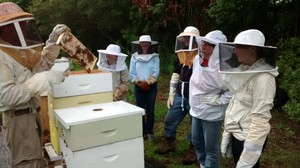
Sunday's high of 72 degrees meant we could open the beehives and check on colony population and strength for the first time since October. All are well and most are thriving, with pollen ranging from light gray green (red maple) to light yellow from our apples and a brilliant yellow-orange (camellias and dandelions) stashed around the brood nests and plenty of honey stores in the hives. This next week will have our coldest nights so far, but alternating with days above 55 degrees means the bees will be out eagerly foraging for this protein-rich food to feed all the new brood hatching in the nest. We've been busy building and painting new wooden hive boxes for the young colonies that will join them soon, and holding the first beekeeping workshops of the year.
Our other winter activity is crabbing, and with the cold nights comes colder water temperatures, sending the wild Atlantic blue crab down into the mud to stay warm, not even being tempted by the delicious fish we use as bait in our crab pots. Our constant companions on the waters near Bulls Bay and the Cape Romain wilderness are white and brown pelicans, and a local celebrity dolphin, who likes to race up and leap beside the boat, splashing us thoroughly as we retrieve the crab pots.
