
09 Oct Sun 2016
Capturing the season
We took up the rest of the tomato plants Saturday, which is a week earlier than last year even though we planted them late this season. The end of the tomatoes is always a sad day here as what will follow is nine months of hard, unripe store-bought tomatoes. We were dry in August and September in Maryland and the tomato hornworm and leaf-footed bug were formidable and persistent. Red and black, these spidery leaf-footed bugs are quick to elude a swift hand and lightning fast at creating circular rings around the top of mature tomatoes. While the marks did not affect the juiciness or the sweet taste, the tomatoes had to be relegated to seconds for retailing. Our method of watering, drip tape on all our vegetable beds from rainwater collected from four 3,000-gallon collection tanks, meant spraying the leaf-footed bug with a hose, the best way to rid your plants of this pest, was going to require a new method of watering. Instead, I opted, for hand picking the feisty bugs which are amazingly fast. My efforts left me with ugly but tasty tomatoes.
Growing heirloom tomatoes challenges your patience. Thin-skinned heirlooms like Mortgage Busters taste great and weigh a hefty pound usually, but they split easily and are hard to get to market. Thicker skinned heirlooms like Rose deBerne are hardy enough to ripen on the vine but don’t get very big, eliciting comments like, “Is this all you have? I wanted a nice big tomato.” But the taste can’t be beat even if it is a sloppy mess you have to eat over the sink.
22 Mar Sun 2015
Learning your farm community
In one of the first books I read about farming the writer explained how to assimilate into your new farming community. He gave multiple examples of how, when and where (networking in essence) to get yourself ingratiated into the local farming community. Being from the city this was especially worthwhile advice.
We are specialty crop centric farm, which has its pluses and minuses. We did not have as much opportunity to expose ourselves to other local farmers because we are one of only a few organic farms in our town. A couple of suggestions from the book were to go to auctions in the area. Find a group of men talking and just walk up and listen. Do not talk. Just listen. The other suggestion was to join local farm groups and associations.
We took the advice and did just that. Pretty soon we were learning names but more importantly we were learning about local farmers, farming techniques and farm common sense. This led to contacts at local stores and restaurants.
We get manure from a local farm. When we first started getting loads we paid the farmer. As time went by we got to know each other, he is conventional and was leery about us and our growing views. We discussed GMO’s one time early on and have not discussed it since. He rents some of our land so we work closely when he plants his GMO-Corn. I have to make sure our corn pollinates before his does or run the risk of GMO contamination. Sweet corn matures faster than dent (field) corn so we have windows when his corn is in pollination and ours is not.
Recently, we got a load of manure. The farmer brought his truck up and dumped the load. When he got out of the truck I asked how much. His answered surprised, “Nah, that’s okay, consider this a gift,” I said “Thanks, but what does this mean for our relationship?” He looked at me quizzically yet annoyed. Okay lets go back fifteen seconds; When he said gift, my thought was wow, I have never been given manure as a gift before. When I lived in the city, gifts were usually wrapped and rarely measured in cubic yards,” does this mean our relationship was starting to bud? My next thought was what does it mean when someone gives you a load of crap for free? This crap is not cheap, it is not the kind you get from your boss or from others, and this stuff is brown gold. I just meant the statement as a joke.
With all those thoughts swirling around I just stated it was a joke and did not even try to explain. If you have to explain a joke, a.) Do not explain it and b.) Let it die a quick death. You look better that way. However, inside I felt kind of proud, I did thank him profusely and he drove off. I just could not help but think There is nothing like a pile of crap to make you feel like you are part of the farming community.
Buy Local: It is one of the ways to send a message to the powers that be who profit from the degradation of the environement.
03 Jan Sat 2015
Spendavist
In a lot of ways we are environmental activist. We belong to many groups that support environmental practices. We attend continuing education classes as a way to keep our nutrient management certification or certified farmer status as it is called in Maryland.
We are members of various groups local and national that relate to specific functions associated with the farming community and specifically to environmental issues that we practice. We practice what we preach, that is how, with confidence, we can give tours of our sustainable operation and impart ways that non-farmers can help the environment in their households.
Then there is the consumer activist side that dictates my spending habits. I firmly believe, and economics proves, that my money speaks louder than I do. After each of my posts I implore the buy local mantra. I have learned that if you do not walk the walk, you cannot talk the talk. It is that simple, I am not naïve, I know that there are limits based on income. However, I know of a lot of people who are spendavist and products labeled Non-GMO Project Verified are their targets.
Once you find a genuine sustainable farmer support them. Speak up with your money and gratitude. These people are working and committing themselves to your health and the health of your family and generations to come. It is important to note that if we all made choices to support local businesses and growers then the industrial food complex will react. If you look at the countries that ban GMO's it will surprise you. One of the latest country's to refuse GMO food from US big Ag is China. China, the same producers that brought us high sulfuric dry-wall, leaden toys and clothing, killer pet food and treats.
I admit, I was stunned to learn that they rejected GMO's, then I got scared. It was one of those out of body experiences a moment of clarity that solidified my stance against eating GMO's. Then knowing that we have joined a cause that really is a worldwide issue adds to the pressure to succeed.
It is not just us in the USA, it is humans all over this planet. We are all in it together and it is a fight for future existence. What I see is that it is greater than all of us and will impact future generations. The science points this out but does not reach as drastic a conclusion. It merely states the facts as they find them. If however, nothing changes then the environmental impact continues in an increasingly negative way and we will run out of clean resources.
Buying local is not a fad, it is a core shift in how we as individuals can communally join hands and fight for those who will inherit this earth long after we are gone. Because it is those people who will suffer the greatest but it also you who will benefit now. Spend your money in a way that helps you, your community and your lineage. Be a spendavist, use your money to dictate what big Ag should be doing. It is the only voice they know to listen to. If the money stops flowing they will change course to capture it back.
Buy Local: Help make a difference and impact the future in a positive way
17 Jun Tue 2014
Next to Love
Work on a small farm primarily consists of manual labor and is a grueling proposition. James Carville stated, “Next to Love, the greatest gift someone can give is their labor”. Never has such a statement hit closer to home then what we experienced during strawberry season.
We were close to getting into a major retailer, but we had to have our “Good Agricultural Practice,” GAP certificate. We did not get it in time so the berries destined for the store sent us hustling to find buyers. Before that, we had to harvest the strawberries. I was on Agrication last week and was picking strawberries everyday. I can tell you, first hand that harvesting strawberries six hours a day is back breaking work, eight to ten is down right unfair.Yet there are migrant workers that do just that.
By Tuesday evening, I was whining like a tired two year old. My wife being the sympathetic person she is, told me to suck it up and get back out there. Okay, maybe she did not say it like that, but I know what she meant. By the end of the day, my feet, ankles and lower back were killing me.Sleeping did not bring much relief, every time I moved some part of body reminded me of the days work.I would get up the next morning gingerly putting on my clothes and work my muscles loose.
Then unexpectedly we get a call from a local woman that home schools her kids. She wanted to know if she and her kids could volunteer to pick strawberries for us. She is big into the local movement and had seen other organic strawberry growers go under. She wanted to make sure to help in order to keep us afloat. Then the Carville statement came to my mind. Thanks, Kate, the intrinsic rewards we felt and gratitude was overwhelming.
I have said this before growing and raising food is a humbling experience I just did not know in how many ways it could happen. The mom and her four kinds came out on two separate days and helped pick over fifty pounds each time. It was incredible to meet her and talk to her kids. I cannot help myself I am a natural born teacher, so I took the opportunity to ask them questions. Like “What is a good bug versus a bad bug?” and others questions about nature. I have to show them the new layers that were on grass and the meat birds we are raising.
As the week progressed, it was not looking good for sales. We had about one hundred and twenty pounds in the refrigerator and my wife was contacting every restaurant in town and any other potential bulk buyers. Being a small farm, you are all things and when there are just three of you, things fall behind quickly. However, we managed to get them into the Orchard in Frederick City and sales increased on the farm.
Then a group of three adults and four kids came up to pick. They were repeat customers but I did not recognize them and I asked, “How did you find us,” of course the reply was “We were here last year,” so I made a joke about my mental capacity and took them out to the berries. They came back with fifty-six pounds of strawberries. We made a game out of weighing all the different baskets and flats with people guessing the weights before the total displayed. One family picked 6.66 pounds of strawberries, the display was facing away from me and when I heard them say that I quickly picked up one of their berries and ate. “Thanks," was their response.Strawberry season is over for us, but there is still work to do with them.They produce fruit for about three weeks, then you must renovate, weed, feed, keep them healthy, cover for winter, uncover in the spring.Then whine like a baby in June of the next year.
It is people like Kate and everyone else that came out to pick that give us hope, finding kindred spirits and people willing to help knowing you are trying to make a difference in an indifferent world and they see that an get to be part of that.
Buy Local: Find a grower by you and give it a try.Now is the best time.
23 Jul Tue 2013
GMO makers have the upper hand but you have the choice.
BPA, BHA, BHT, DDT, PCB's Sodium Nitrate and Nitrites, 2, 4-D, 2, 4-T Atrazine, Glyphosate and Phthalates, all chemicals that the manufacturer has claimed were safe backed up by studies they funded. Atrazine is not supposed to stay in the human body (according to industry research), yet Canadian researchers found it in the blood of pregnant women and then in their umbilical cords. Does that mean it will be in the fetus?Scientist have reported that pigs eating GMO corn leaves them with higher stomach inflammation then those fed non-gmo corn they have also found a new mutation in the DNA of GMO corn called Gene VI known as a viral gene. Viral as in virus.
Atrazine, is an endocrine disruptor found to castrate and feminize frogs, bass and other predictor species. What do you think it is doing to fetuses? We have a problem with our food supply. Additives, preservatives and other synthetic substances are in our food with very little empirical research focusing on the affect to the human body. Bombarded by health claims that truly are false, Michael Pollan in his book “In Defense of Food,” stated rather bluntly that if the package reports to be healthy or has any other claim of benefits, to the human body, it is not. He went on to say, paraphrasing: read the ingredients, if the ingredients were not around when your grandmother was alive it is not good for you. Whole foods are good for you, fruits vegetables, nuts and berries and yes, the occasional protein input
It is our time; we as a nation are a spending economy. If we do not spend, then the one percent does not make money. Raise your voice with your wallet. Shop local, support local business, go to the mom and pop stores, and most of all source your food. Find a local farm or CO-OP and ask questions; most importantly buy products labeled as NON-GMO. Each of us has a duty to those less informed about their food choices. You will hear "I cannot afford the prices of organic or naturally grown". I know given economic choices hard decisions are made, but that does not mean you have to make the wrong choice. As Pollan pointed out in his book, we spend money now for cell phones, cable, internet, internet games, streaming video and other services that we never had to before. Once again, it comes down to choice. It is a choice that profoundly affects the future health of you and those to come after us.
I know it is a radical suggestion, but by making that choice, you are supporting people that are benefiting the air you breathe, the food you eat and the earth that your family inhabits. Besides, your taxes already go to pay for environmental ills caused by those that sell you this cheap, chemically laden food. My question is why would you want to support that? By staying local, you build your community backup. The money you spend on a farm or at a farmers market goes to pay for local labor, local supplies and kept in your community.
Do not kid yourself, you are paying a larger price then you know, the choice you make today influences the lives of our future generations. The science of today has proven the ill affects of the chemicals mentioned above. Given the greed that we see around us from big-ag, would you have any other reason to believe that this history is not going to repeat itself? GMO makers might have the upper hand but you my friend have the greatest gift to benefit yourself and future generations, you have a choice.
Buy Local: Help the hundreds of thousands of us, struggling to bring you fresh, safe, food
03 Jul Wed 2013
How to Shop at a Farmers Market
I made a comment the other day about shopping at farmers markets and helping support the local economy. A person stopped me to complain about “Hucksters,” my word, not hers, and how you cannot be sure you are getting locally grown food. Making sure not to offend the person I carefully explained that yes, there are some unscrupulous characters at farmers markets, but by asking a few questions and arming yourself with basic information, you could ferret out the poser from the farmer.
I could tell they were upset by past purchases but to damn all farmers markets was wrong and I explained people like them could actually help those of us that feel the same way. Yes, I acknowledged there were some farmers markets that allowed anything but the markets we established and participated in were “Producer Only,” markets. I explained that a “producers only,” market is a market that has vendors that sell what they produce. They range from just fruits, vegetables and meats, to anything the person makes, breads, jams, paintings, photographs, jewelry whatever, as long as the person made the product being sold.
I turned the tables as subtly as possible, “you know,” I said, “it is Caveat Emptor when you go to an unfamiliar farmers market but you can quickly find out if it is a producers only market". I explained that first and for most know what is in season in your area, if a farmer is selling corn in Maryland before July, he or she is a huckster. If the fruit or vegetable is in season, ask the farmer what is the name of the product. If corn they should be able to tell if it is Sugar Pearl, Fisher’s, open pollinated or hybrid or some other characteristic, ask how many days to maturity (DTM).DTM on corn is typically between 75-95 days.Here is a great web site that tells you when fruit and vegetables are in season in your area.
The vendor should be able to give you the name of every vegetable they are selling, the days to maturity, when it was harvested, how long it will last in the refrigerator, is it a heritage or heirloom breed and when it was actually established. Fisher’s yellow corn was developed in Montana, in the 1960’s by a man name Ken Fisher. He kept selecting corn that had a short growing season and could withstand cold snaps in his state. That I know of every fruit and vegetable has a traceable lineage and the farmer who ordered and planted that seed will know these details. If they say they are organic, ask to see their certification. They have to have it with them at all times and they will be proud to show it to you. If you get an excuse consider them non-organic.
As consumers, we just need to ask questions and follow our gut. If you start to get a feeling, the person is being dishonest or they cannot answer a simple question like what is the name, then they are hucksters. All but one market we have participated in has been producers only. As growers, we know who is growing and who is not. Those that do not grow only bring down those who do and we are quick to question the origin of the products. We do this precisely because of the comment I heard and the reality that there are unscrupulous vendors.
Buy Local: And support non-gmo producers,
28 May Tue 2013
My Mom
I took this picture on May 26th, 2013, with my wife. It is of her rose bush, that she planted last year. That I kinda ran over once or twice, mowed a little and let weeds over come the entire bush. I spent some time last winter, weeding, re-staking and securing the plant.
We were out by the berries and I saw it and called my wife over so she could see it and admire my handy work. "You have got to take a picture of them," she said. So, I got my phone out. took some shots and notice the rays of sun coming through the trees. I tried to capture both rays and rose at the same time. Below is the outcome:

I showed her the picture and said "My mom always loved roses, and that ray of sunshine must be her admiring them". It was just a comment based on the beauty of the situation and the fact that I miss my departed mother.
It was May 27, 2009 when my mom passed away, which makes the timing of the picture above and the comment all the more poignant. After her passing I wrote the following post a few days later:
My Mom passed away Wednesday May 27th at 5:00 am, I knew this because at 6:23 the phone rang and it was my sister. She couldn't get it out but she didn't have to, my mom suffered from breast cancer and it spread to her bones. She was in terrible pain and in the end it was really a blessing for her, we were selfishly hoping she would be around longer but it truely wasn't fair to her. She had given us everything she had from life lessons to cooking lessons and she was crazy about spelling and grammar. I, unfortunately, let her down on the latter two.
She was delt a cruel hand for life but she raised three really good kids and she always had a smile, a laugh and strong shoulder. She was a great cook and loved to entertain. But what was endearing was her ability to laugh and look at the bright side of every cloud. She lives on every time I cook tomatoe sauce, bread, meatloaf, pizza, well you get the picture. Mom is with most of her family now, they are all probably sitting around playing cards and joking and laughing. She had the ability to forgive like no other, a trait I am still trying to emulate. We grieve and we miss her terribly but she wouldn't want us to morn, she was a partier and that is what she would have wanted.
I never stored the details of time the day she died, I could not have told you the day, the month, or the year for that matter. My memory of the day was that she died and left that void that we all feel or will feel at some time in life. She died and that is what remained as my memory of the event.
This single shot of a rose with sun rays coming through the trees as a backdrop made me think of her love for them and of her . It is sad but at the same time it is so heart warming, being one of those things that makes this hard life we live easier. It made me go back to that post, to re-read what I had felt only to find that I was reading it on the date of the day she passed.
From her I learned it is what we do for others and the impact we have on those around us that makes me a good person. If you look for someone to help, you will find them. Your reward will not be know to you but things will happen that you do not understand. It is not the materials that we own or the clothes that we wear by which we are judged, but by the people we help and lives we touch. Which is how my mother lived her life.
Thanks mom, .
02 Apr Tue 2013
Free Range might not be
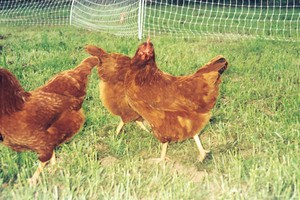
When you hear the term “Free Range” the natural thought is grass. However, given the definition brought about by lobbyist, free range means “access to” the outdoors. Access to what is the question? In some cases, access leads to cement pads. Cement pads that are not big enough to hold all the chickens in the house.
On the other hand, they actually get to step on dirt surrounded by a fence. No grass, because chickens are hard on soil and if you confine them to the same space the grass cannot recover. As long as the building has a door and the door can open the producer can call their product free-range. USDA for their part is trying to redefine the term and add the amount of time the animal has to be outside in order to combat the unscrupulous.
Done correctly chickens are tremendously beneficial to the soil. They cut down on bug populations and they leave fertilizer behind. The industrial food complex has seized on the USDA definition, raised their prices, calling the chicken “free range” when the chicken most likely has never set foot outside, or even came close enough to the door to get fresh air. You go into these large poultry houses and the smells can be overwhelming with ammonia being most prevalent. It is the environment that they live in that causes the need for anti-biotic and other medicines
How we free range as well as other small farmers is to let the bird out of the house at sunrise and then close the door at sunset. Once the chickens know where their roost is located, they will come home. Provided there has been no predation. Predation is one of the major problems with free range. There are the natural night predators that people know about, fox, owls, opossum, raccoons, coyotes, bears and others depending on the location. If your structure is sound you will not loose chickens at night, or at least we have never lost any at night.
Our losses have all come during the daytime and there are two reasons, dogs and hawks. Since we got Coadee, the dog attacks have stopped. The hawks on the other hand she is hit or miss with. I have seen her chase hawks barking as she runs after them. Then we have lost one or two while we have had her. As with every problem research and knowledge gathering came into play. I found that hanging CD’s up deters hawks. I called around and verified that yes indeed, hawks have acute eyesight and the reflections glinting off the CD’s bother them, so they tend to stay away from those areas.
Besides making the place look sparkling, we have not lost birds to any hawks.We have moved fifty more out on grass but kept them in the barn too long.How do I know this, the birds are not coming outside of their new home.The other day we did a forced evacuation but as soon as all were out of the trailer, they started to head right back inside.It was cold but the sun was out still one by one they all went back into the shelter.It has been three days and we might have ten outside.
Chickens are like that, they get use to an environment and they tend to stay with what makes them comfortable.That is why “having access to,” is so ridiculous.Chickens last maybe eight weeks before processing.If they have not gotten out by the fourth week, they are not going to be true free range.Unless of course we are talking about layers, given enough time and we will be chasing them back into the pen just like every other flock we have ever had.It is a familiar pattern but one that stills brings delight while watching them explore and get use to the great outdoors.That and Fer Coadee.They have known Fer Coadee since they got on the farm as day-olds.The peeps have seen her everyday twice a day since October.They do not know what she is there for but once they get outside the fence, of their pen, they will quickly learn.
Coadee enforces the boarders and keeps the layers close.As an added bonus, Coadee gives them a complete checkup before letting them go back to pen.Okay, she may be licking all over them and feeling their skin and feet but I prefer to see it as a health check.The layers see it as a reason to stay inside the pen.
Buy Local: It is how you make a difference.
15 Jan Tue 2013
Food is in our blood
Food is in our blood, whether, growing, preparing, cooking or, consuming, food is in our blood. It is why we produce fruits, vegetables, chickens, eggs, honey, jams and jellies. We make our own bread, pasta and tomato sauces.It is why we share our knowledge of Italian cooking. With me, it started in my grandmothers' kitchen. Going over to my grandmothers house brought about gastronomical anticipation beyond mere description, and if dinner was ravioli "fa gedd about it". Arriving at her home and taking that first step through the threshold of her house brought olfactory nirvana.
The smells of homemade tomato sauce stewing on the stove, fresh Romano cheese, grated that day and bread baking in the oven made my mouth water.Not knowing at the time but it was the start of a path that has led me to today. Food has always been at the center of my existence. Growing up, food was at every occasion and if it were a special occasion, the spread would be overwhelming as a child. First learning how to buy fruits and vegetables, then learning how to cook, spending time in professional kitchens and then moving into growing has given me immense satisfaction and as noted here tremendous challenges and pain.If you hear a farmer say, he or she has put blood, sweat and tears into the farm that usually is a literal statement.
You see, food is in our blood and the food we put in our body today will end up being a part of us. This makes why we grow and how we grow a symbiotic relationship. There are tens' of thousands of us doing just that for our communities. Thus making the choice you make on what to eat and where to buy the food even more important. The more you know about your food source the greater the impact you will have on your own health, the health of your family, the environment and future generations. This is our way, your way and everyone's way of making a difference in the lives of others. Lives that we will not know, people we will not see and an earth we will have long ago inhabited.
Food is in all of our blood, so too are all the trace amounts of chemicals and DNA spliced genes. The additives, preservatives, stabilizers and enhancers that are all synthetic are being exposed for the harmful substances that they are, yet we continue to let the IFC introduce new ways to generate profit at the cost of our health, my guess for future health problems will come in the form of nano titanium dioxide. Greed has taken over as the new norm.Greed at any cost is too much, then tie in the detrimental effects to the environment and you see, man is playing with the lives of every being to come after, and they do this with no moral regard.
We say it often; we grow for health not wealth. Unfortunately, we prove that saying each year. Do not get me wrong, we do grow for health, but damn I would like to make enough money so I only have to work one job. It is the first weekend in December and this is the first weekend I have had off since March. Moreover, I am not really off, we still have the chickens, the pullets and all that comes with small grazing animals.
The odds of success are against us, it seems likely that we will fail in trying to make this a full-time profession, but If and when we do have to make that decision one thing will remain and that is growing food will still be in my blood.
Buy Local: Support those that chose to sustain the environment with you in mind.
17 Dec Mon 2012
BPA, Atrazine and 2,4-D
There was a study a while ago linking Atrazine to the castration and feminization of frogs in test labs. Frogs are known as a predictor species. Predictor species have human genetic make-ups, that is, their internal organs and systems are most like humans so scientist can see what is happening to them and extrapolate what can happen in the human body. Industrial farms and large operations use Atrazine primarily in weed control applications.The San Francisco Chronicle wrote about the affects that Atrazine is having on the environment. The study conducted at UC Berkley and published in the "Proceedings of the National Academy of Sciences" spoke to the affects of Atrazine. .
As you would expect the maker of the weed suppressant is fighting the study and pointing to every flaw they can find. Interestingly, the author of the study worked for the maker of Atrazine years before. His findings showed Atrazine to be an endocrine disruptor but the manufacture dismissed the report.Remember feminized bass, they are a prime example of what an endocrine disruptor can do and bass are predictor species too. The other problem of concern, with the use of Atrazine, is the development of the super-weed.
Weeds are becoming round-up resistant. Leave it to Mother Nature to put man in his place. Therefore, we have weeds now that are resistant to Atrazine, one of the chemicals used in Round-up. Which means these new weeds are going to need a stronger chemical in which to control or eliminate them. That chemical, scientist have said, is 2, 4-D. 2, 4-D is an unknown chemical to you and me until you hear the product name it was used in. 2, 4-D was the major ingredient in Agent Orange. The use of Agent Orange occurred in the sixties and seventies until all hell broke lose when those exposed to the herbicide started getting sick. However, I digress.
The endocrine system regulates hormones like testosterone and estrogen. Any wonder feminization and castrations is taking place in frogs found with high levels of endocrine disruptors. I cannot make this stuff up, yet those charged with protecting our food, environment and health are benefiting from the very industry they are suppose to regulate. They rely on scientific data where the funds to conduct the study often comes from the manufacturer or industry pushing the chemical.
Am I missing something, is it that we die off and are replaced by other people who spend and that is why killing us to make a profit is okay. Why would we expect the FDA or EPA to crack down on the use of endocrine disruptors? Things have to get out of control like Thalidomide, DDT, Bisphenal A (plastic containers) and Phthalates (cosmetics), before the public is warned and then protected from those that seek profit no matter the outcome.
If this is happening to the frogs then what is happening to the humans that have to work around the stuff and ingest trace amounts. If you think washing the food will help think again. You just cannot wash this stuff off; if you could then it would not be affective in the field when rain comes. It has to be able to withstand water in order to be affective in the field. That and the fruit and vegetable actually absorb and contain trace amounts of the chemicals used on them.
Twenty-five years ago, we started growing organic because I learned about trace amounts of chemicals on and in my food. To me “trace amounts,” means the “existence of”. My thought was if I were trying to eat healthy why I would ingest trace amounts of carcinogenic chemicals. I am sorry, I respect science and scientist but they are human and we as a society do not have a good record of accomplishment when it comes to protecting people over profit. If we did, big tobacco would not be the standard-bearer by which we judge corrupt corporate malfeasance in the pursuit of profit over health.
Buy Local- Save a frog, a bass, yourself and the environment by doing so
17 Oct Wed 2012
What you need to know about GMO
To show you how important GMO is to the industrial food complex (IFC) you only need to look at California’s Proposition 37.It is a bill that would require food manufacturers to label foods made with GMO tainted products.Why is this important to you?Because as California goes so goes the Country.California represents about 12% of the total food consumed in the United States.
The IFC has poured in over 25 million dollars to defeat the referendum.Monsanto alone has contributed 4 million to defeat the measure.Coke, Pepsi and others have contributed as well. People are suggesting boycotting these companies. I suggest eating healthy. Eat whole foods that you know do not contain GMO's. GMO’s have been getting bad press about the ill it is causing in the human being, the environment and the flora and fauna.
More of us want food that does not have GMO added.The EU and other countries do not allow GMO in there food supply and there are reasons for that. To me the bottom line with GMO is that an anti-biotic needs to be spliced into the DNA helix in order for the DNA to accept the modified trait being introduced.Then there is the actual substance that is being placed in the DNA.Let me explain, the anti-biotic helps the DNA accept the modification into its makeup say the round-up gene. Round-up ready corn has the round-up gene spliced into its DNA with the help of the anti-biotic.Then if we eat tacos, corn chips or whatever is made with the substance that genetic modification is consumed along with the anti-biotic strain.
That is my elementary understanding, I am not a scientist, and I have no empirical facts other then observations.Those observations are the following:more viruses are becoming anti-biotic resistant, more food borne allergies are being reported, scientist report environmental impacts like feminization and castration of predictor species and flora is starting to become round up resistant.In essence making a super-weed that is impervious to weed killers and strain of viruses that are anti-biotic resistant. Which in turn leads to the need for even more nefarious chemicals to control the weeds. 2.4-D for instance would be used. 2,4-D was the checmical in agent orange.
We are certified organic and GMO drift is one of those things that must be monitored and stopped if possible.I can tell you it is not possible unless you have a very isolated well-protected field you are susceptible to GMO propagation of your plants.We take great pains to find out what is being planted around us and when the germination is going to start to take place.We then plant around that window of propagation.It is the only way I know how to safely grow food.Sometimes we will not plant corn a second time due to drift potential.
The same people that developed GMO technology are the ones that recommended the use in the US food supply. That fact alone answers the question of is it bad for you. If it was healthy wouldn't they open it up to transparency just to prove it is not harming the environment or us?
Buy Local: They do not use GMO.
06 Sep Thu 2012
Organic is cheaper when you take Pollution into account
Recently there was as a study published by a Stanford researcher about the merits of organic versus conventional food. Specifically the study looked at the vitamin and mineral content of fruits and vegetables and the cost difference between organic and conventional food. Although there are studies that refute these findings: University of Washington, http://www.plosone.org/article/info%3Adoi%2F10.1371%2Fjournal.pone.0012346 , http://www.bioneers.org/programs/food-farming-1/articles-interviews/organic-food-has-a-higher-nutrient-content-an-interview-with-charles-benbrook and http://www.cnn.com/2009/HEALTH/06/16/best.organic.produce/index.html I tend to stay away from all of the back and fourth and look at the undisputed facts.
First, conventional food contains trace amounts of carcinogenic chemicals http://www.ncbi.nlm.nih.gov/pubmed/172223 . Trace amounts that are allowed per FDA, USDA and EPA standards. Yet every year we find that what was once approved is now harming us. Diactyl and Bisphenal-A (BPA) are the most recent that come to mind. Diactyl causes lung cancer, which is a fact. However, for years it was allowed in the food supply particularly in butter-flavored popcorn and other foodstuffs. That is until people started getting lung cancer due to build up of Diactyl in the body. Then there is BPA. BPA is an endocrine disrupter and is shown to cause birth defects in children and hinder their mental development. Recently studies have shown that BPA is narrowing arteries in adults. The list of approved then disapproved fungicides, insecticides, additives and preservatives just keeps growing.
Second, there is the environmental detriment big industrial farms create while they produce all of the meats, eggs, fruits and vegetables. One example is Atrazine, an herbicide. Atrazine has been linked to castrating bullfrogs and feminizing bass http://www.sfgate.com/green/article/Study-says-herbicide-causes-frogs-sex-change-3197878.php . Yet it is still in use.
I would like to point out that there is a distinction between local conventional farmers and the big industrial corporate farms and imports. Our local farmers feed their family with the products they grow and produce. Their children and grandchildren play in the fields and water on the property. I know these farmers are much more judicious when it comes to using fungicides, insecticides and herbicides. I feel comfortable buying my sweet corn from Mayne’s Tree Farm or fruit from Bob Black at Catoctin Mountain Orchard.
Then there is the cost argument. What consumers do not take into account with conventional costs is that they pay for cleaning up the environment through their taxes not through the price of conventional food. With organic and sustainable farm practises, the cost of environmental protection and rejuvenation is built into the price of the product.
Your tax dollars go to environmental protection, clean up and rejuvination of our waterways and fields because of industrial farming practises. Environmental degradation from industrial farms have been well documented. So when they say conventional food is cheaper they are not telling you about these hidden costs. Ultimately, sustainable organic food is cheaper, safer and an environmentally sound agricultural practice.
Organic food does not have trace amounts of carcinogenic chemicals, steroids, hormones or anti-biotic's. That is fact. Conventional food does contain trace amounts of most synthetic substances used in the production process and these trace amounts are not being processed out of the body like we are told. "Canadian researchers this year reported that the blood of 93 percent of pregnant women and 80 percent of their umbilical cord blood samples contained a pesticide implanted in GMO corn by the biotech company Monsanto, though digestion is supposed to remove it from the body. "Given the potential toxicity of these environmental pollutants and the fragility of the fetus, more studies are needed," they wrote in Reproductive Toxicology". http://www.chicagotribune.com/health/ct-met-gmo-food-labeling--20110524,0,5841902.story.
Whether they are carcinogenic or not, to me, trace amounts means the existence of a substance. You would no more stick your finger in an insecticide, wipe it off on your pants then lick your finger with your tongue. Yet in essence, that is what you do when you eat conventional food from the industrial food complex.
If you think washing the food off before eating it protects you, think about rain. These chemicals are designed to stay on the vegetables when it rains. The effectiveness of the chemical would be useless to the industrial farmer if rain did wash them off. Organic sprays are water soluble, that is why each time it rains we need to retreat those plants that are in distress (raising operational costs).
If we know anything from the use of chemicals, it is that history proves that what was once considered safe is no longer the case, Thalidomide, Agent Orange, Benzene's, DDT, Diethylstilbestrol, Cyclamates, Bisphenal A, Diactyl, and Phthalates (cosmetics) are some. So what, if from a vitamin standpoint both conventional and organic are the same. From a health, safety, cost and environmental standpoint there is no comparison.
Buy Local: The earth will be a better place,
24 Jul Tue 2012
The journey they have chosen
We are two-thirds into our growing season. The spring salad and greens did well. The organic strawberry pick-your-own was an overwhelming success, the corn came in for the first time in two years and potato harvests have been good. String beans are coming in at about eighty pounds a week and we finally got our first “word of mouth” sale on the organic chickens. Just to even out all the good things. I found out I have to start a five-year inoculation protocol because I am dangerously allergic to bee and wasp stings. I guess being stung as many times as I have (at least 50 since moving here) has not helped.
We started at a new farmers market, located in the city, that is truly a producer’s only market. I know you are thinking, “aren’t all farmers' markets producers only” and no, they are not. Always be weary of the huckster, ask your farmer questions about his or her sustainable practices, the names of their vegetables (is it a Diva cucumber? an heirloom tomato?) and where their farm is located.
Caveat Emptor is the way you should approach farmers markets. There are more posers trying to make a fast buck by not growing but buying in bulk and re-selling. Do not be afraid to ask questions, they will only serve to help you. Your farmer is there because he or she is proud of what they have to offer. To do what they do is truly amazing. Think about that, before they even plant a seed great care has been taken to make sure the soil is ready and at its optimum. It takes time and energy to keep weeds and insects down and virul and bacterial outbreaks minimized.
The latter issue is important and makes soil and crop rotation so vital to the operational health of the soil. Not only does resting soils and planting nitrogen fixing grasses and other biomass greens help to maintain soil health it reduces the potential for major infestations. Your farmer will know about this, they will know about integrated pest management and management intensive grazing, if they have animals. Most will speak to the trials and failures that they face and how hard it is to get fresh, safe produce to you. Farmers are not perfect they are human but the ones that take great care of the environment and their animals are the ones that truly deserve to succeed.
Your farmer will know intimate details about the products they sell, be it animal, vegetable or mineral. I always thought farmers talked so much because of the solitude of the job. Now, I think, it is just shear knowledge gained from the struggle of providing food for their community. There is a plethora of experience and knowledge obtained each growing season. No one season is ever the same, I go back through years of our daily notes and the only constant is problems.
Problems in the form of insects, drought, disease, and predator attacks, infrastructure breakdowns, equipment failure, bee stings and so the list goes. I have nothing but admiration for anyone that chooses to grow. When asked to help educate, I give of my time and knowledge willingly in hopes that these people have an easier time then we have. Yes, I joke about the sanity of making the choice to grow but, food never tasted so good. Small family farms struggle, the life is difficult. However hard, they should be respected because it is the journey they have chosen.
Buy Local: Why support the IFC when they are the ones placing the environment in peril?
15 Jul Sun 2012
Full time work
Off farm income is a category tracked by the USDA. When you look at those numbers, in the small farm catagory, it is appallinb. As of 2010, small farm income as a percentage of total farm-household income is projected to be a whopping 8.7 percent. Down from the 11.1 percent it was in 2008. That means that for every dollar of income a farm brings in, 91 cents is from "off farm income". As in "farms and works another job to earn enough in order to sustain an existence".
Okay, so I am late to the party, but is this normal? I mean, I know it is reality but is this normal for any industry. Let alone an industry whose main function is to provide a basic form of human sustainability. Maslow's paper, "A Theory of Human Motivation" points out the hierarchical needs of humans. The paper was accepted in academia in the forties and is still being taught today. After air and water, food is at the level that everything else in human life builds upon.
Food, water and air are what sustain human life. Would not small farmers producing food for human consumption be allowed to focus all their energies on producing that food in an environmentally sustainable way, be healthier then forcing them to use practices that are detrimental to the environment and humans because it saves time? Should not the person growing your food be able to spend the time learning new technology and methods in order to use and preserve scarce resources like soil and water? Why did we compromise the small family farm? What dove tails with the demise of the small family farm is manufacturing. As consumers, why have we left ourselves so vulnerable to other countries. We buy American as much as we can, it is almost as hard as growing. Try it, see for yourself.
You can very easily be mired in the economics of this argument but my point is to explain yet another hurdle that small farms face as part of being a sustainable, safe and eco-friendly operation. Small farms, as defined by the USDA, are those farms with net-income of $1,000 to $250,000 in gross sales. Small farms represent about ninety percent of all farms in the United States but make up only twenty percent of all gross farm sales.
Within the small farm category, there are two sub-categories, those that make fewer than 10,000 dollars and those making 10,000 to 250,000 dollars in gross sales. Sixty plus percent of small farms makes less than 10,000 dollars in gross annual sales. Thirty percent of small farms fall into the other category of gross sales over 10,000 dollars.
I am not saying that farming is the only profession in which people have to work two jobs in order to maintain some standard of living. The term “standard of living” is very subjective when it comes to the individual consumer. Economic compensation has always been disproportionate when you look at the value added to society from a particular profession. Teaching comes to mind, for instance. We put the weight of the world on our future generations but the people that are there to teach and prepare them for that burden are grossly under-paid.
The men and women that risk their lives whether in the military, law enforcement or other hazardous jobs face the same inequities. On the other side are those people that can put together complex derivatives and manipulate hedge funds such that they topple the economic stability of an entire country and they are valued economically at grossly astounding figures. Money does not feed a nation food does.
There is no wonder small farming is so incredibly hard when you see those numbers. The deck is stacked against you from the start; it is an uphill battle that most people would not think of taking on. As I tell our staff, “you all are very unique people, first off very few people choose to work such a physically demanding job and of those that try most cannot do it". We have a great staff of hardworking conscientious people. They never cease to amaze me with their eagerness to learn, there ability to understand, ask deeper questions and how they carry themselves.
We also have a business plan, one portion is strategic the other dynamic. Our long-term goals quite simply are to be sustainable both environmentally and economically. Our dynamic goals are geared more towards revenue generation and expenditure controls. The two are symbiotic but it is the strategic plan that we have the greater concerns about. Without the ability to be totally, sustainable we are not going to be in business long. At least ninety percent of small farms face this dilemma. When you find out that only nine cents out of every dollar is earned from farm activities you start to question the sanity of why anyone would get into a business like this (see Who in Their Right Mind).
We work full-time and I can attest to those numbers about outside income. We are a small farm and the total income from farm related activities, in a given year, has not been enough to cover just farm expenses, let alone what living expenses there are. Yet we persist, because each year we do a fraction better in terms of revenue, knowledge, our customer base, our reputation and our ability to expand yet keep the food safe and tasty. For us, it is important to do the right thing, to not shy away from hard work or impossible tasks and to help those that need help because that was instilled in me when I grew up. Growing safe, fresh food is as much a part of me as “off farm income”.
Buy Local: From a farmer that grows it not hucksters claiming they do
13 Jun Wed 2012
What is Organic?
We are often asked to explain the difference between organic and non-organic fruits and vegetables. It is hard to sum up, such that the person that inquired does not regret asking the question.
It is such a basic question yet, the answer can go from the scientific to the metaphysical and everything in between. Sometimes, I will give a one-word answer, TASTE, then there are the studies that point to the twenty-five percent increase in vitamins and minerals when compared to their conventional counterparts (see University of California-Davis study). Nevertheless, you will find counter arguments to those studies and then cost comparisons are tossed into the discussion. "Why is organic so much more expensive and is it worth it?”Depending on the view, you get different answers but CNN answered the question succinctly.
Not everything was right in the article, especially about the start of Organics. The father of modern day organic techniques comes from a man named J.I. Rodale and the Rodale Institute that was founded in Kutztown Pennsylvania in 1947. Most people look at organic as the result but it is just one variable in the whole sustainability model.
We have been saying we are beyond organics for a while, because organics speaks to how vegetables, fruits and poultry are grown and handled. It does not address all aspects of sustainability on a farm. When we first started growing professionally, I looked at sustainability as making enough money to be able to live and produce in the next year. Until you start to make money, you cannot support the operation unless you have capital or some sort of financial backing, which is why 90+ percent of all small farms have income from off farm activities, i.e. another job. This is from the 2002 USDA census. However, large or small, money is not the only variable, the other parts not to ignore is environmental which entails water, soil quality and treatment of animals. The whole sustainability model as professed and proven by Joel Salatin of "Polyface Farm." in Swoop, Virginia looks at the farm as a whole with intricate parts woven together in concert mimicking what Mother Nature does on her own.
Because of farm practices that emphasize environmental consciousness, soil and nutrient replenishments, water resource conservation and protection of scarce resources the sustainable model re-enforces what is right and wrong with today's farming practices. In Michael Pollan's book "The Omnivores Dilemma," Joel Salatin points out the difference between a farm that does one thing only, like growing corn or just beef and that of a farm that uses the sustainable model. Paraphrasing Joel, he said look at a cornfield and look at a field that has been left alone to Mother Nature. What do you see in a conventional cornfield? You will find one species of plant life, the corn and maybe an insect if it was away when the insecticide was sprayed. Looking at the other field you see Mother Nature’s diversity, you will see thousands of insects and plant varieties in that field and that is what the sustainable model is designed to accomplish. How do these plants in the field get nutrition from year to year as opposed to the cornfield that is sprayed with fertilizer and insecticides?
Simplistically stated, plants, trees, insects and animals get nutrients through a complex dance of decay, rejuvenation and replacement Much like rotating and resting fields planted with green manure and nitrogen rich grasses and legumes, then letting your animals graze on those grasses to keep it down. You do not let the animals eat the grasses until the grass cannot replenish itself, you let them eat enough to maintain the stability of the soil in the field and then you move them to the next grazing ground. Management intensive grazing is a sustainable practice that uses the grass but not enough to abuse the grass. An example would be to bring cows onto land, let them eat some and move them off to the next section of field. Next, you would move chickens in the grass that the cows have left behind. Cows like higher grass heights while chickens prefer short grass. When all is said and done what is left behind is incorporated into the composition of the field replenishing nutrients and minerals naturally, you get to see the complete cycle of life in this field. Grass is eaten, the cow gets nutrients and gains weight, it leaves behind manure, enough to attract bugs, which lay eggs and then the chickens, get a crack at the grass and bugs that helps them lay eggs high in Omega-3's.
The chickens through pecking and scratching have aerated the soil leaving enough manure behind to feed the flora and fauna. This dance takes place such that a cow and chicken are never on a previous field until that field has fully become reestablished (usually in 8-12 months). Our production gardens are rested and fertilized this way. Although we do not have, cows we keep moving the chickens from space to space in order to evenly fertilize the whole garden.
What is organic? It is a way to protect our environment for future generations.
Buy Local: Become part of the sustainability model.
05 Jun Tue 2012
AGRICATION
Agrication - [Ag-ri-kay-shun]; 1. Verb; The act of educating people about their food source and why the industrial food complex is doing the exact opposite. 2. Noun; One who takes a weeks vacation from their full time, off farm income job, to work full-time on the farm.
Iowa recently passed a law called the "Ag-Gag". This law makes it illegal to go into large animal farms and slaughterhouses, undercover, to document animal and environmental abuses.Seems the big concentrated animal farms are tired of being exposed for the deplorable conditions and actions employees take at their corporations.Other states have tried to pass similar legislation and thankfully, have not succeeded.This legislation was conceived and sponsored by ALEC.ALEC stands for the American Legislative Exchange Council and is funded by some major fortune 500 companies. What does ALEC do? Basically it writes legislative briefs or whitepapers and lobbies for causes that benefit its sponsors. Their sole reason for existence is to influence politicos.
All you need to know is the two middle words of their name.Legislative Exchange, broken down; legislative stands for laws, exchange stands for what the corporations get from those changes in the law.Okay, maybe I am the only one that sees the correlation between the former and the latter but it is too rich not to draw the conclusion or collusion if you will.ALEC by the way was the chief architect of the “Stand Your Ground” laws.
We have always been big into Agrication.Besides being an environmentally sustainable operation our mission includes education.We hold educational tours, seminars, speaking engagements and hands on classes.More and more I am talking to people that get it and are asking informed questions.Ten years ago conversations with customers centered on the type of vegetables and how they tasted.Today people are more likely to talk about sourcing their food and sustainability.I get plenty of questions about chemicals, general gardening, insects, native plants, humane farming, poly-cultures, colony collapses and other aspects of fruit and vegetable growing.Agrication forms the backbone of helping people understand why industrial farming is harming our environment, making people ill and affecting the ecology negatively.Our intent is to inform, if people decide to support their local farmers then in a big way the surrounding community has benefited.
We are in a major shift in our society’s way of viewing food and sustenance.Books covering topics such as living off local food and sourcing your food have been great sellers and continue to be referenced. This has to happen if our future generations are to live in an environment that will not harm them because they breathe, eat or drink water.
We all owe due diligence for our future generations, we cannot be so shortsighted and profit driven that we rape the very earth that will sustain our future family.We learned from the dust bowl, why cannot we learn from castrated bullfrogs, feminized bass, upper-respiratory issues, food-borne allergies, illnesses, anti-biotic resistant bacteria and sometimes death. What will it take?
Buy Local: There is too much at stake not to.
03 Apr Tue 2012
Growing for Health
There is institutional advertising that a major seed manufacturer is playing over the radio airwaves. It is about how farming uses so much water and that their genetically engineered seeds will use less water and yield more food and how this is going to help farmers world-wide. If that is true, why is this major seed manufacturer suing American farmers for patent infringement? The infringement, by the way, is caused by pollen drift. Pollen drift, think about that, bees, wind, birds and insects all carry pollen. Pollen from Genetically Modified Organisms (GMO) fields or even trucks carrying gmo products drift into neighboring fields and boom, the company sues the farmer for patent infringement. In addition, the court rulings have backed up the company not the farmer.
When pollen drift is as natural and inevitable as the sunrise why is the farmer on the hook for stopping GMO pollen drift? Go to www.hulu.com and search for the "Future of Food". It is a documentary on how genetic engineering was accomplished, how seeds are patented and then used as a big stick to force farmers into the herbicide ready club and how pollen drift allows Monsanto to sue farmers. However, in one of the greatest examples of turning the tables Wood Prairie Farms, an organic potato farm, has brought a class action lawsuit against Monsanto for contaminating their organic potatoes. Now that is fighting fire with fire.
We are at a cross roads in our concepts of food, where you see grass root efforts like the Slow Food, buy local, urban farming and support local farms movements. We have groups like Ark of Taste, which is a movement to bring back heritage breeds from pigs, cows and chickens to tomatoes and everything else that has been genetically modified to fit the needs of the profit motive not the taste for consumers. From my standpoint, nasty chemicals on the food and pathogens cause health problems. Recall after recall, year after year, has become commonplace because the industrial food complex is making people seriously ill, with some resulting in death. What is worse is that recalls are a relatively new phenomenon. Did we have recalls in the sixties and seventies? My mind is going but I do not know of any.
We have had recalls because people are getting sick and we are hearing more and more about bacteria becoming anti-biotic resistant. We know that Atrizine is an endocrine disrupter. The endocrine system in the human body regulates hormonal balance. Studies recently found that high levels of Atrizine are castrating and feminizing other predictor species. Predictor species like bass and frogs have similar physiological make ups as humans, hence “predictor”. Scientist look at predictor species with the supposition that what happens to them is an indication of what can happen to humans. Atrizine is one of the most used chemicals by the IFC.
Then there is taste, remember taste, when tomatoes were sweet, soft, watery spheres of goodness. Which would you pick to eat, a tomato from the grocery store or one out of the garden? So far, every single person that I have asked that question picks the latter. Why? Because there came a time when the IFC turned the tomato into a bottom line calculation and its taste was compromised for its longevity. As was most vegetables and fruit.
An organic plant struggles to get its nutrients out of the ground. When a predator attacks the plant, the plant releases its own sent that attracts bugs that are predators or parasites of the bug eating its leaves. This does not work with a heavy infestation but if the plant survives, it grows stronger and has a better taste then a plant that was sprayed with synthetic fertilizers and insecticides. That is why when you grow fruits and vegetables you want to get native plants in your own area. The fauna has lived and adapted to the environment. That means they have adapted and survived the bugs, fungi etcetera.
I trust my taste buds, I know what is on my plants, I know that the more we allow large corporations to genetically modify food the greater susceptibility we all face for unknown genetic mutation, and greater risk of bacterial out breaks caused by anti-biotic resistance. That is why more than ever supporting your local farmer is important. It really is cheaper and healthier for everyone in the end.
Buy Local: Every dollar you spend keeps local growers growing.
06 Mar Tue 2012
Education
I gave a presentation to the Organic BMSB workgroup on how our growing year faired and what we did to rectify last year’s infestation. We improved marginally, however I look at improvement as a great step, no matter the measurement. Improvement equates to moving forward in our fight to grow fruits and vegetables organically against a devastating adversary.
I was finally able to put faces to the voices I have heard on all the conference calls. As usual, I learned more from everyone else then I was able to impart but that is why I wanted to be in the group to begin with. I could not stand by having suffered the losses from 2010 without trying to do something, education, as with most things, is the first step. At least this year I had much less anxiety presenting to such a distinguished group. I am still in awe of the work they do and the dedication they show. I am a babe in the woods filled with entomology experts, seasoned practitioners and other heavy hitters in the organic growing community. I met Jeff Moyer from the Rodale Institute and Dr. Russ Mizell from Florida State University. We followed Dr. Mizell's 2008 native stinkbug study to establish a trap crop solution for this year. During the two-day event, I found I was still writing jargon down, for later research, but the longer I listened the more things started to fall into place.
Entomologist from around the country showed up to participate. It was truly fascinating to sit and listen to the work that they have been doing this past year and years past. They have been studying this bug for sometime. It was not until the last few years that BMSB started to show their true capacity for fruit and vegetable damage. If left unchecked many small organic farms will suffer and more than likely go out of business. The Washington Post recently had an article about a peach grower, in the area, that decided to stop instead of continuing to suffer monetary loses due to the bug.
Orchards around Maryland and Pennsylvania are suffering great losses. The bug continues to hitchhike across the United States with no indication of abatement. Once in a place they multiply consuming the most desirable and costly flora. They are not only destructive they are dumb. They fly but they do not know how to land.They land by hitting something first. Then they either grasp on to the surface in order to stay put or bounce off to fall to the ground. Most times, they bounce off.If it is a hard surface, you hear them hit the surface and another thump when they hit hard ground.
Besides trap cropping we will try native parasitoids this year. Parasitoids lay eggs on their host and the larvae feed off the host in order to mature. As the larvae grow, the host dies. Like the Trichogramma wasp laying eggs on the green tomato hornworm. We will try different species and wasps that are predacious.
We are fortunate that we can participate in the group and learn as we go. I do feel better about growing but we are not out of trouble. This season’s grow area has hedgerows and tree lines surrounding the land. Both places are over-winter habitation areas for the BMSB. We will also plant near the barn, another highly concentrated area for over-wintering bugs. We have our planning cut out for us, we will need to come up with a perimeter defense that takes into account both ground and air assault. Adult BMSB are high in the trees and glide down to earth. Planting a trap crop too close to the trees will not stop them from making it into the cash crop area.
We will put up trap crops, physical barriers and try repellant plants on the interior. The idea of the repellant plant is if the bug gets through the trap crop the next thing they get to is an undesirable plant, which may turn them back around to the trap crop for food. We will have to see; what I do know is the more we learn the better able to educate others. If we are able to further that cause then it fits within our own mission. Without education, we are all lost.
Buy Local: Go out and meet your local farmer, they are waiting for you
21 Feb Tue 2012
What you do not read in the farm books
I do not mean to be so negative when describing the difference in lifestyles growing up in a metropolis versus trying to live a life sustainably. There are stark differences when the environments are compared and contrasted. There is a ton written about the minutia of growing, most everything, from seeds to harvest have been studied and documented. Then there is the whole animal side, once again well researched and published. What we found lacking in all that we read was the casual need for euthanasia.
Yes, if you are involved with animals euthanasia is naturally part of the farm cycle. When I say naturally, in the best of production, you will have to deal with mortality and or the decision to end the animal’s life for health reasons or for processing. That is what we thought going into the vegetable side, if you had no animals you do not have to end the life of God’s creatures. That you would not have to kill, anything other than vegetation was law as far as we were aware.
Truth is, if you are on a farm you cannot get away with not killing something. Inevitably, you will someday have to take the life of something, even if it is mice eating your seeds. When you lay poison down you have stepped over the line and become something that you said you would not. Mice are but one in many instances where taking the life out of something fixes your problem. Have all the romantic fantasies you can conjure about living in a rural environment on a farm. Growing up in the city, we were led to believe in the farm where Lassie grew up. Sure Timmy was locked in a fiery barn, but Lassie was able to run and get help.
Why didn't they run an episode where Lassie kills a groundhog because the groundhog is undermining the foundation of the milking shed? At least it would have evened out the perspective of farming. Then there was Oliver Wendell Douglas, they could have shown him chopping the head off a snake he found in his kitchen. Having to take my phone outside and connect to a box on the telephone pole did not phase me in the least. That was because of the legacy of Green Acres. I do not mean to imply that our view of farming was predicated on television broadcasts; but I would be lying if I said they had no influence on our perceptions.
I am a very cautious person, I go into a decision only if I feel I have exhausted what is known and understood about the expected outcomes. We did not buy this farm and go into growing on a whim. We spent thirteen years reading and playing in our small garden before we even started looking for a farm.
In all that time, euthanasia was never brought into the discussion. That is unless animals were discussed. We were vegetable people, not vegetarians; we ate meats from local butchers and purchased fruits and vegetables from Knill's, our local farm. We just settled on growing vegetables instead of animals to get away from our own squeamishness.
We got a rude awakening within the first five days of living on the farm. Nevertheless, if you are thinking about farming and you are like us, do not think you can farm without having to someday take out an animal or reptile. I wish it was not the case but at some point in time, it will happen. Just be aware when planning, you will have to kill. If you have a hard time with it like us, I wish you all the strength in the world.
Buy Local: Help preserve the environment for future generations
07 Feb Tue 2012
Marketing 101 or Think before you speak
I was fired recently as the official spokesperson for the farm. Seems that the last interview I did turned out to be perceived as negative. Now I have heard that publicity, good or bad, is still publicity and perception is in the eye of the beholder. The article centered on the organic research of the brown marmarated stinkbug, the damage that it caused and the potential for damage to organic crops. We have had a hard time fighting this bug and we have lost entire crops. Just because we are, a small farm does not mean that the losses were small.
Going into a growing season you have certain expectations, profit is one of them. You dream, plan and then you contingency plan. In Maryland, you need pre-approval for any amendment used in the coming growing season. Amendment means anything applied to the crop or land. This is a growing trend among organic certifiers.
For the grower this puts extra emphasis on contingency planning. You need to know what you may face from an environmental standpoint. That was a lot easier to do before 2010. As a part of growing, you learn what bugs, viruses, bacteria and weather conditions are like in your region. Armed with that information the amount of variables you face begin to dwindle. It is not as daunting as it seems. That is until you face an unknown enemy with no known organic amendment available.
Some of the older farmers around here talk about when Japanese beetles first invaded and the similarities. Nevertheless, they are talking about a different world and time when the scientist developed a quick chemical response. The uses of those chemicals are band today, for good reason, but conventional farmers did get relief relatively quick.
Organic growers on the other hand do not get quick relief. The normal process for allowing new amendments takes time. The amendment needs vetting for organic properties, it needs a review period in which growers and others can comment, then it goes to the National Organic Standards Board for discussion and vote and if it makes it there, it goes to the Secretary of the USDA for approval in the NOP. Recently, the EPA came out with a few rulings allowing the limited use of certain chemicals. This was great news for the conventional folks but it had little impact on the organic folks. The EPA went as far as approving some banned organic materials for use.
The problem is, as I understand the regulations, EPA does not have final say over what is and what is not allowed in the NOP. Using any of these EPA approved organic amendments could very likely result in the decertification of the land where the amendment was applied. The complete pre-approval process, mentioned above, is designed to prevent that decertification from happening. Once you get the certifiers approval, you have in essence obtained the right to use the amendment accordingly. However, you must still conform to the NOP, IPM, Nutrient Management and other environmental guidelines. There is no quick fix in organics and that is what makes growing tenuous when facing an invasive species with no natural predators or is impervious to existing organic amendments.
When Dr. Nielson, from Michigan State University, gave the reporter our name it was so the reporter could get a growers perspective on the bug and what we face being organic. Having lost what we lost and living with the bugs over wintering in our house peaked the reporter’s interest. A year before, the local ABC affiliate was doing a story on Congressman Bartlett running for office and some of the story looked at his effort to get funding for research of the BMSB. The local ABC channel interviewed him, his opponent and us.The last thing my wife said before she left was that the house was off limits and I was not "under any circumstance" allowed to let the reporter in the house.Therefore, they took video of the piles of stinkbugs in the barn.
Apparently, that warning was meant for all eternity, because I was still not suppose to say anything about the house. Now the writer did not get every detail correct in the article, I did not teach Coadee to eat stinkbugs; she just does that on her own and we do not have thousands of stinkbugs crawling on our floor. Anyone that has encountered the bug knows the adults fly and the instars walk. We had adults in the house just like everyone around us. Our house sits in the middle of fifty acres of farmland. Harvesting the soybeans chased the bugs from the field to the closest structures, which in this case, was the barn and the house.
The first sentence in the article started this way “Brian Biggins’ life stinks.” and it went down hill from there or so I am told. After my wife read the article, she was horrified that I had spoken about the house. “Who is going to want to buy any of our jams or jelly’s?” she asked. Never mind the fact that it was made in August when the bugs were outside. "Would you go to a farm like that?” We are an organic farm; of course we are going to have bugs people expect that. She is entitled to her opinion as well as her privacy and I violated that, for which, I am truly sorry.
I told her “Look, this will go the way every other bit of publicity we have had goes,” which is nowhere. We were on the radio in Baltimore for an hour, I got one email, and we have been on local television a couple of times.We received no comment what so ever, not even someone saying they saw us. A local newspaper covered our cooking class three years ago. One person asked if we were the farm in the paper. We have been in the local paper multiple times, we even took out an advertisement, paid two hundred dollars, to run one day (in the food section) and we got one reply. “Let’s face it,” I said, “our track record for getting sales out of our publicity has not exactly been stellar.” Nothing seemed to change her mind to her the damage was done. “You cannot un-ring a bell”.
She is right, you cannot un-ring a bell, but it is not like we are the only ones with bugs in the house, everyone around us faces the same problem. She is getting better about it but I am still no longer the official spokesperson for the farm. I am just hoping she has forgotten the password to Local Harvest, I am sure this piece would not go over so well with her either.
Buy Local: help build community and preserve those who persevere