
10 Feb Wed 2010
Anticipation
Planning the garden, is something that we really enjoy, emotions get involved, words might be said and past experiences brought up and used as salvos. Each person pushing to have their favorite fruit or vegetable planted. It is all done in good fun and eventually we find ways to add a vegetable here or more fruit plants there.
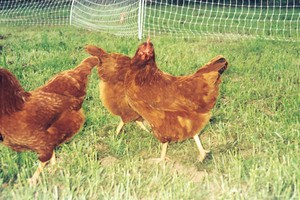
We'll be using field two which the chickens are now on and tearing the grasses to shreds and dropping their fertilizer. We've used them as weeders and feeders and will start to move them off to the next resting field. We started out with six Rhode Island Reds that were seventeen weeks old. They weren’t organic but they were being raised organic.
Layers are supposed to start laying eggs when they get to about twenty one weeks of age. So at the twenty week mark I started looking for eggs. Each day I would go out check the egg door only to be disappointed. This went on for fourteen straight days. Each evening after work I’d check for an egg. Here we are going in week twenty-two and I’m not seeing anything.

So, I thought what if I give them an inspirational speech? Show them what they are here for and hopefully get them thinking about their true calling in life. We had gotten carry out from the local Chinese restaurant the night before when I got this brain storm. The next day I took my materials out to the hen house and put one object on the edge of the pen and the other at the opposite end.
The chickens were out and curious as to what was sitting on top of their pen. So I started my speech. I told them how we were a small farm and they were here to help and that we were helping their species by ordering and using them in our system. Then I pointed to the left and explained to them that this was an egg carton. I explained what they needed to do in order to fill the egg carton so we could make money to help with their costs. Then I pointed to the right hand side and explained that the object sitting on the corner was a Chinese take out container and it could contain General Tzu’s Chicken, or Broccoli and Chicken and so on. I gave them a choice they could fill one box or the other. I explained that it was up to them as to what choice they made but that we needed to make money somehow.
I left both boxes there so as to continue the intimidation. This was all in good fun but our records show that they started laying a few days after that. I know deep down that I had nothing to do with there productivity but I love the coincidence none the less.
Buy – Local – From a farmer you know and trust, not a chain profiting off the word
31 Jan Sun 2010
It's the most wonderful time of the year
When Andy Williams sung those words,he didn't have in mind what we do. This is the time of year when we start to plan this seasons' vegetable garden and decide what fruits we will add to the existing landscape. The engines have all been tuned and oils changed. The tiller has been cleaned and hoes, clippers and shears sharpened.
My guess is all small farmers are starting to have this anticipation that some may say is cabin fever. I know we are not alone in our feelings. Tens of thousands of us are starting to go through the same steps. We hold out hope for the coming spring; we plan for the sunny days and envision what our plants will be bearing. We look to the interactions with our old customers and friends as well the potential for new relationships. But for the most part we all dream of spring and summer days to come.
Vegetable people will start to plan the garden layouts with what to plant and how much to be planted. We decide what seeds will be ordered and where everything is going to be placed then we draw the irrigation plan. We make sure we have all the parts to keep water flowing. There is anticipation about the coming season; each year is a chance to make better what failures we had last year, to prove to ourselves that we have learned and can overcome what we may face. It never turns out that way but we can dream.
This is that magical time when everything before you is full of promise, much like catching the sunrise when it’s still below the horizon and violet hues brighten the under-bellies of the clouds. The beauty of it makes you think that the day's potential is limitless. It’s that expectation of good things to come. Our thoughts are on how plants will be positioned in the limited space and what expected yields will be. We’ll take stock of what is in inventory and plan to purchase replenishments. Each year is a fresh start with new possibilities and new aspects to learn and knowledge to build upon. We look forward to the rewards that our hard labor reaps and the satisfaction we get when eating something that we’ve grown. We belong to a larger group of people who all have these same feelings, thoughts and anticipations.
This is the most wonderful time of the year for the prospects are endless. I can not wait to hook the tiller up to the tractor and break the season’s first piece of soil. The smells of a fresh crisp morning air so cold it stings the lungs. As the day progresses, temperatures inch higher and the odor of fresh humus wafts from turned soils. You get to see the nutrient rich dark chocolate soil breaking up as the cover crops and chicken fertilizer turn under to start to do their part for sustainability. We wait out the last of the winter days testing and tracking soil temperatures and watch long term forecast eager to plant the season’s first seeds and plants.
Then there is the other side of the coin. Everyone that does this knows about it, but we might not bring ourselves to speak or even think, except for a fleeting second. It is there and always present, it is the dark side that the regular public doesn't see but might catch in a news article. Like the dairy farmer in New York, this winter, who catastrophically gave up. There are heavy burdens and failure has great consequences to whole families. You have the inevitable crop failures, then equipment failures, plant infestations and weed over-population. Worst, not being profitable and going under and most horrific of all injury or loss of life. We all know the dangers, failures, foibles and hard physical labor that we are about to face, but we decide to do it anyway. We treat our job with reverence, respect and caution. Mother Nature has her own plans and we just hope to fit in them and try to do well no matter the circumstances.
So, good luck to all my colleagues this coming season may your animals be happy, planted rows straight, weeds under control and bugs beneficial. May the soils bring forth the bounty you so richly deserve for your sheer perseverance and determination. Your work is not in vain. Who else is going to help the environment, provide safe fresh food and replenish the earth’s nutrients if not for the small, sustainable farmers in the world? Which is why I think at this time even though you can't see the ground for the snow, it is the most wonderful time of the year.
Buy Local –From a farmer you know and trust not a chain profiting off the words
.19 Jan Tue 2010
What will you leave future generations?
Michael Pollan said it best in his book "The Omnivore’s Dilemma". He said that each and every day we make a choice on what to eat and that choice has a greater environmental impact then we think. For some there is no thought of where the food comes from just who is preparing it for consumption. Pollan was pointing out that the "Where the food came from" question is not present in the day to day normal cognitive process of deciding what to eat.
As a nation of eaters most of us don't realize that the food choices we make affect our environment. We have been so far removed from the making of our food that we have no idea what goes in it. Not only has this been perpetrated by the IFC but it was done specially to avoid the kind of scrutiny that the local farm movement is generating.
If we don’t see that beef processing companies import beef from other countries to make our hamburgers how can we make a value judgment at purchase time. I’ll bet you think that when you buy a hamburger, that it comes from a cow that at least lived in North America. That is not necessarily the case as has been recently pointed out in a lawsuit against a big meat packer.
No thought is given that the beef patty sitting on the bun before us has a relationship to the raised hormone levels in the water table and estrogen levels in male bass. But at its base that is what our choice to eat comes down to. Every day we decide to further the cause of local sustainable agriculture or benefit the Industrial Food Complex.
On one hand you have the small independent farmer that is trying to squeeze out a living by carefully tending the land and their animals for social, environmental, economic and human sustainability. On the other side is the vast IFC with ever increasing ways of chemically altering food, milk and juices for the sole purpose of producing these products in the least expensive way to gain the most profit. That in it of itself isn't bad, but it is the consistent failures resulting in illnesses, death and environmental degradation that make their practices deplorable.
That is how in the past most robber-barons made their huge fortunes. They took advantage of the less fortunate, less intelligent and in some cases just destroyed everything a person owned for their own personal gain. The cost to and negative impact on people and the environment does not matter. I mean the moniker says it all “robber-barons”. Food is one of the last great resources to be raped and pillaged so a few of our elite can make their personal fortunes greater.
You have a choice; you can make a difference globally by being just one person acting locally. It is happening now and has been happening slowly for at least the last twenty years. Those that are on the front lines see the progress. A couple of years ago, California registered the first increase in agriculture land in their State; stopping a decline that lasted decades. It is growing to such a point that the USDA is starting to take interest in the numbers.
The USDA recently sent out a mandatory census that looked at detail level data on growing and production and they are starting to offer incentives to help promote the local farm movement. Seven years ago I never heard of financial assistance for organic growers and or vegetable growers in general. It was usually just aimed at grains, water conservation, and nutrient management. These past two years I've seen two programs to help local vegetable farms.
Things are changing but you the individual is needed to participate. Barbara Kingsolver, in her book “Animal, Vegetable Miracle” wrote about the year she and her family spent eating seasonal, local foods. In it, not only did she highlight the adjustment to seasonality of foods but also to the plight of the local farm.
So the choice is ours to make. Do you want an open food source where you know where your food came from and can go to the source or do you want what is going on now? Recent news stories recounted the poisoning of a female who ate bad beef. Now that the court case has gone public the manufacturer had to divulge that the meat that made up this ground beef came from animal parts from two different countries, neither being America. If this isn’t an example of the IFC buying junk to put into the food supply to make a profit then I’m at a loss.
But it is us, you, me, and everyone that has a stake in this fight for healthy food. Never before have so many people been part of the same group that has the opportunity to be part of a grass roots effort. We All Eat. We can really make a change to affect our future and truly make a difference in the history of man. I am talking about the safety of food and the preservation of our ecology. We might like different things but we all eat. If you just chose local once a day over the IFC imagine the change we could all affect. I’m not saying that everything consumed should be local but if a lot of our choices are for local foods then the IFC’s will take notice and act accordingly. Of course we could have an outcome like free range chickens (see. Beware of Free Range) but I hold out hope for a better result.
It is just one choice made multiple times each day. As an individual you can choose whether to promote the IFC and all the damage being done to the environment (think feminized bass) or you can choose to support your local community, local families, local businesses and your local food producers. The money you spend at the farm gets spent in the community by the farmer. The money stays in a local bank; and is used to hire local labor be it skilled or general and used to purchase supplies from local businesses.
It is your choice, start slowly make a resolution to eat at least one local meal a day. We are not asking for you to be like Barbara Kingsolver, but to give serious thought about your children’s, grand-children’s and great-grandchildren’s health and the environment we will leave them.
Choose to make sure the future generations grow up in the least toxic setting possible. Become aware of how the IFC is poisoning us and the environment for their short term profit. If that doesn’t get you motivated to support your local sustainable farm we will all fail our future generations.
Buy Local-From a farmer you know and trust, not a chain selling the concept
.10 Jan Sun 2010
Why I should stick to growing Or
Go with your Strengths
We had started year three of our growing in a good position. We were using crop rotation and still figuring out the irrigation system but we felt good about our knowledge. The deer were still beating us on the blue berries but the strawberries were coming on strong and sweet. The barn was holding up but was showing its age. It was built in the 1950's as a dairy barn. We didn't have the money or the experience to do anything major with it so we kept an eye on it, making it water tight and let it go until the future.
I am not a handyman or a “mister fix it” by any standard. If fixing means tearing down or destroying then I’m great at it. One of the first successes I had as a handyman came when we were able to open the barn doors in the back of the building, that the previous owner had boarded up. The second success came when I built new doors and was able to hang and close the barn back up, mostly. My first mistake in the project came when we closed the doors for the first time. We had measured the opening and made the doors from plywood and wood trimming. Once hung and closed we realized the doors weren't wide enough to cover the entire opening of the barn. You know, I measured twice but I was not the only one doing the construction. However, pointing fingers never moves you in the right direction so why dwell about fault.
I added wings to the doors and sure enough there was no opening to allow small critters inside. So that success started me thinking about other small projects. Like a moveable, self contained, floorless chicken house and pen, one large enough to hold twenty-five birds.
It has since been referred to as both the Spruce Goose and the Titanic, neither names invoking any thing other then abject failure. But I digress. I've never been good with building things as a matter of fact I excel at the complete opposite. I learned earlier on that destruction was my forte. I've put holes in cinderblock walls with a sledge hammer in order to place in a doorway. I’ve torn down shacks with crow bars and sledge hammers. I can tear things apart with the ease of an expert. Putting things back together though I'm the kind of person that has spare parts when everything is completed. I'm much more comfortable bringing down a dead thirty foot oak tree than I am cutting a forty-five degree angle for chair molding. Even though I knew I was not a handyman I tried to build the moveable pen.
We started out with six birds and bought our first hen house. It is a great little moveable house and pen. It is completely self sufficient. It has water, food, nesting boxes, roosts, bare floor and a small enclosed yard. It is called a Henspa. It was more than we wanted to spend but we bit the dust and placed the order.
The house was small and would hold up to twelve hens though nine is more hospitable. With green manures and winter cover cropping we had plenty of fresh grass for the hens to eat. We could put the house in our gardens and move it every other day. The hens got fresh grass and the garden got nutrients for the coming growing season. For the first year this worked well but we had more orders for eggs then we had capacity. It was nice having a waiting list but we needed to add to the hen population.
I started drawing the new, bigger portable pen a year before we started building. It would have everything that the other house had but this would hold twenty-five birds, comfortably. So I took the dimensions of the real house and scaled it up to handle the increase in hens. Most of you are already getting the picture. I think the only thing I can say is that I didn't rush into things. I drew up the plans with measurements from all sides, heights, widths, lengths, floor plans, nesting boxes and roosting poles, egg door and outside pen. I had all my drawings (14 different views with measurements of various sections) and a materials list before purchasing a single screw. I was on top of the project.
We cut all the pieces of wood and started assembling them. Adding sides to other sides it started taking shape. We got the nesting box and egg door in, the second floor and roosts, wheels and pulley system and feed box. We pulled it out of the barn to put the roof on. I can't begin to document all the failures and in what order they took place. All I remember is that I would fix one thing and another thing would break. But, being one that doesn't give up easily, I would fix the next problem only to encounter another. So on its maiden voyage it hit ground and a support pole broke on the wheel mechanism and it sank into the ground (think Titanic). I then heaved up the wheels and support beams that would carry the whole box. I fortified pullys, cables and support hooks.
On its second maiden voyage we pushed the lever down to lift the box up off the ground, and on its wheels, but we couldn't get enough clearance to move the box off the ground (think Spruce Goose). After two years and five hundred dollars in materials (at least that is what my accountant says, and if I wasn't married to her I would've questioned her book keeping skills) I've somewhat given up on it. When asked about it I joke that it was designed by the "Three Stooges" and built by "Fred Flinstone".
It sits out by the barn mostly built, no roof, no pen, no handles on the egg door; it just sits there and mocks me. I may have stopped tinkering with it and often think about accidentally setting it on fire when weeding but I'm not just ready yet to give up on it. Besides, it’s been holding up pretty well these past few years.

Buy Local - From a farmer you know and trust not a chain selling the concept
04 Jan Mon 2010
Winter Setup.
Going into the winter of our first year with the chickens, we were worried that they would freeze. Okay, my wife was, I figured they already had a down coat on, how cold could they get. Besides being on the "Recovering Species" list, Rhode Island Reds were bred in a cold northern climate. Our research pointed us to birds raised in the northern portion of the nation. The rational was that they are use to the climate and can withstand normal to hard Maryland winters. RIR are good down to below freezing if it drops lower than that, you need to provide some kind of heat source in their house.
One of the most important keys to winter survival for the hen is housing. They need to be in a draft free house in order to maintain body heat. Of course the more birds you have the better able they all are to keep each other warm. But you can quickly reach a space issue which causes competition, which causes pecking.
The six we had that first winter would crowd very close in order to stay warm. We had what we refer to as the winter setup for the two moveable houses. There is a second floor to the house with the floor being a wire mesh. This allows air circulation and an easy way to clean the leavings from that top part. For colder days there is a tarp that is fit to cover the wire mesh. The tarp is then covered with pine shavings.
Every other day a little more shavings are put in. As the layers of pine shavings build the bottom starts to compost and provides a small amount of heat to the second floor of the pen. We keep a nose out because once you get a slight whiff of ammonia then their environment has become toxic. For the past three years we have been lucky on that account. Their egg production slows a little but it is more a lack of light then it is being too cold for them.
When it snows like it did this past week (we had close to twenty inches) we move into the second phase of the winter setup. This entails covering the bottom floor of the inside and the attached outside pen with pine shavings. We also cover the outside pen with a tarp to break the wind. These areas too will get the sniff test. One of the problems with confined housing is the build up of fecal matter and then the corresponding ammonia.
This type of environment promotes respiratory ailments and other problems that can be fixed with anti-biotic. In an organic setting, having to give a bird any drugs, hormones or synthetic substances takes it out of certified status. So we are very careful about smells and the amount of fecal matter in and around the house in general during the winter. They get fresh litter on the floors at least once a week or more if the house starts to smell anything other than fresh.
Another learning experience for us was the feel of the bottom of a hen’s foot. On a RIR it is a soft, smooth, leathery feel not a hard pad like a dog or cat would have. Because of this soft tissue they are susceptible to injury. If the bottom of the foot gets cut, for any reason, it will usually get infected because they frequently step in fecal matter If not caught in time this infection will eventually kill the bird and could possibly contaminate the rest of the flock.
Keeping an eye on the birds for any type of limp helps catch the problem early. If there is a limp (sometimes referred to as bumble-foot) take a look at the bottom of the foot. Make sure it is clean enough to inspect the skin. The bottom of the foot should be soft and pliable with no cuts, sores or abrasions. If you see an open wound you will need to clean and dress it. The bird should be confined to a hospital pen with fresh, clean pine shavings. Clean the foot and change the dressing every two days.
Frost bite is another problem a hen can face during colder months. I’ve read that bad frost bite is serious and needs a veterinarian to fix. A small amount is not fatal but if nothing is done to change the environment a hen can die from the exposure. The first part of a chicken to get frost bite is going to be their comb and waddle. Depending on the bird if the temperature is below freezing then you want to provide heat twenty-four hours a day. We use heat lamps and an electric outlet that senses temperature. If ambient temperature in the hen house drops below thirty-four degrees the light and water bucket warmer come on. When the inside temperature reaches forty-five degrees the electricity is turned off. This seems to keep them comfortable because they are starting to have a consistent lay rate.
We’ve had the biggest snow fall since getting chickens and this has proven to be quite overwhelming. We knew the storm was coming so we moved all the houses into covered spaces for protection but still be able to get the tractor in and be able to clear some ground for them. When we finally let them out, the first thing they started doing was pecking and eating snow. This is not good for them because like you or I, eating ice has a tendency to cool our body temperature. With a chicken it is a little more drastic but what can you do. I told them at least don’t eat the yellow, brown or greenish brown snow! They looked up for a second and went directly for the colored snow anyway, go figure.
Buy Local - From a farmer not a chain using the word to generate sales.
21 Dec Mon 2009
Sausage day
Sausage day is coming up. It is a family tradition dating back to when my great-grandfather owned a lunch counter in Baltimore city. He would make sweet Italian and hot sausage at Christmas time and my grandfather and his siblings would have it for breakfast Christmas morning. We once tried to date the start of our Christmas tradition when my grandmother was in her nineties. She said that my grandfather made sausage before they were married. At the time we tried to date the tradition my grandparents would have been married more than seventy years. We figure there was another ten years before the marriage and since the interview it’s been another twenty years. So we guess that we are embarking on the century mark for this Christmas tradition.
The tradition is the same but how we make it has changed. Time marches ahead whether we chose to acknowledge it or not, family members pass but the tradition is of its own making. We still get together and make Italian sausage for those left in the family. My generation is the last generation eager to keep the tradition alive. There is something melancholy to that thought but I’m sure when my great-grandfather brought home his sausage for Christmas he never had a thought that one hundred years later we would still be using his recipe and making it basically the same way.
Automation changed the process that my grandfather (Poppy) and his brother would have to accomplish by hand. First, they would hand grind the meat; then have to hand stuff the casings. Now, instead of grinding the meat ourselves we have the local butcher do that. Around 1940 the old Esskay meat packing plant in Baltimore retooled and got rid of all there old grinders and stuffers. Poppy’s brother got one and automated the stuffing process. That machine was passed down from my grandfather to a great-uncle then back, to his son (my Uncle Nick). I was next in line of succession but that wouldn’t be until Uncle Nick gave it to me. We used that machine until 2001 when we had to move my grandmother into an assisted living facility.
Each year we start off with a traditional toast to all those who have come before us and have made this tradition possible and we remember all the mothers, fathers, aunts, uncles, brothers and sisters. We reminisce and bring up stories of sausage day pasts. Uncle Charlie and Aunt Helen are usually the first names to surface. Aunt Helen was a saint mainly because of Uncle Charlie. God love him, Uncle Charlie was a gruff, no nonsense Italian. He served his Country in WWII, his Church and his community hospital. He was a man with many talents but I remember him best for his dogs. He trained one dog to get tools, shoes, mail, the paper, clothes, rags you name it. He taught the dog the difference between a crescent wrench and a hex wrench, a hammer versus a screw driver, a flat head versus a Philips screwdriver. This dog was the brightest dog I have ever seen in my entire life.
One scene sticks out more than any other in all the years I’ve been involved and that was when Uncle Charlie passed the machine down to Uncle Nick. It was the last time I saw Uncle Charlie on sausage day. We had finished for the day, everything was packed up and clean and we were getting ready to leave.
It was a simple act but one I had never seen before. My Uncle Charlie, being frail at this point in his life, went up and hugged my Uncle Nick and said “Well Nick its all yours now”. My Uncle for his part played it off and said "What are you talking about, you'll be back". They hugged a bit more kissed each other on the cheek and Uncle Charlie walked up the stairs. I didn’t realize what had taken place until later in my life. What I had witnessed was Uncle Charlie passing on the lead of our tradition to my Uncle Nick. Uncle Charlie lived on a few more years and we would take him sausage but that was the last year he had the strength to attend.
Uncle Charlie taught me how to properly stuff the casing with sausage, the right feel of tension on your fingers tips and in the casing it self. He taught me to make sure all the air was out of the casing, not filling it too tight or limp, getting the casing on the feed tube without tearing it and on and on. I was eighteen when I finally got to sit in the chair to do the stuffing and I think I was twenty when Uncle Charlie finally told me I was doing it right. But each year as Uncle Charlie was telling me what I was doing wrong; Uncle Nick would wink and throw me a knowing smile. I had apprenticed for four years prior to even come close to sitting in that chair.
We had jobs that were segmented by years of seniority. We had the mixer, the primary and secondary stuffer, the hanger, the engineer, the closer and the casing prep. The lowest level was that of hanger. As a hanger your job was to take the finished sausage from the closer and hang it over the rail. It was your responsibility to make sure the hot sausage did not mingle with the sweet and that none of the sausage fell to the ground. You always had to be ready when the closer was finished with the next piece.
The second to lowest was closer. This person was responsible for tying white string around the end of the sausage if it was sweet and red string if it was hot. Next on the list is engineer, this person turns the stuffing machine on and off as needed. When a casing is fitted to the end of the feed tube the secondary stuffer gives the ok to start. He or she then gives the sign to turn the machine off if the sausage is filled or the casing breaks during the process.
Next is the secondary stuffer, one of the two top ranking positions. Next to Mixer the secondary stuffer has the most important job. The casing has to be filled just right. To much meat inside and the casing will burst. Not enough meat inside and it will not cook properly or evenly. This person must have great touch and be adept at putting the casings on the feed tube quickly, lest everyone waiting to do their job starts to harangue and belittle the secondary stuffer. It is a hard room and everyone rides everyone else when ever possible in that playful ribbing way. We make sure everyone gets their fare share and no one person is singled out all the time. But, the secondary stuffer usually is the one with the bull’s eye on their back.
The primary stuffer is the person that puts the mixed meat into the hopper and pushes it down to go through the screw mechanism into the feed tube. With the old stuffer this was the most dangerous of the jobs with more than one person in the generations losing the tip of a finger. I unfortunately am in that group. With the new machine there are no more dangerous jobs, just speed and air.
The casing prep person washes, tests and sizes the casing for use. They then place the finished product in a bowl of water for later stuffing. Lastly, but most importantly is that of Mixer, the mixer is responsible for adding the ingredients and mixing them consistently into the meat. Taste is the mixers main responsibility. You can tell by look how well the ingredients are mixed and when there seems to be a good mix we get ready to cook some. As the meat cooks aromas fill the air that brings thoughts of Christmas’s long past and times spent with family doing this same thing year after year. We sing carol’s and tell jokes and catch up on family from the past year’s events.
Then comes the tasting, when cooking is completed; everyone tastes the finished product and comments on what they feel is good, bad or indifferent. This is a big source of contention as you may have guessed. There are times when no one comes close to agreeing and then sometimes we all agree. The final say comes from the mixer who is my Uncle Nick the senior member of the group. He listens to everyone then usually adds a little bit of something to tweak the taste. He may need to add more fennel or more red pepper depending on taste. Once that is done we plow through stuffing between one hundred and one hundred and fifty pounds of pork. It makes for a fun but exhausting day and a chance to remember all those that came before us.
Buy Local – From a Farmer not a chain hard selling the fact.
16 Dec Wed 2009
Weeding is a four letter word
We seemed to always take pictures of our vegetable gardens in the spring when they looked clean and weed free. I find very few pictures of established gardens in late July or August. This took me all of one second to figure out why. One word tells it all and conjures up the images that we lacked to capture digitally. Weeds.
Weeds, is a four letter word on our farm and probably every other farm organic or otherwise. We have spent more time then I care to admit testing weed suppressants, retardants, defoliants and pre-emergents. Being organic you really are limited with what you can use but I think we are gaining the upper hand. We have hands, hoes, heat, spreads and sprays that we use in our arsenal along with some mechanical means.
The first couple years of growing, the weeds took over like they owned the place. That first Spring we started with a very small garden but larger than any prior. We weeded ever day, seven days a week. Something always needed weeding and we would attend to it. We never thought that missing a couple of days would doom us but it did. In June of that first spring I was selected to give a presentation, as part of a seminar, at the Kennedy School of Government. My thought was three days in Boston and away from weeding can't be too bad. Besides the stress of the actual presentation everything was fine when I got back to the farm. We had weeds but it looked manageable.
That Saturday it rained and kept raining until the following Friday. Did you know that weeds grow in the rain? Yep, no sun in sight but these things grew and the water helped other weed seeds germinate. We soon learned that weeding is one of those chores done rain or shine.
Our main garden was under siege, we spent the better part of five days getting the weed pressure down only to put the corn in danger. At times, we felt like cartoon characters bouncing from one place to another. It was truly a losing battle in all senses of the words. Yields were down; we lost complete crops like carrots and melons. Overall we got a quarter of what we had expected that season. But true to our mission, that winter we hit the books and tried to come up with a plan to thwart the beast that stole our nutrients and minerals and made our vegetables puny.
Winter of 2004 we learned of and leaned towards black landscape fabric. We could put soaker hoses down, lay the black fabric over it and place plants in it. Thus eliminating light to all weed seeds. Or so we thought. At first weed pressure was minimal. We literly had over 95% of our soils covered with landscape fabric. We soon found that the wholes we punched in the fabric to plant the seedling was sprouting weeds. Weed encrouchment from the sides started too. I quickly learned the following: once these things catch fire they burn and burn fast! Two, the fabric will get sucked up and into the mower if you get to close while cutting the grass (see. Keep your grass short). By the end of summer we lost out again to the weeds. It took six people ten hours to clear all the weeds out such that we could pull the fabric up.
We bought a mechanical tiller, one of those small personal tillers. That lasted one year, it was pretty effective but we've never been able to get it to start again. I spent time changing plugs, oil etc., but it refuses to work. It was good between the strawberries and corn rows as long as you didn't hit the corn stalk and could get it started and keep it running.
We had the worst time using straw and newspapers. Not only did it not work for us it actually added to our weed pressure. We wasted water wetting the paper and straw only to have it dry out and blow away. Then we learned about corn gluten as a pre-emergent. A pre-emergent is a type of process that stops seeds from sprouting. It stops the emergence of the seed, any seed good or bad.
In the spring we tilled our production bed and plant seedlings. The little plants will be in rows and can withstand the broadcasting of corn gluten. As long as a plant has an established root system, corn gluten is not going to affect it negatively. Because the corn has a NPK rating of 9-0-0 whatever is around the gluten will get a jolt of nitrogen. We've been using it with limited success for the past two seasons.
Flame weeding is an easy way of getting rid of weeds but it is not systemic in its application. The leaves will curl and some plants will die but most plants remain viable due to their root system. Plants that have rhizomes are one type that comes to mind. It is best to flame weed after a rain to reduce the spread of an errant flame or burning leaf. It is always a good idea to have some water handy just in case a silo catches fire or something (see, Are We done Planting).
We have also found a concentrated vinegar and lemon juice mix that works as a topical defoliant. It doesn't kill the whole plant but it does retard its growth and on a subsequent pass it can kill the plant. Once again rhizomes will defoliate but you will not get to the tap root.
This year coming up we will focus on cover cropping as weed suppression between rows of vegetables and fruits. This seems to work pretty well from what we've read and seen. Our arsenal is vast and our knowledge improved but no matter the outcome Weeds is a four letter word.
Buy Local - From a local farmer not a chain that just uses the word.
p.s. we appologize to all our and every english teacher reading this!
09 Dec Wed 2009
It is suppose to be a hen
The first flock was seventeen weeks old, their were six of them all layers. One of the first things we learned was that you did not need a rooster in order to get eggs from a hen. After hearing stories of insane and attack roosters, having hens was just fine by us. We had gotten comfortable with cover cropping, field rotation and mixing grasses and legumes for the chickens to forage. Family and friends truly liked the taste of the eggs so we felt we were ready to expand.
When you get hens as day old chicks they are suppose to be hens. Because we didn't know any better we expected that we would get hens when we ordered a total of fifteen one day old hens. I had seen how they sex chicks (determine male or female) and some chicks are known to be hens based on their color (sexlinks). We have Rhode Island Reds and apparently they are not as easy to sex as one thinks. We didn't know this but found out later with on the job training.
We got flock two, fifteen, day old chicks, and raised them organically. We moved them out to the barn when they were four weeks old. They had feathers but we put a heat lamp out just the same. We had started to build a moveable pen so we were in the barn a lot that spring. As the chicks grew I started noticing one that was bigger than the rest. I didn't pay much attention to it until it started sounding different then the others.
I know why city people are made fun of in rural areas. Here is a primary example of why we as urban dwellers are looked upon with a degree of skepticism from our rural neighbors. I called the farm store and asked about our recent chicken order. "Did we get a rooster with the hens"? I asked. "No, probably not" was the answer then followed by "we can't guarantee all hens at sale but probably not". So I described the chicken that was more developed then the rest and said that it sounds like it is trying to crow. "Yep," she said you got a rooster.
Without even thinking when she said it was a rooster I blurted out a question that, as the words were forming and audiblizing, I knew was the dumbest question a supposed farmer could ask. There are two things you can do with a rooster on a farm. One is to eat him. The other is to let him fertilize the eggs. That's it; those are the only things roosters can do on a farm. A male chicken has two functions on a farm he is food or Don Juan for the ladies.
Of course I knew this, but I was forming the question, and the sales clerk on the other end was hearing it, and I couldn't stop myself. When she told me it was a rooster I was dumb founded "What am I going to do with a rooster," I blurted out mindlessly. There was dead silence on the other end of the phone line or maybe muffled laughter I don't remember. What I do remember is questioning why I had just asked such a simple question. She composed herself enough to say that indeed we could eat it or we could you use it for its reproductive capability. Neither of which we wanted or planned for so I ended the conversation quickly. So the damage was done, at least I hadn't given her my name
We never wanted a rooster, we are not at the processing stage and we didn’t want to hatch chicks either. With our luck if we hatched chicks we’d get more males then females. Rooster weren’t a thought until we started seeing and hearing the signs. By that time it is too late, it is yours. We tried to sell it, then offered to give it away but had no takers. Over time we have found that there is a third function a rooster can serve and that is ambience, our customers like to hear it crow and often comment on him. They get to see a beautiful Rhode Island Red in all his plumage and in full throat. Of course I've learned the mating signs so I'm not caught off guard when he's in the mood and we happen to have parents and children watching.
So the Rooster lives on with a run of the yard and hens to keep him company and protect. So far their have been no signs of insanity, delusions of grandeur or unprovoked attacking. Oh, and the rooster is ok too.
Buy Local - From a farmer not from a chain hard selling the word
02 Dec Wed 2009
Another story in Water Conservation
We collect rain in order to water our vegetables, fruits, herbs and the occasional fire that might start while weeding. Putting a well in is too expensive but we found black holding tanks to be in our price range and capability.
A few years back we put in a three thousand gallon black water tank to collect the rain off of the barn roof. We quickly found that three thousand gallons wasn't enough to last a month let alone a season. It would take a rain fall of about three inches to fill up the tank given the size of our barn roof. In the spring, in Maryland that is not a problem. As the growing season stretches into July and August getting rain becomes problematic.
We purchased a second three thousand gallon tank and placed it on the other side of the barn. We were using soaker hoses at the time and overhead watering for the corn. Overhead watering was one of the problems with growing corn. We've read that overhead watering can inhibit pollination. An ear of corn gets pollinated through its silk strands. Each silk strand is tied to a kernel of corn on the cob. If that silk strand does not get pollinated then that kernel tied to it will not form.
Pollen comes from the top of the corn stalk from the tassel. If you shake a corn stalk, when it is pollinating, you can see thousands of specks of dust particles (pollen). Those particles need to land on the silk in order to work its magic. It seemed logical to me that overhead water would hurt this process more than aid, that wind was the better vehicle by which to transfer the pollen to the silk. You hear about pollen counts being down after a rain. I think with corn you want as much air borne pollen as possible because the odds are better for all silk strands pollinated.
We had to rethink overhead watering, not only were we using a lot of water it wasn't nearly enough for the corn. Research and talking to other farmers led us to drip tape. Drip tape has turned out to be the best irrigation solution to date. Drip tape is lighter than soaker hoses and is solid with little openings spaced every six to twelve inches. We planted seed accordingly and could deliver water directly to the plant and the plant only. This saved us a tremendous amount of water and allowed us to deliver water to further distances with less waste and evaporation.
This year because of proposed expansion we decided we needed to purchase two additional three thousand gallon tanks. We went in with another farmer so we could share transportation costs.
I was sitting in the dentist chair on Friday and I heard someone behind me mention something about a phone call. Then the assistant said to me you can go. My mouth was already open so it couldn't drop any further, "me?" Nothing good ever comes from a phone call in the middle of a dentist appointment.Especially with you sitting in the chair, mouth agape and suction hanging from the side of your lip.
I managed to get up, my mind is running the scenarios, I get to the phone and it’s my wife. She's okay and no one is hurt or otherwise. But I do hear that the tanks have been delivered to Harry (the other farmer) and the eighteen wheeler is on its way to our farm to drop off the other two. I said "tell them to wait I'll be there in an hour".Not much I could say or do at this point so I went back to chair and finished
A three thousand gallon vertical water tank is over ten feet in diameter and twelve feet high. The good news is it only weighs four hundred pounds. Because of its size the bad news is its unwieldiness. But I jump ahead; getting them out of an eighteen wheeler is the first hurdle that needs addressing. Did I mention that I do my best work under the gun? That is an expression that lazy procrastinators use to disguise the fact that we hadn’t prepare ahead of time. Thus making the delivery even more difficult then it needed to be. This time however, I have the perfect excuse. They delivered early. We weren't supposed to get the tanks for another couple weeks. Still it would have helped to have the wood planks so we could roll the tank off the truck but why make it easy?
I did get home and meet the driver. Getting the tanks went okay but I had some scrapes and busted one of the lids, all minor so it was a successful delivery. Moving them a tenth of mile and setting them up was another story in water conservation.
Buy Local - Live, Establish, Support Community Farms
29 Nov Sun 2009
The hits just keep coming
We found that Roaster was ill this past Saturday. She is one of the first six chickens and is a prolific egg layer. My wife noticed that she was not herself. She was listless, wasn't eating and or drinking and had yellow diarrhea. We pulled her from the flock and put her in the hospital pen.
We started to give her an examination. Everything was fine except her belly area. It was inflamed and hard. We thought for sure we hade a stuck egg so we prepared to do an exam of the vent and cloaca to get the egg out. We got rubber surgical gloves and lubricant. We gently felt around and she didn't move, squawk or anything. To me this was a terrible indication that and the fact that we could not find an egg stuck or otherwise.
That night we spent most of the night tracking down her combination of symptoms. Something this difficult was hard to find on the net and at any of the university sites we had. We poured over books and eventually sent an email to a poultry professor at NC State. We explained all the symptoms and what we had felt in the cloaca.
What we got back hit us square on. It was the Monday before Thanksgiving and her prognosis was dismal. He told us that it was possible she had one of two things, ovarian cancer or e-coli poisoning. The line that sent chills and made us fold was that either way she was in severe pain. He went on to say that even though she would be in extreme pain she would not exhibit signs of distress. I understood what he meant and that we needed to consider her quality of life.
In the mean time the battery on the tractor went dead and we still had to get the newly delivered water tanks moved and up righted and the big chicken house moved. I had charged the battery only to find it did not hold a charge. I took Wednesday before Thanksgiving off so I could get a battery and keep an eye on Roaster. We had started her on anti-biotic the night before in hopes of it being sepsis and getting her well.
I was feeding her medicated water by syringe and she seemed to be drinking as much as I could give her. I had read that boiled egg was good for a chicken that was not eating. I know it sounds bad but we tried it. She wasn't eating but that was secondary to drinking. She kept drinking so we kept feeding her the anti-biotic water. The next day I went and purchased a new battery for the tractor.
I put the battery in the tractor and the tractor would not crank over. I left it to check on Roaster. When I saw her I thought she was already dead. She opened her eyes when she heard me come into the stall and started to vomit blood. It was time. I could no longer let my inadequacies continue only to let her suffer. I will spare myself the re-telling of the events that happened next but she is out of pain now and I am not.
This experience only reenforced our earlier thoughts about caring for animals on a farm. There are people like myself that have a very hard time dealing with the mortality. I've heard that there is no mercy on a farm but there is. There is just no mercy for the farmer when the hits just keep coming.
24 Nov Tue 2009
In the Future
We do a lot of research in order to learn what we are doing be it right or wrong. Farming is one of the few professions that I know of that is backed by University researchers, extension services and educational knowledge resources. We do contact and communicate with subject matter experts from around the world and are currently doing some field research with a local University.
One of the things that I like about what we do is that there are many variables in determining how to handle a situation or problem. My thought is to keep an open mind and run through them as best I can. I always have in the back of my mind "what if"?
I look to the future 200, 300 or more years from now; people will still be writing books, songs, movies, plays and doing farm research. My next question is what will they be studying? What will they be writing or singing about? How will layers and broilers evolve? What will organic standards be and materials used? So I read and try to become as knowledgeable as possible on the topic at hand, but I don't constrain myself to what I've learned.
I don't mean to imply I re-invent the wheel every time we have a problem or a situation arises but I always question if there is a different way to the same outcome. The hens would be my best example of what I mean. Who's to say that we can not communicate with the birds and in turn they communicate to us?
You can find the minimum square footage of space for the bird (inside and out) roosting and nesting space, feed and water space and optimal temperatures. You can find out about bird behavior and characteristics. All that goes out the window with us, mainly because we exceed all maximums when it comes to housing, feeding, watering and foraging. We touch our hens often, picking them up, moving them, inspecting them or just stroke their backs. Some run, most once they know you are after them just kind of squat, push their wings out some and wait to be picked up.
Behavior is another thing, we know there is a pecking order and we try to discourage pecking. We don't de-beak so it takes extra attention to make sure all are calm. If there is no compition for resources they usually don't have a reason to enforce the pecking order. Happy is a human emotion that at the begining we never associated with our hens. We just thought there was healthy and unhealthy. But we have learned that the hens are indeed happy. We talk to our chickens and they respond.
Just by walking towards the pen the flock comes to us and it is one of the funniest things I've seen. All of a sudden one bird will see us and come running, wings flapping dust flying, and then another and another until you got the flock running flopping wings and all. Some get about two feet off the ground others kind of skip and fly. It always brings a grin to whomever is watching. It is not just us either; I've noticed customers walking over to one of the flocks to watch. They can be at the other end of the pen but when they see someone they dash to inspect the voyeur. The Pavlovian crowd will say it is a learned response because of us bringing food and water. Maybe, but we go there more often empty handed getting eggs than we do with food and water.
We replenish stores every other day, however there is enough water and food for four days (in case of emergency like we get caught at work). Can the hens associate food with us even though they have a constant supply? I don't know the answer, all I know is we can call them and they come. We talk to them and they calm down, even during the most stressed of times. When we had the dog attack we had two badly wounded hens and we had to clean and dress the wounds, frequently. There was some agitation as would be expected but we kept shushing them and they would calm down. I could feel it as their body relaxed and hear it when the squaking stopped.
Then there are the times that a hen will go to far and loose her way back to the hen house. At dusk it is in their instinct to get to the highest point and roost there, much like wild turkeys. When the hen count doesn't add up we'll start to walk the grounds and talk. Inevitably the hen will respond back with a low gurgling clucking. We'll keep talking until we find what tree and what branch she occupies. We'll then just pluck her off the branch, she'll squawk but when we say shish, in that soothing tone and cadance, she calms down and goes along for the ride. Once back at the house we place her inside and close the door. Of all the research that I've done I haven't come across all the behavior we observe with our flocks.
But, we talk to our hens from day one. You spend a lot of time with them at the beginning making sure their food and water supply is clean and they are warm. I keep from anthropomorphizing but by observation I know they have decision making capacity and can tell the difference in voice, tone and timber. Broody decided to stay with flock one, cognitively or not she made a choice to stay instead of going back to the barn and being alone or going to her own flock which was stressful. She apparently was less stressed with a new flock than she was with her own and went there.
As I've written before we are a humane farm and that philosophy transfers to the animals themselves. Fights are not allowed and are mostly stopped by me yelling. The tone, timber and reflection in the voice are enough to break their attention which in turn settles them down (see: My Neighbors Must Think ...). Most of the time that works, then there are times that I need to just get in between them. I've actually taken to placing the most aggressive, of the birds outside of the pen and let them forage. This in turn has helped a lot on flock behavior.
For the most part there is harmony among the flocks and they are healthy, energetic specimens. But, the time is coming for the first six. They will stop laying and we will have to process them in order to cut costs in an attempt to be profitable. Yes, profit, we are making a decision based on the profit motive. But, it is not at the expense or safety of our customer’s health.
As has been written on these pages before this is a very personal, agonizing decision for us. We keep putting the decision off because the birds keep laying two to three eggs a day. There will be decisions made that monetarily and emotionally will be hard but not now, that is still in the future.
Buy Local - From a local farmer not a chain hard selling the word.
17 Nov Tue 2009
Maybe this will be the year
There were hundreds of little experiences with my grandparents, parents. aunts, uncles and in-laws, that when taken as a whole, have led me to where I am today. My father liked to grow tomatoes and camp. On those camping trips we somehow always ended up at a farm. One of my earliest recollections was with my father stopping to buy eggs, I remember him talking about the freshness of the eggs coming right from the farm. He would buy fresh corn, tomatoes and whatever else they had. That night my mom would make dinner with what was purchased.
My grandfather owned a restuarant for awhile and then sold fruits and vegetables in the city. I can remember the smells the fast driving as he was picking up or delivering cases of fruits, vegetables and herbs. Then there was my father-in-law who put a garden in every year and every year it seemed to get a little bigger. He had perfect rows and would tend them daily often imparting bits of wisdom. I love to cook but at the time I was still in college and didn't have a thought of growing anything. But I loved his daughter and I wanted him to like me, so I helped and listened to him all the same.
There is this paradox with what we do. It is incredibly hard physically, mentally, emotionally and fiscally. by the end of the growing season we are drained in every aspect of being. Yet each year as winter turns to spring I start to get anxious. I can't wait to hook the tiller up to the tractor and turn that years production garden under. I'll hook up the water tanks to collect the spring rains and torture some poor plant by planting it early and trying to keep it warm in the frigid air. Always testing ways to get things planted earlier then planned.
I'll dream of the corn and tomatoes to come while testing the soil temperature and waiting for the slightest change in weather. But there are the long, hot, humid, sweaty days that will come with all this anticipation and the back breaking labor of planting, weeding and re-weeding. I'll look back at what we earned last year, what pains we went through, how much time we spent and logically tell myself it just is not worth it.
Then a small voice inside will say, "This is the year. This year will be the year that we really make a profit. Our name will get out and people will come to the farm and purchase". I think of all the little simple acts that have taken place in my life and I know I'm where I'm supposed to be doing the things we do. Besides who is to say, maybe this will be the year.
Buy Local - from a farmer not a chain hard selling the word.
08 Nov Sun 2009
Things are still heading in the right direction
The first few years in the house were very trying while at the same time we were transitioning from small gardener to large gardener. We quickly learned that the experiences we had in a smaller plot of land did not particularly prepare us for large scale production.Problems are magnified on a scale that was larger than we anticipated. So, in the beginning crop failures were more frequent than successes and weeds, insects and poor nutrient management seemed to have center stage. We started small and increased slowly when we thought we had a handle on the growing aspect of a particular fruit or vegetable.At the time we were just starting to learn about field rotation, cover cropping, green manure and other soil management techniques. It took us close to three years to get comfortable with our ability to replenish the soil nutrients and minerals naturally without the need for doses of organic fertilizer. Among the volumes of research we read every book Joel Salatin wrote, we studied the Rodale Institutes literature and course offerings and talked to as many farmers as possible.
The more we learned the more we learned that chickens would be needed to augment our soil fertility practices. So we took the plunge and bought six seventeen week old Rhode Island Reds. It did take us some time to come to that decision but the type of hen we would purchase was easier. Rhode Island Reds are on the recovering species list and they are a heritage breed that is a dual bird. They are dual purpose for their meat and egg laying capabilities. Because chickens were cross bred for one purpose or the other (eggs or meat) RIR fell out of favor with farmers. When you can get a chicken to reach five pounds in ten weeks and it takes a RIR thirteen weeks the decision is made for you.
Since we've added chickens to our soil conservation effort we have been able to cut down on the amount of organic fertilizer we purchase. I should do a cost analysis on purchasing feed, chickens and time versus purchasing fertilizer. My guess is that just purchasing fertilizer might be less expensive and less time consuming but then again we wouldn't be getting those wonderful eggs.
My wife and I were sitting down to lunch when my phone buzzed. I answered it and it was the local organic market calling about our eggs. Afterward, my wife said I turned white as a sheet. I can tell you when I said hello and the voice on the other end said "Hi, this is Sheila from the Market" my appetite dropped and my mind went into a spin. It seemed like minutes as she told me why she was calling. I heard "A customer called about your eggs the other day," My mind is racing, ok I'm thinking what went wrong, what aren't they happy about"? What did they complain about did we short the count again by mistake (it has happened before)? Did we send an egg out that had started to incubate (this is impossible, we collect, wash and refrigerate the eggs on a daily basis) but that doesn't stop the thought. It couldn't be freshness, they can not get fresher eggs unless they catch them coming out of the chicken. My pessimism is running rampant as a go through each scenario.
All of this is going through my mind, as well as, possible solutions and what fix is needed. Sheila goes on to say that the customer really likes the eggs and wants to know if they can buy direct from us. Talk about a hundred and eighty degree turn, my heart beat and mind started to slow as I absorbed the meaning of the conversation. "You can give them our number and have them call us," I managed to eek out. We talked a bit more and then the conversation was over.
My wife looked at me smiling and I relayed the information. She just started laughing, "are you hungry anymore?" "No," I replied, she said she could practically see the mental gymnastics I just performed. I let out a deep breath and we both just laughed. I am an optimist covered with a heavy cloak of pessimism. We've gotten other comments on the taste of the eggs and have a following that is growing. So we have established a symbiotic relationship with our hens. We give them fresh rye and hairy vetch; they weed, eat bugs and leave naturally organic fertilizer. So far things are still heading in the right direction,
Buy Local - From a local farmer, not from a chain hard selling the fact
04 Nov Wed 2009
"Green Acres" was a prep course for us
The first year on the farm had its perils, like the time the phone company changed our phone number, without us initiating the task or them asking us if it was okay. To top that off they wouldn't give us the new number because they said it was unlisted.
One Friday evening my mother-in-law called us on the cell-phone. "What is your new number?" "What new number" my wife asked? "I just called your house and the message said that your number has been changed to an unpublished number". There were so many new situations that we were facing that this seemed par for the course. But thinking back, when has the phone company ever changed your phone number without you asking for it and then they wouldn't give you the new number. I mean we really have had off the wall occurrences to deal with.
We had already been through the "take an analog phone out side and plug it into the telephone poll" routine. I kid you not; we had a problem with the line and called the phone company. As part of the troubleshooting they wanted us to take an analog phone out and plug it into the network interface device or NID.
We found it on the telephone poll, plugged the phone in and got a dial tone. "Ok,” the technician said "the problem is with the line in the house". They scheduled an appointment the coming week. In the mean time if there was an emergency we could take the phone outside and plug it into the NID and call 911. Does anyone remember Oliver climbing the telephone poll to make a call? What a hoot, with the phone connected to the telephone poll I couldn't help but start to call family and friends and tell them I was using a phone outside plugged into the telephone poll.
My wife hangs up with her mother and we call our home phone number. "The number you have dialed has been changed to an unlisted number." We hear the automated voice telling us. So we called the phone company. Yes the phone number was changed this afternoon. "Okay, great," I say "can you tell us what the new number is?" I'm getting ready to write the number down and I hear him say, "I'm sorry" Sorry? For what? "The number is unlisted". "Yes, that is what the message told us, but you know we are calling from our home and you can see our number, right"? It didn't matter what argument we used they weren't going to give us the new number.
We're thinking you can't make this stuff up. Being resourceful is a great trait to have when working on the farm. Things come up that you've never experienced and there is a need to deal with it or overcome it. This was just another example of a problem that we hadn't anticipated or thought of. The answer to this problem was simple. All we did was call my wife's cell phone and presto, we had our phone number. So much for paying an extra fee for an unlisted phone number.
So we got our new phone number and my wife says "Man, do you get the impression that Green Acres was a prep course for us?" I had to laugh and simply agree.
Buy Local- from a farmer not from a chain pushing the word.
01 Nov Sun 2009
Winter Vacation
After the persons surprise that often accompanies the answer, that yes we indeed do farm, we get asked about vacations. "When do you take vacations," or "Now that summer is over what do you do?" Work never stops, in the winter we are about as busy as during the growing season. I'm just doing different work. Work that takes a back seat during the growing season. We still have it easier than the folks with big animals.
You still have to take care of the chickens. You have pre-winter activites like taking down the rain-water collection system. Winterizing the water tanks and putting everything away. You get the winter setup for the chicken houses out and ready for bitter weather and cover the strawberries with burlap. Winter is the time to work on the tractor and tune up the small engines to get them ready for next year. Fields need to be cleared of fallen trees. Dead trees need to be harvested and cut into firewood.
We will go through about four thousand pounds of firewood (two cords)and three thousand pounds of wood pellets in the house. It is all brought in a little at a time but it is almost a daily chore. We heat the upstairs with the pellet stove and the first floor with a woodstove that is in the kitchen. The wood stove sits in the original cooking fire place. The fire place hearth is eight feet wide by six feet deep, the opening of the hearth at its peak is almost five feet five inches tall. I've been told that I can not cook in it as much as I ask!
The chickens are a daily task that cannot be skipped. Some are kept in houses that have no floors so they can be moved onto new grass without having to let them out. Others are in converted horse trailers and have to be let out every day. This means they have to be closed up for the night too. Then you have to make sure the water is not freezing and more importantly the chickens are not freezing. They will eat more as a way of staying warm so restocking cycles pick up. The Rhode Island Red comes from the north (Rhode Island coincedently) so they are pretty cold tolerant but they to are suseptable to the frigid cold.
There is dragging the crusher-run driveway to smooth out the ruts and redistribute the stone bed. Next up would be fixing doors, windows and any structural repairs that crop up.
Of course winter is also when the Italian Cooking Classes really start to take off. We'll teach bread making, pasta making and tomato based sauces. We get to cook dishes we love to eat and do taste tests with the students. Usually class will start off with a homemade dish for everyone to sample. Then depending on the interest we'll go into knife safety, food borne illnesses or a range of food saftey topics. From there it is into the thick of hands on cooking.
From a vegetable/fruit growers point of view, I think vacation is a good thought but is a misnomer. Your work and responsibilities do not end they just shift and change a little.
Buy Local - From a farmer not a chain that hard sells the word
28 Oct Wed 2009
Family Fun at the Farm
Frederick County held its Annual Family Fun on the Farm Festival this past weekend. This is a time for people to come to different farms and learn what the farm is all about. What sustainalbe practises are in place along with free range techniques and you get to taste actual food provided from the farm. On Saturday it was cold and raining torrents but people showed up. A lot of people showed up. We partnered with Nick's Organic again this year. I cooked on a cherrywood fire and Nick provided his organically raised beef.
I cooked mostly hamburgers and beef sausages. Nick brought out three new varieties of sausage this year and for the life of me I could not keep them straight. Talk about embarrassing, but we did have fun with it. We gave samples out and I asked the person what it tasted like; was it sweet, did you taste garlic, or sage? He had Italian, Kielbasa, Bratwurst and Sage. Three of the four looked the same. Cut open I could tell one of the three was Italian because it had red peppers in it. The sage and kielbasa was a toss-up. The bratwurst looked differently so it was easier. As the day wore on some suggested marking the sausages to keep track.
I jumped on it and started marking the kielbasa with a slash down the length and the sage a slash across. But as they cooked they split and slashes look like lines and lines looked like slashes. Tasting the sausage to tell the difference was alright when it was a free sample. But it was tought when people ordered one or another type of sausage. Now they were paying for the sausage and roll. To their credit most people settled for what they got. Others said "Don't worry about it. It is all is good. Give me what's ready." Nick has a very hardcore group of followers, people that really "get" local, organically-raised, grass-fed beef, chicken and turkeys.
Along with Nick's meat we were selling our certified organic fall vegetables: kale, red ancho peppers and green peppers,our honey and jam and promoting the cooking classes. Saturday was a long cold day, and even though I was next to the fire and under cover I was freezing. By the end of the day I was whining and wanted nothing but a hot bath. I felt bad for Nick, Dave and Harvey as they were out in the worst of it and away from any heat.
Then there was feeding the help. I really have to apologize to Harvey. He only wanted a well done burger and I can really cook a burger well done, he just didn't get any of them. Harvey was driving the tractor for the hay-rides. One of the problems with cooking with wood is I use the flame not the coals. So you have to get used to moving meat close to and then away from the heat. Poor Harvey. Out of all the burgers he got during the two days one might have been medium well done. His preference was well. I tried I really did. I'll make it up to him next year though.
To all the hardy souls that came out thank you.
Buy Local - From a farmer not a chain hard selling the fact.
24 Oct Sat 2009
We are Losing our Extension Agent
Cuts are taking place at all levels of government in our State. Where the rubber meets the road, they are taking away one of the biggest knowledge resources in our State when it comes to small farming. Our Extension Agent and his aide are getting the proverbial ax. For those of you who do not know, the function of an Extension Agent is to be the knowledge resource in the County about all things agriculture, be it regulations, resources, methods, education or problem solving. He or she is the one to go to and they can tell you the who, what, where and when of your answer.
There is a letter writing campaign that is taking place and we have written to our county and state representatives. Not one elected offical seemed to understand the importance of an extension agent to a small farmer. Each and everyone pointed a finger up the line. At least the ones that even took the time to respond.
It is quite dismaying. Here is a man that has spent his entire life learning and teaching agriculture. In the latter part of his career he developed a nationally recognized program for small farmer education. It is a model which others teach. We are where we are because of this man, and we are only one of many. He is a resource, an inspiration, a cheerleader and above all, he is there for you with an answer to any problem you might have.
He teaches the nutrient manamagement course - the same nutrient management course and program that is so important to saving the Cheasapeake Bay. On one hand the State wants farmers to be responsible stewards of the the land. On the other hand, they are taking away the person who can teach you how to best do that.
Here is another example of how the small farmer is being squeezed out by making resources scarce. If it wasn't for Terry Poole, our extension agent (ermitas) and his classes, we wouldn't be as far along as we are. We would have never learned about Management Intensive Grazing, Integrated Pest Management Techniques, Nutrient Management, and Water and Soil Resource conservation.
Terry is the driving force behind the Maryland Small Farm Co-op, an organization of small farmers working to help each other and sustain the small farm. Small farms have little to no room to compete, and big Agra-business is controlling the food chain. Our extension agents are a lifeline to university research, practical applications in the field, and neighborly help. Support farming by keeping them available.
18 Oct Sun 2009
The Formative Years
As Nietzsche said, "that which does not kill us makes us stronger." No truer words describe the attitude needed to raise and grow food for human consumption. Coming from the city there were a lot of adjustments we needed to make in order to transition to rural life on a farm. We thought having lived in a rural area for thirteen years prior would have prepared us some what. The first five years tested us mentally, physically and spiritually.
When you compare learning how to live in the city versus living in rural America there are some glaring differences and then there are the subtle ones. Like critters - in the city you have squirrels, cats, dogs, rats, mice, insects and the occasional raccoon, deer and opossum. In the country there are the same plus skunks, fox, bear, coyote and the rest of the wildlife Western Maryland has.
Animals are animals, no matter where you are. You need to be careful around all of them. In the city you’re more likely to be bitten by a stray dog as being sprayed by a skunk in the country. If asked five years ago would I be within five inches of a live skunk, I would have responded, "No way, no how." Not only have I been that close to one skunk I've had three close encounters. We had set traps to catch groundhogs, only to find skunks like sweet corn too. I also learned how to let the skunks out without alarming them and without having to sleep in the barn for a week.
I think the most glaring difference when comparing and contrasting the two environments would be snakes. Snakes have such a negative association that most people cringe at the mere mention of the word. Then actually seeing one sends chills through the spine. As bad as rats are in the city, I think snakes create a stronger reaction when seen. Not only are snakes prevalent on a farm they tend to gravitate towards existing structures. Unless you have pigs or so I’ve been told. When I was talking to the farmer down the road about snakes he told me that if I got pigs, I’d find that the snakes would disappear.
When we found snake skins in the basement of the house we said, "if we find them on the first floor then thats it". When we found them in the first floor bathroom we said, "if we find them in the living room then thats it". When we found them in the living room we said "if we find them in the bedroom then thats it". Then BC found one in the master bedroom (see: Where Else Would Rather Be)
We found that our tolerance changed that nature and the environment helps ease you into those transitions before you are aware. I guess some people would have moved out after the bedroom horror but we had a Godsend in BC. I know I write about how hard things are and what difficulties we often face as well as point out how things are not easy. But I count my blessings every day and I appreciate the life I have. We've been given an incredible opportunity here and we are trying our best to make it work.
I've learned that life is precious, that things can be taken from you in an instant and tomorrow is nothing but a possibility. I've learned patience and that I am mentally and physically stronger than I ever gave myself credit for. I've been given a chance that not many people are given and for that I am immensely grateful. I've met some incredible people that have a real passion for what we do and they are an inspiration.
Things don't always go as planned and life is hard and that doesn't change just because you've moved from the city or you live on a farm. I've seen the beauty that nature brings, like a night sky so crystal clear you feel like you could reach out and touch a piece of it. I brought my wife outside to view. As driven as you have to be in order to do something so hard, I'm as much humbled by a simple act of thanks or expression of gratitude from our supporters and customers.
Life on a farm is hard and there is no way around it. You sacrifice yourself, your time, sometimes your well being and your vacations. But God love all the people that have chosen to rise above all the negative in an effort to strive for something better for our local communities, environment and animals.
Buy Local - from a farmer not a chain advertising "Local"
14 Oct Wed 2009
The Tomato Lament
I've been growing tomatoes for the last eighteen years. In that time I've tried probably 30 some different verities and always roma's or plum tomatoes as they are known. No matter the year we have grown Roma's and then the others. We started canning tomatoes about eighteen years ago and we had very little store bought tomatoes since then.
We started to get into heirloom tomatoes when we moved to our current house and had space. It has been an education every year, sometimes good sometimes not so memerable. This year the German Queen heirloom was great. the taste, size, and texture was better than the rest. They made great tomatoes for Tom's Tomatoes.
Tom's Tomatoes were an appetizer at the old Palmer House restaurant in downtown Baltimore City. It was a simple yet tasty dish that Tom one of the owners created. He would take the freshest, ripest slicing tomato and shave hard rigotta cheese on top. Then drizzle that with olive oil, salt, pepper and red wine vinegar, basil and oregano. It was a great dish that I still make for guests.
Tom's tomatoes are a seasonal treat because it does not translate well using canned tomatoes. Much like the home made sausage it is one of those things that leaves you wanting more due to its absence. It is this time of year when the weather starts to turn and you start seeing your breath in the morning. I look longingly at the last of this year’s tomato crop. The cold nights are taking its toll; tomatoes are part of the nightshade family so cold nights are not conducive to its health.
I always stretch the last couple of plants out as far as I can. They slow down and eventually stop producing and the tomatoes on the vine stop reddening and the leaves curl trying to stay warm. I feel bad like I am torturing the thing because it is only for my own selfish pleasure. I treat them well from the time they are planted, I don't ask for much just one more tomato.
Work has already begun for next year's tomatoes. I am cleaning and saving the seeds from a couple of the German Queens and will start them indoors in March. We always plant Roma's we have lots of customers that have bought them by the bushel for years. Now though, we have a following that have already asked for the Queens next year so I know I'm not the only one that really liked them. They are low in acid, sweet tasting, thin skin and small seed pods leaving a lot of flesh to nibble on. The biggest one weighed in at one pound and twelve ounces. It was bigger than my hand and stuck out on the edges of sliced bread when eatan as a sandwich.
As the leaves turn and all the gardens are put to bed the saddest thought is that I will not be able to walk outside, grab a tomato off the vine and eat it right there. We'll make sauce, chili, stews and pizzas from the canned tomatoes but it won't be the same. It seems year after year I lament the loss of my fresh tomatoes.
Buy Local - From a farmer not a chain that hard sells the fact
11 Oct Sun 2009
Keep Your Lawn Short Or
THINGS I'VE RUN OVER BY ACCIDENT
So we moved onto an old farm. Six generation of families have lived here before us. Six generations of buying tools and loosing them to the outdoors. Working on a tractor you get done and the crow bar was left on the side. As you read on I know I am not going to look good. But in the interest of true life I've decided to be fourth coming about some of the more boneheaded things I've done while mowing and tilling.
I have no one to blame but myself, yet I don't. You know the part about making mistakes and not repeating them. All that goes out the window when I talk about sitting on the mower or the tractor.
At least with tilling I have a very good excuse. I mean the stuff is underground, at least 99.9 precent has been anyway. When I hit something with the tiller I stop, dig it up and place it in my "stuff I've tilled" pile. It is just like my "stuff I've mowed" pile but it's a much smaller pile defying all logic. Although the area I till is greater than the area I mow I somehow seem to do more damage with the five foot mower deck than the six foot tiller. Actually, I do more damage to the five foot mower deck.
Yet of all the things I've run over I do not think I'm actually all that responsible, completely. really. I mean, I am driving the mower each time and I can honestly say I have never run over anything on purpose. I mean who purposely hits an iron cap to the clean-out pipe? And then its plastic replacement.
The land around our house has a lot of stone out-croppings. I've taken a sledge hammer to the ones that where deceptively low or I guess their deceptively high. You only have to hit a rock once to remember where it was. But, then again there was three acres of lawn.
I've estimated that I've spent eight hours on my back untwisting things stuck in the mower blades. Things that other people have left on the ground or have not put away, well mostly others. I've spent six hours replacing blades and five hours replacing belts. The mower itself has only 233 total hours of run time. I know the numbers are not in my favor but what can I say. I try not to cut the lawn but sometimes we can't find the barn and I don't have a choice.
So I begrudgingly get on the mower and start mowing around the gardens, orchards, water tanks, trellises and out-buildings. While this is happening I'm looking up front to see if there is anything in the way. Grant it I'm looking for chickens, rabbits, frogs, cats, stones, boulders, wood or any of the myriad of other things in the grass. I can be candid and say I’ve never run over a chicken, baby rabbit or any living creater. So in the interest of full discloser below is a list of things that I've found with the lawn mower;
metal wire 3/8th inch 59 ft long with tensioner;
Three strand electric fence 60 ft long
6 ft wide black landscape fabric 10 ft; long
Chicken wire - 6 feet by 10 feet I was quick on stopping the PTO that time.
1 light post; 1 garden hose 25 ft long
Various wood planks, pallet edges and boulders
Steel drain pipe cap; plastic drain pipe cap (different years though)
Black walnuts, ok, they are on purpose how else can you get the meat out of them?
Does top soil count?
Tilling the ground has its own perils but I can't take credit for any of it with the exception of the chicken wire. When we put our first garden in I encased it in chicken wire. I buried about a foot and had five feet sticking out of the ground. It works great for keeping the critters out and protecting the vegetables. We had the fence up for three years. Each end was open so I could get the tiller in and closed once we were done.
One fall day I was preparing the bed for its winter cover and got too close to the side of the fence. Before I knew it the tiller got a piece of the fence and the fence starting coming at me like a rocket. Before I could kill the PTO, the tiller tines had wrapped about fifty feet of the fence around themselves. As it was wrapping around the tines the fence was compacting. Six feet by five feet compressed into about three inches wide. Getting that out took about five hours but knock on wood it was the first and only time.
So, I make mistakes but I really try not to run over things, especially those that wrap around the blades and spindles. Getting them out is not easy and serves to be the greatest motivator when avoiding trouble. My advice to all, keep your lawns short.
Buy Local - From a farmer not a chain hard selling the fact.