
22 Jul Wed 2009
Corn Battles pt 1
Corn Battles part 1 of 3
I love eating sweet corn. A dinner of fried red tomatoes and corn on the cob is what I dream about during the winter months when snow is on the ground or I’m out chopping wood. So too do our raccoons, in February they sit in their dens with listening devices waiting for us to discuss corn placement during our planning sessions. I know once we finalize our plans they start on theirs. We are brighter than the raccoons but they win more times then they loose.
The first time we ever grew sweet corn was in a little plot in our kitchen garden at our old house. We lived on four acres with 3.9 of it being woods. It was four rows by six plants; it didn't get enough sun and wasn't pollinated very well. We got one ear of corn out of the entire crop. But that one ear changed my view of fresh sweet corn for ever. We did harvest it and I cut it in half for my wife and me to share. Off the stalk and in the water it was our introduction to really fresh corn. From that point on it was puppy love.
By 2007 we were getting better at growing corn but we had more to learn about keeping critters out of it long enough for us to harvest. One thought I had was to plant as much as we could, the rational being the wildlife would eat some and we'd get the rest. At least at the time it seemed like a reasonable plan. We planted eighty rows by sixty feet. As it grew we strung over ten thousand feet of electric fencing around it. I babied it, it was fertilized with 9-0-0, watered, weeded, mounded, I did everything but sleep with it.
We plant corn in stages, every two weeks we plant another equal size plot of corn. That way you get corn through out the season instead of all at one time. It was a hot summer and the corn wasn't coming in strong but it was coming in. Pollination was a problem in the first batch so we went through shaking the stalks to help with the other plantings. We watered every seven days but we quickly found we were running out of our rain water barrels. We have two; each one holds 3,000 gallons of rain water collected off of the barn roof. Even though we were watering it wasn't enough. Because there wasn't sufficient water the corn growth was stagnant. When we got water all the corn started to sprout together. Succession planting went out the window and all the corn started coming in at once.
It was a Monday; I went out to look at the corn to see if it was close to picking. I picked a dozen that we ate at dinner that night. It was good, sweet and tender not all the kernels were full but the taste was good. We would harvest the rest in four days for Saturday’s market.
The corn was planted in an area that we could not see from the house. Hence, the 10,000 feet of electric wire around the perimeter. One strand was six inches off the ground; the second was fourteen inches off the ground. We did this because of a conversation we had with a full-time farmer.
Friday night the same week we took big tubs out to harvest the corn. There wasn't any. I mean there wasn't any, none. Our jaws dropped as we went from row to row and saw clean cobs on the ground. It was one of the lowest points we've had since we started growing professionally. We were stunned and dismayed, which then led to depression. I don't say this lightly. It was one of the few times we ever contemplated throwing in the towel. It was a low point. Not only did we lose a lot of money, we lost confidence in our selves and our ability.
After a couple of days we regrouped and set about finding out where we failed. We learned that it was raccoons and groundhogs that did the most severe damage not the deer that I had suspected. We learned this because of the way the cobs looked, picked clean. A deer will eat the corn from the top. These cobs were pulled from the stalk and eaten clean, much like you or I would eat. That meant it was raccoons and groundhogs. I called Dave at Nicks Organic and asked him about it.
He asked if I had strung electric fencing like he suggested. I had and he asked if there was a high spot. "What's a high spot?" I asked. He went on to tell me that the wire has to be no higher than six inches off the ground. A high spot would be anything higher than that. "No," I replied but I wasn't completely sure. I inspected the perimeter all 4,800 feet. To my dismay I found a spot where I had brought the lowest strand of wire up to meet the solar battery. The gap was less than twelve inches but enough to let them in.
Believe it or not that made me feel better. At least I could explain and identify were the problem was, had I not been able to do that we probably would have given up on growing corn. Having identified the problem it renewed my spirit to at least continue next year to fight the corn battles.
Buy Local - from a farmer not a chain store advertising "local"
20 Jul Mon 2009
Taste Tests
I'm good at research, currently we are participating in a study with the University of West Virginia, Graduate School on a nematode study. But I love giving blind taste tests the best. Get a foody in the kitchen and sit them down and give them two things to eat and ask which tastes better.
Our County has what’s called Family Fun on the Farm. It is a two day event where the local farmers sign up and folks take tours of their farm. It’s a way to promote farming and for the farmer to explain environmental and sustainable practices and show what he or she grows or has for sale. Families go from farm to farm visiting and learning about milking, free range chickens, organic beef or whatever the farm does.
It is held in October when we are pretty much done with growing and have put the winter covers on all of the gardens. We have an organic farmer down the road from us who raises chickens. beef, turkeys and feed. We purchase our organic chicken feed from them. One summer day we were talking about the upcoming October event and what he had been going through getting permits to sell cooked food and beverages and so fourth.
I've always been an advocate of using cherry wood instead of charcoal. I've tried apple, maple and oak but not walnut. DO NOT USE WALNUT; there are toxins in walnut that can remove paint from cars. The best flavors come from cherry specifically American cherry or choke cherry wood. I cook with the flames not the coals or smoke. So I'm telling Nick this. I said that his organic ground beef and cherry wood would just be terrific and went a step further and said I could prove it.
He took me up on the offer and when October rolled around I took my grill over set it up started the cherry wood and let the fire get ready. Prior to this I had arrange to have another grill setup but this one was fired with charcoal. We offered everyone a taste test. They could by two burgers get 50% off the second burger to participate. The bottom of each plate was marked with a 1 or 2. Each person would then give us their number preference. Everyone could participate, young and old. This was no empirical study by any means, there was no control group, the conditions were free form and no scientific protocols were followed.
We did this for two days; each day lasted about six hours. We sold out of beef mid-day the second day. We kept the numbering system up and let people weigh in on what they liked and thought.
I had people come back with analysis that floored me, I'm a foody, I know other foodies but some of Nick's customers just amazed me with their palettes. I delighted in the seriousness that some people took with this test. Some saw this challenge the way I would have, which would have been to thoroughly analyze every aspect of the food, the taste, texture, flavor of the meet the outer smoke ring and its color.
I think people really had fun with it and were truly interested in the outcomes. What surprised me most were the results. Age definitely made a difference in taste preference. Almost one hundred percent of the children preferred charcoal. Their parents on the other hand went in the complete opposite direction. That didn't surprise me. I've advocated for cherry wood cooking ever since we went camping and cooked over a cherry wood fire. We had hamburgers and chicken the first night and people raved. They all wanted to know how we prepared both meats.
Truth was that nothing special was done but cooking on an open fire. I admit I liked it too and could taste the flavor that they were talking about. My thought was everything taste good when camping, you’re cooking on an open fire, you're communing with nature and the environment is different. I wanted to see if the same was true once we got home. I started cooking with cherry instead of charcoal. I grilled fish, shrimp, pork, corn on the cob, squash, tomatoes just about everything I could.
So I got to take the show on the road and for two days we had people voting on the better taste. The meat was the same the only difference was cherry wood versus charcoal. What I learned was a sophisticated palette gravitates to new flavors while unsophisticated tended towards the familiar. No matter the outcome, taste tests are always fun.
15 Jul Wed 2009
Growing Pains
It’s the middle of July, we've lost most of our lentils, and something is killing the squash and zucchini. The basil has holes and does not look good enough to sell, the cucumbers are fighting off fusarium wilteven though they are supposed be a resistant variety. The weeds grow best of all and are almost taking over. We are down to the last 2,000 gallons in our rain water collection system and there doesn't seem to be rain in sight. The twenty-five new birds are eating about two hundred pounds of organic starter mash a month but we only purchased one hundred and fifty pounds. This caused us to scramble and ask the farmer down the road for some to hold us until the next shipment. We've upped the shipment to two hundred pounds which should hold them until they go on layer mash. The Japanese Beatles are coming out and landing on the grape vines, Colorado Potato Beatles have found our German Butter Ball potatoes. Oh yeah we are down one worker so we started looking for help and have to go through the interview process again (see “Who in Their Right Mind”...).
So, these are the current problems. I'm sure there are more but why dwell, we'll learn about them soon enough. On the good side the corn looks strong and each stalk has two ears, the tomatoes are coming in and the Roma’s are starting to turn red. The chickens look good and are laying at a rate of 80 percent. On any given day we have about two to three not earning room and board. We know one never lays, we think the others are joining in sympathy. Chickens lay one egg every twenty-five hours at their peak, after about three years they start to decline. They eventually stop laying and can live to twelve years of age. This does cause us great concern.
We say we are a humane farm. Yes there are specific denotations of what humane farm means, to us it is keeping the animal free of negative stress. This is where the philosophical meets the practical. Take out all perspectives, PETA, HSUS, SPCA and others. Animal meat is food; it is protein and essential minerals. Can we survive without meat? There is evidence to suggest we can. There is evidence that the vitamins and minerals from beef, chicken and pork are beneficial to the human diet, too.
We are struggling; we've had the first flock for three years now. The tenant was one of the first six and we decided to keep her. Now the first six will begin to decline in laying and we need to look at production versus feed cost. They have led a happy stress free life so far, plenty of fresh grass and different varieties planted every six months. They have also been prolific layers. Three of the six have names, there is Palely (AKA Broody 1), and she is the tenant and the runt of the group. Next is Gladys Kravitz, from "Bewitched," she looks mean and is always butting in on the others’ doings. Last is Roaster.She is huge.They all started out roughly the same size but Roaster out weighs them all. She is almost too big to fit through the door.
Some people may think you can't be a humane farm and kill animals. We started out not wanting to process chickens and so far we have continued with that standing. But, chicken meat goes for 3.50/lb in our neck of the woods. The potential revenue stream is very viable because of pent up demand and the relatively low cost of production. I have not eaten commercial chicken for over four years. Thanks in part to Joel Salatin but mainly because of how confinement chickens are raised and processed. Joel just happened to write about it and had a pathogen analysis done between his chickens and store bought chickens. Even though he processes his chickens in an open air facility his chickens had tens of thousands parts per million less bacteria than the store bought. That’s all I'm going to say on the matter, Joel has an excellent book that goes into great detail.
So, we are considering meat birds versus layers.Eventually layers stop laying and can live up to ten more years naturally. They eat about two tenths of a pound of feed a day, multiple that by 365 then by 6 (for the first six). 50 pounds of organic food cost $22 a bag. When the math is all said and done we lose money if the chickens are not processed. Even if we take them off organic feed and feed them cheap mash we will lose money. No one stays afloat losing money.
Our decisions are not governed by the profit motive but we do need to make money in order to meet IRS requirements. As altruistic as we've been these past seven years now the rubber is starting to meet the road. After buying the farm this decision is one of the most agonizing we've had to face. No matter how you grow there are going to be pains.
Buy Local - From a real person, not from a chain that advertises as "local"
13 Jul Mon 2009
Italian Cooking Classes
We hold Italian cooking classes on the farm. I learned to make bread dough, pasta dough, lasagna, meat ravioli, Italian sausage, salads, cookies, pizza, calzones, meatloaf, macaroni and cheese and others from my mom and her mom.
Two of the three most influential women in my life were my mom and my mom-mom. I learned allot from both of them and I won't bore you with the details of the religious, moral, ethical, social and community mores they instilled. Instead it’s my other passion besides growing, food. Not just food but home made from scratch, stick to your ribs, comfort food. Technically what would be classified as peasant food.
As a child no meal prepared in the maternal kitchens ever smelled as good as when they were preparing Italian dishes. Starting with the smell of sautéed onion and garlic in olive oil. Then pile on tomatoes, Romano cheese, oregano some salt and pepper. The fragrance was mouth watering. Add to the olfactory the forbiddingness, as children we were never allowed in the kitchen. Mom-mom years before had here dress catch fire in the kitchen and she was burned pretty badly. We didn't realize as kids but she bore the burden of both the physical and emotional from that accident. Being a child we only new that we were not allowed in the kitchen when mom-mom was cooking. I think my mom kept the practice because she was allowed some peace. Human nature took over and I wanted what I couldn't have. There was a great attraction to the kitchen for me.
It wasn't until I was sixteen before I was allowed in the kitchen without being asked what I was doing; sometimes in unison. In the beginning of my tutelage I focused on the Italian dishes that mom and mom-mom made. Meatballs and spaghetti sauce were first, then I learned how to make pasta dough. All preparations were done by hand. Those six words in the last sentence barely describe the manual labor and effort that goes into making pasta dough by hand. The process and ingredients are simple, eggs, flour water, mix until incorporated. Today I use semolina flour and a Cuisinart but I was taught to use all purpose flour and my hands.
My grandmother was about five feet tall and one hundred ten pounds when drenched. At the age of sixteen, she put a hurting on me, and I was starting to hit my peak physical shape. I was running, lifting, playing baseball in the summer, pick-up football, and basketball games and soccer in the winter. But to mix those simple ingredients made me sweat and my arms and hands ache. All those times I watched them make pasta then ravioli it seemed simple. They both looked like they worked effortlessly. Well I can tell you it was not, even with the tools we have today it is still labor intensive to make ravioli. Its one of longest classes we teach and one that leaves the students tired but sated.
The recipes that I have from both women are still with me. When I first started cooking on my own I didn't really change the ingredients as much as make them upscale. I mean why buy the cheapest meat when a better cut was available, or use cheap olive oil. Both my mom and mom-mom would have to buy the cheapest meat, cheese and olive oil because they could not afford anything more expensive. In my quest to make dishes taste like theirs I had to learn that sometimes cost does matter. We were so use to eating the ingredients that when I went to high-end x-virgin olive oil or choice ground beef the taste was not the same.
One of the greatest compliments I received was when my niece said my ravioli tasted like mom-mom's. Still to this day I am humbled when family tells me how close my pizza is to mom and mom-moms or how good my meatballs taste. I think it is a way to pay tribute and homage to the women that shaped me and nurtured my interests in cooking. My mom's side of the family has been making Italian sausage for over 75 years, with me being part of it for the last twenty five. We make it once a year the week before Christmas. Christmas morning home made bread rolls are made, the sausage is cooked and we have eggs for breakfast. A couple of years ago we added our own organic eggs to the mix. To sit down to a meal and everything you eat you've had a hand in making is special. Add to that feeling the significance of day and we get a profound sense of well being.
The Italian cooking lessons I had with my mom and her mom will forever be etched in my mind and cherished for what they truly were. A passing of the torch if you will, they are both gone but as I said they live on each time I add water to flour, or cheese to meat or stuff casing with seasoned pork. Fresh vegetables, meats, fish, fruits, eggs and berries are as fundamental to our being as breathing and in some cases so to is learning from Italian cooking classes.
Buy Local!!
08 Jul Wed 2009
Lay broody Lay
We have brown eggs to sell. My wife says I spend too much time writing and not enough time selling, that I should write about our products and how good they are and what we have to sell. So because she is my wife and intelligent and I love her and our anniversary is coming up I've decided to take her advice and sell. So we have certified organic free range brown eggs to sell.
The chickens on the other hand don't see it that way, at least one of them doesn't we're now calling her "Broody". When a chicken goes "broody" it means that the chicken thinks it is time to start hatching eggs. It doesn't matter that we don't have a rooster and her eggs are not fertilized, she is still sitting on eggs in the nest (which makes it hard for us to sell them). This happened to us last year and as with every other aspect of farm life we researched what was going on and how to deal with it and we called more experienced people to discuss our options. There are allot of reasons that a chicken can go broody, I've read one is hormonal another is temperament and yet another is age. Given what I've learned on the job I'd have to say hormonal is the more likely cause. Now, I know what some of you are thinking, he's male of course he'd blame the problem on hormones, but it is not like that.
When we first noticed broody in the nest we left her for a day or two. We did have experience from last year so we were hoping that she might just break it herself. Last year we ended up taking the broody one out of the box and placing her in the barn, it was the only way to keep her out of the nesting box. Our main concern was that she wasn't eating and drinking enough. We'd get her out of the nest and leave her outside with the others and before we finished the next chore she was back in the nest.
So this year we let the new broody sit in the nest, the weather has been cool and breezy with lots of rain but we kept an eye on her. Every so often we'd notice that she would be outside but not long. Then she started to go into a prolonged sitting stage and she wasn't budging from the nest and she was pecking people when they tried to harvest eggs. I stuck my hand in underneath her to try and get her to get up and out of the box and she felt hot to me. I went to see how hot the others felt and they all seemed relatively cool. The heat leads me to think hormones might play a role. Although we suspected broodiness we had to make sure there wasn't some other problem that we just weren't seeing. This meant we had to give her a physical, check her eyes, nostrils and beak for discharges, her wings, feathers and legs for signs of mites or liaisons, the comb and waddle and the crown jewel was checking to see if she had an egg stuck. A chicken has what is called a vent; the vent is the only outlet that a chicken has, so with out getting too graphic everything that a chicken expels goes through the vent including the egg.
Checking for a stuck egg has to be done very carefully and with the utmost tenderness. At best if a stuck egg breaks inside it can severely injure the chicken and at worst the chicken can die. We prepared and drew straws; my wife got the task of holding the bird (I got to figure out how to cheat in that game next time). At first broody was all squawk but we shushed her and she calmed down. That’s another thing we do from day one is to pick them up and shush them to calm them down.
This serves two purposes, one is to get them use to human contact the other is their just so cute you want to pet them. It works on into adulthood; some will run from us, most will just squat down and let us pick them up. All of them though will calm down and relax when we shush them, you can hear it and feel it in their bodies. Their muscles go limp, the body slumps and they go along for the ride.
My wife is holding Broody, we got her calmed down and I start the exam. I did everything first, saving the vent for last. She has no outward signs of problems, pests or injuries, I check the skin, feathers everything, her belly and between her legs to see if I feel a lump, nothing jumps out. Last up is to feel inside the vent to see if there is a blockage. I expose the vent, it looks pink and healthy, and I take my surgical gloved hand that is now covered with lubricant and gently insert my finger to feel around, Broody moved a little but didn't squawk. She did squeeze her vent closed which scared the hell out of me; in an instant I 'm pulling my finger out and seeing a newspaper headline, "Local Farmer Loses Finger in Chicken Vent". Now I'm the one squawking. To their credit both my wife and broody are perfectly calm, I know it doesn't seem like much but it scared me, so now I got to calm down and go in for a second look. I got collected and went in once again to gently probe for an obstruction and to our relief find nothing.
We left her in the barn in the stall with a roost, nest, plenty of water and food. She was there three days and on the fourth day we opened the barn door and left it open. She didn't come out. Day five we open the barn door again and left it open. This time she came out found her flock and jumped into the pen with her group. She is no longer brooding but her name will forever be "broody". Broody started laying about a week later which was a great sign because did I mention, we have eggs to sell.
06 Jul Mon 2009
The industrial food complex
We were selling at a Farmers Market and an elderly farmer’s wife stopped by to look at our offerings. She looked at our "Organic" sign and said "Honey, we've been growing organic since before you were born," and if you know anything about the green revolution after World War 2 you can understand her statement. Before the invention of ammonium nitrate for bombs, farmers relied basically on organic means to grow their vegetables. We went from every community having a fresh food market to almost none. Before the establishment of the industrial food complex, grocery stores and refrigeration, communities relied on their local farmer to grow a market garden for their fruits and vegetables.
They ate what was in season in their region; consumers knew the farmers and their families and purchased what was available. They put fruits and vegetables "up" or "canned" so that they could eat them in the off season. Then technology started to advance growing and storage techniques and all other aspects of life. The marketing gurus during that time advanced the concept of convenience and free time. Prepared foods, can goods and frozen foods were the rage, Going to the local farm was phased out by stores that had everything in one place. What marketing was selling to everyone was convenience and free time. Slowly but surely Free Time and the profit motive was the death knell for the small family farmer.
As industrial farming took hold and these huge monolithic behemoths started turning out tons of one product the laws of mass production and economy of scales took over and the small farmer could not keep up. The farmers grew what was called a truck garden or market garden, because he or she would take the vegetables from the garden, put them in a truck and go to the market and sell what they had picked. What we lost with the growth of these monolithic farms was the individual family growing vegetables for their community and so too coincidently we lost taste and freshness of the fruits and vegetables. Tomatoes picked green and shipped miles away can't ripen on the vine while in travel, nor would they ever taste like one right off the vine.
What we gained from the loss of market gardens, freshness and taste is the game of Russian Roulette. Illnesses and sometimes death resulting from pathogens in our industrial food supply has become common place. Corporations have shown time and again, when faced with a decision to stop production and clean up after tests prove contamination, they have a laissez faire additude.
Yes, we have always had to take precautions with our food, but the sheer number of recalls makes one pause. Nothing beats local for freshness, taste and safety. The consumer has the ability to talk to the person or persons that grow the food, be it animal, vegetable or mineral. More and more people are supporting local farmers because they see value for their money. It is more expensive to grow organic; consequently, it is more expensive to purchase. There is value to going to a local farm or a farmers market and buying from them.
If you take out the carbon footprint, the freshness, the taste, the true cost of operation, if you take everything out of the equation but a base explanation you are left with human kind's last fuel source and the person that toils for it. It's a passion, a mission and a fundamental activity that sustains life. It’s not the profit motive but a social conscience that motivates us to provide food for others. Yes, we all need to make money to provide and small farms do need to make a profit. It's imperative in the sustainable model, but that doesn't mean that every decision we make is dictated by the profit motive or what effect it does to our stock price.
The profit motive, stock prices and yearly bonuses are the norm in big business. Tell me, do you really want to leave the growing of food to the faceless people behind the industrial food complex, knowing their main concern is if they can make a profit and raise the price of their stock? Isn't our health more important than money, and haven't our taste buds suffered enough with petroleum derivatives, synthetics and other man made food additives?
So make the right choice, find someone that is growing vegetables for your health, talk to them, visit the farm see how it is being run. Not everyone is growing for your health and we call them hucksters. Buy vegetables when they are in season and you're guaranteed local. Learn what vegetables are in season in your area. If someone is selling corn in Maryland in June, it wasn't grown here. So it is not local corn because it is not in season yet. Ours will be in July and we do not cater to the industrial food complex.
Buy Local!!
01 Jul Wed 2009
Honey there is a turkey at the door
If you ever want a true juxtaposition that starkly shows the difference between city and rural life rent "Michael Clayton". At one point they show Tom Wilkinson as Arthur Edens in the middle of Times Square, they have a 360 degree pan of him just standing there among the cacophony of noise and neon flashing lights, large screen TV's and it is just sensory overload.
In a split second the shot is of a white house with black trim and the sounds of wind blowing gusts of heavy snow. You can hear the snow hitting surfaces. The camera slowly pans towards a red barn, the snow coming in blankets. The two scenes couldn't be starker, yet it’s not the scenes as much as it is the feeling I get that is generated from that contrast. One second and its Times Square in New York City, half a second later it’s a rural setting in the mid-west. I know it’s me but I get a visceral reaction to the two screen shots and my bet is I'm not the only one. Allot of people have moved to rural areas for the serenity that was depicted in that second scene. Not all have taken up the mantle of growing local and/or organic but enough are to make it a full fledge movement.
As I said, I grew up in the city and my dream was to own land in the country. It’s a feeling allot of us have to move to a house where we can grow and life is some what simpler. Its not really, it is constant work and infinitely complex and there are no vacations. You see and learn things everyday, because where you live is governed by nature, not by man as in a city. Sometimes you can actually hear no man made sounds sort of a silence, the birds might be chirping and flying around but that’s it. It doesn't happen often but it gives you an idea of what generations before us heard. On Sundays we get to hear the local church bell ring calling people to service.
Its a life style choice, which is why we live with chickens, skunks, groundhogs, raccoons, deer, possums, snakes, more bugs than I'm able to identify, hundreds of bird species from cardinals to blue jays, a little yellow breasted bird that looks like a canary and of course their offspring. We had a turkey family a couple of years ago; they hung around the front of the house and lived in the trees on the top lot. There was a mother, father and four little ones. We haven't seen them since 2004 because they do migrate a little. But it is this kind of happening that reminds you that the city is pretty far away and you’re in close to a natural habitat.
Last Sunday we were getting ready to start the day and my wife heard what she thought was slight tapping at the sliding glass door. She went to investigate and found that we had a wild turkey pecking at the door. She called me and said a turkey is knocking at our door. So I asked the only question I knew; is it dressed? If you don't understand please read "Look Honey they have dressed rabbits" from a previous blog.
Buy Local
29 Jun Mon 2009
Are we done planting yet?
We started a spring garden this year, growing lettuces, kale, and collards and, of course, the strawberries. We've been planting ever since.If it is not actual plants then it’s seeds, but we've planted every weekend since late March.
We planted the rest of the cucumbers this past weekend. At least I think we are done planting. I'd have to check with the boss to really see, but I see no plants and I'm not looking for seeds. Why tempt fate and I'm certainly not going to ask, as a matter of fact I'm not going to let my wife edit this particular blog. What she doesn't know I can't plant. So now comes weeding, watering and watching, the three w's of organic growing and producing. Weeding is broken into the three H's, hoeing hands, heat and spraying.Okay spraying doesn't fit but we do control weeds by spraying concentrated vinegar, lemon juice, clove oil and lecithin. The spray has a pleasant fragrance that I like but is not for everyone. You can only use the spray if it is really hot out and it is not going to rain for awhile nor should it have rained for awhile, which doesn't make it the most ideal weed control but we use it when we can.
My most favorite way to weed is heat. The heat is easier than the other methods but it does have its draw backs, I may have gotten a reputation for starting fires but it is not on purpose and I am very careful despite what my wife says. I did set an old abandoned concrete silo on fire once by mistake and you never hear the end of it. Please let me explain before you judge me.
The silo was made of concrete block and had no roof and was loaded with old wood from the previous owners. My weeding tool is a propane tank with a hose and torch attached.You turn it on, rub the flint for a spark and you have about 25,000 BTU to kill weeds. I had been using the torch for over a year before the day the silo caught fire and I was pretty successful not burning things down except for weeds and maybe carrots. I knew the silo was loaded with wood and in essence was a tinder box, so I was careful whenever I was around it with the flame.
It was late in a long day of work and I wanted to get the weeding done; I started around the silo then went around the barn and to the grape vines. From the grape vines I went to the production garden and started doing the perimeter. Out of the corner of my eye I see my wife running towards the silo. I knew immediately why she was running; I turned to see flames licking out of the top of the silo.When I got closer I could hear popping sounds and then clinks on the tin roof of the barn. The pargeing from inside the silo was heating up and exploding out hitting the roof. I took everything off and went to the barn to get the water pump. I pulled the pump ou,t hooked up the hoses to the water tank and pulled to start the pump engine. Of course, it doesn't start.After three pulls it coughs to life and water starts to come out at the other end. Once the water was flowing I was able to cool the fire down and eventually put the fire out. It took about five hundred gallons of rain water to accomplish that feat but we did get it out.
My wife was standing there eyes wide open, heart pounding and shell shocked. What could I say, I had a torch, the silo caught fire and I was in the area, there was no wiggle room, none. I think we were both in shock at the time so we put the pump and hoses back, I stowed the pump and we called it a day. I look back and see how lucky we were, how things fell into place, the pump worked and we actually had water in the collection tank, Any one of those things not happening and we might have lost the barn. So I still weed with heat but my wife prefers the hoe and hand method best. I can laugh about it, but my wife is to the point were she can grin and shake her head but not quite laugh. On second thought maybe I should stick to just planting.
Buy Local
26 Jun Fri 2009
Are there any jobs we're not responsible for?
On a farm large or small you have to be a jack of all trades, it's not like you can call someone in to fix something when it breaks, especially if you can't afford to or have already blown your maintenance budget. So you are left to your own devices and the help from others.
One of the jobs that lacks on our farm is marketing/advertising specialist. We haven't figured out who that is and what all the duties are of the position - add to that sales. Not only do you have to learn about growing vegetables, viruses, bacteria, integrated pest management, management intensive gracing techniques, nutrient management, animal husbandry (which includes first level veterinarian care), soil and water conservation, meteorology, tractor and implement maintenance, carpentry, electrical, plumbing - ahh the list is just to long to complete. Suffice it to say farmers have always been jacks of all trades and I can't do half that stuff.
But today's vegetable farmer has it much harder than our predecessors when it comes to sales and marketing, by the mere fact that there were fewer choices for the consumer back then. Today, the list of food retailers and purveyors are as long as the list of responsibilities a farmer has and they are backed by slick marketing campaigns, sales forces and multi-media influence. What we have at our disposal is freshness, taste, integrity and the internet. Our forefathers might have had ready markets but we have access to the world. It doesn't do us any good because we don't ship our food and we don't drive our food more than ten miles from our farm, but it does give us a chance to potentially reach more people and explain who we are and what we have for sale.
Because we are so small and in order to save us money ,we do not harvest vegetables until they are ordered. This cuts down on waste(if we cut 20 heads of broccoli and only sell 10, we lose or must stop working to blanch and freeze the balance). It also shows the customer that they are getting the freshest vegetables possible. Same with our eggs. They are usually less than seven days old because of demand; I can tell some people the only way to get fresher eggs is to catch them as they come out.
We are proud of what we've accomplished so far and we look forward to each new season knowing that we are doing something that very few people choose to do and it does have a positive impact on the environment and on people’s health. It's humbling when someone tells you how good a vegetable tastes or how good the eggs and bread taste. When they keep coming back year after year you find out what all the hard work and sacrifice went towards. We are just about to begin feeding a second generation of customers; one of our regulars has had a baby. It makes us beam to know some of the first local vegetables this child will eat will be from our gardens and that is way cooler than anything we ever thought would come from our endeavor.
We are helping support our community with a chemical free, environmentally sensitive and semi-sustainable agricultural enterprise. Fresh vegetables and fruits that don’t make you sick but in fact give you more vitamins and nutrients with a much smaller carbon foot print. Are there any jobs we are not responsible for? Nope, and there are plenty of reasons for that!
Buy Local
23 Jun Tue 2009
The tip of the iceberg
We are asked all the time to explain the difference between organic and non-organic. It’s hard to sum up such that the person you are talking to doesn't regret asking the question.
It is such a basic question yet the answer can go from the scientific to the metaphysical and everything in between. Sometimes I will give a one word answer, TASTE, then there are the studies that point to the twenty-five percent increase in vitamins and minerals when compared to there counterparts in the conventional field (see University of California-Davis study). But, you will find counter arguments to those studies, then there are the cost comparisons, why is organic so much more expensive and is it worth it? As I was writing this blog CNN Health came out with what I thought was a good article at http://www.cnn.com/2009/HEALTH/06/16/best.organic.produce/index.html
Not everything was right in the article, especially about the start of Organics. The father of modern day organic techniques comes from a man named J.I. Rodale and the Rodale Institute that was founded in Kutztown Pennsylvania in 1947. The studies done at the Rodale Institute are the longest recorded studies on the subject, "Our Farming Systems Trial®, the longest-running U.S. study comparing organic and conventional farming techniques, is the basis for our practical training to thousands of farmers in Africa, Asia and the Americas." Copy Right Rodale Institute.
Most people look at organic as the end result but it is just one variable in the whole sustainability model when talking about growing. At Miolea we've been saying we are beyond organics for awhile, because organics speaks to how vegetables, poultry and meats are grown and handled. It does not address all aspects of sustainability on a farm. When we first started growing professionally I looked at sustainability as making enough money to be able to live and produce in the next year. Until you start to make money you can not support the operation unless you have capital or some sort of financial backing, which is why 90+ percent of all small farms have income from off farm activities, i.e. another job. This is from the 2002 USDA census. However large or small money is the other part that cannot be ignored is environmental which are air, water, soil quality and treatment of animals. The whole sustainability model as professed and proven by Joel Salatin of "Polyface Farm." in Swoop, Virginia looks at the farm as a whole with intricate parts woven together in a concert mimicking what Mother Nature does on her own.
Because of farm practices that emphasize environmental consciousness, soil and nutrient replenishments, water resource conservation and protection of scarce resources the sustainable model re-enforces what is right and wrong with today's farming practices. In Michael Pollan's book "The Omnivores Dilemma," Joel Salatin points out the difference between a farm that does one thing only, like growing corn or just beef and that of a farm that uses the sustainable model. Paraphrasing Joel he said look at a corn field and look at a field that has been left alone to Mother Nature. What do you see in a conventional corn field? You will find one species of plant life, the corn and maybe an insect if it was away when the insecticide was sprayed. Looking at the other field you see Mother Nature’s diversity, you will see thousands of insects and plant varieties in that field and that is what the sustainable model is designed to accomplish. How do these plants in the field get nutrition from year to year as opposed to the corn field that gets sprayed with fertilizer and insecticides?
Simplistically stated, plants, trees, insects and animals get nutrients through a complex dance of decay, replacement and rejuvenation. Much like rotating and resting fields planted with green manure and nitrogen rich grasses and legumes, then letting your animals graze on those grasses to keep it down. You don't let the animals eat the grasses until the grass can't replenish itself, you let them eat enough to maintain the stability of the grasses in the field and then you move them on. Management intensive grazing is a sustainable practice that uses the grass but not enough to abuse the grass. An example would be to bring cows onto land, let them eat some and move them off to the next section of field. Next you would move chickens in the grass that the cows have left behind. Cows like higher grass heights while chickens like grass to be between two and three inches. When all is said and done what is left behind is incorporated into the composition of the field replenishing nutrients and minerals naturally, you get to see the complete cycle of life in this field. Grass is eaten, the cow gets nutrients and gains weight, it leaves behind manure, enough to attract bugs, that lay eggs and then the chickens get a crack at the grass and bugs which helps them they lay eggs high in Omega-3's. The chickens through pecking and scratching have aerated the soil leaving enough manure behind to feed the flora and fauna. This dance takes place such that a cow and chicken are never on a previous field until that field has fully become reestablished (usually in 8-12 months). Our production gardens get rested and fertilized this way. Although we don't have cows we keep moving the chickens from space to space in order to evenly fertilize the whole garden.
What is organic? In my own mind it is the tip of the iceberg.
19 Jun Fri 2009
How'd we miss it when it was half its size?
It’s been strawberry season and we've been trying to pick as much as we can when they are dry. We've had a bad season this year as was mentioned before, but none the less we forge ahead and try to make the best of the situation. Everybody was picking while I had the torch and was weeding. At one point I stopped to check and see how it was going, when I approached the strawberry beds I noticed some nice looking strawberries.
I asked if anyone had done the row I was standing in and got a reply I didn't really like. It was affirmative, I was informed that the row was done and on both sides. Now I know I am somewhat of a perfectionist and we've already had the problem of leaving fruit on the ground and sap beetles so I launched into how you need to be careful and you need to look at all the angles and that strawberries are very adept at hiding themselves. I look at correcting mistakes as an opportunity to learn and to teach if there is a point to make. I try to make them understand the importance yet let them know that no one is perfect.
Like the time we were growing Italian eggplants. We had about one hundred feet of eggplants that we were growing the summer of 2007. The weather was good most of the summer and we had little watering to do. As the eggplants grew we would harvest and sell them or make something from them, babaganoush, fried eggplant pancakes, grilled or whatever other way suited our fancy for the night. The summer progressed and the eggplants kept coming. I find string beans, strawberries and some other fruit hard to harvest or easy to miss, but knowing this is one thing, taking the time to uncover them all is another. Eggplants however are not that hard to harvest. Eventually the size will stick out enough to catch someones attention.
Which leads us to the volleyball sized eggplant that we eventually discovered. This thing was huge, it was at least a foot tall and had a beautiful purple cover. I actually took it on tour showing anyone that would look; it was prominently displayed on our vegetable cart on the weekends (image below). We had watermelon that was smaller than this thing. We just had to laugh at how huge it was, one of my first thoughts after cutting the beast from its plant was, "How did we miss this when it was half its size,' You would of thought someone would see it when it grew to the size of grapefruit, or when it got bigger and was the size of cantaloupe, or when it grew even more into the size of a small pumpkin. When it comes to harvesting you don't make money if you don't pick it and put it on the cart, we also learned you don't make money when you miss it and it grows bigger than your head and nobody in their right mind would buy it. That eggplant certainly was the conversation piece and had our customers asking if it was really organic. One of the few proud moments we had from this thing was admiting that it was indeed one hundred percent certified organic.

So your wondering, what happened to it? Did we open it and look inside, did we cook it and taste it or did we get it stuffed and mounted? Well truth is I put it on top of the compost pile and watched it fade away as winter took hold.
17 Jun Wed 2009
My Neighbors Must Think I"m Angry
We are a humane farm, which means we treat our animals with kindness and care and that extends to their own community. We think there should be peace and harmony in the flocks. They all grew up together; they are in the same pasture together and roost in the same houses together. We have them living in plenty of space, more than four square feet per bird when housed and more than double that when out doors. We do keep them in moveable fencing to keep predators out and them safe. They have plenty of access to food and water and we provide shade during the hottest parts of the season.
Everything we've read points to management if there is an issue, like excessive pecking can be caused by competition, due to not enough access to food, water or space; soft egg shells indicates there is a calcium deficiency in the food source, like we are not getting the feed mix right; and too cold or too hot and egg production drops and so on. Fortunately, the problems we do create we find quickly and fix, but what we read was right. Most problems we've had with them could be traced back to our management or lack of attention. You look for consistency in all facets of their existence. If anything is inconsistent it usually is the start of a problem.
Every so often, one chicken will start pecking on another, it is their nature. There is a pecking order but we discourage this behavior from the time they are chicks; we do not de-beak because that's cruel and it works against the chicken and the goals of raising the chicks. A de-beaked bird will spend more energy eating and wasting food than a bird with a full beak, and that energy could be going toward laying eggs or gaining weight. We don't clip their wings either; we let them fly as much as they can. Once they get to a certain weight their wings can't sustain them in flight but they try to fly just the same and it’s a fun thing to watch when they all get going.
How we deal with pecking and rough housing is to yell. This startles all of them but it’s directed at the antagonist which usually gets her attention and given the attention span of a chicken it is long enough for the tormented one to get away. Seldom is there a prolonged problem. I yell" HEY," usually followed by "WHAT ARE YOU DOING?" with a loud voice, deep timber and tone. They hear the volume and tone and that gets their attention. They stop briefly enough and look and forget what they were doing and go on to something else.
When the latest flock was put on pasture we put up a fence to keep them in and safe. At one point I was working near the flock on the outside of the fence, and I turned around to see that a chiken had come through the fence and was pecking at the grass. I yelled, the bird looked up did a u-turn and went right back in through the fence. That’s what I wanted it to do but never in my wildest thought did I expect it. But it did.
My neighbors on the other hand just hear me yelling, not knowing what I'm yelling at or why but they too hear the volume and tone. It doesn't help that we are in a valley and there is an echo. I can't help but think they must be thinking "organic farming must make you an angry person."
15 Jun Mon 2009
All in a Days Work
In order to raise organic chickens and eggs you need to take possession of the chick by the time they are one day old. They can be inoculated on day one but no anti-biotic after that, if they do get sick you must give them what is needed to keep them alive. The dilemma is if the bird does truly need an anti-biotic it should get it or be culled (another one of those jargon words). If you chose the former the Organic rules would prohibit you from then marketing the meat or eggs as organic. If there seems to be a paradox it’s not really.
We are a humane farm, no cages, plenty of space per bird, they feed on organic grasses, legumes and get fed organic feed, along with organic scraps we pull out of the garden, like strawberries, kale, collards, tomatoes just about everything we pull out of the garden they get some, especially the bug infested fruit.
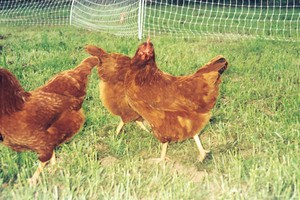
At first baby chicks are susceptible to Coccidiosis which they eventually develop immunity for but until that happens you are left with one choice (if you are organic) and that is to keep their bedding, food and water free of fecal matter. Up to three weeks old they are prone to get it and if that happens you either cull it or treat it. So far we have raised three groups of day olds and we have been lucky enough not to have to make that choice. Being a humane farm our answer is going to be treat it and keep it in a non-certified group, we already have what I call tenants, layers that are not laying but are just living with the group. Traditional practices would be to cull the non-layers but we haven't done that. Actually of all the layers we've raised all but one lay. Industry wide the percentage is seventy-five to eighty percent. We'll have to see what the rate will be with the 25 new Rhode Island Reds.
It is not easy protecting baby chicks from themselves. You think you got the water clean and setup so they can't perch and drop leavings, but they must be acrobats, it defies logic how they dirty their water and food and with such gusto. Grant it, all they have to do is run around, grow out of their fur and sprout wings. The first week all they do is eat and sleep under the light moving very little; cleaning up isn't too hard. Then they start to get energy and eat like teenagers and the fur is starting to fly and they are finding more and more ways to go to the bathroom from higher and higher heights. I swear they've had competions with judges and score cards voting on who can go to the bathroom from on top of the water can. Because this was the biggest flock that we have had, we built what amounted to a big cardboard box in the garage. It was too big so we divided it in thirds and opened more up as they grew. The water and feed were hung from two by fours spanning the width of the box, low enough for them to get to and high enough so they couldn't perch. At least that was the plan. The sides of the box were only a foot and a half high a design that would allow us to easily bend down and scoop out liter and the foul food. The chicks eventually learned to use the edges of the sides as a spring board to get to the top of the water bucket.
Our water bucket has a flat lid, with drip nipples on the bottom that I installed. The flat lid design is not how store bought waterers are designed, but I created one from a piece of scrap plywood and jig-sawed it to fit. It covers the bucket, the lip of the bucket is under the rim of the plywood, there is one little tiny hole were the bucket handle meets the plywood. Suffice it to say, version two of the watering bucket will have some kind of cheese cloth or other organic stopper.
You go out and check on them four to five times a day, clean their leavings out of the water bucket, food and bedding and you make sure the light is not to hot or they are not too cold and you listen for sounds of happy chicks enjoying the day. Happy chicks, it wasn't a concept that was on our radar until a graduate student from the University of West Virginia said something. We are participating in a study on nematodes with UWV and they were at the farm taking soil samples and asking about our organic and agricultural practices. The student made the comment, "You have some happy chickens," "thank you," I said but hadn't really thought of chickens that way. But if you look at the picture on our webpage here on Local Harvest you'll see one of the more photogenic ones, it looks like she is smiling.
So you go out and listen, this happens every day until they start to grow feathers and beaks and longer legs and bigger feet, but you still listen no matter how old they get or where they are housed, you listen for and hopefully you hear the sound of happy chickens, but thats all in a days work.
11 Jun Thu 2009
You're going to Harvest That?
Spring is coming to a fast end and the spring crops are starting to show their wear. Strawberries came in and we started picking, they are big, sweet and very juicy. From what we've read you can only harvest strawberries after the morning dew has dried. If it rains that pushes off harvesting even further, unfortunately strawberries don't know to stop ripening. Rain or shine if it is warm enough a strawberry is going to ripen.
We've love strawberries and have grown them every year since we moved in. Strawberries are one of those two year plants, like asparagus or grapes, meaning you put all this labor upfront but you don't get anything until the second or third year. For grapes it is even longer and if you have as steep of a learning curve as we tend to have it might even be extended still. I think our first bunch of edible grapes came in the sixth year, by that time we had experimented with every organic fungicide and insecticide there was. We still don't produce a sell-able amount but I do get a few every time I mow the land around them.
It is May 30th, we hadn't picked strawberries for close to six days now and a neighbor came up to buy a couple quarts. So we left him in the shade and went out to pick them. What we found in the patch was a lot of black furry berries, huge ripe bug eaten berries and the bed seemed like a total waste. Once again the learning curve bent around to slap us silly. We picked the best we could and gave him a good two quarts, it took longer than expected but they were good strawberries and he didn't mind the wait. After the days work ended we said goodbye to everyone and set about learning what we did wrong with the strawberries and what was that little black bug eating all the huge ripe fruit. The nerve of the intruder, I mean there were plenty of small ripe berries, but no they'd eat some of the biggest and go onto the next one. I can see them, setting up little daiquiri bars, inviting their friends and family over then for the heck of it they find a bigger sweeter berries and move to that one.
Well it didn't take long to find out what went wrong and why, first was water, second was air, third was lack of harvesting and fourth was not harvesting everything. Strawberries like dry beds that are airy and allow rows to dry sooner than later. We had let them grow to close to each other over the years so that had to be fixed and we didn't pick the berries that were infested or blackened by fungus, I mean they are nasty looking and when you pick them they mush in your hand. The sensation of slime and stickiness the berries had on my hands just gave me the willies.
Everything we read pointed to management of the crop and letting fruit sit on the ground. When we had a smaller garden we didn't have these problems, the small size allowed for more air which kept things dry and there was less to pick, so everything did get picked. We found that the strawberry sap beetle was the insect that was doing the greatest damage and the population was growing bigger because of the environment.
As we read we came upon a few sentences that made us cringe, and that was that the sap beetle will move to corn and tomatoes after the strawberry harvest. Being one who lives for fresh tomatoes and corn I went into panic mode. I swore as long as I was alive those bugs would not get to my corn and tomatoes. The deer, rabbits, raccoons and groundhogs may but I was drawing the line at the strawberry sap beetle, it was on and I was ready to put a hurting on the population.
My wife was reading about how to manage the infestation of insects and molds; we were going to have to mow rows through the patch to get air circulating through and pick up every last nasty berry. Talk about fruitless work, we pulled gallons and gallons of bad berries but on the bright side the chickens got to eat strawberry sap beetles and we started to make inroads and turn the beds around. No word on the taste of the eggs but we are waiting.
08 Jun Mon 2009
Who in their right mind does this?
After five years of growing on our own we decided that we needed help in order to get done all the tasks that needed to get accomplished (that's alot of words for "we needed help weeding"). So we thought now would be a good time to hire from within the community, which fit with our whole buy local mantra.
We sat down and developed our questionaire,. My wife had questions she wanted to ask and I had come up with a couple basic ones myself. Her questions were of the general quality, "what experience do you have?, can you work out in the heat?, have you worked on a farm?, etc". My questions were simpler, but they struck at the heart of the matter and got down to the base of the job. First question up was "Why in your right mind would you want this job?" Second "Can you tell the difference between a weed and a plant?". And lastly, "how many fingers and toes do you have and do you know how to keep them?'
I came up with the first one because that's the question I get asked most by family, friends and work collegues, it's a simple question but one that has alot of historical baggage attached. Why do people look at farmers as having to be crazy when they try to grow food? Is it because the work is so physically demanding, start up costs and failure rates so high, too much uncertainty with weather and governement regulations, too much information to learn, too many things that are out of your control? Have we been brain washed into believing that only corporations are the ones capable of growing food for the consumer market or that you have to be born into a farming family in order to grow?
Farmers should be venerated and respected for their chosen profession, Like firemen or policemen a farm and its farmer is life supporting. What if we relied on the industrial food complex and concentrated animal farms for all of our food? When they say our food source is safe do you believe them? Should you, when every year food recalls are popping up more frequently than automobile recalls? Why are we as consumers allowing this to happen? There is nothing that beats freshness and food safety when it comes to local. When is the last time you heard of a local butcher recalling products or local vegetables being recalled for e-coli contamination. I know it can happen and chances are it will but I haven't heard of any yet and I know from our farm practices it is not. The "buy local" movement is growing I think because of the recalls but also for freshness and taste-the taste of a ripe tomato or fresh ear of corn, or carrots so sweet and crunchy you eat them before you get home.
As I stated before we started growing becuase we followed in our fathers footsteps, except we widen the garden. Like them it started with a single tomato plant, then pepper plants, then corn, peas, carrots, string beens, kale, lettuce, melons, blue berries, raspberries, apples and service berries and it keeps growing. But, it started because our fathers planted and tended their own gardens. Small as they were, the joy was the same, bringing vegetables in for the family. That simple act had its own intrinsic reward ,the fact that you grew it made all the more significance. At the time we were too small to realize it, but I think we are starting to get it. I think we do but I feel that we are still missing something I don't know.
What I do know is that the people that come out to our farm respect what we are doing. A lot of people know what we are sacrificing in order to grow organic food, baked goods, jams and eggs. They thank us and tell us how much they love the eggs or how good our strawberries were this year. They ask genuine questions about the operation and want to learn for their own gardens and for their own children and to get information from a trusted source. They look at their local farmer as not only a source of fresh fruits and vegetables but as a knowledge resource for their own growing. I love talking to our customers, I get to learn from them much more than one would think.
As for the people we hired, their answers to my questions made me see from a different perspective; not in that their answers were funny but they took the questions with a slight grin and launched into why farming wasn't that intimidating. Yes, if we taught them they could tell the difference between weeds and plants and pretty much everyone wanted to keep all their fingers and toes. They have turned out to be a great, eager and enlighting group to work with, they work hard, ask good questions and have been a wonderfull asset. We couldn't have asked for better or expected anything as close. Buy Local!!
05 Jun Fri 2009
Look Honey they have Dressed Rabbits
We started selling vegetables professionally in 2003 at the fair grounds in our County. In its day the farmers market was a focal point for the community, everything was there as the seasons permitted. Butchers, bakers, and I bet candle stick makers, as well as, other crafts and household items. Fast forward a couple hundred years and we arrived to a revitalization effort taking place, the fair ground management wanted to get the market up to the old day standards and we were happy and lucky to be on the ground floor and helping.
We had joined the Maryland Small Farm CO-OP after hearing a presentation of what the CO-OP was about and how it worked. It was a group of farmers that tried to pull resources, and hold educational seminars that had experts in the field come in and talk about their specialty and actual farmers talked about the good and the not so good of what they do. We learned that the CO-OP had a stall at the farmers market and they were looking for vegetable growers, They had some one selling Emu oil, hydroponics tomatoes, baked goods and dressed rabbits, but not enough variety of vegetable growers.
We jumped at the chance, you had to be set up by 9:00am and the day ended at 2:00pm on Saturdays. Because we are so small we tended to harvest in the morning and take it for sale that day. This meant revelry by 6:30; everything picked and loaded on the truck by 8:15 and on the road to the fair grounds by 8:25 and setup by 9:00a.m. We did this for three years until late in 2005 growing season when my wife became ill.
For the first three years during the spring and summer we committed our time, efforts and energy towards growing vegetables, customers and our confidence in ourselves. After hearing farmers speak about farmers markets I believe each and every one could write a book about the experiences attending these events and the people they meet. I admit I have a ton to learn about growing, professional interaction with full-time farmers, customers and most important JARGON.
It was a hot Saturday in July a couple of years ago; we had just started selling our vegetables on a regular basis. There were other vendors there as mentioned above. A young mother comes by and sees the sign for dressed rabbits. Honestly, I did not know at the time what that really meant, but I heard the mother say to her little curly headed blonde child that they were selling dressed rabbits, "Look honey they have dressed rabbits maybe we can get one in sailor suit." I heard the man politely tell the woman that she could buy a live rabbit but that it would not come with clothes. Without having to ask I now realized that dressed is one of those euphemisms for "prepared" or "processed" or "ready-to-eat". This made the innocent statement endearing, “Look honey they have dressed rabbits,"
03 Jun Wed 2009
Why Growing Organic is Vital
Have you heard the institutional advertising that a major seed manufacturer is playing over the radio airwaves. How farming uses so much water and that their hybrid seeds and geneticaly engineered seeds will use less water and yield more food and how this is gowing to help farmers world-wide. If that is true why is this major seed manufacturer suing farmers all over the world for patent infrigment. When pollen drift is as natural and enevitable as the sun rise. Why did Mexico outlaw ALL GM (genetically modified) foods, especially corn? Then only to discover that strains of GMO corn have made their way into the corn fields of Mexican farmers from the US. Technically the big seed company should sue Mexican farmers too. Go to www.hulu.com and search for the "Future of Food".
It is a documentary on how genetic engineering was accomplished, how seeds are patented and then used as a big stick to force farmers into the herbicide ready club, We are at a cross roads in our concepts of food, where you see grass root efforts like the slow food, buy local food,and support local farms movements. We have groups like Ark of Taste which is a movement to bring back heritage breeds from pigs, cows and chickens to tomatoes and everything else that has been genetically modified to fit the needs of the profit motive not that of the taste of the consumer. From my stand point it is not only the lack of nasty checmicals on the food, or pathogens that cause recall after recall year after year but it is also the simple fact of taste. Taste, remember when tomatoes tasted like sweet, soft, watery spheres of nutrition. I've learned that which does not kill you serves to make you stronger. In an organic plant that is basically the same concept, when a plant is attacked by a predator the plant releases its own sent that attracks bugs that are predators of the bug eating its leaves. This doesn't work with an infestation but if the plant survives it grows stronger and has a better taste then the a plant that was sprayed with synthetic fertilizers and insecticides. This opinion is derrived from reading and my own observation not a result from an imperical study.
I trust my taste buds, I know what is on my plants, I know that the more we allow large corporations to genetically modify food the greater suseptubility we all face for unknow genetic mutation and greater risk of bacterial out breaks caused by a lack of stronger antbiotics. That is why more than ever supporting local farmers and growing organic is vital.
24 May Sun 2009
History Lesson
You have to research and read alot if you want to learn why your vegetables look the way the do or what is causing the little wholes in the leaves or why the leaves are curling or tomatoes have black spots on the bottom or you get the idea.
It helps if you like puzzels because that in way is what it is, if you have no history behind you with growing large scale vegetable plots. But this is what's so cool about the farming community, there are people out there with working knowledge and practical work experience, except for what we are doing. We are not the only organic vegetable growers but in our neck of the woods there aren't alot of older more experienced organic vegetable growers. In Maryland there is a large contingency of organic growers and like our own local farm community they are very gracious to spend time with you and answer your questions. It seems like we all have this same idea of growing food that is healthy for us to grow and more importantly for the long term healthy to eat.
I find the people in the organic community and farming in general to be stewards of the soil, the water and the ecology in general. I know there are folks out there that are the complete opposite, they have mono-culture farms that are detrimental to the environment and the water and the nieghborhood, But I don't see organic folks like this, or those people that are using sustainable agricultural practises abusing the land and resources. The people that are part of the sustainability movement are those people that are commited as we are commited to using ecological practises that mimic the poly-culture that mother earth provides and sustains. We try our best to learn from the history of farming and mother nature to make sure what we do is not harmnful to us and the people that work here and food that we eat and sell. George Santayana said "Those who cannot remember the past are condemned to repeat it." When it comes to growing history is the greatest lesson.