
31 Mar Thu 2011
Help Protect Our Pollinators - The Bees Need Us. We Need Them, too!

~ A GLOBAL BEE EMERGENCY ~ Happening NOW ~
.............................
Quietly, around the world,
Billions of Honey Bees and other pollinators are dying.
.
This is more than alarming.
.
This is a fact.
It threatens our crops and food supply on a global basis, and in my opinion is more of a threat to our livelihood than anything else.
.
A global ban of one group of pesticidescould save bees from extinction.
Yes, that's right.
It can make all the difference.
.
Four European countries have begun banning these poisons, which are called:
.
There is evidence that due to the banning, some bee populations are recovering.
That's good news!
.
Here's the bad news...
Unfortunately, big chemical companies,
like Bayer,
(the culprit for this one, and just as insidious a corporation as)
all of whom LOBBY really hard to keep all their killer poison pesticides on the market.
.....
A global outcry is now on for a ban in the U.S. the E.U. where debate is raging,
and hopefully here in Canada, too.
.
I'm hoping this will provoke an outcry from people like me, gardeners and people of all walks of life who want a total ban on these hazzardous poisons.
.
This could create a ripple effect around the world. : )
Let's build a giant global buzz calling for these dangerous chemicals to beoutlawed in the U.S., Canada, and EU until and unless they are proved to be safe, and I do not believe they are.
.
Please consider signing a petition to save bees and other pollinators, and our crops:
https://secure.avaaz.org/en/save_the_bees/
The Bees need us. And, we need them just as much, if not more.
........................
So, you ask...
What can we do in our own little way, in our own back yard, to help the Bees?
Here are some great tips & links!
1) Plant a pollinator-friendly garden
http://pollinationcanada.ca/?n=pc_lib_pfg*
2) Don't ever use pesticides or chemical fertilizers. They do more harm than good, and are not needed.
(Except to line the pockets of big Ag and Chem's greedy pockets.)
http://google.ca/search?q=organic+gardening*
3) Naturalize the garden. Or a part of it.
Plant native flowers in your yard.
They are suited to your area and landscape.
Native plants are partners with pollinators.
http://google.ca/search?q=wildflowers*
4) Become a backyard beekeeper.
I'm going to!! : )
http://google.ca/search?q=backyard+beekeeping*
5) Support conservation, wetland conservation, and biodiversity.
Once it's gone, that's all folks.
http://planetfriendly.net/dontpave.html#links*
6) Definitely avoid industrial food and GMOs at all cost.
Who need's Monsanto's poisons? Not me! Not you, either.
So, shop locally and organically whenever possible.
http://planetfriendly.net/organic.html#food*
7) Be a pollinator observer. I am!! And, it's fun for kids, too!
It's like a science experiment in your own back yard!
http://pollinationcanada.ca/?n=pc_be_an_observer*
8 ) Learn more about Bees & Pollinators and why everyone needs to get involved:
http://planetfriendly.net/wiki/?title=Save_the_Bees*
9) Live sustainably. It's all connected. We're all connected.
We can't just hop skip and jump to another planet if we destroy this one.
We have to take care of it now.
Even in small ways. It adds up.
------------------------------------------
An interesting fact from Pollination Canada
"Pollinating insects are "essential for over a billion dollars of apples, pears, cucumbers, melons, berries, and many other kinds of Canadian farm produce".
*
That's a lot to ask of these creatures.
The least we can do in return is to NOT poison them!
*
-------------------------------------------------------
More links about how to help our pollinators:
http://www.pollinationcanada.ca/
North American Pollinator Protection Campaign
Pollinator Partnership
~~~~~~~~~~~~~~~~~~~~~~~~~~~~~~~~~~~~~~~~~~~
And Don't forget to post your bee-friendly jobs, internships and volunteeropportunities with GoodWork: http://GoodWorkCanada.ca/
~~~~~~~~~~~~~~~~~~~~~~~~~~~~~~~~~~~~~~~~~~~.--
Again, my thanks to People and Planet Canada
Gateway to Environment and Sustainability Since 1998
Subscribe: http://www.planetfriendly.net/
.
Thanks for visiting! Happy Organic Gardening!
-----------------
Visit: Wall Flower Studio
Thank you!
Dandelions - Embrace Them - They're Not the Enemy!
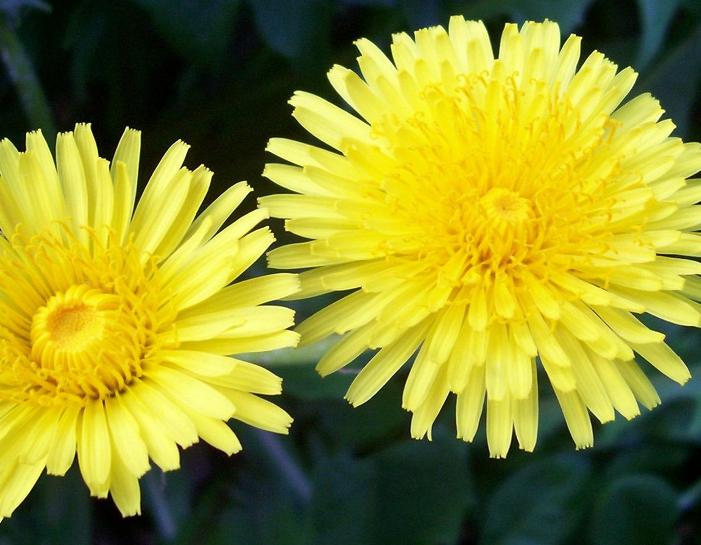
Call me crazy, but I like Dandelions.
That's right. And, I couldn't help but think of them lately. Here's why: .
As I watch the news pertaining to events surrounding the ongoing tragedy happening to our Japanese friends, like many, I watch in horror.
The newscasters keep offering horrible news. Radiation levels in some parts of Japan has affected their food and water supply, milk and vegetables, and it's now spiked to dangerous and deadly levels.
While watching the news on comes a commercial break... I was about to get up and make a coffee, however... one commercial came on that caught my attention.
It was a commercial for Roundup®. You know that stuff. It's a poisonous chemical herbicide, created by that giant chemical conglomerate, Monsanto. .
You've heard of Monsanto. They were the co-creators of Agent Orange.
Wasn't that nice of them? . A real tribute to mankind.
So, back to the Roundup. You know the stuff. It's the chemical you have to actually pay for, so that it can be sprayed in the garden, perhaps on food being grown, Food that you might feed to kids, friends and family members.
So, picture this... A cowering little Dandelion. A big bottle of Roundup®, aimed & ready to open fire on that Dandelion. . Talk about playing up to an old Wild West Mentality! I actually laughed at the absurdity of it all. Absurdity mixed with a heaping helping of disgust. .
This chemical company is telling me that a useful little yellow flower is my enemy!! .
What does Monsanto have against dandelions? What did a dandelion ever do to deserve such a powerful enemy? Why do they want to instil such hatred into my head for this little flower? . Dandelions have never done anything to me. Have they ever done anything to anyone? Not that I know of... .
So, I'll tell you why... It all comes down to corporate profit. . If Monsanto can't promote the dandelion as an enemy to you and me, no more profits for them or their shareholders.
. Well, I don't give a damn about Monsanto or their shareholders.
There is cause and affect for everything we do. Perhaps people don’t realize that the chemicals sprayed in the garden has to go somewhere. It doesn't just miraculously go away..
It leaches down into the soil. . The earth we live on. . Right into our water supply. .
Hmm, I have a well on my property. I don't want to drink this poison, or have my children drink it either. .
That, my friends, would be asinine. It makes no sense. . Who in their right minds would want to choose to poison their own water hole?
. A 2008 scientific study has shown that Roundup formulations and metabolic products cause the death of human embryonic, placental, and umbilical cells in vitro, even at low concentrations. .
So, my point is that there’s no need for Monsanto's poisons if Dandelions aren't really our enemy. Hmmm. That sounds pretty good!
I mean, come on.... Is one plant, growing between the cracks in our patio's so hideous, and such a blight to our sensibilities as human beings, that we're ready to spray deadly and harmful poisons on our own property that in the end will only poison us, and which may subject us and our children to ill effects down the road? It makes no sense...
. Consider this, a main active ingredient of Roundup is the surfactant POEA (polyethoxylated tallow amine), known for its toxicity in wildlife. It increases herbicide penetration in plant and animal cells.
. Consider also the fact that several weed species, known as superweeds, have developed resistance to Monsanto's herbicides, largely because of repeated exposure.
. Superweeds?? This sounds like sci-fi thriller. But it's actually happening now. And, it's part of the reason our food costs are higher. . Monsanto now has to create more powerful herbicide chemicals to combat those superweeds they've created.
. Sounds like the lady who swallowed the fly... More absurdity. . Is a dandelion really worth all of this?
. If a weed really bothers a person, I ask them to please consider boiling kettle full of water and pouring that boiling water on the crack that contains that little dandelion.
. That'll do the trick. Really. It's that simple.
. Consider our children, our future, our planet.
. Consider the fact that using chemicals to spray a few weeds is overkill on so many levels.
. Consider the fact that our Japanese friends now have poisons on their food supply, through no choice of their own, and it will likely be there for a hundred years. It will make them sick if they eat it.
Why would we, as intelligent as we think we are, fork out money and pay for a toxic product to willingly do this to ourselves??
Things to make with Dandelions:
Dandelion chains ( Remember doing this as a child?)
Dandelion leaves in salad. They're tasty and nutritious, too!
Thanks for visiting! Happy Organic Gardening!
Join us at:
our Blog - Wall Flower Studio
Our Facebook Group - Wall Flower Studio
Our Twitter - Wall Flower Studio
29 Mar Tue 2011
Creating Eco-friendly, Recycled Newspaper Seed Starting Pots @ Wall Flower Studio
Well, I finally broke down and purchased a pot maker.
I'm really glad that I did!
It's "sow" easy to use, and, the pots are the perfect seed starting size every time!
The fact that I'm using recycling newspaper, which will quickly break down, and won't harm the environment played the biggest part in my decision to try this.
 . Sure, peat pots are easy to use, but I'd found that peat seems to suck up moisture really quick, which means the soil they contain, and the seedlings in them, dry out much quicker than the newspaper cups do, which means more watering.
Not to mention the cost of them! I start hundreds of seed pots each year. This can really add up. . Plus, since I'm trying my best to be ecologically aware and I try to do what I can for the environment, I'd like to share some information about why using peat pots to start seeds isn't such a great idea. .
The effects on the dwindling wetlands and peat bogs has me concerned. I don't want to take from nature what is not renewable, if given the choice. .
After much reading, I've discovered that Peat bogs are actually a finite, non-renewable resource. Since the 1960's, there has been a threat to these valuable bogs.
The bogs that produce the peat suitable for horticulture used to be cut out slowly by hand, but now the horticultrual industry extracts it so efficiently & thoroughly with huge machines.
The process of extraction is sausage extrusion and surface milling..
Just knowing this has openend my eyes and now my choice clear.. Newspaper!
Happy Gardening!
20 Apr Tue 2010
Seed Balls From Wall Flower Studio - Throw and Grow!! It's That Easy.
Creating Seed Balls ~ Rural Sustainable Guerrilla Gardening : )
 The first time I ever heard of the concept of making and using "Seed balls", I was enamoured with the whole idea, and was determined to make some. It took me a while to get my act together, but finally, I've gotten around to it and thought I'd share my experience on my blog.
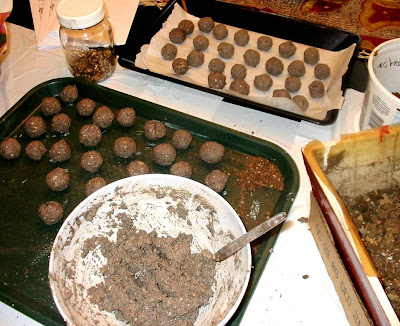 Next, I've added water, and just enough to make it feel like I'm making meatballs! You don't want it to be too dry or too wet. As Goldilocks would say, "Just right'! And just a hint, make sure to take of your jewellry first ; )
 Now of course comes the packaging. Am not a big fan of overkill when it comes to packaging, especially due to my concerns for the environment and landfills,
19 Apr Mon 2010
Morning Glory
Morning Glory - Ipomoea


18 Apr Sun 2010
Cutting Celery - Apium graveolens - Easy to Grow indoors or out!
 My uncle Allan grew Cutting Celery in his garden at his farm.
Heirloom Beets - Two Great Favorites!
You can't beat Beets!
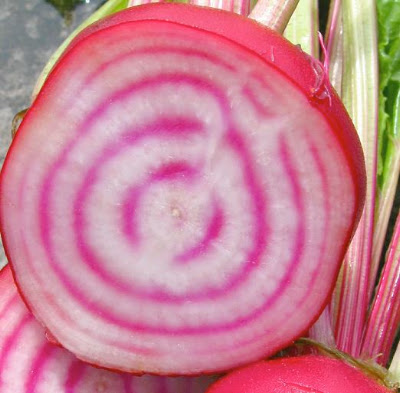 Beet "Chioggia", also called the "Bulls Eye beet" for obvious reasons is an Italian heirloom dating back to the 1840's. The Chioggia Beet has a mild flavour and it's solid green tops have a smooth, delicious taste. This beet is particularly best harvested young and they may make a nice baby vegetable because the tops are also best young, especially when used in salad mixes. I like the fact that Chioggia matures early and requires less cooking time then most other beets. It's origins are from Chioggia, an Italian coastal town.
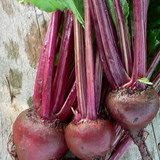 Beet "Early Wonder" - Also an heirloom that can be grown in containers. I really like that!
The greens are tasty and abundant, and every bit as good as chard or spinach, and of course, just as nutritious. These roots are flavourful and produce earlier which makes it a great choice for a small garden!
Beets, (beta vulgaris), are a member of the chard family. Chard is really grown just for its leaves, and beets are more well known for their edible roots. Some people aren't aware that every bit of a beet plant is edible! These wonderful heirlooms are becoming very popular at market gardens, and are prized in salads and other dishes with many chefs!
------------------------------------
19 Mar Fri 2010
Clematis ~ Nelly Moser - A beautiful heirloom climber!
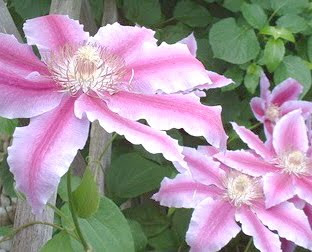
Each petal is a frosty-pink with a deeper pink bar down the centre, the anthers are a lovely shade of purple, and it's shimmery and seemingly silvery seeds are almost as attractive as the flowers.
16 Mar Tue 2010
Chelone - Turtlehead - Hot Lips!
 This beautiful "Pink Turtlehead", (Chelone lyonii - Hot Lips) blooms from late July right through to October. It's a North American native perennial flower that hosts the Baltimore Checkerspot butterfly.
-
Foliage: Herbaceous smooth-textured.
-
Requires consistently moist soil; do not let dry out between waterings.
-
This plant may be considered a protected species; check before digging or gathering seeds.
-
Propagation Methods: By dividing the rootball or from seed; direct sow outdoors in fall or early spring.
-
Stratify seeds if sowing indoors.
-
Seed Collecting: Allow pods to dry on plant; break open to collect seeds.
-
Non-patented native perennial
-
Height: 24-36 in. (60-90 cm)
Purple Carrots ??! Actually a very tasty heirloom!

15 Mar Mon 2010
Borage - Borago officinalis - Beautiful Blue!

Borage - Borago officinalis
I especially admire them since they are an heirloom, and have been cultivated since at least the year 1440. Such a historic plant.
04 Mar Thu 2010
Attract Hummingbirds to Your Garden
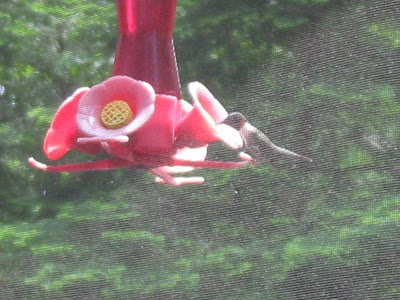
- Bee Balm (Monarda)
- Morning Glory (Ipomoea)
- Cleome
- Butterfly Bush
- Sweet William (Dianthus barbatus)
- Lobelia (blue)
- pink Coral Bells (Heuchera)
- Scarlet runner beans
- Agastache
- Hosta (elegans, "Frances Williams"
- Crocosmia 'Lucifer'
- Red-hot poker (Tritoma)
- Cosmos
- Linaria purpurea
- Hollyhock (Alcea rosea)
Many of these garden flower varieties, (and more!) are available in Wall Flower Studio's Local Harvest store! (click to visit).
Thanks for viewing, and, Happy Gardening!
Karen ~ Wall Flower Studio http://wallflowerstudioseeds.blogspot.com
02 Mar Tue 2010
Heirloom Amaryllis - 100 plus years old! Seeds Available from Wall Flower Studio
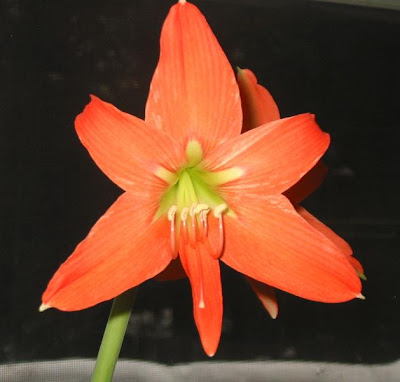
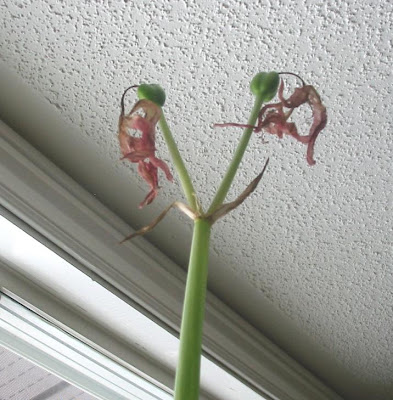
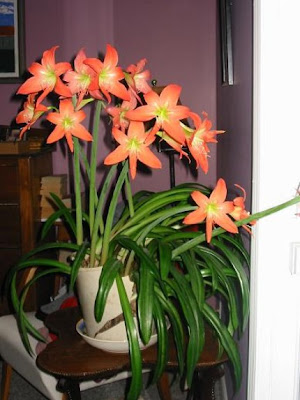
The "Mother Ship" !!!
If you're a collector, or just want to give this Amaryllis a try, email me for a catalogue, (which is free), or, visit my Local Harvest where I have them listed for sale. Hippeastrum 'vittatum' does best in full sun to partial shade with a rich moist soil mix.
Full culture notes/growing instructions, along with a picture are provided with purchase. I am proud to offer these seeds!
Thanks for viewing, and Happy Gardening!
19 Feb Fri 2010
Basil - So versatile!

Basil - Ocimum basilicum (a.k.a. Sweet Basil, Common Basil, Italian Basil) Probably the most popular herb in North America today. It's GREAT FOR COOKING!
A bit about growing Basil:
Height in inches: 24" - Spread: 12-15"
Germination: 7-10 days - Sowing depth: 1/8"
Planting Season: Sow outside in Spring 1-2 weeks after the last frost
Requirements: Likes full sun for best success. Plant in well-drained soil with plenty of organic matter.
Out of the more than 150 varieties of Basil available, my personal favorites, Lemon Basil, Ocimum basilicum citrodorium, and the ever popular Italian Large Leaf Basil, aka: Genovese basil, are perfect for pesto and pasta sauces. I use it fresh and it tastes great with almost all dishes. The Italian Large Leaf Basil has large dark green, shiny leaves that grow up to 3 inches long on a tall, upright plant. Thankfully, Basil has very few pests, and you can also use Basil as a companion plant to repel mites, and tomato worms. Tomatoes loves Basil!
Basil loves to be pinched out the tips, which will encourage fuller plants, delaying flowers, and it going to seed. I suggest letting one plant go to seed so that you can grow them again in the garden next year, but of course Basil can be grown indoors on a sunny windowsill, so the seeds can be planted anytime!
Happy Gardening!
17 Feb Wed 2010
Hollyhocks - A True Farm or Cottage garden flower!

Hollyhock, (Alcea rosea), was once the most popular flower in gardens across North America, and is most certainly back in vogue today! It's stately beauty adds a real dimension of height at the back of a flower border. The hollyhock is well known in the English cottage garden, and reknown in any farm garden, standing above all else!
Many people don't realize just how easy this lovely and old fashioned flower is to grow from seed. I've actually had them grow between patio pavers, where there's relatively no soil, and seemingly no space! This speaks volumes of their drought tolerance and ability to grow in almost any type of medium.
The Hollyhock seeds I offer, (Click Here to view) are from ones originally grown at my family farm by my great-grandmother. One of my particular favorites due to the personal history and link to my past. They are a lovely pink heirloom variety, (and because a water bottling facility backed on to our family farm, there were never any chemicals, herbicides or pesticides used at all). Growing organically is a valued and continued tradition of my past, and it's what I believe in and practice in my own garden.
Hollyhock seeds can be directly sown into your flower garden. I recommend that you start them indoors six to eight weeks before the last frost, as they may bloom the first year if that is done. Once in the garden, they need plenty of room. Spacing should be 18-24". Give them plenty of room to allow air circulation and minimize rust and other disease.
Some people will tell gardeners to cut back the stalks after they've finished blooming, but I let them go to seed, and collect the seeds for next year! "Sow" easy to do. You'll only have to buy them once!
Enjoy, and as always, " Happy Gardening " !