
29 Jan Fri 2010
Dill - Anethum graveolens - 2010 Herb of the Year!
Evening Primrose - Oenothera - Lovely and Drought Tolerant!
Now, evening primrose is widely known for its medicinal properties.
Evening primrose seeds can be planted outdoors in fall, but they can also be
Plant them in a sunny location in your garden and they will do the rest!
28 Jan Thu 2010
Edible Flowers - A Beautiful Salad in your own Garden!
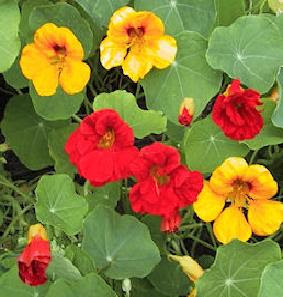
~Flowers are high in vitamins and minerals and all are rich in nectar & pollen.
~Rose hips have a high in vitamin C content, as well as nasturtium & marigolds.
~Dandelion flowers contain vitamins A and C. Add them to your salads!!
Edible flowers should be picked in the morning after the dew has gone. You should pick fully open flowers, and of course, should sample several different varieties of flowers before harvesting.
Never eat flowers that have been in contact with any chemicals and poisons such as pesticides or herbicides. Organic is the way to go!
Much like growing grapes for making wine, flowers of the same variety but grown in different locations will have slightly different tastes, due to varying soil types & environmental conditions.
Flowers might also taste a little different at the end of the growing season too, and can vary from year to year.
The best part you ask!!! Flowers are mostly free of calories!
***....NEVER eat ANYTHING from the garden if you don’t know what it is first!!
List of Some Edible Flowers
-
Bachelor button
-
Beebalm
-
Borage
-
Calendula
-
Chamomile
-
Chive flowers
-
Dandelion
-
Daylily
-
Dianthus
-
Hibiscus
-
Impatiens
Lavender -
Lilac
-
Marigold
-
Mint
-
Nasturtium
-
Pansy
-
Roses -Rose hips
-
Sage
-
Squash blossom
-
Violet
-
Happy Gardening!
Have a Green Eco-Friendly Event!
This can help ease the burden and lessen your carbon footprint on our planet.
Butterflies shown. (Approx. 5" wide )
27 Jan Wed 2010
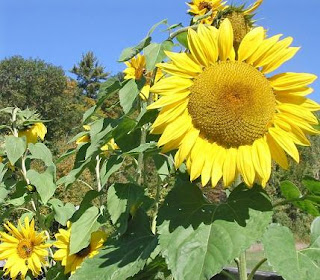
Arikara Sunflower - An Heirloom Rich With Heritage!
25 Jan Mon 2010
Winter Is For The Birds! :: Home Made Suet Balls
![[Suet+balls+blog+1.jpg]](http://3.bp.blogspot.com/_XS2fxEBIdBE/SyGh-jeJ16I/AAAAAAAABEE/2jQT1Hj1sxo/s1600/Suet%2Bballs%2Bblog%2B1.jpg)
Feeding Feathered Friends in Winter - Fun - Easy - Economical!
Ingredients:
-1 pound lard or fat
- 3/4 cup peanut butter
-1/2 cup flour
- 1/2 cup cornmeal
- 1 cup sugar
- approximately half a loaf of bread crumbs
- 1-1/2 cups of mixed seeds, nuts and chopped dried fruits
Directions:
-Melt the lard and peanut butter over low heat. Mix flour, cornmeal, and sugar and stir in.
-Add enough bread crumbs to absorb all liquid.
-Add fruit, seeds, and nuts as desired.
-Pour into a 9 x 5? bread pan (lined with plastic wrap), or pour into suet cake molds.
(molds can be saved from store-bought suet.)
-Allow to cool completely.
-Keep refrigerated or in a cool place like a basement.
One batch makes about four cakes.
Have fun!
23 Jan Sat 2010
Grow A Victory Garden
![[sowing_seeds.JPG]](http://2.bp.blogspot.com/_XS2fxEBIdBE/S1s6IhaiMaI/AAAAAAAABH0/Ty2DAhlGubM/s1600/sowing_seeds.JPG)
Victory Gardening, which usually refers to small-scale farming, and a way of supporting community based agriculture, is where the past meets the present, and should be the way of the future.
Unfortunately, production of our food by corporate interests means that quality is ignored for quantity’s sake, and produce is bred for easy shipping across many miles, instead of taste.
These crops are sprayed with poisonous chemical pesticides and herbicides, and burning of fossil fuels is used to transport the food.In a time of global food shortages and high fuel costs it is becoming not only economical but also crucial to grow a large percentage of our own food at home or to at least, support the local farmers that do.
This resurgence of Victory Gardening happily means that people are starting to return to a more self-sufficient life style.
Growing and buying organic, and even heirloom, fruits and vegetables, frees us from the chain of oil that binds us to the corporations that are ruining our planet with toxic chemicals and the use of fossil fuels.During World War I and World War II, Canadian, American and British governments asked their citizens to plant gardens as a way to support the war effort, and literally, millions of people did just that.
It was a place of pride, a national duty, and a community effort that brought local people together to feed one another.
Today, Victory Gardens are being created on rural acreage, small city plots, apartment balconies, and suburban yards. Growing vegetable gardens is in vogue!
Article:"The Economist magazine - Victory Gardens - Digging their way out of recession”
In 1943 Eleanor Roosevelt encouraged a return to the "victory gardens" that had become popular during the first world war, when the country faced food shortages.
Mrs Roosevelt planted a garden at the White House; some 20 million Americans followed her lead, and by the end of the war grew 40% of the nation's vegetables.
Today, this grassroots movement has taken place at the White House in the form of an organic kitchen garden.
16 Jan Sat 2010
Vermicomposting - Composting With Worms!

In Canada, where snow covers our composters and gardens, we all make excuses as to why we are putting vegetable scraps in the landfil instead of the garden, but vermicomposting can be done year round, right in your kitchen, and without any smell!
Here's how:
The box should one square foot of surface area for each person in the household.
Bedding materials can include shredded newspaper, corrugated cardboard, peat moss, and partially decomposed leaves.
Red wigglers are the best for vermicomposting. They thrive on organic material such as yard waste and fruit and vegetable scraps.
Do feed them:
Coffee grounds or filters
Do NOT feed them:
Bones
To Harvest castings, feed one end of the box for a week or more. Most worms will find their way to that side. Remove two-thirds of the worm castings from the opposite end and apply fresh bedding . Start burying food waste in the new bedding, and the worms will move back.
Here are some great links to get you started... Have fun!! : )
15 Jan Fri 2010
Container Gardening

13 Jan Wed 2010
Compost - The Ultimate Gift For the Garden
Compost and organic soil is the lifeblood of organic growing...
Don't feed the plants, feed the soil - The plants will look after themselves.
The composting process will be more effective if you follow these suggestions. To get started, make a layer of leaves or other brown vegetation.
Then add a layer of green plant material. Add kitchen waste as it accumulates. Dig this into the pile or cover with a thin layer of soil. Continue adding material, alternating layers of brown material, green yard waste and kitchen waste.
Brown yard waste is generally high in carbon. Kitchen scraps and fresh yard waste are high in nitrogen. Both carbon and nitrogen are needed to build a balanced compost pile.
Fine materials such as grass clippings should be added in thin layers so that they do not compact.
Keep the material as moist as a wrung-out sponge. Covering the pile with a plastic sheet may help to retain moisture, (but I'm not sure that should be done if your garden is truly organic. Many frown on the use of any plastic in an organic garden setting.)
Water the pile occasionally if it becomes too dry. Turn the pile every few weeks or whenever it becomes compacted, too wet, or develops an odour. A garden fork, rake or pitchfork can be used to turn the pile properly and keep it aerated. Mix the material from the edges of the pile into the middle for more even decomposition.
------------------------------------------------------
How to make yourself a 3 Bin Composter - -(U of Kentucky, College of Ag.) http://www.ca.uky.edu/ENRI/PUBS/enri310rev.pdf
------------------------------------------------------
Composting Material Suggestions
*Cardboard -Shred into small pieces if you use it. Wetting it makes it easier to tear. If you have a lot, recycling might be a better option.
*Coffee ground and filters - Worms love coffee grounds and coffee filters.
*Cornstalks, corn cobs -Best if shredded and mixed well with nitrogen rich materials.
*Dryer lint - Compost away! Moistening helps.
*Eggshells - Break down slowly. Crushing shells helps.
*Hair -Scatter so it isn't in clumps.
*Manure (horse, cow, pig, sheep, goat, chicken, rabbit) - Great source of nitrogen. Mix with carbon rich materials so it breaks down better.
*Newspaper - Shred it so it breaks down easier. It is easy to add too much newspaper, so recycle instead if you have a lot. Don't add slick colored pages.
*Oak leaves - Shredding leaves helps them break down faster. They decompose slowly. Acidic.
*Sawdust and wood shavings (untreated wood) -You'll need a lot of nitrogen materials to make up for the high carbon content. Don't use too much, and never use treated woods.
*Pine needles and cones - Don't overload the pile. Also acidic and decomposes slowly.
09 Jan Sat 2010
Gardening For Butterflies - And Other Pollinators, Too!

A butterfly garden is a designed to attract and encourage butterflies.
Flowers provide food that adult butterflies need in the form of nectar. Host plants provide the food source needed by caterpillars. A rule of thumb is, the greater the variety of flowers and shrubs, the greater the amount of butterflies that will want to visit your garden!
Try creating a habitat that butterflies will be attracted to. Offer some sheltered areas, which will mean that these beautiful winged creatures will expend less energy fighting the wind. Trellises and other garden structures, as well as plants like bushes and trees will make good wind breaks.
Most importantly remember that butterflies are insects, so never use insecticides. These harmful chemicals kill the butterflies. Even products such as Bt, Bacillus thuringiensis, will kill the caterpillar of butterflies. There is much talk that this is what is killing the bee population as well. Don't use them because insecticides never discriminate. Who needs that? Please look for organic ways of handling your insect problems!. It's better for the planet.
My advice is to provide a diversity of flowers, especially ones that will bloom in succession of each other. This provides a consistant food source for the butterflies and makes good gardening sense, often being the goal of most gardeners that I know!
More importantly, however, butterflies will have a variety of sources to choose from. I prefer to encourage as many native plants as I can in the garden, which I feel is more than likely what the butterflies are seeking in their diet anyhow, since they have evolved through time with them. The butterflies will feel at home in a natural landscape. I must admit though, that annuals provide a good source of nectar to fill in between blooming times of perennial gardens. Who doesn't like to see a window box bursting with annuals? This way, everyone, including the gardener and the butterflies, are happy!
Some flowers that butterflies will appreciate:
Ageratum Butterfly Bush (Buddleia davidii) Purple Coneflower (Echinacea purpurea) Bee Balm (Monarda didyma) Butterfly Weed/Milkweed (Asclepias tuberosa) Sweet William (Dianthus barbatus) Goldenrod (Solidago) Joe-Pye Weed Privet (Ligustrum vulgare) White Clover (Trifolium repens) Hop Vine (Humulus lupulus)
Some links butterfly fans might appreciate:
* http://www.ontarioinsects.org/PhotosLeps.htm
* www.niagaraparks.com/garden/butterfly.php
* www.toronto.ca/parks/programs/butterflygdn.htm
* www.mnh.si.edu/museum/butterfly.html
* http://www.monarch.org.nz/monarch/projects/conference-2009/
Happy Gardening : )
07 Jan Thu 2010
Saving Seeds
Some reasons to save seeds
1) Saving seeds appeals to my motto of "waste not want not".
I hate to see anything good go unused, and the economical reasons alone, especially in today's financial climate, makes a ton of sense.
Seed savers knows that by gathering up seeds and storing them carefully away for next year's garden is preservation for next year's crop, and less money to fork out.
2.) Personal selection.
I like the thought of developing my own vigorous strains over several seasons of selective seed saving. Saving seeds from the plants with the qualities you most prize, you will soonhave varieties that are ideally adapted to your garden and growing conditions.
3) Maintain bio-diversity.
Fewer and fewer old varieties of food crops are available, so seed saving keeps the vegetable world's food choices diversified.
Today many of the world's food plants are disappearing, including vegetables, grains and fruit varieties. Approx. 70 % of the world's major food plants have already been lost. This is because modern agriculture practices require high yield, uniform plants, so the genetic base of the world's food plants has been greatly reduced. This has left the world dependent on a few, closely related varieties of each crop.
4) Historical value.
Many plant varieties we save or trade are living links to the past.
Seed saving is a way to link with our ancestors. As gardener's this is a responsibility and opportunity to pass these wonderful heirlooms to future generations.
5) Sustainability.
We don't need big corporate seed companies taking care of us and choosing the foods and flowers that we can grow. Many of these companies sell varieties that are tasteless, but travel well. That's not a good enough reason for me. Self reliance is very satisfying. It is our right to save seeds and make sure that there is enough variety on the planet which makes for bio-diversity. It's the cycle of life.
Seed Banks and Saving Sites to Survey
~~~~~~~~~~~~~~~~~~~~~~~~~~~~~~~
www.seeds.ca/
Seeds Of Diversity ~ (My personal favourite and I'm a member). Canada's Heritage Seed Program - A non-profit group of gardeners who save seeds from rare and unusual garden plants for the purpose of preserving varieties
Purchase the manual - "How to Save Seeds" from their website!
www.planetnatural.com/site/xdpy/kb/herloom-seeds.html
Both beginning and experienced gardeners can easily learn how to save all of their own heirloom seeds
.
05 Jan Tue 2010
Garden And "Growing" Trends for 2010
Home & Community Edible Gardens:
Due to the previous downturn in the economy it's my belief that more and more people will see the benefits of growing their own food, or art at least growing some food to offset purchases from the grocery store. This also includes community gardening, which is a huge asset and benefit to any city, not just for the food that is grown, but for the social aspect of gardening as well.
And, with the growing concern of chemicals used by food manufacturers, there is resurgence or renaissance with edible gardens. Just look at the Whitehouse garden, and the impact that has had on many to follow in it's footsteps!
Gasoline prices continue to be a factor in higher food costs, so a greater reliance on domestic and local growers of food will become the norm. It's already happening, and the timing couldn't be better, really!
Gardening, for some time has been considered more of a hobby, but will become more important as people develop into a more cautious attitude about what food they eat and where it comes from.
Kitchen Herb Gardens:
Herb gardens can be created indoors on windowsills and of course, outdoors. Some may be small in size, ie. container herb gardens, but these flavourful and useful plots will continue to become popular as people learn how vast the choices are for herbs in which to grow and use in their food.
Heirlooms herbs and veggie's will also become more common as people start to realize that food products grown with gmo's are doing more harm than good for both our health and well being, and to the environment. Also, many are beginning to realize that so many of our older varieties of vegetables are being lost, due most in part to corporations only growing a few varieties of food, which means lack of diversity for the human race to feed upon. That's why the potato famine happened. We don't want that to ever occur again! Relying on only a few varieties of produce will surely lead to that.
Garden Rooms:
Rooms out of doors will continue to "grow" in popularity as people are spending more time entertaining friends and family at home. Partly due to the economy, but also because it is a popular trend enhancing our homes as a sanctuary for our own well being.
Enlarging gardens, replacing travel with new patios, barbecue areas, water features, as well as other landscaping options, has already becoming popular for a many.
Outdoor areas can be utilized to the enth degree as individuals continue to create their own version of paradise with the use of exciting new varieties of plant material, planters, and weatherproof decor and other architectural features.
Native, Organic & Heirloom Gardening:
One of the most positive gardening trends is the commitment of gardeners towards organic practices in their garden.
There is an increased awareness and interest to view the natural landscapes of woodlands, meadows, and wetlands for inspiration in their gardens.
There are many ecological and environmental reasons to use native plants in the garden. It makes for an increase in biodiversity, provides habitat for creatures such as butterflies, birds and other pollinators, and can become a refuge for the many native plants that are increasingly becoming rare in their natural habitats.
Using native plants helps to conserve water and eliminates the need for pesticides, fertilizers and other chemicals that we are realizing are unhealthy practices on our planet.
The benefits of native plant gardening include less work and a beautiful garden.
Native plants evolved here and adapted to the environment in which they grow. That means the weather patterns and the other flora and fauna that have evolved with them are equally comfortable together. These variations of adaptability to the regional environment are what make native plants so effortless to raise.
Happy Gardening!
17 Nov Tue 2009
Three Sisters Garden ~ Historical Companion Planting

This year at the Stanhope Discovery Museum, where I'm the garden's coordinator, we once again, planted a "Three Sisters Garden".
Until I moved from Toronto, here to Haliburton County, I'd yet to hear about what a Three Sisters Garden actually was. It's an immensly interesting, yet simple way to participate in companion planting in your own garden, so I'm happy to share what I've learned.
Many people think of companion planting as a relativley new idea, but it's definatley not! This is a First Nation concept which goes back millenia. It's truly heirloom gardening in it's finest form; A beneficial co-existance and a sustainable practice, passed down from generation to generation, just as the seeds were. It's success was passed on as well, to other tribes and regions in North America.
Here's how it works...
The Three Sisters is a combination of three plants:
-corn (maize)
-beans (pole)
-squash
Each supports the growth of the other in one way or another. Corn supports the beans physically, and squash grows around them both. The original "design" concept was to plant it on a mound of soil, and in a circular method.
The beans naturally wind themselves up the corn stalks, which provides the support. The beans in turn, feed the corn by providing nitrogen to the soil. The squash, with its vines and trailing habit, winds it's way around the base of the corn and beans, hence becoming a barrier against weeds, as well as shading the soil, which helps retain moisture. Ingenious, really. : )
If you'd like to try planting in this method, I'd suggest first preparing the soil. Plenty of compost & organic matter should be used to offer the seeds a healthy beginning.
The wonderful thing about a Three Sisters Garden is that it can also be grown in a container.
If you don't have enough garden space, it's a fun way to garden, and children will love it too! Make sure however, that the container will have direct sunlight for at six hours or more, and of course, that the container has good drainage.
Start by planting the corn in the middle. Let the corn grow a few inches before sowing the beans directly around it. Then, plant the squash seed along the edge. Squash will trail, and can be trained to grow right around your container.
Keep the seeds moist and water well throughout the growing season. You'll likely have to water every day when growing anything, especially edibles, in containers, which will dry out much quicker than if planted directly in the ground.
Try planting heirloom varieties, enjoy your harvest, save the seeds, and have fun!
: )