
The LocalHarvest Blog
27 Mar Thu 2014
Introducing Our New Webite
LocalHarvest Newsletter, March 28, 2014

Welcome back to the LocalHarvest newsletter.
Most of us have a project or two we've managed to put off for a few years now. For whatever reason, there are always a few jobs that are hard to get to - painting the back bedroom, cleaning out the storage room in the barn, replacing that ratty winter coat, whatever it is. The inaction may show no signs of ending, and then one day we surprise ourselves and begin. Momentum builds and eventually, with a last push and a flourish, the long dreaded task is finished! Procrastinators everywhere know the particular mix of relief, pride and delight that follows. It is exactly that feeling that we at LocalHarvest are reveling in this week.
At long last, "redesign the website" made it to the top of our To Do list in January. We thought we might be able to get away with just doing a little touch up here and there, but eventually gave ourselves over to re-doing the thing from top to bottom. This week we are absolutely delighted to launch the first redesign in our 14 year history. Happy birthday, LocalHarvest. We got you a new suit for the party.
Our main intention was to make it easier to find and utilize the information LocalHarvest users find so valuable. So, along with the updated design, you will notice a few structural changes when next you visit LocalHarvest. We expanded the search functions and moved them to the top of the page. The map, events and listings are specific to your location. Our popular Farm Events feature gets more space, and the farm listings are improved. We streamlined the catalog checkout process, and made a lot of other little changes.
We hope you will spend a little time on the new LocalHarvest! There's a lot to see. The feedback we've gotten thus far from our members has been overwhelmingly positive. We'd love to hear your reaction to our new site too.
Meanwhile, the weekend is coming. Maybe it's time to tackle that project that's been hanging over your head for too long? Take it from us: you'll be glad you did.
Until next time, take good care and eat well,
Erin
Erin Barnett
Director
LocalHarvest

23 Feb Sun 2014
Time to Try CSA Again?
LocalHarvest Newsletter, February 24, 2014

Welcome back to the LocalHarvest newsletter.
People join CSAs for all kinds of very good reasons, but they stay for only two: really liking the food, and workable logistics that work for their family. The food, of course, is primary. It needs to be luscious, more or less the expected quantity, and of good variety, but not too weird. That is, most people don't mind a couple experiences of "what is this thing?" during the course of the growing season, but few want to brave unfamiliar vegetables every week. In terms of logistics, the pickup place and time must be convenient, the payment options need to work for the family's cash flow, and the delivery frequency needs to match the quantity of food delivered so the frig suffers neither deluge nor desert. There are many other great things about being part of a CSA – getting to know the farmer, for example – but usually these are not strong enough to retain members if the food and its delivery are unsatisfactory.
Satisfaction, though, is highly subjective. "The perfect amount" to one family may be too much or too little to another, and notions of acceptable quality and convenience are similarly personal. CSA farmers try their best to meet their members' needs, but sometimes they don't. A growing issue faced by CSAs nationwide is that of member attrition. Some people join a CSA and stay for a season but don't re-up the following year, making it difficult for individual CSAs to grow. My message this month is to try, try again. With your second farm you may find a better fit.
My sister's experience is a good example. A few years ago, she signed up for a CSA. She went in with a lot of motivation to support a local farmer and expose her kids to local food. Sadly, it was a flop. The farmer was new to CSA, which led to inconsistent food quality and too many unidentifiable vegetables. My sister ended up tossing a lot of the food. At the end of the season she left. Still wanting to eat local, seasonal food, the next year she tried to shop at the farmers market. That wasn't ideal for her either. Too often her Saturday morning schedule filled up without getting to the market. She realized that she liked the commitment and routine a CSA offered. ("I already paid for it. I better pick it up!") So last year she tried a different CSA. This time she did more research and asked a lot of questions. She found a CSA that focused on what she calls "the basic vegetables" – those that she and her family like to eat. The quantity and quality were excellent. The pickup fit with her work schedule. Her family had an enjoyable experience and she signed up again for this coming season. Everybody won: my sister kept trying until she found a format and a farm that worked for her, and the farmer gained a returning member.
If you have had a less than stellar experience in the past, perhaps 2014 is the year to give it another try. We have some articles that offer ideas about how to decide if CSA might be right for you, and if so, how to find a good match.
If you've had a good CSA experience - even if it took a couple of tries! - we'd enjoy hearing about your experience.
Until next time, take good care and eat well,
Erin
Erin Barnett
Director
LocalHarvest
P.S. Be sure to read on for the announcement of our new mobile version of LocalHarvest!
24 Jan Fri 2014
Why Cheerios Matter
LocalHarvest Newsletter, January 25, 2014

Welcome back to the LocalHarvest newsletter.
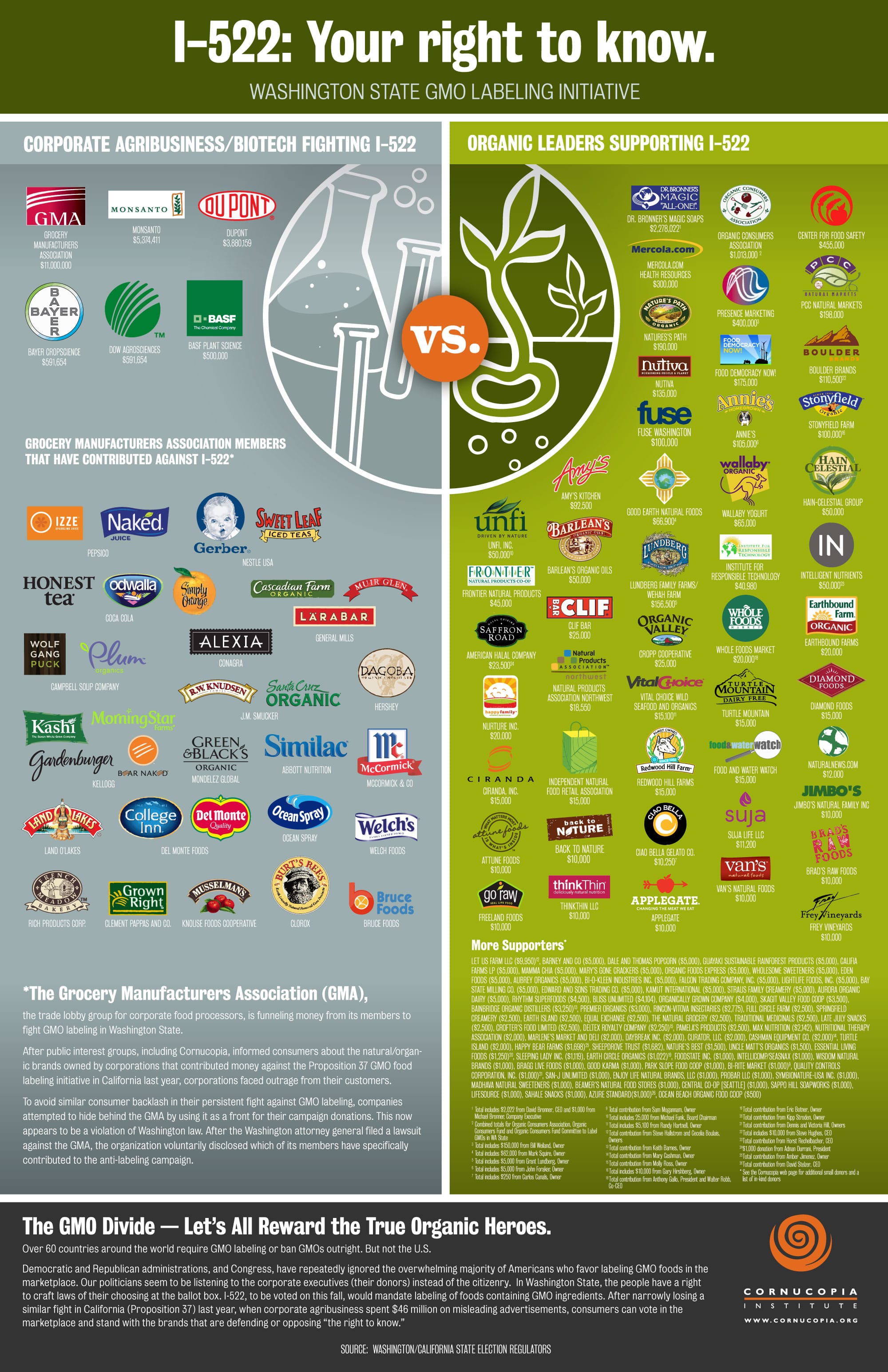
Earlier this month, General Mills announced that Cheerios would no longer be made with genetically modified (GMO) ingredients. Anti-GMO activists were pleased, while defenders of Corporate Food insisted it was no big deal. General Mills did have a relatively easy job of it; the only GMO ingredients in its original Cheerios were a little cornstarch and sugar which were readily replaced by non-GMO sources. Unfortunately, General Mills is not removing the GMO ingredients from its myriad other products so there is no reason to think that the company is concerned about the widespread use of GMOs. To the contrary, General Mills owns organic brands Cascadian Farm and Muir Glen which made campaign contributions that helped defeat the GMO labelling initiative in the State of Washington last November. Given all this, some people have suggested that the change with Cheerios was just a PR ploy. Maybe it was. Certainly General Mills knew that the move would appeal to many parents who feed Cheerios to their toddlers. Whatever the motivation, Cheerios going non-GMO is a very small gesture on the part of a very big food conglomerate.
So, does it matter? We at LocalHarvest think it matters deeply over the long run.
Most people in this country find themselves in the cereal aisle at least once a week. Most of those shoppers would probably not go out of their way to find a GMO-free cereal, but given that polls show that the vast majority of Americans want access to GMO-free food, we have to assume that many of them will be glad to have a convenient option. The change with Cheerios is important because it gives everyone a chance to easily and knowingly choose a product that is free of GMOs. What begins with Cheerios may very well carry over to other GMO-free products. Sometimes peoples' buying patterns actual strengthen their beliefs, which then deepen their commitment to their buying patterns. Anyone who buys organic food has probably experienced this; I know I did. I started buying organic vegetables and fruits out of concern about pesticides. Gradually, organic became a higher priority and I started investing in organic meat. Then I switched to organic milk and yogurt. I'm still working on cheese and get organic grains or beans when I can.
We start with something easy and eventually realize that the issue has become more important to us. We put effort into it. This is one way to create change. One choice leads to another, leads to another, and to a strengthened conviction over time.
Moving toward a GMO-free food system will take a lot more than Cheerios. But if a few million people get in the habit of buying this one GMO-free product, they may begin looking for others. If they do, America's food manufacturers will respond. What sells gets produced. Meanwhile, if even a couple of million of those people started making a little noise for GMO labelling, it will only be a matter of time before a labelling law gets passed in a populous state, and that could be the tipping point for labelling laws across the nation.
Genetically modified ingredients have infiltrated nearly every corner of the food system with very little public debate about the risks and possible benefits. It is that public discussion, along with the kind of labelling laws already in place in Europe and elsewhere, that we at LocalHarvest feel are vital. GMO-free Cheerios may play a role in furthering those causes...even if that wasn't General Mills' intent.
Until next time, take good care and eat well,
Erin
Erin Barnett
Director
LocalHarvest
P.S. Be sure to read on for the announcement of our new mobile version of LocalHarvest!
20 Nov Wed 2013
Being Grateful for What Is
LocalHarvest Newsletter, November 21, 2013

Welcome back to the LocalHarvest newsletter.
Thanksgiving is my favorite holiday. For weeks I look forward to preparing a beautiful meal and relaxing with my family. Sadly, Thanksgiving night invariably finds me deflated. I regret having gotten irritable in the final crazy minutes of gravy making and turkey carving or feel dispirited by the lack of meaningful conversation at the table. I miss the family members who are absent. I wish people would have gotten along better and connected more deeply. The list of discontents varies from year to year but the theme is the same: it didn't turn out exactly as I had hoped.
This year I am on to myself. All month I've been thinking about letting go of my imaginary ideals and showing up with an open heart for whatever happens. I anticipate that it may be a little hard to pull off on the big day. I know I'm not alone. For many people the holidays are a time of heightened need for things to be a particular way. Certainly there's nothing wrong with wanting a lovely holiday. But high expectations can hold us in their grip. What we want to see blinds us to what is actually in front of us and diminishes it. If we then distance ourselves from the imperfect, that gap makes it even harder to connect to things as they are. It is only in approaching a thing — be it this particular holiday meal or an individual human being — with attention that we can fully appreciate it, for all its faults and strengths, for all its funky uniqueness. Paying attention with kindness opens us to the wholeness around us. From there it is a short leap to gratitude. That which we see deeply enough can virtually always be counted as a blessing.
As we each look around our Thanksgiving tables next week, may we focus on the kindness and generosity that is shared between us and give thanks for the day we have been given, whether or not it is the one we had imagined.
Blessings on your holiday table.
Erin
Erin Barnett
Director
LocalHarvest
24 Oct Thu 2013
Yet More Shenanigans
LocalHarvest Newsletter, October 25, 2013

Welcome back to the LocalHarvest newsletter.
After the shenanigans of the last month it feels almost in poor taste to bring up yet another example of the folly in Washington. I would happily write about something more pleasant if there wasn't so much potential for damage here. The Food and Drug Administration has proposed another set of regulations that, if implemented as written, will negatively affect many LocalHarvest farmers and could very well put some of them out of business. (Careful readers will recall a similar theme in last month's LH newsletter concerning outdoor access for chickens; believe it or not, this is a separate issue.)
These proposed regulations fall under the Food Safety Modernization Act (FSMA), the first overhaul to food safety rules in 75 years. For several years before its 2010 passage, farm and food activists worked hard to make sure that the law would address the known threats to food safety from industrialized agriculture, and differentiate between those activities and ones that are non-threatening. Thanks to their hard work, Congress passed an amendment exempting small-scale farmers, thus protecting them from overly burdensome regulations that shouldn't apply to them. But that didn't entirely work.
Sometimes 'fair' means that the same rules apply to everyone, but sometimes what is fair is to ask the people who engage in the riskiest activities to meet a higher standard than others. In the food system, the riskiest activities are those with a documented history of contamination leading to human illness. In the U.S., those products are bagged salads, sprouts, and much of what is grown downstream from confined animal feedlot operations (CAFOs — aka feedlots). Bagged salads are risky because when the salad leaves are cut they become vulnerable to pathogens; putting these vulnerable greens in a sealed container and removing the oxygen creates an excellent environment for bacterial growth over time. Sprouts are risky because of a history of contaminated seeds and the lack of sufficient post-harvest safety checks. Irrigation water tainted by runoff from CAFOs may contaminate produce. Instead of focusing the regulations on these few problem areas, though, the FDA produced a set of rules strict enough to keep the high-risk products safe and applied it to all produce. According to The Cornucopia Institute, over 90% of the farmers to whom the regulations will apply do not produce these high-risk foods. Requiring them to abide by the same strict rules just isn't fair.
Nor is it smart. Despite being so expensive to implement that the FDA itself predicts the new rules will put some small- and medium-scale produce farmers out of business, asking them to follow these rules is unlikely to make the food system any safer at all because these farmers are not the bad actors. Society will lose an unknowable number of good farmers for nothing, and good food will become harder to find. We think the government has a role in keeping the food system safe, but rules that put good farmers out of business and leave gaping holes in known problem areas is not wise governance.
Several organizations have developed excellent materials through which you can learn more about these proposed regulations and their impact. One good source is The Cornucopia Institute. If you really want to dig in, read their whitepaper on the food safety rules. Another good source is the National Sustainable Agriculture Coalition. They offer step by step instructions on how to submit a public comment and what to say. Finally, the offers an in-depth analysis, sample comments, and a downloadable PDF flyer that can be printed and distributed at farmers markets.
I hope that many of you will help protect LocalHarvest's produce farmers by contacting the FDA before the November 15 deadline. Let them know that you want the FDA to create rules that don't unfairly burden the small- and mid-scale farmers from whom you like to get your food. Good food — and good farmers — are worth protecting.
Until next time, take good care and eat well.
Erin
Erin Barnett
Director
LocalHarvest
20 Sep Fri 2013
Organic Eggs: Help Keep them Real
LocalHarvest Newsletter, September 21, 2013
Welcome back to the LocalHarvest newsletter.
This month and next we are devoting this space to two important sets of regulations that, if implemented as written, would seriously undermine the integrity of organic food and the viability of small scale vegetable and fruit production. It is one of those times when people who care about good food need to make our voices heard - because what's at stake is important, and because some of what is being proposed just plain defies reason.
Today's concern is the new FDA's proposed guidelines for organic egg producers. One cornerstone of the existing organic law regarding egg production is that chickens must have access to the outdoors - you know, grass and sun, dirt and bugs. Stuff chickens like. Under the new FDA guidelines, organic egg producers could forego actual chicken yards in favor of enclosed porches attached to the henhouse. But the porches don't need to be big enough for all, or even most, of the chickens to use at once. Allowing some hens to crane their necks and see the great outdoors from their confinement does not uphold the spirit of the existing laws governing organic.
Our concern here is that the guidelines give large-scale egg facilities the green light to tack on a little porch to the outside of the poultry house, close down the chicken yard, and continue to call their eggs "organic". In fact, this already happens. According to The Cornucopia Institute, giant organic egg operations are currently housing 100,000 birds in a building equipped with a porch so small that only 1-3% of the birds can elbow their way out there. The USDA, the agency charged with enforcing organic law, is already being threatened with lawsuits for failing to enforce the outdoor access rule. With these new Salmonella guidelines, the FDA is essentially building a backdoor for the USDA to get out of enforcing this rule, thereby undermining both the spirit of the organic law and the efforts of those egg producers who take on the extra work of letting their birds roam outside.
The goal of the FDA's proposed guidelines is to reduce exposure to Salmonella. This is a worthy goal, without question, but scientific studies have demonstrated that eggs raised in systems providing true outdoor access for the birds have lower incidences of Salmonella than do those of confined birds. For more on this point, I recommend reading The Cornucopia Institute's evaluation of the scientific literature.
I mentioned above that aspects of the proposed guidelines fly in the face of reason. Here comes that part. One way that the FDA is attempting to limit exposure to Salmonella is by directing farmers to limit the hens' exposure to wild birds and other wildlife. Never mind that the science doesn't demonstrate a significantly lessened risk of Salmonella among hens kept away from other birds - though that does seem relevant. But let's picture it for a minute. We're egg farmers. We're organically certified, so we have a nice yard where the birds spend a good deal of the day sunning themselves, scratching around, pestering one another - being chickens! Wild birds fly overhead. Sometimes they land on the fence and once in a while they light in the yard. If we follow the proposed guidelines, we'll have to keep the birds away. How will we do it? The FDA suggests several methods, including putting bird netting or a roof over the entire chicken yard. This would be costly and a maintenance nightmare. The FDA's second suggestion is to use noise cannons. These emit an "almost sonic level" sound every minute or so, according to one cannon manufacturer. The cannons would no doubt frighten away the wild birds. Trouble is, they are also going to scare the chickens, and scared chickens don't lay eggs.
If organic farmers are required to keep wild birds away from their hens, having the birds outside is going to be extremely difficult, if not impossible. Kind of makes the enclosed porch seem like a good idea, doesn't it? …except that common sense and the science both say that hens are actually healthier and their eggs have fewer incidents of Salmonella when they are allowed to roam around outside.
At LocalHarvest we feel that there is a significant difference between eggs laid by chickens who spend time in the sun and those from chickens who don't. If these federal agencies either fail to enforce the National Organic Standards or throw up roadblocks to their implementation, the "organic" label will not allow consumers to tell the difference.
We have to wonder if that isn't the point.
Just today a journalist writing about the local food movement asked me if I think there will be a point when small scale agriculture threatens large scale ag enough to result in some push back. I said, "That day is here!" and told him this story as an example. It isn't the small scale organic egg producers asking for work-arounds to the outdoor access rule.
The FDA's official comment period for this issue closes this Monday, September 23. We are hoping you will take a few minutes to weigh in with them before then, though it would still be worth doing even after the 23rd. You can do so directly here or through The Cornucopia Institute. They have done a lot of good work on this issue and have a proxy letter you can sign that they will hand deliver to the FDA.
Thank you for your attention to this issue. We'd love to hear what you think about it.
Until next time, take good care and eat well.
Erin
Erin Barnett
Director
LocalHarvest
29 Aug Thu 2013
Stocking up for Winter
LocalHarvest Newsletter, August 30, 2013
Welcome back to the LocalHarvest newsletter.
A perfect August Saturday morning for me looks like this: a little sleeping in, a little breakfast, and then a walk downtown with hubby and daughter, maybe stopping for a cup of coffee before making our way to the farmers market. The trick is to feel like we're not rushing, but also to not lollygag and miss all the good stuff. We also like to take our time once we get there. We chat with vendors and friends, get pastries and find a bench where we can eat and people-watch, and then we walk around again and buy whatever looks good. After an hour or so we amble on home, bags heavy with produce. We unpack, and when we get hungry make a simple lunch like tomato-cucumber-feta salad (a little olive oil and balsamic vinegar - so simple, so good) and broiled eggplant with mozzarella on toast. It's the kind of morning and the kind of meal that make us feel rich.
All summer, but especially in August and September, I go to the market with my freezer in mind. If I'm buying eggplants, say, I might buy two for the aforementioned meal and two to freeze. For those who enjoy farm-fresh food but don't care to can or dehydrate food, freezing is a great option. It's quick and easy, and can be done in small batches. Not a lot of freezer space? Then choose just a few of summer's treats to take with you into the winter. Here are a few things I'm hoping to have in my freezer by summer's end.
Berries: Couldn't be easier - just put them in quart-sized freezer bags and lay flat in the freezer. Great for smoothies and muffins.
Eggplant: Roasted eggplant freezes well, in slices or whole fruit. We make with ours in the winter, as the texture breaks down a bit in the freezer.
Bell peppers: Easy as berries - just quarter them, remove seeds and put in freezer bags for use in winter chili, pizza, eggs, etc. Or roast them and then freeze - beautiful.
Tomatoes: These can also just be quartered and put in freezer bags for use in winter chili, soups, and sauces. You can remove the skins before freezing if you like. It's a little extra work, but not hard, and makes a smoother final product. A third, and most succulent, option is to roast them and then use in quiches, on pizza, in soups, wherever a sweet, slightly acidic kick would be welcome.
Winter squash: Halve, roast, scoop out of shell, and freeze. We put it in quart sized yogurt containers and use to make squash soup all winter long.
The beautiful thing about all of these projects is that if you prep a little extra produce when making summer meals, you can set yourself up for beautiful winter meals with very little extra work.
I know that many of you are food preservers extraordinaire. What are your favorite things to get at the farmers market and put by? We'd love to hear.
This month we're announcing a partnership with the recipe site, Yummly. See below!
Until next time, take good care and eat well.
Erin
Erin Barnett
Director
LocalHarvest
22 Jul Mon 2013
Getting the most out of your CSA
LocalHarvest Newsletter, July 23, 2013
Welcome back to the LocalHarvest newsletter.
I like to wring every drop of goodness out of summer's abundance. Last month I wrote about making the most of your summer produce in the kitchen, and this month I ‘m thinking about how to get the most out of your CSA. My notes for this article originally approached the subject from a different angle, "how to be a good CSA member." When I started digging in, though, I realized that they amount to the same thing. At its best, a CSA creates a mutually beneficial relationship between you and your farmer. Cooperation, connection, and full bellies all around.
Like any relationship, a CSA takes some work. Here are a few things you can do to have an excellent experience as a CSA member, now or in the future.
Familiarize yourself with what grows when.
Many of us have gotten so used to grocery store shopping that we don't know what month the local tomatoes get ripe. This lack of knowledge can lead to disappointment and unfounded criticism of the farmer. If you're new to seasonal eating, it's a good idea to ask your farmer for a list of what kinds of foods to expect when, so you can pace your anticipation.
Make peace with visits to the produce aisle.
Most CSA members supplement their CSA box with a few items from the produce aisle, as many families want to eat more fruit than is provided in their box, or find they need more staples like onions and garlic. CSA manager JoanE Marrero from J.R. Organics in Escondido, CA, finds that some people get frustrated because they do not get the same array of produce available at a grocery store. Most people find themselves eating a wider variety of vegetables with a CSA, but if you find yourself missing some of what you're used to getting at the supermarket, by all means supplement.
Read the policies.
Each CSA operates a little bit differently when it comes to refunds, vacation policies, pick-up procedures, and the like. Part of being happy with your CSA and being a good CSA member is knowing and respecting the way things are run.
Get to know your farmer and the farm.
Farmer John Peterson of Angelic Organics in Caledonia, IL, appreciates CSA members who look beyond the food and become interested in the farm itself. "The food is just the result of the farm; it's the overflow from the farm. The most important thing is the farm itself," he says. He recommends that CSA members allow themselves to be curious about the people who live and work on the farm, the culture of the farm, how the work is done there, and what it's like for those who do it.
Talk to your farmer.
After enjoying the great food, this is probably the most important aspect of getting the most out of your CSA experience. Talking with the people who run your CSA is what takes the experience beyond the transactional and creates that sense of belonging to the farm that so many CSA members value. It also offers the opportunity for mutual understanding and that can nip any potential frustrations in the bud. JoanE Marrero emphasizes the importance of communication: "The contents of our boxes are guaranteed. If for any reason, someone is unhappy with an item, we happily offer replacements. Since we are dealing with highly perishable items, there is bound to be spoilage at one time or another. When this happens, some subscribers who are not aware of our guarantee are disappointed and decide to discontinue with the program without sending any feedback. Those who do communicate are given replacements, and as they continue with the program, realize that the majority of the time the box contents are in excellent condition." Talking helps.
But not an hour before the delivery.
Kerry Glendening, LocalHarvest's site coordinator, has noticed that many of people's complaints about CSAs result from members trying to make last minute changes to their delivery and being disappointed when farmers can't honor them. In the hours before a CSA delivery, farmers feel a lot like you do in the hours before your entire extended family arrives for Thanksgiving dinner. Imagine Aunt Ethel calling while you're stirring the gravy to say that Cousin Yvette needs a special meal, please. Timing is everything. Many farmers may not be able to respond to last minute requests, but are often able to be flexible with more notice.
Getting the most out of your CSA and being a good CSA member comes down to having realistic expectations, getting to know your farmers, and talking with them right away if something is amiss. We encourage you to utilize the farm review feature on LocalHarvest.org to let others know about your experience with your CSA and other local farms.
The ideas are geared toward current CSA members. If you're considering of signing up for a CSA we have an article with some suggestions about how to choose one. And if you get your produce at a farmers market rather than through a CSA, I'll be writing about farmers markets next month!
Until next time, take good care and eat well.
Erin
Erin Barnett
Director
LocalHarvest
26 Jun Wed 2013
Making the Most of your Summer Produce
LocalHarvest Newsletter, June 27, 2013
Welcome back to the LocalHarvest newsletter.
We've been hearing from many LocalHarvest users who are facing a new challenge, and this month we hope to help address it. As more and more people sign up for a CSA or decide to shop at the farmers market, they find themselves faced with an unforeseen conundrum: what to do with all the produce! No one likes to waste food, and few people can pull veggies out of the frig and just start cooking, especially when their local farmers are introducing them to members of the plant kingdom that are entirely unfamiliar. ("Errr.... what is this thing and how on Earth do you eat it?") This month we are offering a few resources to help answer two of summer's persistent questions: what else can you do with kale? And, what's for supper?
The first cookbook is a new publication from the creators of the popular From Asparagus to Zucchini, A Guide to Cooking Farm-Fresh Seasonal Produce, previously featured here and relied upon by many. The new book is called Farm-Fresh and Fast: Easy Recipes and Tips For Making the Most of Fresh, Seasonal Foods. In addition to all the new recipes, this book is valuable for its unique organization. Fruits and vegetables are grouped by anatomical type (e.g. leafy greens, roots) so that readers can learn how to make appropriate substitutions within like types. Each section also includes several "master recipes" from which home cooks can absorb the basic template for making, say, a blended vegetable soup, and then venture off on their own. If you like From Asparagus to Zucchini, you'll love Farm-Fresh and Fast.
A second cookbook featuring myriad ideas for using fresh produce is Cooking from the Farmers' Market. This one is full of beautiful full-color photos, making the paging through a pleasure in and of itself. Organized by major produce ingredient, sweet recipes are interspersed with savory, so "Pork Tenderloin with Rhubarb Chutney" and "Tangy Rhubarb-Strawberry Pie" share a page. This arrangement is ideal for those coming home from the market with a couple of bags of produce and no particular plan, as all the recipes for one item are grouped together.
Finally, I want you to know about another great book called Local Flavors: Cooking and Eating from America's Farmers' Markets, by well-known chef and cookbook author, Deborah Madison. Madison visited markets all across the country and then wrote a cookbook that is as beautiful as it is informative. The 350 recipes are top notch. This is food my family and I like to eat.
If you're taking your commitment to eating local, seasonal food to a new level this year, or need a shot of inspiration after a few years of eating local, set yourself up for success: get a good cookbook. We recommend the ones mentioned above, but also encourage you to look for regional cookbooks focused on the fresh produce that grows in your area; there are sure to be a few excellent ones on your bookseller's shelves. Having appealing recipes at your fingertips takes the intimidation out of working with vegetables that are new to you, and makes the process of cooking even your old standbys something to look forward to.
Thanks to the publishers of the first two books mentioned in this article, we have five copies of each to give away to lucky LH newsletter readers! Sign up for the giveaway by midnight on Tuesday, July 9. If you're one of our randomly chosen winners, I'll be in touch the following week!
Until next time, take good care and eat well.
Erin
Erin Barnett
Director
LocalHarvest
20 May Mon 2013
Survey Says….!
LocalHarvest Newsletter, May 20, 2013

Welcome back to the LocalHarvest newsletter.
Several months ago, we sent out a survey to all of the CSA farmers in LocalHarvest in cooperation with researchers at Lehigh University and the University of Maryland. We were interested in learning more about how our CSA farmers are setting up their programs, interacting with their members, and using technology to support their CSA. Over 850 CSA farmers participated in the survey, and this month we are sharing some of the results with you.
One thing the researchers found is that the vast majority of these farmers rely on the Internet to spread the word about their business. Over 80% have their own websites, and three-quarters of them use Facebook to connect with their members. Back in 2000 when we launched LocalHarvest, many farmers did not have reliable Internet access, and only a handful were selling their products online. Times have changed, and farming has changed with them.
The aspect of the survey that was most interesting to us was the piece about CSA member retention. Many CSA farmers tell us that one of the most difficult aspects of running their CSA is increasing their membership. In many areas of the country, the public now has a number of CSAs to choose from, and that increased competition affects individual farms' CSA capacity for growth. Member renewal rates also affect growth. When it's low, farmers have to recruit many new members just to keep their CSA the same size. In this survey, 41% of CSA farmers reported what we would consider a very good to excellent member retention rate of more than 75% between 2011-2012. Approximately 30% reported a 50-75% return rate, and another 30% had less than half of their membership return in that period.
Many factors go into a shareholder's decision whether or not to re-join a CSA for another year: among them the quality and quantity of the food relative to expectations, a sense of connection with the farm, life circumstances, and what we would call "rightness of fit." Our sense is that this last piece might be the most significant. As the CSA model becomes more popular and available, a wider diversity of people are trying it. For some, it's a great match and becomes their new way to eat. Other people discover that they don't like to cook nearly as much as they thought they did, or that they really only want to eat a few kinds of vegetables. Unless they find a friend to split a box with, CSA may not be for them.
The researchers analyzed their data to find the practices that most influenced member renewal rates. Two things that CSA farmers can do in this regard, the survey found, are hosting special events on the farm, and building personal relationships with members. This makes sense. Many people join a CSA in order to develop a connection with a farm, so farms that are good at this will likely keep more members from year to year.
Far and away the strongest correlation for member retention found by the study, though, is allowing members to choose what items go in their baskets. The traditional agreement in a CSA is for members to accept whatever the farmer puts in the weekly box; nowadays, however, an increasing number of members and potential members are looking for more choice in their CSA. Some farmers meet this need by setting up farmer's market-style tables at the pick-up location and allowing members to choose their own vegetables within certain parameters. Others offer members the option to customize their box online, either completely or by selecting "Box A" or "Box B" each week. We at LocalHarvest have long thought that increased choice would become an essential part of the CSA model's long term growth, so we built several options for box customization into our CSA management software, CSAware.
If you are a CSA member, your yearly commitment to a particular farm means a lot to that farmer! When a farm has earned your loyalty, your annual CSA membership is a great contribution to your local food system. It contributes to that farm's stability and capacity for growth. Sometimes a long-term relationship with a farm may require communication, should issues arise. Are you getting too much produce and thinking of leaving the CSA because you don't like to waste it? Talk with your farmer! Getting what feels like too little for the money? Talk with your farmer! Many concerns can be worked out if addressed directly; if left un-communicated, they sometimes grow into a general sense of dissatisfaction, which doesn't serve anybody. We'll be taking up the issue of how to talk with your farmer in our June newsletter.
Meanwhile, if you have joined a CSA in the past, we'd love to hear what you have to say about your reasons for staying or leaving. If you're a farmer, what factors do you think most affect your renewal rates, and what levels do you consider a good year for membership renewal?
Until next time, take good care and eat well.
Erin
Erin Barnett
Director
LocalHarvest
28 Mar Thu 2013
When Love is an Ingredient
LocalHarvest Newsletter, March 29, 2013

Welcome back to the LocalHarvest newsletter.
A little while back I was on a road trip and stopped at a coffee shop for a snack. I picked up one of the extra large cookies on the counter to see what was in it, and there, listed at the end of the usual ingredients was 'love.' I am sorry to say that my initial reaction included a tiny bit of eye rolling. It felt a little gimmicky - but it got me thinking. If we can put love into food, all sorts of possibilities open up, including how we think about good food.
We who appreciate good food sometimes struggle when it comes to describing it. Does it need to be grown within a certain number of miles? Does all organic food count? What if its parent company was a multinational? It gets complicated. Maybe there is some shorthand that would help, and maybe that shorthand is this: good food is grown and prepared with love.
What does that mean, exactly? How do we add love to our food? For myself, one important piece is simply paying attention to both the ingredients and the act of cooking. It's the easiest thing in the world to throw together a quick supper while thinking a thousand racing thoughts about everything but the vegetables in my hands. But really, it is almost as simple, and infinitely more satisfying, to close the mental door on the day, focus on the task at hand, and take note of the fact that this food - this onion, these beans, this rice - this food right here will nourish me and my family, will become the energy that sustains us. Being mentally present and open-hearted changes what happens in the kitchen. It's noticeable. My husband appreciates food and the effort home-cooking requires, and even when I've just thrown dinner together he looks at it and says, "Thank you for cooking, sweetie." But when I've really put my heart into it, he'll almost always say something like, "Wow, this is beautiful." And it is.
So love changes food and the way we perceive it. I think this is one reason so many of us are drawn to farmers markets, farm stands and CSAs. Much of this food has been loved its whole life, and some part of us knows that. While not every farmer would use the word "love" in relation to what he or she does in the fields, I think it's a fair descriptor of what's going on when someone works for months to raise a crop, poring over crop rotations and seed orders, scraping weeds away from seedlings, sifting soil between their fingers to test the moisture, and getting up at 4:00 every morning to care for animals and load trucks and do the million other things necessary to bring in the harvest. Such work requires sustained attention, and usually, what people attend to deeply opens their hearts. Crops raised in this way, like meals prepared with care at home, are good food.
When we give our full attention to that which sustains us, whether we are growing, preparing, serving or eating it, that attention becomes a form of blessing. And we too are blessed.
Until next time, take good care and eat well.
Erin
Erin Barnett
Director
LocalHarvest
24 Jan Thu 2013
The Power in Homemade Things
LocalHarvest Newsletter, January 25, 2013

Welcome back to the LocalHarvest newsletter.
Last summer I started making cheese at home. It's nothing fancy, just a little two-step soft cheese, but I absolutely love having it around. It goes well with many foods, is light and tasty, and because it is made of goat's milk, is easy to digest. But the level at which I am into this cheese goes beyond all that. I finally realized that making cheese is deeply satisfying because I had previously put it in the category of things that have to be bought at a store. Learning to make this one simple cheese turned me into a producer, which made me feel more active, more resourceful, and more capable.
Long ago the American farmer and philosopher, Wendell Berry, wrote about the societal cost of our collective case of "cheap energy mind." This is the mindset that believes that the world can supply our every material want without consequence. It has driven myriad aspects of public policy for the last sixty years and brought us things like disposable electronics, Land Rovers, and agribusiness as we know it. Cheap energy mind maintains that making things you could buy is a waste of time. We live in a society steeped in this belief, so even small steps in the direction of self-sufficiency amount to acts of both creativity and resistance to the pull of the norm.
Any time we decide to let our innate curiosity loose, we participate more deeply in the world - how do you make cheese anyway? How about bread, or beer? We experience this deeper engagement, I believe, as a sense of being more fully alive. Making things is good medicine both for ourselves and for the world. For now more than ever, the world needs all of us to be vibrantly alive.
Homemade cheese anyone? My recipe is below.
Until next time, take good care and eat well.
Erin
Erin Barnett
Director
LocalHarvest
20 Dec Thu 2012
Protecting the Essentials

Welcome back to the LocalHarvest newsletter.
Tonight will be the longest night of the year. For many, this time of deepened darkness offers a welcome counterbalance to the stresses of the holiday season. The long evenings make us want to curl up in bed with a book, immersed in quiet. This year the darkness offers another kind of retreat, a space to grieve the sorrows we carry as a nation. It is a time to turn inward. When we do, many of us find that we hunger for that which is simple and meaningful and real. We long for life's essentials.
In the world of agriculture, one of these essentials is the land itself. We who love good food often focus on the fruits of the land, but that natural abundance is only possible when soil is cared for over time. Protecting farmland is vital to strong local food economies. The common good requires farmland that is safeguarded from erosion and toxic chemicals, and public policies that recognize the value of well-tended land and help preserve it from development. Organic farmers nourish the soil that we all may be fed.
Subjects like farmland protection can be dry and abstract until we are touched by a story. I recently read a book that brought this issue to life. It is called, Turn Here, Sweet Corn: Organic Farming Works. I recommend it. It is a good read and a powerful book. Beyond making a strong case for the soil, it is also a love story, a description of one couple's "growing up" into successful organic farmers, and a sometimes astonishing illustration of the intimate connections between people, plants and animals. And, it is a story of land lost once and then fought hard for. In the latter struggle, the farm was threatened by a proposed crude oil pipeline which would have destroyed the integrity of the soil, and thus the entire business. For those of you who like a good David and Goliath tale, this one will not disappoint.
This book reminded me how hard so many farmers work to stay on their land – working two or three jobs, working all hours of the day and night, sacrificing all sorts of comforts and security to keep on farming. In this season of counting our blessings, I am filled with gratitude for their labor, and for the commitment of all those who support them.
Until next time, take good care and eat well.
Erin
Erin Barnett
Director
LocalHarvest
28 Nov Wed 2012
What is Enough?

Welcome back to the LocalHarvest newsletter.
Here in the Midwest the harvest is in, at long last in my case. I spent Thanksgiving morning running between the stove and the garden, wanting to cut the last of the broccoli and chard quick before the thermometer dipped into the teens. A few squirrels ran up and down the trees near me as I bent over my plants, and I wondered if they, too, were saying, "Just a little bit more..."
I usually feel some pride in my squirrel-like tendencies. With Minnesota's long winters, producing a year's worth of food in a six-month growing season feels like a survival skill. My husband and I like the sense of security we get from going into the winter with a full larder. But it comes at a cost.
For many weeks now, the question of 'enough' has been swirling around my head like a fall wind. It trimmed my Thanksgiving menu to just our favorite things. "We don't need mashed potatoes or rolls; we have enough." And we did. It showed up again when my dad suggested we pare back our family's Christmas gift exchange. This too was an easy decision once I asked the question. "Do we need more stuff? No, we have enough." The place where I'm having real trouble seeing the line between plenty and excess is the garden.
We grow as much food as we possibly can, and buy more at the farmers market to preserve for winter. We like the work, mostly, and really appreciate having such intimacy with our food. But it has gotten to be too much. It feels like it's all we do. Every year we get ahead of ourselves in the spring and plant too much. Maybe we're afraid of running out; maybe that fear makes us a little greedy. Does a family of three really need 40 pepper plants? In any case, we only have so much time, and until now we have given an inordinate amount of it to the garden.
Every story of waking up to excess includes a moment of realization in the form of the credit card bill, the pants that no longer snap, a brush with the law, or what have you. My moment came in September when I realized that the camping season had passed and we'd only taken our daughter to the woods for a single night the whole summer. She loves camping. We all do. But we got there only one night all summer, because we were so driven to produce more.
Our society has quite a bit to say about 'more' - mostly that there is never enough, that we should forever do more, be more, and, especially in the holiday season, buy more. Looking at it that way, saying, "We have enough" about anything is almost a radical act.
Sometimes, of course, there genuinely is not enough. Every life includes experiences of scarcity, when there is not enough food or money or friendship or opportunity. What I am hoping for my family is that we can learn to recognize the difference between need and greed.
Next summer you'll find us in our downsized garden, some, but also in the woods; often, I hope. Very likely on Saturdays I'll be at the farmers market, buying the things we aren't growing ourselves. They always have plenty there. We'll have enough.
Until next time, take good care and eat well. Erin
Erin Barnett
Director
LocalHarvest
29 Sep Sat 2012
Sharing Meals

Welcome back to the LocalHarvest newsletter.
Over the weekend my husband picked up a class schedule from our local gymnastics club. Our daughter is five, and the press of extra-curriculars is beginning. The problem is that most of these activities fall squarely over the dinner hour, which I consider sacred. The practice of sitting down to eat with people we love is something we at LocalHarvest really value, but as we all know, it isn't easy.
Kids' schedules are not the only impediment to shared meals. Many of us work late, live alone, do shift work, or have obligations in the early evenings. In reality, living as we do in this age of busyness and distraction, sitting down with loved ones requires conscious intention. The pull of work, volunteer commitments, television, and the Internet are significant. If we are going to gather at the end of the day, we have to make a plan to do so.
An article in the New York Times published a few years ago identified eating dinner with others as one of three things that actually make people more happy. And on some level, we know this to be true. In a recent study by the International Food Information Council Foundation, nearly 90% of respondents thought it was good for their health to sit down and share meals with their loved ones.
Even though sharing an evening meal with others can make us happy, sometimes it seems easier not to bother. At the end of a day made stressful by work (or even more stressful by no work), and under the pressure of the ticking clock, it can be difficult to sit down around the dinner table at 6:00 and relax together.
What can we do to increase the odds of our sharing more meals? Lately my work has been busier than usual and I have had to simplify our menus in order to make sure we still eat at home, and eat decently well. I write out menus ahead of time and grocery shop for the week on the weekends. I've also taken to scheduling the cooking tasks so that not everything needs to be made at the last minute, such as cooking rice for the next day the night before, and this time of year usually roasting a big squash to serve throughout the week.
What strategies do you use to schedule shared meals and to make sure they go smoothly? Please share your ideas so we can all learn from each other.
Speaking of learning, several of you emailed me asking for citations for last month's article about organic food, specifically the part about organically grown food being more nutritious. Jim Riddle, whom I interviewed for that article, has made this well-cited article available to LocalHarvest readers; you'll find the reference section in the back.
Until next time, take good care and eat well.
Erin
Erin Barnett
Director
LocalHarvest