The LocalHarvest Blog
21 Sep Mon 2026
Processing the Year's Abundance
Store, Can, Freeze, Juice, Pickle, & Compost: Make the Most with this Season's Abundance
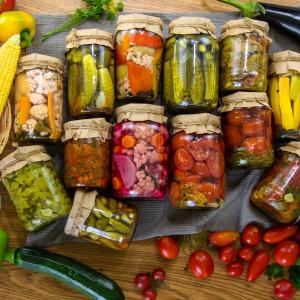
Have you ever received a CSA box but couldn't use all of the contents? Or maybe over-shopped at your local farmers market and realized, "Oh goodness, I have no idea what to do with all of this produce"?
Don't worry, you're not alone! We can only eat so much in a day, after all. None of us wants to waste peek quality produce, but sometimes the goods turn too quickly or we simply can't handle the surplus. That can create some guilt in the kitchen and even make us wonder whether a CSA is a good fit after all.
But here's another way to look at it: CSAs are meant to feed you in the present season and help fill your pantry for seasons to come.
A farmer's goal is generally to have enough produce rather than risk having too little. Farmers plant carefully and plan for a harvest that can feed their community, but Mother Nature is the real star here—and sometimes she gets carried away. The bounty just keeps multiplying.
That's one reason you may see your CSA farmer offering tomatoes, cucumbers, peppers, fruit, or other produce in bulk at the height of the season.
But wait. How did we get from having too much produce to deliberately buying it in bulk?
Seasonal eaters know the secret: when the harvest is abundant, it's time to preserve some of it.
Preserving isn't just for people with root cellars and shelves full of mason jars. You can freeze a bag of green beans, dry some herbs, pickle a few cucumbers, turn ripe fruit into jam, ferment cabbage, or make tomato sauce for a cold winter evening.
And when something really is past its prime, there's always the compost pile.
This article is meant to inspire you to preserve, store, can, dehydrate, freeze, ferment, juice, or compost the food you can't eat this week. These are old practices—our ancestors depended on them—and they're surprisingly easy to bring back into a modern kitchen.
Produce doesn't wait forever. Over time, plant tissues lose moisture and structure, enzymes continue to act, and microorganisms eventually get involved. Those beautiful greens you were planning to make into a special meal can turn into frankenfood seemingly overnight.
Learning a few preservation techniques can help you waste less food, stretch your CSA investment, and enjoy part of this season's harvest long after the season itself has passed.
Sustainable eaters understand two things:
1. This season's abundance won't last.
Peaches, tomatoes, peppers, berries, cucumbers, greens, and other crops have their moment. When they're at their best—and sometimes coming out of the fields faster than you can eat them—that's your opportunity to save some for later.
2. A lot went into producing the food sitting on your counter.
Seed, soil, water, time, weather, and plenty of human labor went into growing it. Throwing food away isn't just losing a vegetable. It's losing all of those resources too.
So let's save some of that abundance!
Canning
Canning is one of the classic ways to preserve the season's harvest. It can turn a mountain of tomatoes, cucumbers, peaches, or berries into sauces, pickles, jams, relishes, and other foods you'll be very happy to see several months from now.
Canning does require more attention to food safety than most of the other methods in this article. This is one place where it's important to follow a tested recipe rather than improvise. 
There are two basic methods: boiling-water canning and pressure canning.
High-acid foods—generally foods with a pH of 4.6 or below—can be safely processed in a boiling-water canner when you follow a tested recipe. This includes many fruits, jams, jellies, properly acidified pickles, and other high-acid foods.
Low-acid foods such as most fresh vegetables require pressure canning. A pressure canner can reach temperatures of about 240–250°F, which are needed to safely process low-acid foods. An ordinary boiling-water bath cannot reach those temperatures.
Tomatoes deserve a special mention. Their acidity varies, and modern home-canning recommendations call for adding a specified amount of bottled lemon juice or citric acid when canning plain tomatoes, even when some approved recipes offer a pressure-canning option.
The easiest rule is also the safest: use a current, tested canning recipe and follow its processing method, jar size, time, pressure, and altitude adjustments exactly. Good sources include the USDA and university extension programs.
Water-bath canning requires relatively little equipment: a large deep pot with a rack, proper canning jars and new lids, a jar lifter, and perhaps a canning funnel. Pressure canning requires a purpose-built pressure canner, but a good one can last for many years.
Once you get started, you may find yourself looking at that late-summer case of tomatoes very differently—and perhaps wishing Grandma had taught you all of this years ago.
Freezing
Freezing may be the easiest way to preserve a lot of CSA produce.
It slows microbial growth and the chemical and enzymatic changes that gradually reduce the quality of fresh food. Done properly, freezing preserves much of the flavor, color, texture, and nutritional value of produce.
Most vegetables should be blanched before freezing. Blanching means briefly putting the vegetables into boiling water or steam and then cooling them rapidly in cold or ice water. This slows the enzyme activity that would otherwise cause frozen vegetables to lose flavor, color, texture, and nutrients.
The exact blanching time matters and varies by vegetable, so look it up rather than guessing.
Fruits generally don't need blanching. Some fruits that brown easily can benefit from being placed in lemon water before freezing.
Packaging matters too. Use freezer-safe bags or containers and remove as much air as practical. Vacuum sealing can be especially useful for reducing freezer burn, but ordinary freezer bags and rigid freezer containers work well too.
For best quality, most properly prepared fruits and vegetables should be used within roughly 8–12 months when stored at 0°F or below. They don't suddenly become unsafe at the end of that period, but their quality gradually declines.
Here's another advantage: freezing lets you preserve food in useful portions. Freeze berries on a tray before bagging them, portion tomato sauce into meal-sized containers, or freeze chopped peppers so you can grab a handful whenever you need them.
Dehydrating
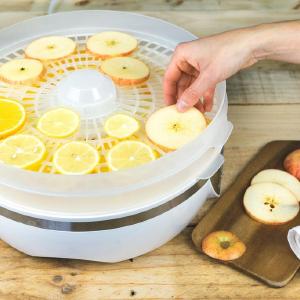
Dehydrating is another wonderfully simple preservation method. By removing moisture from food, you make it much harder for the microorganisms responsible for spoilage to grow.
You can use an electric dehydrator, an oven capable of maintaining an appropriate low temperature, or—for foods and climates where it can be done safely—a properly designed solar dehydrator.
Fruits, vegetables, and herbs are all good candidates. Dried tomatoes, peppers, apples, berries, onions, and herbs take up very little room and can last far longer than their fresh counterparts when properly dried and stored.
Dehydrating does change a food's nutritional profile. Some nutrients survive drying very well, while others—particularly some heat-sensitive vitamins—may be reduced. Because water is removed, dried foods also become much more concentrated by weight, including their calories and natural sugars.
But nutrition isn't the only reason to dehydrate. Dried produce is compact, portable, shelf-stable, and incredibly versatile.
And here's where it gets fun.
Once thoroughly dried, many vegetables, fruits, mushrooms, and herbs can be ground into powders. Tomato powder can disappear into a soup or sauce. Dried herbs can become seasoning blends. Dried vegetables can become the beginning of an instant soup.
Before you know it, you may find yourself making fruit leather, crackers, granola, dried snacks, or your own pantry mixes from food that once would have wilted from being forgotten in the refrigerator.
Pickling and Fermenting
Pickling and fermenting are related, but they aren't the same thing.
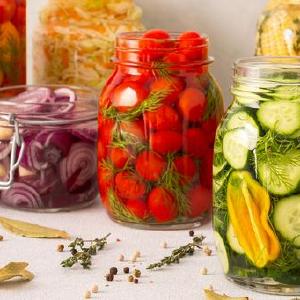
Pickling usually preserves food by creating an acidic environment, commonly with vinegar. The result can be sharp, tangy, crisp, and ready relatively quickly.
Fermentation relies on beneficial microorganisms to transform food over time. In vegetable fermentation, naturally occurring lactic-acid bacteria convert sugars into acids, producing the characteristic flavors of foods such as sauerkraut and kimchi while making the environment increasingly hostile to many spoilage organisms.
Fermented foods can contain live microorganisms when they haven't been heat-treated after fermentation. Research into the relationship between fermented foods, the gut microbiome, and health is active and promising, but there's no need to turn your pickle jar into a pharmacy. They're also simply delicious foods and a time-tested way to preserve a harvest.
Fermentation has deep roots all over the world: Korean kimchi, Japanese tsukemono, Filipino atsara, Turkish turşu, European sauerkraut, good ol' American Pickles, and countless other traditions grew in part from the same basic problem we're solving here—how do you keep the harvest around after harvest season is over?
As with canning, use a reliable recipe and pay attention to salt concentrations, acidity, cleanliness, temperature, and storage. Don't assume that every old family method is automatically safe simply because someone has been doing it for years.
Composting
As a farmer, gardener, and herbalist, composting may be one of my ultimate favorite projects.
There are few garden tasks more satisfying than hauling a load of "past prime" vegetables to the compost pile knowing they'll eventually feed the garden beds. I also love feeding the worms and all of the beneficial organisms doing the real work down there. The aftermath—a dense, dark, earthy soil amendment—feels like one of life's great cheat codes.
Why buy expensive fertilizers from the store, when you can just create your own.
Composting also keeps food scraps and other organic material out of landfills. That's important because organic material decomposing under the oxygen-poor conditions of a landfill produces methane, a powerful greenhouse gas. Composting turns those same materials into something useful instead. 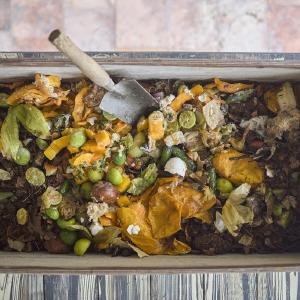
Finished compost adds organic matter to soil, helps soil retain water, supplies nutrients, supports soil organisms, and can improve soil structure and plant growth.
A backyard compost pile doesn't need to be complicated. Mix nitrogen-rich "greens" such as vegetable scraps and fresh grass with plenty of carbon-rich "browns" such as dry leaves, shredded cardboard, or small woody material. Keep the pile about as moist as a wrung-out sponge and give it enough air.
Turning the pile periodically speeds decomposition, although how often you need to turn it depends on the system you're using. A well-managed hot pile can produce compost fairly quickly; a passive pile may take many months.
If you don't have a yard, vermicomposting—a worm bin—can work surprisingly well in a small space. Many communities also offer municipal or commercial food-scrap composting.
Juicing
And lastly, when you'd like something refreshing with breakfast or brunch, you can always juice some of your surplus fruits and vegetables.
A glass of juice can provide many of the vitamins, minerals, and plant compounds found in the original produce. It can also be a handy way to use a collection of vegetables and fruits that aren't otherwise going to make it into dinner.
But juice isn't nutritionally superior to whole fruits and vegetables. Most juicers remove much of the fiber, which is an important part of the food. Blending whole produce into a smoothie retains more of that fiber.
Fruit-heavy juices can also deliver a lot of natural sugar very quickly, so vegetables make a good foundation when you're experimenting with combinations.
Celery, cucumber, carrots, beets, greens, apples, citrus, ginger, and herbs can produce an almost endless variety of flavors. Use what's abundant and experiment.
Fresh juice is also perishable. It's best consumed promptly and kept refrigerated if it isn't going to be drunk immediately.
Think of juicing as another tool in the toolbox—not a miracle cure, detox, or replacement for eating whole produce. It's simply one more enjoyable way to make sure that nutritious CSA bounty doesn't go to waste.
Make the harvest last
Your CSA box doesn't have to disappear within seven days.
A bunch of basil can become dried herbs or pesto for the freezer. Cucumbers can become pickles. Cabbage can become sauerkraut. Tomatoes can become sauce. Berries can become jam. Peppers can go into the freezer. Vegetables that got away from you can feed the compost pile and eventually help grow another crop.
Once you begin thinking this way, abundance stops looking like a problem.
It starts looking like a pantry.
So get creative with your CSA box. Preserve a little of this week's harvest and enjoy it a month—or a season—from now. You may even discover that next year, instead of wondering what you're going to do with all those vegetables, you'll be asking your farmer:
"Any chance I can get a whole case?"
Resources we recommend:
1. Ball Complete Book of Home Preserving
4. https://dehydratorliving.com/dehydrator-guide-for-beginners-ebook/
5. Wild Fermentation: The Flavor, Nutrition, and Craft of Live-Culture Foods