
12 May Sun 2019
Martha Stewart on Raising chooks
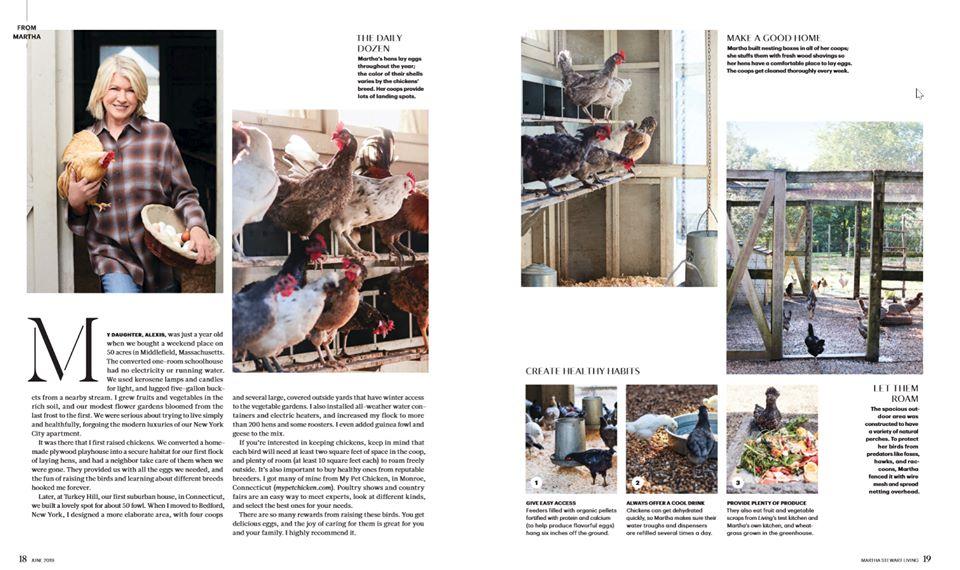
This article from Martha is in June/July 2019 Martha Stewart Living magazine. She no longer seems to have Ameraucana, and no roosters in her Bedford, New York house (she sold the place in Litchfield) but lots of hens for a multi-coloured basket.
29 Mar Wed 2017
Hollyhock seeds are fine for chooks
Found this old article from 1920 in the New York Times archives about using hollyhock seeds (rose of sharon) for poultry. Hollyhocks put out alot of seeds during the bloom, shake those stamens, and you can safely give it to the chickens. Of course as a winter food is problably a lot more than anything you can reasonably harvest, but who knows? Maybe you have a lotta Rose of Sharons and few hens and it may work as a treat.

21 Sep Wed 2016
Fear of open spaces may have some value
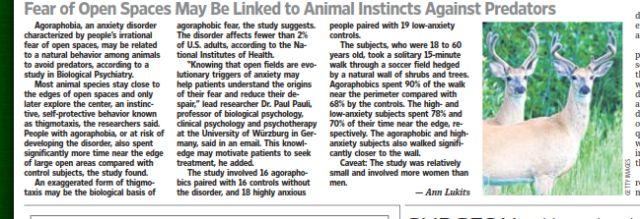
This article from the WSJ says that chickens fear of open spaces, typically attributed to cowardice, maybe just good common sense, in a study done at the University of Wurtzberg, Germany demonstrates. The idea is that open fields are evolutionary anxiety triggers, as larger predators can move faster over it than their smaller pray, whom in turn have no place to hide. I have seen this in action in my own fields, when a chook is cornered by the big hulking Russian wolfhound, aka Borzoi. Gusto can literally tear up ground in seconds, while the little chook is frantically trying to make flight. If not stopped in time, it's dead meat as Gusto loves the chase but not the raw bird.
Chicken rollatini is always in season
From Food & Wine, a green chicken dish.
- Season the chicken breasts with salt and pepper. Tightly roll them up lengthwise and secure with toothpicks at 1-inch intervals.
- In a large saucepan, combine the vinegar, 3/4 cup of water and a pinch of salt and bring to a gentle simmer. Add the chicken and cook over low heat until just white throughout, 10 to ?12 minutes. Transfer the chicken to a work surface and let cool slightly. Discard the toothpicks. Slice the chicken crosswise into 1-inch-thick rounds.
- In a large bowl, whisk the olive oil with the mixed herbs and season with salt and pepper. Add the chicken, turning to coat evenly in the herb oil. Let cool to room temperature, about 30 minutes. Cover and refrigerate for at least 2 hours or overnight. Bring to room temperature and serve with crusty bread.
02 Aug Tue 2016
Why you should bag your clippings
If you let your grass clippings on the soil, eventually the grass will trun to thatch. This article, at the end, and most who advocate that practice, ignore that problem. Instead, bag it, and compost it and everyone will be happier.
How to Prepare and Use Compost
Remove grass and sod cover from the area where you construct your compost pile to allow direct contact of the materials with the soil's microorganisms. This recipe works well.
- 1st layer: 3-4 inches of chopped brush or other coarse material on the very bottom, touching the soil surface.
- This material allows air circulation around the base of the heap.
- 2nd layer: 6-8 inches of mixed scraps, leaves, grass clippings, etc.
- Materials should be “sponge damp.”
- In composting too much water is a major reason for its failure. Less is more with composting and water.
- 3rd layer: 1 inch of soil serves as an inoculant by adding microorganisms to the heap.
- 4th layer: (optional) 2-3 inches of manure or coffee grounds, to provide the nitrogen needed by microorganisms.
- Sprinkle lime from the garden center, wood ash, and/or rock phosphate over the layer of manure to reduce the heap’s acidity.
- Add water if the manure is dry.
- Add one pound of urea fertilizer or 10 pounds of composted poultry manure per yard of leaves or ground brush if organic sources of nitrogen are not available.
- 5th layer: Repeat steps 1-4 until the bin is full. Put a tarp on it, to help heat up the process and keep water out.
USDA and Hydroponics
The USDA released a report July 21 submitted to the Agricultural Marketing Service National Organics Standard Board regarding whether or not products cultivated via hydroponic or aquaponic farming qualify as organic.
According to the National Organics Standards Board Hydroponic and Aquaponic Task Force, both hydroponic and aquaponic farming should not qualify as organic because they do not improve soil quality, which is a mainstay of organic farming.. Read more here.
GMOs now must be labelled!
President Obama signed into law, a bill requiring a Federal labeling standard for foods containing genetically modified ingredients (commonly called GMOs)
Two weeks ago, Congress passed the legislation which would require food packages to display an electronic code, text label, or some sort of symbol signifying whether or not they contain GMOs, according to The Associated Press.
The exact details will need to be worked out by the Department of Agriculture, which will have two years to write the rules. Read more here.
18 Jul Mon 2016
Writing for Food
In June 1938, the Federal Food, Drug and Cosmetics Act (“FDCA”) repealed much of the former Pure Food Act and created a more detailed regulatory scheme. It carried forward the 1906 Act’s emphasis on outlawing adulteration and misbranding of food. The operative paradigm of the FDCA is to provide consumers with food content information and let them decide whether the food is appropriate for them to eat.
When the FDCA was enacted in 1938, it too did not define what constitutes “natural” or “organic” food. It defines the word “food” as “(1) articles used for food or drink for man or other animals, (2) chewing gum, and (3) articles use for the components of any such article.”[21] “Processed food,” in turn, “means any food other than a raw agricultural commodity and includes any raw agricultural commodity that has been subject to processing, such as canning, cooking, freezing, dehydration, or milling.”
The FDCA distinguishes food from drugs. A drug includes “articles intended for use in the diagnoses, cure, mitigation, treatment, or prevention of disease in man or other animals” as well as “articles (other than food) intended to affect the structure or any function of the body of man or other animals.”[23] When food producers make unsubstantiated health claims to promote their food products, they risk having their food categorized as an unapproved, hence an unlawful new “drug.”
17 Jul Sun 2016
Christine Heinrichs on Bantams

The Ameraucana Alliance APA Judges
 The Ameraucana Alliance has two directors that are Judges. Jim Fegan and Jeannette Frank.Just posting this in case you are in their area and looking for good fowl.
16 Jul Sat 2016
The chantecler died
She was a great brood mother. Unfortunately, she had a black cap on her head, which I was told by the Club Founder, Mike Gilbert, was not APA accepted. Pity, I liked that look at lot; I think that was a mistake. Still that was the case, so what can you do; she never went a show room but stayed on the farm, and was happy.
This year she was in her glory. She would go around cluck and worry about her chicks, all buff Ameraucanas, and look after the 25 counting heads and making sure they were all there. Some of them got culled early on because they had crooked or scissor beaks. When I killed them, she would scream and look for them and then huddle the survivors under her broad wings for protection.
 |
| Cornish partridge female. My chantecler female with the black head was similar but the eyes were not as prominent and of course the comb was a cushion. |
The page attached is from the Livestock Conservancy Book, which is somewhat better than their website but not much. The partridge Chanteclers unlike the whites, are from Alberta. They are very broody.

The importance of a breeding plan

12 Jul Tue 2016
The Alliance National is October 15th

22 Jun Wed 2016
How a breed happens
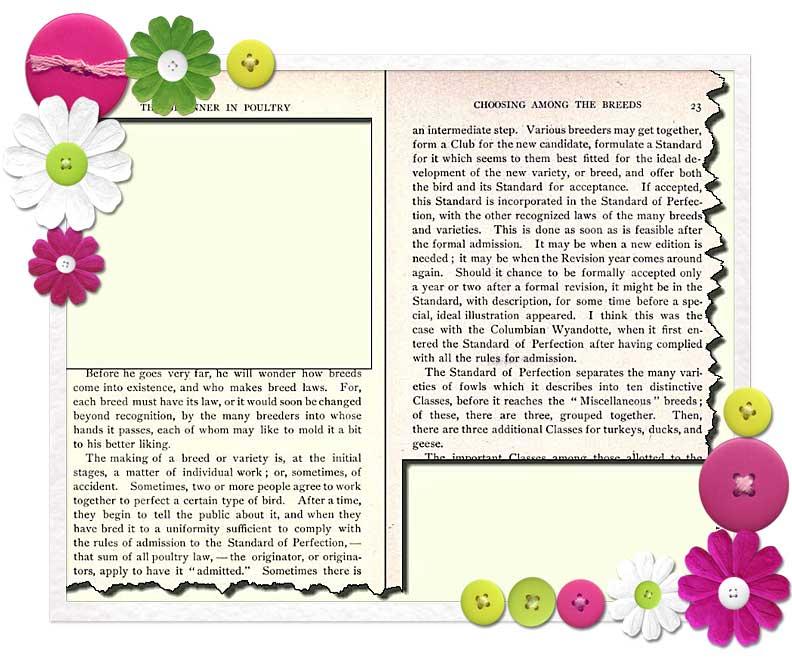
This page is from C.S. Valentine's book, which I am currently reading. I trimmed out the nonessential paragraphs so you could focus on the topic at hand. Mr Valentine gives a very good account of how breeds "click" and come together -- and how no matter what anyone says, it is very much a combined effort. In some cases, like the Araucana, it was a decree and the APA just made the bird ignoring all the research previously done and giving it their own imprimatur. That alas has made the Araucana and Ameraucana a bit a problem from the Livestock Conservancy's pov as it does not recognize it's original South American heritage.
But they are exceptions.
Most breeds come together as he mentions and it takes a while for a breeder and his vision to coalesce and get a following. A good example is the American Salmon, which is supposed to be a rather de-feathered version of the Salmon Faverolle -- alas it is too plain for my tastes, but Gary Underwood is pursuing it with his merry band of 5 nonetheless. One thing rather interesting though of this bird is its dark coloured chocolate eggs...Marans watch out.
05 Jun Sun 2016
Victoria TX on Store bought chicks
This article on Hanselina is from 1984. Back then only Agway, the farm cooperative out of upper New York State, was the only way for most to buy chicks unless they knew a breeder who would sell them some. Now there are lots of hatcheries including your local Tractor Supply.
So what's the diff between hatcheries and breeder chicks? Quality for the most part. Most breeders are giving you chicks from their show line, so if you are good at culling and breed hard, eventually you can get a top flock. With hatcheries that will rarely if ever happen.
So how do you know a breeder from a hatchery?
Ask the seller, though some like Mt Healthy, Ideal, Hoffman and McMurray admit these are not show birds, but what you are getting is some stock to start with and replenish with show birds that you buy from breeders if you are interested in line improvement. Some people aren't, and they just want a pretty bird, but if you are interested in a good showable line that you will be keeping for years, make sure you know what you are getting from whom.