
The LocalHarvest Blog
05 Oct Fri 2018
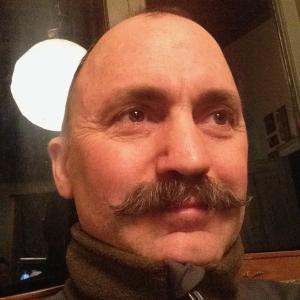
Fall Delights- a photo tour of Hood River County Fruit Loop

A few Fridays ago I ended my workday early so I could take my daughter out for a few hours on the Hood River Fruit Loop. It was the last official day of summer before fall equinox and a bright, picture-perfect day with fluffy clouds and temperatures in the mid 70s.
The Hood River County Fruit Loop, located in northern Oregon along the Columbia River, is enormously popular, especially during fall fruit season. There are apples, pears, pumpkins, wine grapes, Italian plums, and a few other crops being harvested at this time. Tour busses and large groups descend upon this agricultural region en masse, especially on the weekends. So we snuck out on a Friday afternoon to get a taste without the huge crowds and limited parking. The Fruit Loop has 28 different members who have farm stands or tasting rooms open at different times of the year, some of them year-round. They band together to do group marketing and produce a colorful map that can be found all around the region. It is a model of cooperative agritourism, one that could easily be adopted in other agriculturally rich and beautiful regions of the country.
28 Aug Tue 2018
Up in Smoke: The West and Wildfire

Welcome back to the LocalHarvest Newsletter.
Although July 2018 was not the hottest on record- that unfortunate data belongs to July 2016, the wildfires this year have been record-busting. For many people suffering the effects, however, this summer's raging wildfires and blistering heat waves stand out as exemplars of the impacts that human-driven global warming are having worldwide. Across the western US, thousands of wildfires have burned more than 2 million acres since January, far above the average for the previous decade. In California, the active Medocino Complex fire is the largest in state recorded history. Three of the largest wildfires in California's history have occurred in the past 12 months. There are 114 large fire incidents burning in the West as I write this article (see updated map here). Millions of acres of farm and ranchland have burned this year from the Pacific coastline to the 100th meridian, which is the typical fire zone (although it is moving further east). But wildfires have popped up in the Southeast as well, where long-term drought has taken its toll. Over 2 million bushels of wheat was recently lost in a fire in my home county of Wasco and the neighboring Sherman county, Oregon. That is just a fraction of the wildfire losses this year, and the fire season is not over. Agricultural losses in the Texas Panhandle and Southern Great Plains last year topped $21 million dollars and over 1.4 million acres burned. It's going to be bad this year, any way you look at it.
Climate change is far from the only reason for these conflagrations in the West, although many of these factors are related. There is also the legacy of 100 years of fire suppression and fuels build-up, pest and disease outbreaks on a massive scale, shorter winters, less snowpack, drier soils and fuels, increased human development in or near wildlands, and human carelessness. According to a recent comprehensive study, 84% of all wildfires are directly ignited by humans. The past 3 decades of human-induced warming has dried out more fuel, doubling the amount of forest burned compared with that from natural climate variability alone (Science, 10 August 2018). What was once a 3-4 month long fire season has become year-round in many places such as California and the desert Southwest. Friends of mine who are wildland firefighters used to work the summers on fire and then take the winters off to go ski, surf, or work other jobs like carpentry. Now they are called up the majority of the year.
Farms and ranches lose trees, crops, and pasture to wildfire. They lose fences, outbuildings, houses, and animals. Many lose their lives trying to protect their livelihoods, despite the intense risks. They also burn up soil carbon, which can decrease productivity for several years into the future. Farms and ranches can work to "fireproof" their properties, to the extent possible. But dry weather, wind, and firestorms will resist even the best fireproofing efforts. With a long view, however, the most innovative, creative, and forward-thinking farms and ranches of this country and globally are focusing their efforts on creating more resilient agricultural ecosystems. This includes managing the adjacent wildlands as well through various methods. It turns out that these practices also make the farms more resistant to climate change and in many cases improve product quality and economic returns.
Some of the best practices to create fire and climate change resilient farms (these can be used on homesteads and homegardens as well):
- Encourage diversity (across space and time)
- Crop rotations, cover crops, reduce tillage
- Fertilizer management and precision agriculture
- Reduce food waste (and return to soil)
- Prevent erosion, reduce soil loss
- Adjust irrigation practices and upgrade equipment
- Dry farming/fallowing systems (without irrigation)
- Build soil organic matter/capture carbon
- Managed, rotational, multi-species grazing
- Agroforestry (shade, windbreaks, lumber, etc)
- Perennial agriculture (trees, berries, vines, perennial grasses, etc)
- Reduce fossil fuel use and practice energy conservation
- Draft animal power and alternative energy sources
- Fuels management, selective thinning, and forest grazing
- Mowing and controlled burning as needed
* For a more in-depth presentation on Climate Change and Resilient Agriculture, please see this slide show I put together a few years ago.
Imagine if practices like these could be done on a landscape level. Then we could witness that landscape becoming more fire-proof, and smaller scale, economically thriving farms would also flourish. Local economies would benefit as well. As Allan Savory, noted agroecologist and livestock farmer stated, "Since the advent of agriculture, humanity has been moving carbon in the wrong direction—out of the soils and into the atmosphere." Catastrophic and widespread wildfire is just another indicator of that mismanagement and sending carbon in the wrong direction. There will always be wildfire and indeed there should be for ecological health. But we have a crisis now on our hands that will take herculean efforts by all of society to turn around.
-Rebecca Thistlethwaite
26 Jul Thu 2018
The Berry Monster
|
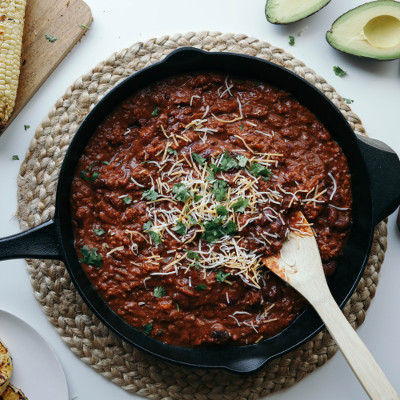
Welcome back to the LocalHarvest Newsletter. Full confession. I don't have a garden anymore, at all. With exception of two measly under-watered tomato plants living in pots on my patio, I am landless and green thumb-less. It will be the first time in 15 summers that I am not tied to either livestock or a garden to take care of. I am taking full advantage of that rootlessness. I know it sounds like heresy to many people in the Local Harvest community and my other farming networks, but I have zero guilt about it right now. I am camping, hiking, going out dancing, relearning how to play the piano, playing with my toddler on the beach, and reading way too many books at the same time. I am delighted to shop once or twice a week at area farmers' markets or buy meat in bulk direct from farmers. I round that out with a grocery store visit once a week and probably too many nights eating out. Summertime is honestly not my favorite time to cook. Last night I had a huge salad with smoked wild salmon on top with a glass of crisp, local Chardonnay to go with it. Utterly divine, no cooking needed. Although I have joined the low/no-carb bandwagon (and lost 10 pounds as a result), I make a special exception for the natural sugars of summer berries. I am not a big fruit eater the rest of the year, but starting in May with strawberries, then June cherries, then July blueberries, raspberries, and blackberries, and then August wild huckleberries (and peaches), I can polish off a pint a day of berries. Again, no shame in my obsession. I sometimes feel like a bear stockpiling for winter, but in my case I am pounding antioxidants for winter colds rather than for sleeping all winter. I stake out two patches of wild blackberries every summer, checking them weekly for ripeness. They are both located in areas that don't get sprayed, but have good access to the full extent of the canes. Then, when they are ripe, I pack up a canvas bag with several reusable containers and pick all I can from the patches. I take them home, wash them in a sieve, then set them out to dry. Once dry, I pack the berries into pint size freezer bags to be dealt with when I have more time and cooler temperatures in my kitchen. Usually in October or so, I pull out the frozen wild blackberries and blueberries that I get from a u-pick farm, and concoct the most delightful Black n' Blue Jam. I will provide a recipe for this jam below. Needless to say, it is the jam that gets polished off the fastest and the one that my kids fight for in the winter. I attempt to make enough to get through the whole winter, but last season we were out by February. I also make copious quantities of Balsamic Plum Jam from the two Italian plum trees on my former homestead. Hopefully I will still have access to those plums this year. It's another household favorite that goes well on plain yogurt, vanilla ice cream, and even as a glaze for pork or chicken. Do you have any favorite summer fruits or ways that your preserve the warmth and sweetness of summer? I would love to hear from you, either in the comments or send me an email. Maybe I will feature one of your stories or recipes in a future newsletter.
With love, | ||
| ||
| ||
| ||



26 Jun Tue 2018
Laboring with Less

Welcome back to the LocalHarvest Newsletter.
Let's talk frankly about the state of agricultural labor in this country. Don't worry, the US is not alone in this dilemma- it is happening in countries all over the world. Despite a growing human population, we have fewer people who want to be farmworkers. And those that do want to do the work may not be located in the countries that need the workers. It is a mismatch of global proportions because we don't let labor move freely around the world.
There has been a long-term decline in the number of people employed in agriculture in the United States. This includes principal operators, their family, and non-family paid labor. This is not a new trend, but it is a complex one. Increasing mechanization can account for the vast majority of labor declines (USDA ERS Farm Labor website). But there are numerous sectors of agriculture that still require the skilled knowledge and dexterity of humans, and thus far, the robots and machines are just not cutting it. This includes most fruits, vegetables, dairy, and livestock and poultry production. These are precisely the kinds of diverse crops you may see on small and mid-scale family farmers around this country, and the same kind that you will find when using the LocalHarvest search engine.
The decline in the number of people working in agriculture is not due to a reduction in demand for their services. Indeed, there is a growing and acute shortage of agricultural workers in most parts of the country. The causes of this decline of available workers and the implications this had for US agriculture is extremely complex. But I think it is worth understanding. With all the heated opinions and vitriol being passed around regarding foreign-born workers, it really helps to understand some of the nuance.
US agricultural workers are comprised of US citizens and immigrants from many parts of the world, around 2.5 million people in total. One quarter are US born and the rest are from other countries. Most have the legal right to work in the US, but in some agricultural sectors such as specialty crops, an estimated 50-70% of the employees are thought to not have the proper legal documentation to work here (NAWS 2016). Yet, the only legal visa program for agricultural workers (H2A), provided work permits for a paltry 200,000 people in 2017. It is expected to double to 400,000 in 2018. Clearly, though, there is a significant mismatch between a need for millions of people and only allowing 400K people in legally to do the work. In addition, the H2A program is only for seasonal work, and many farms such as dairies and poultry farms, may operate year-round.
Less people are immigrating to the US for agricultural work. Fifty-five percent of agricultural workers have been in the US for at least 15 years. They are skilled and proficient at the work they do and many are rooted and embedded in their communities. Eighty percent of farmworkers are settled now and non-migratory. The days of following crops all over the country are over. It is not a sustainable lifestyle for most. Farmworker immigration to the US is down due to the after affects of the 2008 Great Recession, increased mechanization, and improving economic conditions in Mexico where the bulk of agricultural workers for the last 70 plus years have emigrated from. More recently, increased deportations and fear of movement have curtailed worker immigration as well.
With the strengthening job market of the last 5 years, many farmworkers have moved into more lucrative work in landscaping, construction, food service and processing (NPR Morning Edition 5.3.18). Despite wages going up in agriculture to an average of $12.47/hour in 2017, finding and retaining employees is really tough. The NPR radio show described a California celery farmer who was now paying over $20/hour but still struggling to get enough workers to harvest the crop. As a result, he has shifted to less labor-intensive crops and is moving production down to Mexico. Same workers, different country. What will become of the US farmland when it is fallowed and the intensive production shifts out of country? A 2017 survey conducted by the California Farm Bureau demonstrated that nearly 20% of surveyed farmers/ranchers were going to fallow land or simply not harvest the crops due to labor shortages. Fallow land can become a hotbed for invasive weeds, or be sold off for development because it is not bringing in farm income. Not many people can hold onto unproductive land.
Where is the domestic workforce? Quite simply, they are not applying for jobs in agriculture in any appreciable numbers. One factor is that 1 out of every 5 American men ages 25-54 have some sort of drug addiction (mostly opiods) that keeps them out of the workforce. Ten percent of young American men ages 21-30 are completely idle- meaning not choosing to work nor to further their education. So that's about 30% of the able bodied male workforce that are not going to be applying for agricultural jobs. The rest are either furthering their education or working in other careers, caring for family members, or disabled (see this 2017 Brookings Paper on Economic Activity called “ Where have all the workers gone?” for this data). Nobody should delude themselves into thinking that American-born people are going to fill the need for millions of farmworkers each year. Even with increasing wages, better benefits, shorter work days, and other structural changes, the farms and ranches of this country require access to a certain amount of motivated immigrant workers in order to stay viable and thrive.
Farmers and ranchers have chosen to cope in a number of ways. Raising wages has been their first strategy, but they are working with labor contractors to find employees, increasing mechanization to the extent they can afford to, switching to less labor intensive crops (meaning less production of fruits and vegetables), reducing acreage, changing cultural practices, and simply not harvesting crops. If we worry about food waste, this last statistic of nearly 9% not harvesting crops and letting them rot on the tree, vine, or in the field is a really unfortunate situation (California Farm Bureau Federation 2017).
I will return to a premise I made in an earlier Local Harvest article I wrote. That we need a safe and sane immigrant agricultural worker program. It must ensure human rights, it must not be exploitative, and it needs to respond to the realities of diverse agricultural systems. It must not be used as a crutch to prevent living wages in agriculture nor to use people like indebted servants. Likewise, we need an end to the hateful scapegoating of hard-working people who want to work, regardless of their nationality. I hope you will join me in advocating for these things.
Kindly,
-Rebecca Thistlethwaite
23 Apr Mon 2018
We All Weart Pants

Welcome back to the LocalHarvest Newsletter.
A week ago I attended the Northwest Meat Processors Association annual conference, held this year at the beautiful Lake Coeur d’Alene, Idaho. I went for my day job where I have the pleasure of assisting small, niche meat processors make their businesses more sustainable and thriving. It probably sounds like a bizarre job for many of you, but I absolutely love it. I have worked with farmers for a couple decades now, but the food processing sector and all of the links in the chain of local food production and distribution may be even more critical for the long-term viability and growth of local foods. They are the invisible actors that transport, slaughter, wash, cut, box, bag, cool, and distribute many of the foods that you enjoy. Because of my background raising animals and direct marketing meat, I am intimately familiar with just how important the meat processors of this country are to my business. You literally cannot have local meat without local slaughterhouses.
I wanted to share an epiphany I had as a result of attending this conference. It may seem small and insignificant, but each nugget of wisdom that I acquire in life is important to me. For many of you, this won’t be a revelation because you already live life in the "radical center". I applaud you for that.
While at the conference, I conducted several short video interviews with any meat processor willing to speak to me before a camera. I also facilitated a roundtable discussion about the opportunities and challenges for Northwest meat processors. Almost every single meat processor I talked to was enthusiastic and excited about the growth of the local food movement and consumers wanting to better understand where their meat comes from. They saw this as both critical to keeping their small businesses afloat but also to bridging the so-called "urban/rural divide" and engendering a higher level of respect and support for family farmers, ranchers, and small food businesses.
There is no doubt about the trends- our country is getting more urbanized. Rural America is de-populating, meaning less people hang out in rural areas, or have rural relatives, or have a deep, visceral understanding of agriculture and management of working lands. But if people from metropolitan America truly want more local food, there is a tremendous opportunity to build a relationship of mutual respect and transparent, educated engagement. Instead of loathing each other for some supposed fashion choices, political bent, or level of formal education, why not come together in our commonalities? Those could include our support for local food, local farms, quality and craftsmanship, and economic interdependency.
I see this mental divide where I live, which is both rural and agricultural but also touristy and increasingly so. I frequently hear the message from friends and neighbors that the skinny-jean wearing, Instagram obsessed crowd should just stay away and stop crowding our local hiking trails or favorite pizza and beer joints. But yet we are just as dependent on them to buy our agricultural goods, our lumber, and our recreational experiences as they are dependent on us to produce those things for them. So instead of an all out Carharts vs. skinny jean war, why not realize we both like to wear pants and we are in this boat together?
The other part of the epiphany that I experienced from this conference was that by focusing on the things we had in common and the humanity of each individual that I met, I could hear them and put our potential political differences aside. Many of us live in echo chambers where the people we surround ourselves with are a reflection of our personal values, perhaps even an exact replica of our own. I have purposely broke free of that way of living since I was in my early, dogmatic 20s. Working in and around agriculture has been an excellent opportunity for me to meet and collaborate with others who are decidedly not in my echo chamber. I thrive on that challenge and make a special effort to listen and get to know folks who have vastly different philosophies than my own (religious, political, social, etc). I used to have a bumper sticker on my car that read: "A mind is like a parachute- it only functions when open". I am only now starting to understand that bumper sticker that I carried around in my 20s like a badge of honor. When you find common ground with people of diverse backgrounds and ideologies that is where the magic of human connection happens. It is the seed you plant that will grow into something beautiful.
So next time you interact with your local butcher or farmer and make assumptions about him/her, or conversely the next time you interact with a bike-riding skinny-jean wearing young person, cast your stereotypes aside, strike up a friendly conversation, and listen. Try to identify some things you have in common and grow from there. Good food is often a great unifier- start there. The only rural/urban divide is in our minds.
Kindly,
-Rebecca Thistlethwaite
19 Mar Mon 2018
A Glass Half Empty

Welcome back to the LocalHarvest Newsletter.
US dairy farmers are in a crisis. Thirty percent have left the business in the last 10 years. Prices are the lowest they have been in the last three decades, yet costs of production keep inching upwards. If this pace keeps ups, we will be down to just the largest, vertically integrated mega dairies in a couple decades. There are a lot of contributing factors to this dilemma. Like fleas on a dog, it is not one flea that causes the itch, but all of them sucking the life out of the animal that makes its life miserable. There is so much despair in the dairy world that farmers are committing suicide at an increasing pace. Now when the dairy processor mails the paltry milk check to the farmer, they send a list of suicide crisis hotlines at the same time.
Why is this happening? Overproduction is part of it. We continue to breed more productive dairy cows who produce more milk. When milk prices were high in 2014, a lot of farms bought more cows. Larger herds of more productive cows means a lot of milk. Add to that trend is the growth of what I like to call “gigantiation”. The gigantic dairies in the West are getting even bigger as they figure out how to pack more cows onto a piece of land and flaunt, bend, or break local environmental laws. Take this 30,000 cow dairy that was just approved in Oregon in 2017 despite objection from thousands of citizens and several environmental groups. Now, just one year later, the Oregon State Department of Agriculture may shut them down for numerous manure and wastewater violations.
One aspect of the crisis that has been occupying my brain is the increased consumption of plant-based milk alternatives and decreased consumption of fluid milk. In just the last five years, there has been a 61% increase in plant-based 'milks' and nearly 30% of Americans consume these beverages on a daily basis. Real milk consumption has dropped 22% in last two decades. There is most definitely a relationship here, although it can't all be blamed on the rise of almond, soy, and coconut milk. Dietary fads and allergenicity are also part of this shift.
Does increasing our consumption of plant-based milks benefit US family farmers? Certainly not as much as dairy milk, which is produced by around 41,000 farmers around the country and processed at regional milk plants. Small dairy farms can be licensed to bottle and sell their own milk. I don't know of any farms that bottle and sell their own soy or cashew milk in this country, but if you learn of any, please do let me know. Most of the plant-based milks are manufactured and distributed by only a few very large corporations, such as $6 Billion dollar company DanoneWave, makers of popular Silk and So Delicious brands. They buy ingredients from some US farmers, such as California almonds, but much of the ingredients are imported from other countries, such as coconut from the Philippines, or cashews from Africa and Vietnam.
Similar to my lab meats article in January, I think about what the loss of those independent dairy farms mean in a larger context. They mean less dollars circulating in their rural economies. They mean that tractor dealership, feed mills, and even slaughterhouses that harvest the veal calves and older cows have much less business to the point of many of them going out of business. Less economic activity, fewer jobs, loss of multi-generational farms and their hard-working families. What happens to their land? In some rapidly urbanizing states on the East Coast, these picturesque farms get bought up as gentleman farms where maybe a couple horses will be kept, or they are subdivided to pay off the family debt and sold for housing.
To be clear, I am not for saving giant factory farms, and as this article clearly shows, it is not the giant factory farms that are going out of business. It is the independent dairy farm with an average herd size of 200 cows. As yes, there are issues with how some animals are raised, fed, housed, and their manure managed. Again, not the point of my article. I only want to encourage you to think about the larger and long-term repercussions of the loss of family-scale farmers, the loss of rural jobs, economic activity, and working lands. Our dietary fads have serious consequences on our food security and rural communities, ones that we rarely think of. We are putting more of our food dollars into the hands of a few corporations, which not only makes our food system less resilient (ever heard of eggs all in one basket?) but it is also like a giant vacuum cleaner sucking the life and resources from our rural communities into the hands of a few masters. It is time to democratize our food system. It is time to build the economic power of our rural communities, to see them as equals, to partner with them for the good of all. Now go get yourself a glass of milk.
Kindly,
-Rebecca Thistlethwaite
23 Feb Fri 2018
The Different Paths to Health

Welcome back to the LocalHarvest Newsletter.
A Tibetan proverb tells the secret to a long life is:
- Eat half
- Walk double
- Laugh triple
- Love without measure
This has been my mantra the last few months as I embark on a new chapter in my life, focusing on cultivating more self-love and personal health. I think a lot of us here in the Local Harvest community are interested in health, both on a personal level, a community level, and a planetary level. But you always must start from within. You can't save the world while you are crumbling inside. You can't show love to others while you secretly loathe yourself. It may appear selfish to work on yourself, but indeed is it the most generous thing you can do. We want you around for the long haul. You are the agent of change that is most important.
Everybody's journey to self-care and mental health is different and as diverse as there are shades of skin. These are the practices that are working for me right now and perhaps could benefit you as well.
1) Take time to pause and tune out the monkey-mind. For me it is meditating when I wake up and right before I go to bed for about 10 minutes each sitting. I used to think there was no way I could meditate because my thought process is incessant. It turns out I was wrong and now thoughts come and go like waves on the shore. I focus on my breath and the open space of the mind.
2) Spend time outdoors everyday, rain, snow or shine. Everyday I try to go for a walk, run, or hike for 30-60 minutes, but sometimes it is just sitting on my backporch for 10 minutes with a warm mug of tea in my hand. I also try to watch the sunrise and sunset more deliberately and just sit by a window while I am reading.
3) Set limits on your screen time and stick to it. My new rules are no screen time after 8pm and don't read emails or social media right when I wake up. You don't want to start the day with anxiety nor end the day with it. Give yourself a break from the incessant noise.
4) Eat a healthy breakfast everyday, no matter how busy you may think you are. My usual is two eggs scrambled with leafy greens (spinach or arugula are my go-tos), along with some homemade salsa on a warmed corn tortilla, plus two cups of coffee with cream and a touch of maple syrup. Try more protein and less carbohydrates for breakfast, which will provide longer-lasting energy until lunchtime and not spike your blood sugar.
5) Embrace idle time, even schedule it if you need to. I try to leave my weekends pretty open and limit the amount of commitments that I make. Usually once a weekend, I go on a walk with my toddler and let him lead the way. Sometimes we go out for 30 minutes, sometimes two hours. Sometimes we sit by the river and throw rocks for a long time. Other times we hunt for interesting leaves. I let him lead and I don't pull out my phone because I am bored. I try to stay present with his curiosity and joy. I used to think everytime I was eating or sitting still, I had to have my phone in front of me to occupy the time and make sure I was reading something. Now I pull out a book, a magazine, or just look at my food and enjoy each morsel.
6) Give gratitude daily for something, no matter how small it may seem. After I meditate and then do a short round of yoga in the morning, I sit with my coffee near the living room window and think of something I am grateful for. I either say it out loud or write it down. Somedays it is as simple as being thankful for the coffee and the food I will have for breakfast. Other days it is because of a great conversation I had with my mom or spending time with friends. Other days it is the nourishing rain falling from the sky or the eagles making a nest in my backyard. Giving thanks regularly will increase your positivity and help you better cope with the things that may be less positive in your life. They help you see a glass half full rather than half empty.
7) No matter how frazzled, upset, or sad you may be, there is always good food to lift the spirits. For the longest time, I used to think of cooking as a chore. If I was too busy, or depressed, or anxiety-ridden, I would barely cook at all. Boxes of macaroni & cheese with some frozen peas thrown in was starting to dominate my 'cooking'. It took a yelling episode from my tween daughter to awaken me to the fact that my attitude towards cooking was bringing everyone else down. In short, my cooking 'sucked'. I resolved right then and there to shop for more fresh produce, purchase more frozen meats from our winter farmers market, and more frequently look up new recipes. Not only are my children a little happier with what I feed them, I am feeling more nourished and inspired. It's a calm, stress-reducing activity now rather than a chore. I find pleasure in eating rather than just wolfing down a bowl of fake orange mac n' cheese just to fill my belly. I am trying new recipes (like the one below) that bring some level of excitement to my life and challenge me to break out of self-defeating habits. This is good.
There are a few more positive habits I am working on cultivating, such as calling friends and family more often, making time for laughter, reading spiritual texts, and keeping my house de-cluttered. I hope you too will make time for your own healthy habits and continue to cultivate self-love and inner peace.
With love,
-Rebecca
22 Jan Mon 2018
Fake Meats, False Solutions

Welcome back to the LocalHarvest Newsletter.
The production of meat brings with it all sorts of physical and mental baggage. As we have industrialized nearly every product of nature, animals were rounded up and industrialized too. Business interests are now trying to engineer the animal out of the meat. Just as vitamins can be synthesized, so too can meat.
There has been considerable media hype about how different fake meat products (and all imitation animal products, such as those trying to replace milk, eggs, leather, fibers, etc) are clearly more environmentally sustainable, better for human health, and better for the animals if they don't have to die to produce your food. In reality, things are not so clear. There is significant wealth and whole organizations tied up with convincing consumers that "meat analogues" and plant-based meat replacements are the ones you should be choosing. Just to be clear, none of these organizations or investors would make any money should people choose to just eat less meat or buy better sources of meat. They only make money if consumers shift to the new processed products that they have invested in.
Meat analogues or imitation meats can be produced in a variety of ways. Some of them are actually plant-based while others are grown from animal blood, serum, or cells. For the purposes of this short article, I am just going to lump them all together and call them "fake meats". Whatever technology they are made from, there are two indisputable facts. One is that they require ingredients, such as bovine fetal serum, or plant-based derivatives such as soybean roots, potato proteins, wheat proteins, and pea powder. Those ingredients were grown somewhere and transported somewhere else, just like the feed ingredients that make up the diets of most livestock. Those ingredients and their transport have an environmental impact. Secondly, the growing of meat cells in a laboratory or the various manufacturing processes of creating fake meat takes both energy and water. Lots of it. The raising of livestock can take a lot of water too, particularly if that livestock is fed grain that was irrigated. Yet the raising of livestock can also take very little water apart from the water that falls naturally from the sky. Likewise, livestock take energy to produce, but most of it is free solar energy in the form of plants they eat. Meat processing takes energy too, but the facilities tend to be highly energy efficient and use more human-powered energy than mechanical. The fake meat industry will tout how it has a lower environmental footprint, yet there is actually almost no scientific research that shows this. Most of the fake meat industry is incredibly opaque, full of trade secrets and very little data sharing. As a result, nobody actually knows the full life cycle impacts of these products. Yet we know very well the life cycle of a beef steer, of a sheep, or of a chicken. And we know that we can make tremendous improvements towards reducing the environmental footprint of meat by purchasing it closer to where it was raised, from rotationally grazed animals, from breeds that thrive in a specific environment, and by eating the whole animal so there is less waste.
Could fake meats replace some of the consumption of conventional, feedlot-based meats and thus improve animal welfare or the environment by reducing demand for cheap meat? A couple thoughts on why that won't happen. First, fake meats are still considerably more expensive than the cheapest feedlot meats. A 9.7 ounce box of Quorn Meatless Chik'n Cutlets is around $4 (more than $5.60 a pound) whereas conventional chicken may cost $1-2/lb. in the store. Or an Impossible Burger that is said to cost around $10-11/lb., more than three times the price of regular ground beef. Because of the steep price, these products are most likely going to appeal to people who have more money, people who are already able to buy higher quality meats and who probably don't eat a McDonald's hamburger every day. So instead of pulling business from conventional CAFO meats, it will probably pull business from more sustainable and ethical meats. Secondly, fake meats really appeal to the vegans and vegetarians, who obviously are not consuming conventional meat anyways. Therefore, it is unlikely that fake meats will make any noticeable improvement towards reducing the environmental footprint of meat production or improving the welfare of factory farmed animals. Yet if you look at the messaging of these companies, they literally think they are saving the planet. When in fact, the unintended consequences of fake meat production could be incredibly high, with farmers and their communities probably suffering the most from the disruption of their livelihoods. The fake meat companies don't care about that. That is not part of ‘saving the world' that they care about. They are out to grow a limitless supply of money, not food.
As if that is not enough, fake meats come from a few factories owned by corporations (most of them investor-owned). Real meat comes from hundreds of thousands of family-scale farms contributing to our rural communities all over this country (and 1 billion people globally raise animals as part of their livelihood). Do you see the clear difference here? Do we want more colonization of our food supply by venture capitalists or do we want democratized, small-scale farming businesses that invest in and give back to our communities? Do we need more food products that are divorced from nature and continue to erode our connection to it? The more we head down this road, the less resilient our food system becomes.
Next time you read about or hear someone touting the solution that is fake meats, ask them why they think it is a solution and what will it solve for? What data do they have to back up their claims? You will find, most often, they have nothing to say. It is just a seductive story with no substance.
Kindly,
-Rebecca
22 Dec Fri 2017
I Ain't Got No Dough, But I Got Fresh Bread

Welcome back to the LocalHarvest newsletter, and Seasons Greetings to you all-
There are times in most people's lives when their bank accounts dwindle towards a painful void. The holidays often contribute towards that depletion (buy this, buy that, check off everyone on your list, travel, etc). Thankfully, my family doesn't expect much from me. I'm pretty good as setting the bar low ("wow, you sent us a card- thank you so much!"). It's OK- I have come to peace with the fact that my handwritten cards are the best gift I can give, along with plentiful hugs and "so good to see yous".
This winter, the funds depletion seems more acute than ever, but I won't bore you with the details why. Suffice it to say, I must get creative to feed my family through this winter. I am thankful for the opportunity to clear out my pantry of random bags of things from the bulk section and eat through as many jars that I put up over the summer. What are some other ways to stretch those food dollars through the wintertime?
To be clear- I do not spend all my time laboring in the kitchen, I have a busy life just like most of your. Secondly, I am not a gourmand or a very talented cook. My family gets fed, we eat healthy, and once in a while my food even tastes good! Thus, the following suggestions are only things that I am willing to do myself.
- Buy a box of cabbages and make a huge vat of sauerkraut or kimchi.
- Toss diced-up root vegetables (think potatoes, carrots, turnips) with some apples, onions, olive oil, salt and pepper. Roast them until slightly browned and fork tender.
- Buy whole grains and dry beans from the bulk section (or order by the 25lb bag). Then once a week, cook a big pot of grains or beans with a pint or two of stock that you made for great flavor and boosted nutrition. I then have plentiful cooked beans that I can add to tacos, burritos, scrambled eggs, or throw into a pasta salad over several days. You can even save the bean cooking liquid and add it to soup. Leftover grains make a great "fried rice" with scrambled eggs, perfect for a hearty breakfast.
- Pull that dusty bread machine out of the closet and start using it again. It costs me about .80¢ to make a loaf in my bread machine, while my favorite bread in the store costs around $4.99.
- Buy bones or save the bones from meat you eat to make your own stock.
- Save all your vegetable trimmings, keep them in the freezer until the time comes that you will be making stock. Use them to add flavor and minerals to your stock.
- Render animal fats. Either buy bulk bags of fat, or cut if off of roasts/chops that maybe have too much on them for your liking. Save up the fat in the freezer until you have enough to render in a crockpot. Another way to use fat is to trim it off a piece of meat you are eating and instead dice it up and lightly render it to sauté some greens in.
- Ground meat is cheaper than steaks, chops, bacon, etc. But it can get boring just making burgers all the time. Some ways that I mix it up include getting creative with the meatloaf (mixing different kinds of meat or adding lots of vegetables to it), making meatballs, sautéing with vegetables and serving over brown rice or quinoa, adding canned tomatoes, peppers, and onions for taco night, or making different variations of shepherd's pie. Instead of buying linked sausages (I'm not a big fan of the casings anyways), I buy ground meat and mix in my own spices to make bulk sausage. It's not only cheaper but helps me avoid things like preservatives, excess salt, and sugar that are sometimes added to sausage.
- I really try to stay on top of food waste most of the time, but especially when my budget is lean. If the cauliflower is starting to brown, just trim off the brown bits. Pull off the wilted leaves of lettuce but eat the rest. If your broccoli has gotten floppy, use it in a cream of broccoli soup instead.
- All leftovers get eaten, even if I am sick of them. If that pot of beans I made on Sunday evening is getting boring by Wednesday, I will put the rest into pint size containers and throw in the freezer for later use. Then when I am making a soup or taco night, I just thaw out a container of already cooked beans rather than having to resort to using more expensive canned beans. I still always keep a few cans of beans around for emergencies or exhausted weeknights.
According to Shannon Hayes, author of "Long Way on a Little", you can pinch pennies and still enjoy delicious and nutritious farm-fresh foods. Her book is full of recipes for using all parts of the animal, making stock from bones, rendering fats, creative re-use of leftovers, and more. This month's recipe, Stuffed Acorn Squash with Ground Pork, is courtesy of Shannon. It is simple to make, gluten-free, and looks gorgeous on the table. Use it for a fun weeknight meal or to bring to your next holiday supper and wow your friends.
Cheers,
-Rebecca
21 Nov Tue 2017
One Size Does Not Fit All

Welcome back to the LocalHarvest newsletter.
As I am sitting here snacking on some roasted pecans, niçoise olives, extra sharp cheddar cheese, and red pepper slices, I am thinking about all the foods of this vast, vast world. It is at once truly amazing what this planet provides, and truly abhorrent what we are doing to that diversity. It’s as if Homo sapiens have a death wish of turning planet Earth into a wasteland that is not fit for other species nor our own.
Just take these facts: Seventy-five percent of crop diversity has been lost in the last 100 years (mostly cultivars and landraces). Thirty percent of livestock breeds are at risk of extinction. Our diets around the world are looking more and more alike, with less and less of the unique and native foods being offered anymore. The Western diet, prevalent with starchy, calorie-dense processed foods, high in sugar and salt, and full of trans-fats is becoming more common in far-flung places, with its resulting health problems that come along for the ride.
Take this other fact. While it may seem like an isolated one, it is emblematic of the whole food supply. Ninety-six percent of the bananas we consume in this country come from one genetically identical clone of banana- the Cavendish, despite there being hundreds of cultivars. When along comes a banana disease, such as Fusarium, it could wipe out the monocultures of Cavendish clones, as it once did to the Gros Michel cultivar in the 1950s. Diseases cannot thrive amongst diversity. Standardization of our food supply reduces diversity, complexity, and the resilience of species. We also loose the cultural connections to our food that preserve language, song, story, and skill.
An attempt to save these unique and endangered food emerged from the Slow Food movement in 1996, called the Ark of Taste. Much like the mythical Noah’s Ark, the Ark of Taste seeks to save these species and foods from the rising tide of homogeneity, habitat loss, genetic diversity reductions, and loss of cultures. Since the founding of this program, the Ark of Taste has catalogued over 3,500 foods from over 150 countries. The United States has contributed more than 200 to the Ark. To get "boarded" on the Ark, a food must be endangered, taste good, be produced cleanly (can be grown without harm to environment, not genetically engineered) and fair (not trademarked, not produced with slave labor).
This Ark is virtual- there is no vast storehouse holding all the rare animals, seeds, or food products like a time capsule. But the farmers, ranchers, and food artisans cultivating and creating these foods are very much real. Local Harvest has partnered with Slow Food USA to highlight all of the producers on our website that are keeping Ark of Taste foods alive.
What inspires farmers and ranchers to raise and produce rare, heritage breeds of crops and livestock? Mickey Willenbring of Dot Ranch in Scio, Oregon appreciates the lively personalities and thriftiness of rare breeds of livestock and poultry such as the Navajo-Churro sheep and Muscovy duck that she raises. She remarked, "I grew up surrounded by commercial modern breeds and really didn’t enjoy their placid personalities. Heritage breeds have character, personality, and a challenge to them that makes me feel more connected to them and to the moment. They demand your full attention, and for a vet with PTSD, that demand is crucial to stay engaged with the here and now. Each breed at my ranch was selected for their cultural and historical significance as well as their adaptability and resilience to a primitive environment (aka the shoestring budget ranch). Heritage breeds were developed when most labor was still accomplished manually, which means they are still very self-sufficient on their own merits."
Evan Gregoire of Portland Seedhouse is inspired by the flavors and resilience of the heirloom vegetables that he grows and sells the seeds of. He says, "Seeing diversity disappear is tragic in many senses. The loss means we lose genetics we need for climate change not to mention we lose flavor, flavors our grandparents cherished and survived by." He spends a great deal of his time educating other growers and consumers about how to grow and cook these crops, "Education is key, people love new things so making the old new again is key. Look at fashion, mom jeans are back." Editors note: I for one hope that "mom jeans" do not come back into fashion.
The best way to keep a unique food or breed alive is to buy it and consume it on a regular basis. If there is no demand for Hidatsa Shield Figure Bean, it may still exist in small homegarden populations, but it will not be grown in large enough populations to keep its own genes diverse. If there is nobody eating Florida Cracker Cattle, their herds will get smaller and more inbred, until disease and reproductive decline eventually cause it go extinct. We cannot rely on the generous souls who grow crops, raise animals, or make foods for personal use only or as a hobby. When all is said and done, other than subsistence producers, everyone else needs to at least breakeven on their enterprises. They need to sell these unique foods. LocalHarvest can help you find them through our online store and on our producer listings.
The interplay of humans and their natural environment in the form of agriculture and food is a sacred connection. You can honor the cultural knowledge, the hard physical work, and the outstanding flavors by supporting those cultivating Ark of Taste foods.
Kindly,
-Rebecca
18 Oct Wed 2017
Community in Action: Portland, Oregon’s Food Works Farm and CSA
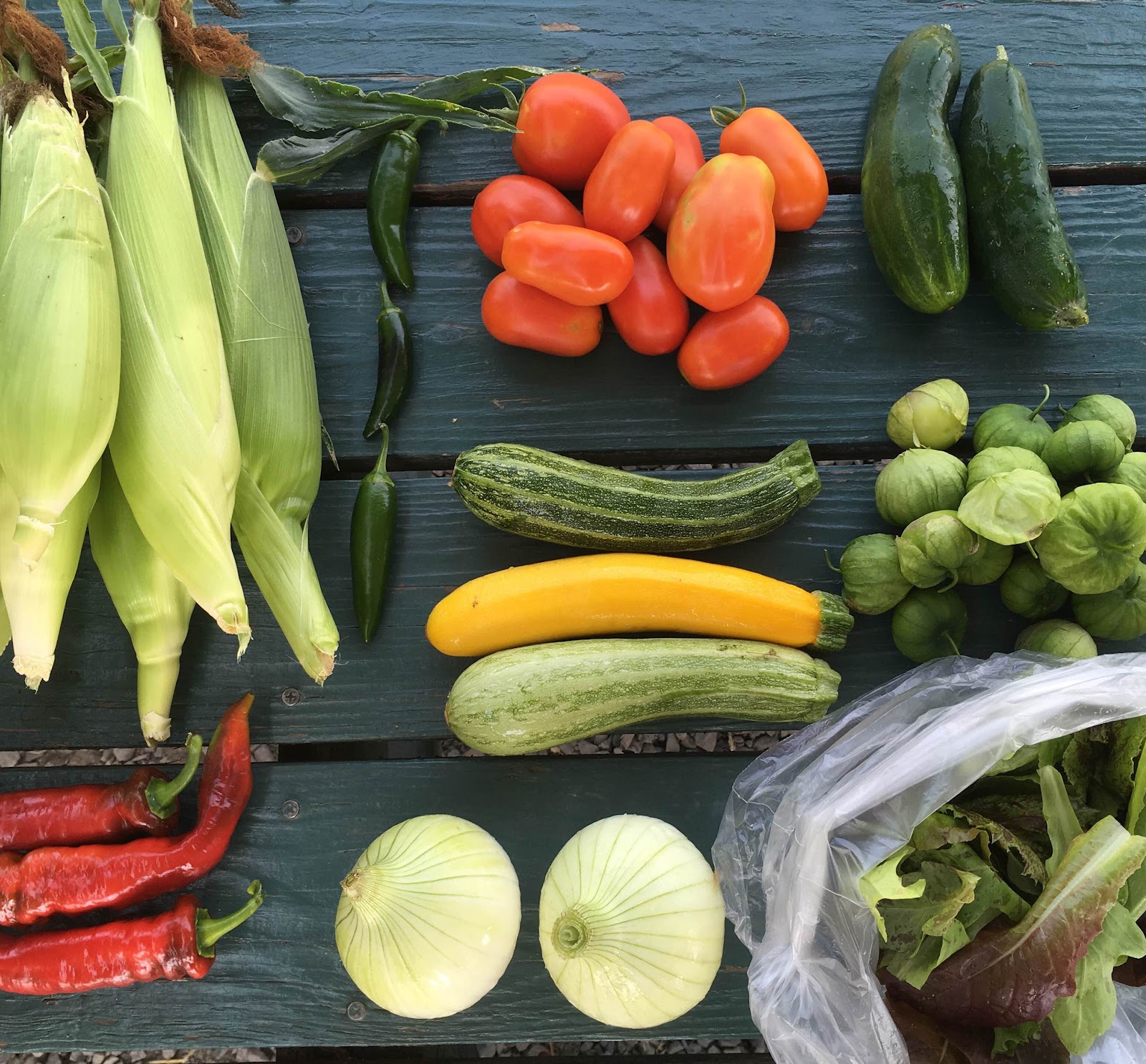
These days we may know a lot about where our food comes from, but despite the broad array of choices in many grocery stores, access to good food is often a privilege rather than a given. More than ever, it is important to recognize communities who come together to provide sustenance to people who need it and support the good work they do. With this in mind, I looked forward to the chance to visit the Food Works Farm of Sauvie Island, near Portland Oregon, to meet some of the people who have made it their vision to make this happen.
Food Works Farm is an offshoot of what began as a grassroots community garden project at the St. Johns Woods apartments, a North Portland public housing community, in 2001. The St. Johns Woods garden (now called Cathedral Garden Apartments and Village Gardens), came about through a strong community effort, and was the first place in the country to offer community garden space at a publicly owned subsidized housing location. During the time that Village Gardens became more established, youth from the community created a plot for growing salad greens for sale. Asdemand for the salad greens increased, the youth expanded the business onto donated land on Sauvie Island, granted by Metro, the Metropolitan Planning Organization for the Portland region. Eventually thisgave rise to the current Food Works Farm and its youth employment program.
The Food Works Farm is a 2.5 acre certified organic farm, nestled between a public orchard and fields run by Sauvie Island Organics, a well-known, established organic CSA serving the Portland area. Food Works Farm produces food for its own CSA, grocery and restaurant accounts, and farmers markets, locatedmostly within the North Portland community. On the hot summer afternoon of my visit, youth were gathering at the Food Works’ shed after preparing a shared lunch at the farm kitchen. Settling on their plan for the afternoon, they divvied up totes used to load up the tomatoes and peppers they’d be harvesting to fill an order for a local grocery.
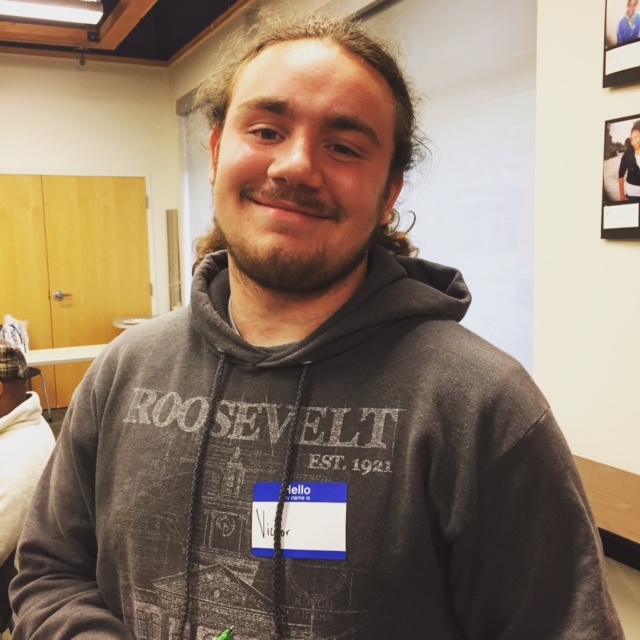
I met with Victor Montano, Food Works Farm Retail Coordinator, and Leslie Heimer, Food Works Program Supervisor, to talk about the history of Food Works Farm, the youth leadership program, and Victor’s role at the farm. Victor’s story starts out on a bus ride in North Portland. During their commute his mom and brothers were caught in a water balloon fight on the bus, and in the ruckus they met Leslie, thesupervisor at the farm. Leslie encouraged Victor and his brothers to apply to the summer youth leadership program and that summer he joined Food Works, working at the farm. From there, while in high school, he returned to join in the Academic Year Program, and then stayed on as the farm’s Retail Coordinator during the summer. Reflecting on his three years at the farm, Victor says:
“I’m a little biased, because my best friend works here, but [I like] working with others, andwith people who want to work together [with you]. Here you start in the summer program, so you build all the way through together. You spend quality time with [your friends/co-workers]. You’re building a friendship, coming here everyday. That’s what I like the best, working with friends.”
These days, Food Works receives far more applicants than they can take. Leslie says that in 2017 they received more than five times moreapplicants than they could enroll in the program.She no longer needs to recruit for applicants, since word of mouth is enough to spread the word. When asked if they’d ever consider growing the program, she says yes, but there are reasons to keep things small:
“We have a two-person adult staff at Food Works. We’ve been bigger before, and someday we’d love to grow, but we found that working with one crew is more effective. Everybody feels more a part of a team, and we are able to provide more access and attention to each person that way. We’re part of a larger organization called Village Gardens, so we can’t expand exponentially. We want to stay within our North Portland community. Those are our [long-term] relationships. They’re who we’re close to and who we answer to.”
Youth in the 8-week summer leadership program take public transportation to get to their workday. It is a commitment: a bus ride to Sauvie Island, then a walk up the road to the farm itself. Oregon summers are hot, and a work day is physically demanding. Lunchtime usually includes a break for a game and potentially a little spray from one of the garden hoses. While in the program, youth learn about planning, growing and selling produce, as well as developing leadership skills, like teamwork, accountability and conflict resolution . At the end of their workday, the youth gather together to review “positives and deltas” from the day: what went well, and what could use a little more practice. Positives for this day were the beautiful produce they’d picked, teamwork, and celebrating the birth of one of their friend’s babies. Deltas includedrecipe-tweaking on the baked onion rings for lunch, time-management with one less person on the crew and that it was challengingly hot that day.
CSA shares from the Food Works farm are delivered to pickup locations in the north Portland area, and some are offered at a discounted rate to people in recovery at a local addiction rehabilitation center. For many it is a unique opportunity to obtain thefresh, healthy food so necessary to our wellbeing. Not only can people make the choice to buy into the CSA and cook with the freshest of produce, Food Works also offers cooking demonstrations based on what is in the CSA box. In addition to the raw ingredients comes knife skills, proper storage, and food preparation, leading to more confidence and enjoyment in the kitchen.
In winter the Farm Supervisors and Academic Year youth team review the farm’s retail accounts and make plans for the upcoming spring and summer seasons. As Retail Coordinator at the farm, Victor heads up the accounting and outreach to community retailers:
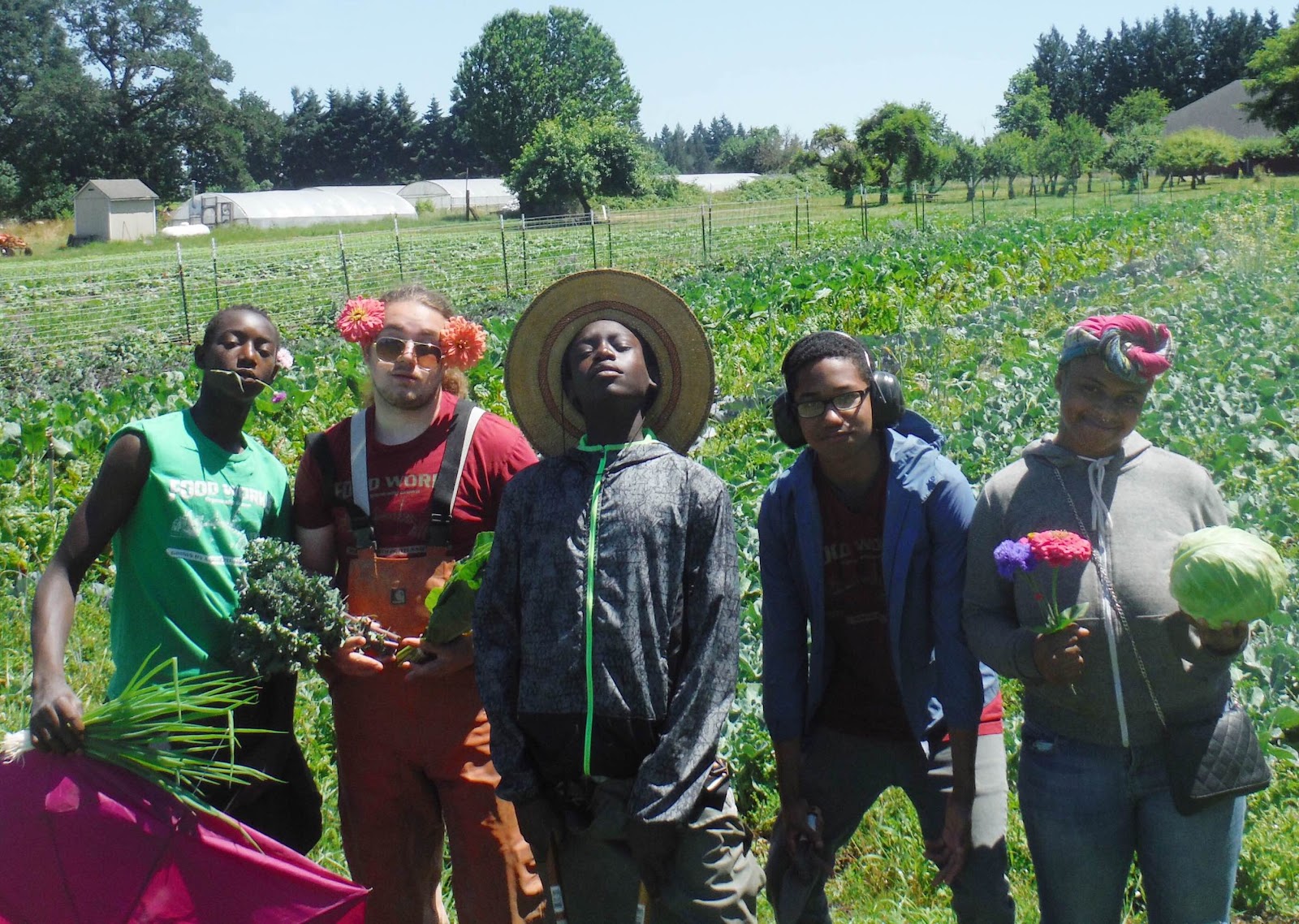
“In general the way it works is thatwe do business planning during the school year, then we reach out to [local businesses] with a partnership proposal. My favorite is Village Market and New Columbia (part of Village Gardens). We’ve worked with New Seasons (a B-corp organic grocery chain) for many years, actuallysince we started. They’re very much in support of community programs. They have always bought produce from us. The heirloom tomatoes we’re harvesting right now are going to New Seasons. New Seasons also coordinates volunteer groups that come out to the farm.”
After we had finished our chat in the shade of the farm packing shed, Victor showed me around the Food Works fields, pointing out which crops were ready for harvest, which were finishing up (giant Walla-Walla onions were just harvested and curing), as well as crops going the long haul, like winter squash. He explained how the youth work with the farm supervisors to decide which crops to grow, when, and how much each season. Crop varieties are often chosen for their past performance: whether they providedproviding good yields, worked well in Portland’s climate, and of course, the taste test. Victor’s new picks this year,robust clumps of chives and lemongrass, were approved by group consensus during planning this past winter.
To me, this is one of the delights of CSA and small-scale farming: where people from the community are encouraged to come visit and participate, to get to know how their food is grown, and to know the people that produced it. The Food Works farm takes this even further, providing youth with the opportunity to give to their community, learn new ways of working together, job training, and commitment to a cause. It isn’t all rainbows, there are “positives and deltas”, farming takes a lot of work, and teamwork takes practice and patience. But we all depend on our food systems, and sharing food brings us a lot of basic joy.
Programs like The Food Works Farm thrive off community involvement with other small businesses working directly with the farm, community volunteers, and even some input like USDA grants. It’s the energy of community and our interdependence that encourages independence and growth, which then cycles around again. However you choose, the next time you’re browsing in the grocery aisle, farmers market, or opening your box of food, we invite you to pause and consider again the people who made it all possible.
26 Jun Mon 2017
Oxbow Farm and Conservation Center: Pioneers of Good Food, Community and Land Stewardship
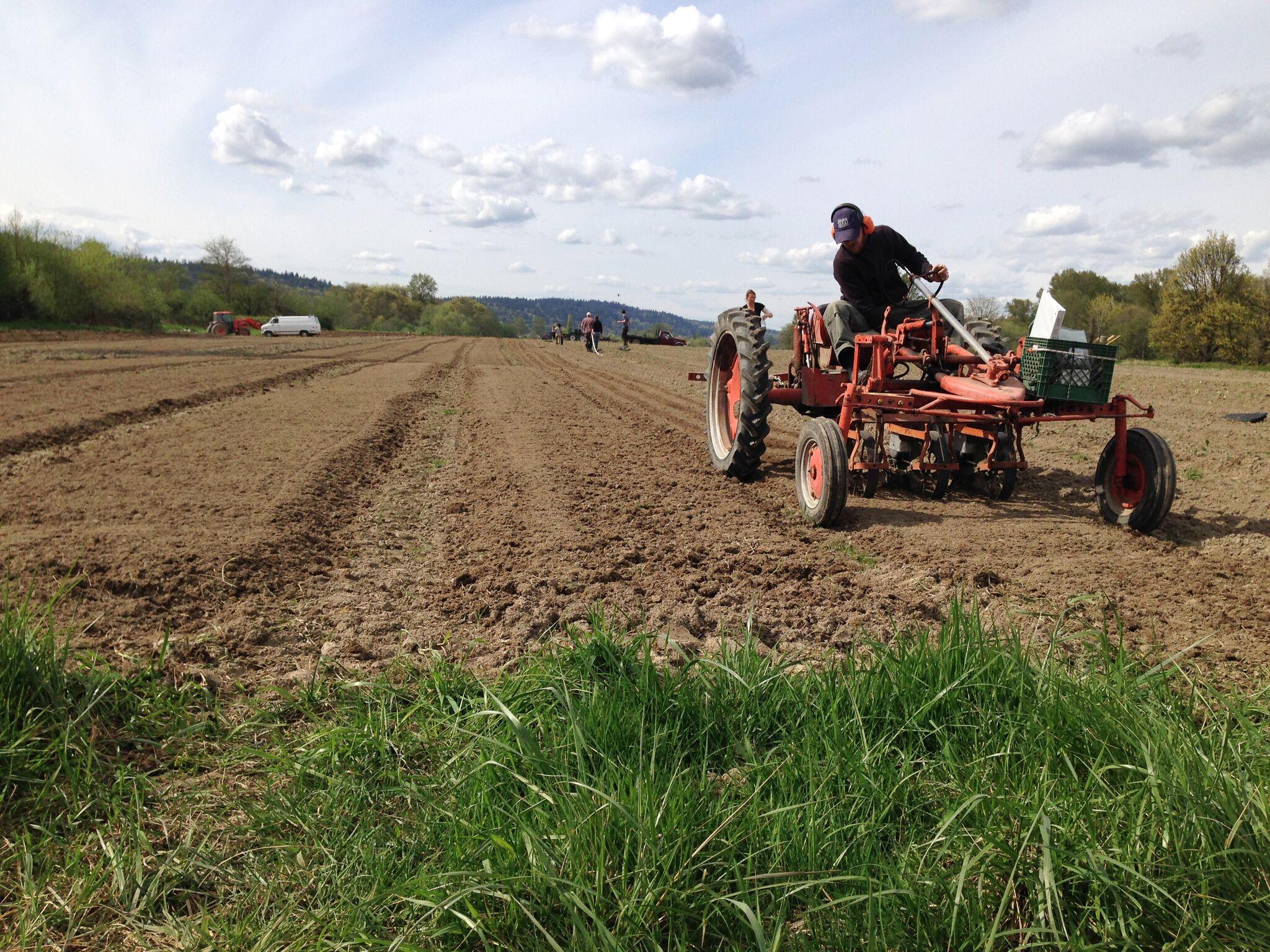 Last month, in the midst of gearing up for the CSA season, Oxbow Farm Manager Adam McCurdy took time to talk with LocalHarvest about farming, community, sustainability and much more. Oxbow Farm & Conservation Center is a unique non-profit organization situated along the verdant Snoqualmie River in Carnation, just 30 miles from Seattle, Washington. Oxbow hosts an impressive variety of projects, including their 500 member CSA program, outdoor education and summer camps for kids, food gleaning programs, and a native plant nursery.
LocalHarvest: What is your role at Oxbow and what got you into farming?
Adam: I’ve been with Oxbow since 2006, and I’ve been farming since 1999 in different regions: in the Willamette Valley outside of Portland, the Methow Valley in Eastern Washington, and now currently in the Snoqualmie Valley. I first became interested in farming while working with an Americorps program in Maine, doing environmental education and forest management, and as a result I became interested in food systems more generally. From there, I started helping with different gleaning efforts in Maine, working towards hunger relief, which is now a major aspect of what we’re doing at Oxbow.
LH:How does the gleaning program at Oxbow work?
Adam: The development of our gleaning and partnering with hunger relief organizations has been quite an evolution. We’ve had to find solutions to questions like: how do you open your land up to volunteers who are willing to come and glean? How do you get the food to the food bank? Most importantly, how do you serve the populations that need local nourishing food, probably more than anyone?
Over time, we’ve worked with organizations such as Rotary First Harvest, Foodlink, and LifeLine, in a few different ways. The first task is to bring volunteers out to the farm to harvest, and the second is get the food to the food pantries. We’ve also developed a purchasing program, so not only are we working with the food bank on a donation basis, but the food bank helps to support the local farm financially. Our gleaning program was managed through Rotary First Harvest and Americorps for a few years, and then HopeLink created a permanent gleaning coordinator position, who manages all the volunteers and getting the food to the food bank. Now HopeLink has gleaning funded as part of its primary structure.
LH:So, HopeLink has set up gleaning as part of its ongoing program?
Adam: Yes, so it’s not just a federal grant with life expectancy, it’s become part of HopeLink’s operating budget each year. We’ve been working with them for five years now, so we have continuity. A committed group of volunteers comes out to the farm regularly. They experience the seasons and begin to understand what it takes to provide products from a local farm to a food bank, and to get food to the people who really need it. It’s really amazing.
LH: How is Oxbow’s CSA structured, and how many members do you have?
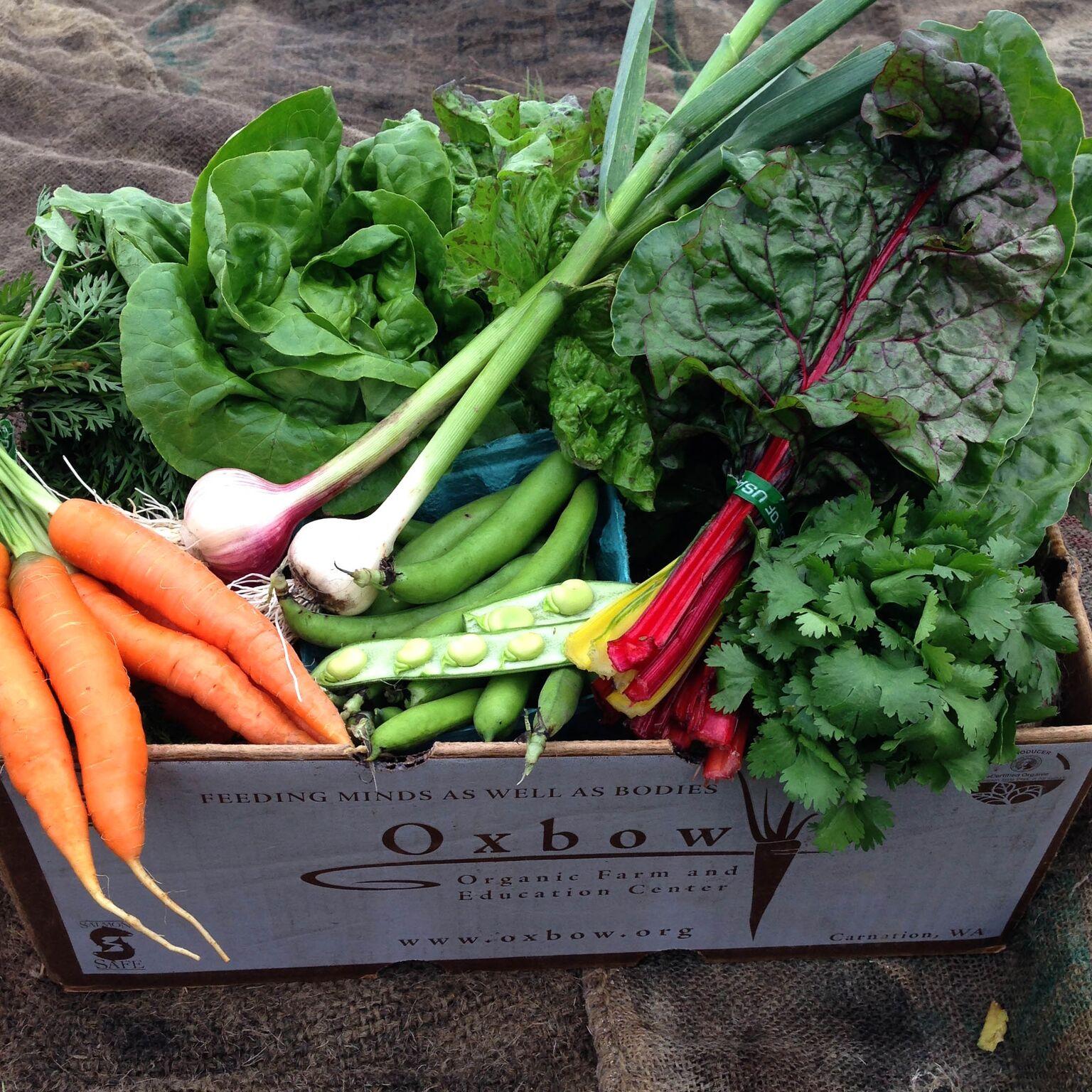
Adam: Our program has evolved over the years, depending on what the community is needing and what is economically viable for the farm. In 2011, when we started working with LocalHarvest and CSAware, we had 350 members, and then in 2013 we were on a growth trajectory with 480 members. By 2014 we were up to 600 members, and in 2015, 700 members. Currently we’re around 500. In terms of the numbers, in different years we’ve offered different types of shares, so the numbers reflect some long season shares and some shorter season shares.
LH:Was it Oxbow Farm’s desire to grow, and how did you accommodate so much growth?
Adam: Yes, we did plan for growth - we basically have three to four business branches. We are Oxbow as the non-profit organization, then we have an educational farm-garden, a native plant nursery, and we have the production farm. The growth of the CSA matched our mission to give members of the community the opportunity to come and experience their local farmland through one of these different channels. We put a lot of intention into growing that aspect. We stopped going to farmers’ markets and started building select relationships with local restaurants and grocery / co-ops. So our CSA has a dual purpose: people can buy direct with us, and also they have the opportunity to experience the farm in these different ways.
When you’re planning for the CSA, how do you plan for what goes in the shareholder’s box? Do you get input from your members? Are there certain trends you’ve noticed or started?
Adam: We take customer feedback very seriously. We always want to know what folks are desiring. Sometimes we buy-in from another local grower if we can’t grow something our members want. Economically this makes more sense and additionally it spreads the customer’s food dollar within the local community. When we buy from another local grower, we’re supporting other local farmers and securing local farmland.
There are a lot of different reasons people are choosing to join a CSA: some are interested in local, sustainably grown fresh food, others are considering the health benefits, some are foodies, and others want a convenient neighborhood pickup. When you’ve got hundreds of subscribers, you have a lot of different folks in the pool. Some people are really fired up about local and sustainable. Others are more interested in just getting their box of fresh produce. One of the trends we’re looking at is providing the best regional product our fields can produce, and strengthening our regional food system through community relationships.
Our CSA is for people who are looking for high quality staples that will grow in this region. We don’t make false promises - you’ll get great value, quality, seasonality, we’ll give you a nice variety and sufficient quantity to make your meals. We have over 30 different pick-up sites in the greater Seattle area. Each site host is a Community Partner that builds a relationship within the community. Some of those are faith-based community hubs, or health & wellness-focused businesses, like the chiropractor’s office. Delivery becomes part of a regional commerce - connecting people with similar values like eating healthfully. We are moving into those relationships with even greater intention. It takes intention, effort and maintenance to keep up those relationships.
LH: what is your perspective on preserving farmland preservation, and how did the native plant nursery project come about?
Adam: Our farm serves the purpose of food production, and in addition we have a conservation program with the goal of being a sustainable steward of the land. In the floodplain where we grow, we work with fish habitat and restoration, keeping the water clean. Everywhere we are is the watershed.
Keeping local farmland producing is going to keep it preserved. We maintain buffers so that there is clean water in the waterways. Preserving biological diversity while doing our best to sustainably grow food is a constant challenge. Bringing those aspects together, food production and land preservation, is a major focus at Oxbow.
Partnering with universities who conduct research projects also helps us to accomplish our goal of maintaining a healthy biodiversity on the farm. For example, right now we have a bird diversity study going about nesting sites around the production fields. We’ve found that there is a direct relationship to the presence of birds and integrative pest management. Another angle of conservation and sustainable growing is nutrient management and knowing what is enough but not too much, in keeping the waterways clean. Understanding the impact of cultivation to the outlying buffer zones is very important to us and our goal of land stewardship.
LH: Tell me a little about the Education Farm?
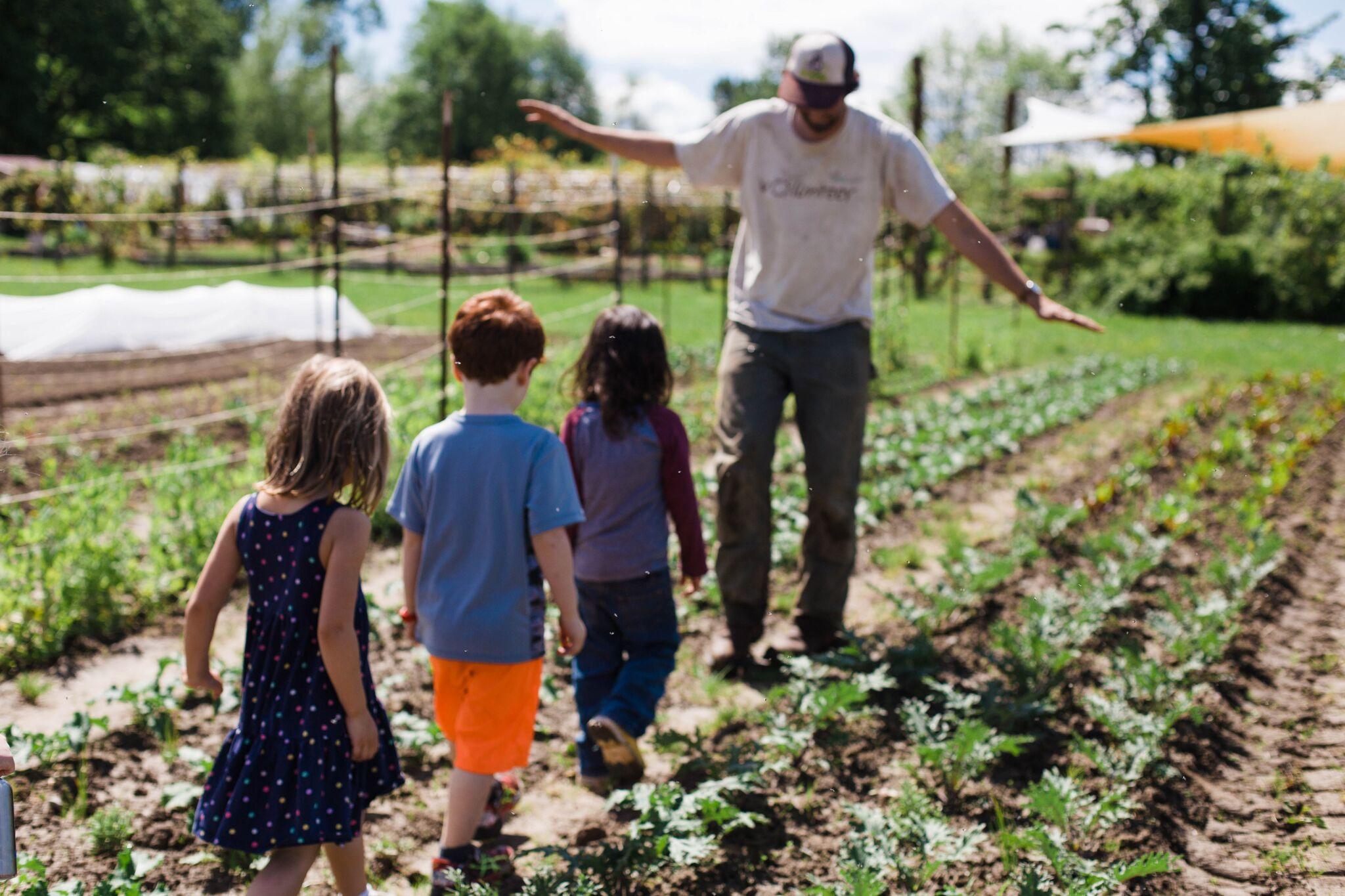
Adam: Oxbow’s Education Farm works toward preparing future generations to be stewards of the land as well. We’re using many of the same production practices that we use on our larger-scale farm fields on a micro-level at the Kid’s Farm. When children come to the farm, they see a pared-down version of how a farm works. They learn about pollination, seeds, germination, soil, insects, where food comes from, how it tastes, and how it nourishes. The kids really get to feel and experience all these aspects of our food system. Our educators go into classrooms during the winter months when there is less going on in the field.
Many thanks to Oxbow Farm Manager Adam McCurdy for speaking with us. If you are interested learning more about Oxbow, you can visit their website or sign up for their CSA here.
05 Mar Sun 2017
Winter Thaw Springs Hope

Welcome back to the LocalHarvest newsletter.
It has been a long, hard winter for us and certainly others too. There has been at least a foot of snow covering our entire acreage since late November- we call it the permafrost because it never seems to melt. Just today I heard a couple red-winged blackbirds down by our pond, a sure sign that spring will be coming soon. Last year at this same time, my daughter and I were going on hikes to look at the earliest wildflowers (the grass widow) and we were starting onions from seed in our cold frame. This year, even though it is early March, I haven't ordered seed yet. It's like the thought of gardening is so remote for me, I can't commit to buying seed. Is it really true that spring will come back to us?
Seeds are the stuff of life, these miraculous little orbs of dormant cells just waiting to multiply with the right conditions. While I can always buy ready-to-plant transplants come May or so, starting crops from seed is so much more gratifying and economical. They also seem to produce stronger crops, better root development, and pest resistance that the store-bought transplants. We either direct seeds crops, such as lettuce, cilantro, carrots, radishes, and beets into the soil, or we start the seeds in our little propagation greenhouse 5-6 weeks early and then set them out in our garden once they have a few true leaves and moderate root development.
I was just at the Oregon Small Farms Conference in Corvallis, OR where many of my favorite seeds companies were displaying their catalogues and giving away free packets of seed. I hesitated to pick up any packets, worrying that they may not get in the ground this year of the big freeze. But the catalogues enthralled me and had visions dancing in my head of fat onions, rosy tomatoes, multi-colored radishes, bitter greens, crunchy beans, zesty parsley, and other favorites that I plant every year. LocalHarvest works with a number of small-scale, regional seed farms and companies offering a wide variety of seeds for sale. From artichokes to zucchini, flower seeds, grains, herbs, and more, consider supporting these farms and buying your garden seeds from them. I promise I will break out of my winter stupor and order my seeds straight away.
Not only is it time to think about buying seeds and designing your garden, it is also time to sign up for a CSA share, especially if you don't garden. Even though you have many options for how you buy food, including pre-chopped, pre-portioned, and almost pre-masticated these days, consider that one of the best ways to support your local farmers and receive the highest quality produce is by becoming a member of a CSA farm.
CSA numbers are way down- we get it. Ordering food on the Internet and getting it at your door 2 hours later seems attractive. But there are a few drawbacks to instant gratification- lots of packaging, lots of transportation, lots of food waste, and your dollars leaving your community and often your state entirely. Now, more than ever, we need to strengthen our local economies and our relationships with our neighbors.
The United States used to be a net exporter of fruits and vegetables. Starting in 1996, we became a net importer. We now import $11.4 billion dollars more fruits and vegetables than we export. This is due to more factors than I can describe in this short essay (see Congressional Research Service report RL34468 to learn more), but suffice to say, it's a lost opportunity to support more family farmers, create jobs, improve our rural economies, and reduce our food miles.
By joining your favorite local CSA farm, you are becoming part of the support network that keeps them in business, keeps dollars circulating in your region, and helps turn back the ever growing trade deficit in US agriculture. Be the change.
Kindly,
-Rebecca
06 Dec Tue 2016
Thoughts on Future Food Policy

Welcome back to the LocalHarvest newsletter.
With the November elections thankfully behind us, there is still a considerable amount of uncertainty moving forward with regards to federal agricultural and food policy. Things will be up in the air for quite some time until a new Secretary of Agriculture is chosen and our Congress takes on the reauthorization of the Farm Bill, the main piece of food and ag legislation set to expire in 2018. Most of the political wrangling for the Farm Bill will start next year so we all should take some time to not only understand what the Farm Bill is and isn't, but also the various ways we can get involved. Regardless of whether we farm or not, as Wendell Berry likes to point out, “eating is an agricultural act”. Our lives all intersect with the food system.
Since food and agricultural policy was discussed very little during the presidential campaigns, it is largely a guess what may happen over the next four years. One concerning issue is there is some talk of separating the food assistance programs from the Farm Bill. Approximately 75% of the last Farm Bill budget went towards nutrition and food assistance programs, including SNAP (i.e. food stamps), senior farmers market vouchers, emergency food assistance, Native American food distribution programs, fresh produce for public schools, and more. Over a quarter of all Americans receive one or more of these benefits. Taking these programs out of the Farm Bill puts them at risk of deep cuts, and will cause the more urbanized states where most of these people reside to be less interested in the negotiations of the Farm Bill. That very well could concentrate the power in farm dominant states, and mean that commodity support might increase at the expense of other more progressive programs. With food assistance programs out of the Farm Bill, they are more likely to face stiff cuts when negotiated and budgeted on their own. The SNAP program, for example, could face cuts of up to $1 trillion dollars over the next decade if House speaker Paul Ryan gets his way. We can't say for sure by how much food assistance will be diminished, but the cuts are coming. The collective impacts could be disastrous on the food security of our nation.
Although president-elect Trump campaigned on promises to not sign the Trans- Pacific Partnership (TPP) and dismantle other international trade agreements, it doesn't look likely that he will actually follow through on his words. Not only is he hiring trade-promoting agricultural commodity lobbyists to manage his agricultural transition, it is obvious that a GOP controlled congress and commodity state control of the Senate and House Ag Committee will engender more trade deals. That is good for large, vertically integrated companies and commodity growers that export a lot, and could be harmful for specialty crop growers that have to compete with ever more less expensive imported produce (see my article in December 2015 for more on that subject). Many in sustainable agriculture don't want to see the US turn off trade, but would like to see trade deals emphasize fair trade principles, such as environmental, worker, and income protections. Will Trump work to change the nature of our trade agreements to include more of those protections? Since he didn't share any of those ideas on the campaign trail, it is probably unlikely.
Labor availability for American farms and food processing is not likely to get any better under the new president. It could actually get a lot worse, which means that not only will food prices increase, but many labor-intensive farms could go out of business or choose to mechanize to a larger extent. Regardless of what you think about immigrant labor, agriculture is going to be hard hit in this aspect and could have devastating consequences on rural economies.
Conservation and research dollars in the Farm Bill may be reduced, which not only could impact some of the great environmental gains we have made in agriculture (reducing soil erosion by 44% in the last 20 years for example), it will also reduce the research and development money that helps make American agriculture a leader in innovation.
This is what I know. We need more diversified family farmers around the country making a decent living, we need access to more affordable farmland for those that want to farm, we need competitive markets, we need a reasonable regulatory environment that takes scale into consideration, we need a safe and sane agricultural labor policy, we need fair trade policies that allow our country to enact rules that protect our people and environment, and we need conservation and research dollars going towards improving the resiliency of our agricultural systems. I urge you to get involved in the negotiations for the Farm Bill next year by first reaching out to your congressional representatives. Also consider joining the National Sustainable Agriculture Coalition, a broad coalition of over 100 member organizations that advocates for federal policy reform to advance the sustainability of agriculture.
P.S. Because of the subject of this article, we ask that you refrain from commenting on who won or didn't win the presidential election and instead focus on agricultural policy. We look forward to hearing an engaged and respectful dialogue.
Kindly,
-Rebecca
26 Nov Sat 2016
LocalHarvest Featured Farmer: Pablo Rodriguez of Rancho Charanda
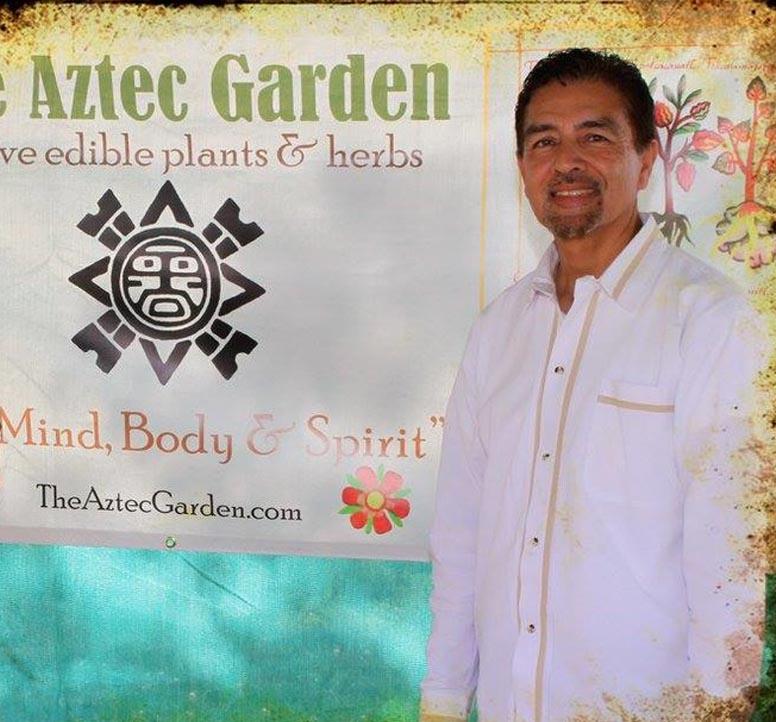 We at LocalHarvest are embarking on a new project to bring you closer to the farmers who grow your food. Periodically we’ll be interviewing our members to share their unique stories with you.
Pablo Rodriguez is the owner of Rancho Charanda, growers of citrus and specialty fruit crops, and The Aztec Garden, his project featuring medicinal and culinary herbs of ancient and modern Mexico. We’ve always loved his artful presentations and passion for growing good food and herbs, so we looked forward to asking Pablo a few questions about what inspires him.
LocalHarvest: What got you into farming?
Pablo Rodriguez: I was totally inspired by my grandmother. As a young boy, I remember spending the summer playing in her huge garden filled with tomatoes, chiles, cactus, herbs and several types of stone fruit. Every time my siblings and I visited, we would peek into the refrigerator and shout, “there’s nothing to eat”... but grandma would always whip something up freshly picked from her garden. So I decided to continue the tradition of growing my own meals. Plus farming keeps me grounded, it connects me to the land and nature, brings me peace and relaxes my mind. I respect the earth and the life giving energy the food provides us.
LH: What inspired you to create The Aztec Garden?
Pablo: Years ago I discovered a reproduction of an obscure little herbal book written in 1552 called the Aztec Herbal. I read it cover to cover. It is the first herbal, in fact, the first medical book produced in the Americas. The original book is preserved in the National Institute of Anthropology and History in Mexico City. It is known as the Codice Badiano, or Badianus Manuscript, after the Aztec scholar Juannes Badianus, who translated the original manuscript into Latin.
The herbal was written in the local Aztec language (Nahuatl) by Martinus de la Cruz, a prominent physician at the College of Santa Cruz in Tlaltelolco, Mexico. The book was produced thirty-one years after the Spanish conquest of Tenochtitlán, which is present-day Mexico City. This little book provided the names of the herbs, hand drawn images and remedies for a variety of illnesses and ailments. I decided to grow as many of these herbs and plants that I could find and share the remedies with others.
What are the three herbs you think everyone should have in the cupboard and why?
Pablo: At the Aztec Garden we firmly believe that to heal oneself you must heal all elements: mind, body and spirit. With that said the first herb to have on hand would be:
Cedron / Lemon Verbena. A very comforting and aromatic herb. Once dried it makes a perfect hot or cold tea. A cup in the morning allows you to clear your thoughts and prep your mind for the tasks of the day. In the evening before bed, it soothes and relaxes your mind before you lay your body to rest. (Mind)
Oregano de la Sierra / Mountain Oregano. This is one of my favorite herbs for cooking and feeding your body with natural nutrients it needs to function properly. It is very aromatic with rich, spicy overtones. Perfect over grilled potatoes or blended with saute?ed tomatoes, onions, garlic and nopales. It adds life and zest to so many dishes. (Body)
Salvia Blanca / White Sage. This is one of the five sacred herbs. It is used to dispel negative energy that you may have absorbed from friends, family or foes. It should be used daily. (Spirit)
LH: Does your farm location have any particular geographical advantages / challenges? How would you describe your local farming community?
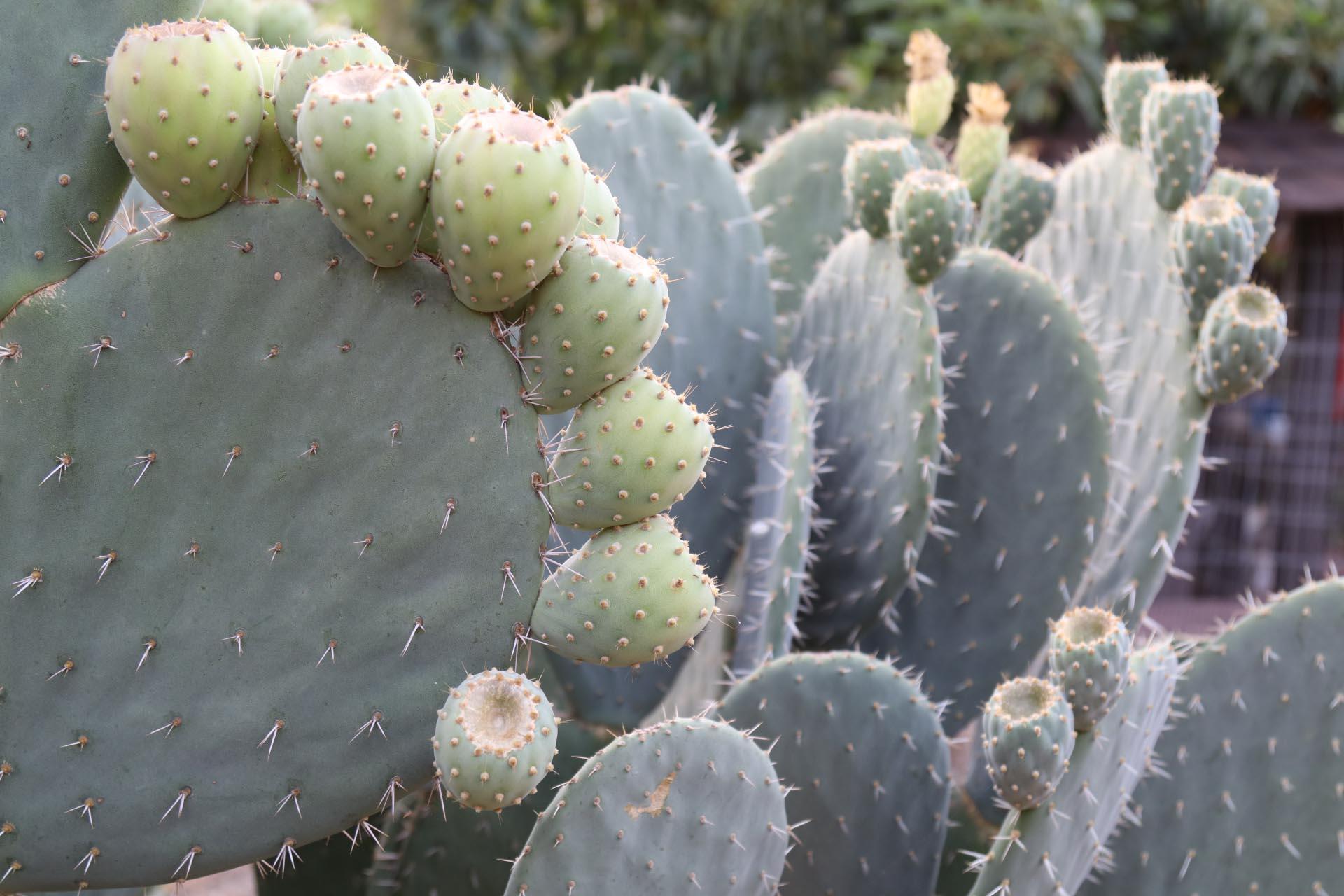
Pablo: We are located on a hillside between Los Angeles and Palm Springs in an area known as Crafton Hills. Our farm has mountains to the north and desert to the east. In my opinion a great location with several microclimates. The area is perfect for growing several types of plants, trees and herbs. The south, higher terrain allows us to grow sub-tropicals such as avocados and guavas. Our sun-sensitive herbs are protected with the shade of our citrus trees throughout the property. The north, lower end, where rainwater and irrigation water accumulates, is perfect for our thirsty plants. The drier, sandy soil of the west side is a perfect location for our cactus garden.
Some of the biggest challenges we face are lack of rainwater, unstable weather, over development and a lack of respect for the environment. The local farming community has finally placed our local food production as a priority, but we still have a long way to go. We need the local community to support local farming … and not depend on foreign interests to supply our precious food.
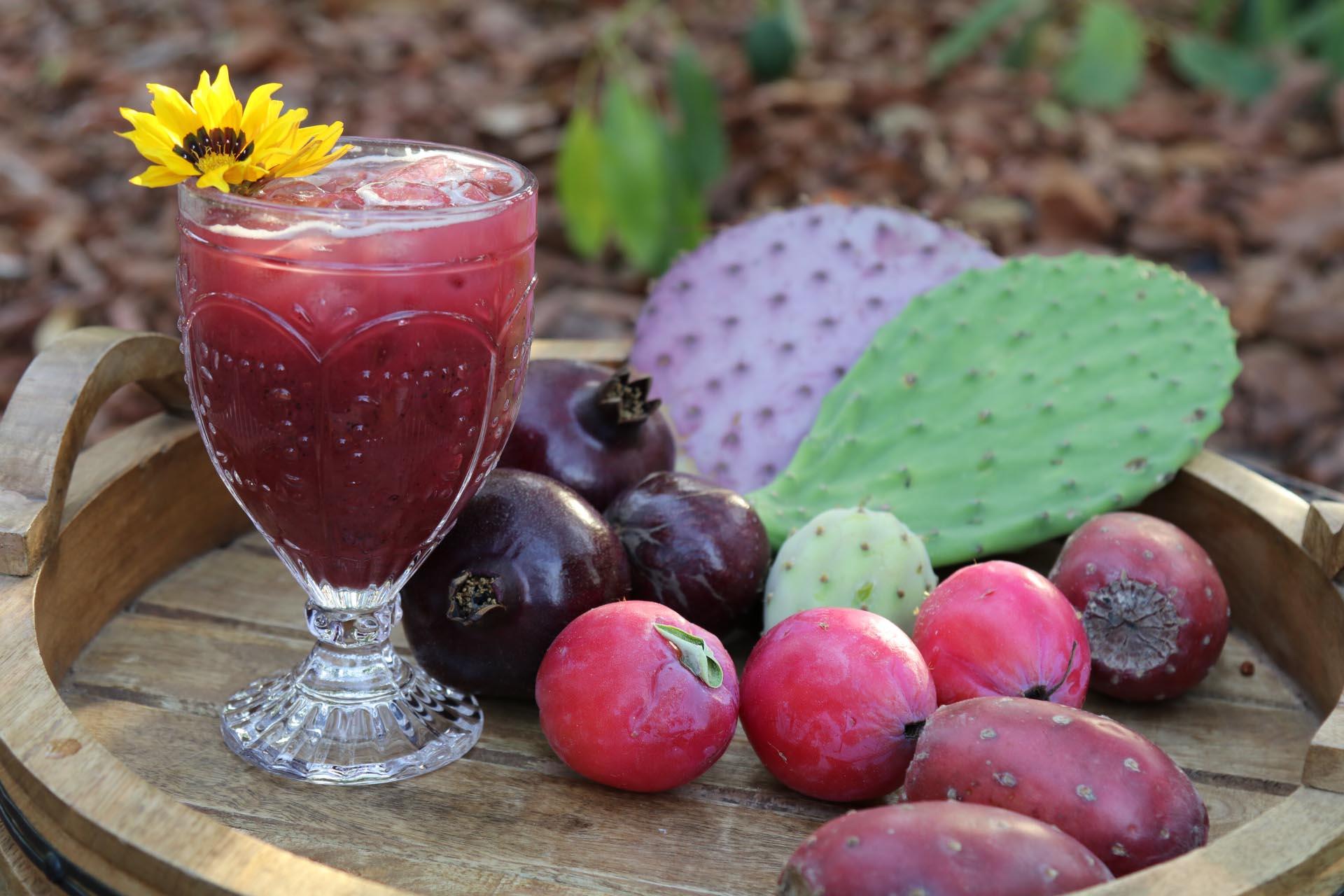
Recipe: Sangre de Azteco
This refreshing drink features some of the unique fruits grown by Rancho Charanda. The Aztec Marigold flower garnish represents the blood that was shed by the Aztecs to the Spaniards who invaded the Americas for gold.
Ingredients
- 1 xoconostle fruit
- 2 pitaya (dragon fruit)
- 2 tuna (red prickly pear fruit)
- 1 pomegranate (medium sized)
- 1 nopal (cactus paddle green or red)
- 3 oz chilled spring water
- 1-1/2oz Opuntia Prickly Pear Spirit
Preparation:
Trim the spines and skin off of the xoconostle, pitaya and tuna. Place pulp in a blender. Next, trim the spines off of nopal, chop and place in blender, cut pomegranate in half and remove seeds. Place seeds in blender. Add 3 oz chilled spring water and blend at high speed for 4 minutes. Pour mixture through cheese cloth to remove seeds into a wide mouthed cup. Add Prickly Pear Spirit, stir and now pour into a chilled glass goblet filled with ice cubes. Garnish with freshly picked Aztec Marigold Flowers.
Many thanks to Pablo Rodriguez for taking the time to share with us! If you’re curious about Rancho Charanda and The Aztec Garden, check out their listings on LocalHarvest, or if you’re in their area, you can contact them about visiting.
Until next time,
Kerry