
The LocalHarvest Blog
19 Oct Wed 2016
Harvest-Time Hysteria

Welcome back to the LocalHarvest newsletter.
It is time to fall into fall and celebrate the harvest, yet I fell exhausted. I'm not even a farmer, just a very ambitious gardener, but still I am tired. Every year it is a push-pull between my husband and I about how big to make the garden and how much to plant of each crop. Around 40 pounds of garlic seed goes in, 1,000 onion sets that we start ourselves, 100 tomatoes and another 30 pepper plants go in the ground. All the other crops are just window dressing. Can you tell we like salsa? Each spring I say, “let's make the garden smaller and have a little more time for adventure this summer”. My husband, on the other hand, is focused on the inevitable zombie apocalypse. He practices canning like it is an Olympic sport.
So here we are, in the thick of harvest and processing time and I don't want to spend another whole weekend dicing, stirring, cooking down, and canning food. Thus far, we have dried 2 gallons of plums, made 160 jars of various plum concoctions (jams and chutneys), 48 jars of ketchup, 24 jars of tomato paste, and 60 jars of salsa. Still remaining are more types of salsa (roasted green tomato, tomatillo/tomato), fermented hot sauce, pickled beets, and kimchi. We will dice up and freeze copious quantities of winter squash (for some reason I can never get it to store well as intact squash), freeze cubes of pesto, and harvest the rest of our dry corn. Later in the fall, I will break out all the frozen fruit I socked away and make more jams- cherry/peach and black n' blue jam. I like to freeze fruit when it is in season and then process it when the weather is much cooler and I don't mind being inside over a warm hearth.
I did not grow up this way at all, with the art of gardening and preserving food having largely skipped my parents' generation. But for the past 10 years I have been getting more and more skilled at canning to the point where I even sell a few dozen jars at fairs. I love seeing people's delight as they come across a favorite jam, chutney, salsa, or homemade ketchup that they haven't seen or tried in years. I also fancy the wee bit of income the sales afford me in order to cover any costs of buying new jars, lids, or ingredients like sugar each year. If I can cover all those costs, I am a happy homesteader.
Then all winter long and into the summer before our next harvest comes due, we happily munch on pickled beets and garlic scapes, thaw out homemade pesto for pasta, spoon salsa over our eggs, and smother plum jam on the PB & Js that my family makes often for their sack lunches. I know all this work saves us thousands of dollars in grocery bills, makes us more resilient in case of power outages or other emergencies, and fills our bellies with nutrient-dense food that we grew with care. But you know the best thing about preserving our food? Giving it away. All these jars make great gifts or just tokens of appreciation throughout the year. When my daughter has a sleepover at a friend's house, I send a jar with her as a thank you to the parents for taking my kid on and giving me a break. I give jars to new employees, board members, new friends, and neighbors when they lend me a tool or watch our pets while we are out of town. So maybe it does make sense to process 300-400 jars a year so we can give away half of that. Here's to the happy exhaustion of the harvest and the abundance we are blessed with.
Kindly,
-Rebecca

30 Jul Sat 2016
People Over Profits

Welcome back to the LocalHarvest newsletter.
You may have read that the venture-capital (VC) funded company Farmigo recently announced that it was terminating their online ‘farmers market’ and going back to just focusing on their software services.
Farmigo’s food distribution service was not Community Supported Agriculture by any stretch of the imagination. Although they did buy from some small farmers, they also bought from a lot of larger farmers whose products you can find in grocery stores across the country. It looked a lot more like the Amazon of food rather than a local farmers market.
As more and more of these heavily funded food distribution companies come online (Farmigo, Good Eggs, Instacart, Amazon Fresh, etc), spending millions of dollars to acquire customers and advertise, they pull many would-be CSA customers or farmers market shoppers into their schemes. What are the impacts on the actual local farmers in those regions? Certainly hundreds of farmers benefit from being able to wholesale their products to these companies, at however smaller margins than selling direct-to-consumer. Yet many of the companies go out of business a few years later and the farmer is once again left scrambling trying to find a buyer. A couple farmers and multi-farm CSAs recently shared with us that they had to fold or change their sales model due to competition from fake CSAs like Farmigo and others, only to witness those ventures close just a few years later. "The offering of 'local' food with the click of a mouse, delivered fast and fresh to your front door is not something most of us can compete with," said Marie Tedei of Edens Organic Garden in Texas. Several long-standing CSAs have told us that unlike years ago when they had waiting lists, they are now struggling to sell all their memberships.
LocalHarvest has several multi-farm CSAs, Food Hubs, or small distribution companies that we support with our software. We have no problems with ethically-ran, privately or cooperatively owned food distribution companies that accurately represent what they are doing. However, we do take issue with companies posing as CSAs or pretending that their mission is to assist farmers or help consumers gain access to the freshest, most sustainable foods when their actual mission is to gain the largest returns for their investors. Even the New York Times has noticed this issue, just penning an article about the rise in fake CSAs and how that impacts actual CSA farmers.
The Times article brings up an important truth that CSAs and Farmers Markets only serve a very small slice of the American population. If we want more diversified family farmers and if we want Americans eating a fresher, more localized diet, there has to be equally diverse efforts to create more options for consumers to get access to that food. We support varied efforts to scale up and scale out sustainable foods with a commitment to quality, transparency, economic equity, and environmental responsibility. Unfortunately, the investor-owned and funded efforts tend to try to get too big too quickly in order to maximize investor returns. They are, by design, an unsustainable model. The profits go to the investors, not back to the farmers, nor up the supply chain towards lowering prices for consumers. A venture capitalist expects to make a significant return, on the order of six times their original investment. This means, for example, that the staggering $26 million dollars that have poured into Farmigo needs to generate $156 million for those same investors. Maybe I lack imagination, but I just don’t see how that could happen from CSA management software or building a food distribution business.
LocalHarvest runs our business differently. We are a very small, privately owned business. We allow farmers, farmers markets, and others to list their businesses for free in order to link them to consumers searching for good food. To support that free service, we have built software for CSA farmers and food hubs that generates a modest but sustainable revenue stream that in turn supports our amazing little team of dedicated employees. Despite repeated attempts by VC investors to purchase a slice of our company, we have resisted because we understand how that would change the nature of our work for the worse.
So keep directing your dollars as closely as you can to the actual people who grew your food, grow some of our own, and resist the hype of these new techno-fancy, multi-million dollar funded models that may look pretty on the outside but usually lack the ethical core that we need to create a truly sustainable food system.
Kindly,
-Rebecca
22 Jul Fri 2016
State of CSA
Dear CSA Farmer,
By now you are probably aware of the recent conversation in the media about Venture Capital (VC) funded "Farm Box" businesses taking the wind out real CSAs' sails. I wanted to share with you what I think is going on and how we can take a stand to preserve the integrity of the CSA movement.
As the Good Food movement started to go mainstream, starting in 2006 VC investors began flocking to "local food" startups. For a few years, we at LocalHarvest received dozens of calls from hungry investors wanting to fund us. Our response was always the same: Pretty much by definition, "maximization of profits" as the investors' top goal will never be compatible with the Good Food movement, which is driven by the health of farmers' livelihoods, communities, and the environment.
Since then, VC-funded companies have attempted a takeover of the CSA market painstakingly developed by small farms and the local businesses who collaborate with them. 10 years later, and with most of the capital spent, we're now seeing these ventures fail. Good Eggs, Farmigo, AgLocal, and other heavily-funded businesses have failed to take over the CSA space. They all learned the hard way that you cannot squeeze 20% to 30% profit margins from CSAs. We believe this trend will continue, and that the space will finally resettle into the steady grass-roots-driven growth it had during its first 20 years, before the VC money flooded in.
The most recent case of a heavily-funded venture failing is Farmigo. They launched a CSA Software product in 2009 in direct competition with our CSAware. I projected at the time that their plan was to learn how CSAs are run and later use the knowledge to compete against their own CSA clients. This proved true when in 2011 they re-launched as an "Online Farmers Market". With most of $26 million dollars now spent, Farmigo proved unable to transform the CSA model while skimming 20% or more from CSA profits. While doing this, they squeezed many established CSAs and (in worse cases) helped drive CSAs out of business in the markets where they operated.
Farmigo has announced that they will refocus on CSA software while they still have investment funds to stay in operation. LocalHarvest pioneered the CSA Software space with our CSAware and CSA Manager products. While Farmigo has proven their willingness to commoditize the local farmer to gain profit share, we distinguish ourselves from this practice. LocalHarvest has always and will continue to focus on helping local farms grow their business.
We at LocalHarvest.org have been dedicated to helping CSAs thrive since 1999, and we are here for the long run. Our goal is not to sell out to the highest bidder, but to provide a livelihood for our small and dedicated crew, while providing tools and services needed by CSAs and family farms.
Just imagine what could have been achieved if those billions had been invested in promoting family farms and locally-grown agriculture. We encourage you to choose your business partners wisely and to collaborate with those that share your vision of the future of food.
If you would like to speak with us about growing your CSA using our CSAware or CSA Manager services, please contact us directly. We have successfully transitioned Farmigo clients to CSAware. If you are currently working with them, we can help make the transition painless.
Sincerely,
Guillermo Payet
President
LocalHarvest.org
PS: Watch for the upcoming July edition of the LocalHarvest Newsletter for more on this subject.
29 Jun Wed 2016
A Gal Gets Her Grill On

Welcome back to the LocalHarvest newsletter.
Summertime, and the grilling is easy. Fresh salmon are jumpin, and the pastures are high. Oh, your sauces are rich and your steaks are good-lookin'. So hush little riblets, don't you turn out dry. (Adapted from the great George Gershwin)
We pulled our grill out of the garage last weekend and are thawing out a flank steak and lamb loin roast to throw on the grill for a small gathering of friends. I also plan to grill some bok choy and green onions, two things I can find at the farmers market that happen to grill nicely. There are tons of foods that go great on the barbecue, but this article will focus on meat.
What kind of meat? About a year ago we got a whole grassfed Jersey steer to fill our freezer. He was finished on pristine mountain pastures and native grass hay. Despite being grass-fed, this beef is plenty marbled with fat and moderately tender (the dairy genetics are a big part of that- he was from a Jersey milking herd). I'm not a fan of fork tender beef- I think it's not natural and requires lots of grain to make it that way. A beefy flavor and tight texture are more important to me than the ability to cut a piece of steak with a fork.
The lamb loin roast came from one of the Dorper sheep we raised last year on our own land. We purchased two weanlings in the late spring and moved them around our property to consume grasses, weeds, and acorns. In December we slaughtered and butchered them ourselves, then packaged and labeled for our freezer. Our family rarely eats any meat we did not raise or know personally (Portlandia chicken episode anyone?). I appreciate that is a great privilege that many don't get to experience, but I also see acres and acres of yards around this country that sit unused except for the Saturday morning mowing session. A lot more yards and small acreage properties could be using a few sheep or other livestock to keep their grass short, reduce fire danger, and provide meat for personal consumption. Think of it as your "Freedom Flock". Freedom from complete reliance on grocery store meat. Freedom from burning petroleum and spending hours mowing your grass. Freedom from the danger of wildfire destroying your home. I also recognize there is more to raising animals than that, and luckily there are a lot of great books out there on how to do it (including my own The New Livestock Farmer if you want to turn a livestock hobby into a commercial business).
LocalHarvest is a great place to start if you desire to include more local, pasture-raised, and organic meats into your diet. At last count, they had more than 3,554 producers of pastured pork alone. Not every farm on Local Harvest uses the same practices, but they are all independent family farms. Just for clarity's sake, let's give a short definition of what some of the common meat terms are these days so you can understand what you are looking at:
100% Grassfed: this term applies to ruminant animals only (cattle, bison, sheep, goats) and means that the animals are fed only grass and forages from weaning until harvest. Sometimes you will see another term "grassfed and finished" to imply that it was finished all the way until slaughter just on grass. If meat is simply labeled "grassfed" that does not necessarily mean it was on grass its whole life and may have been finished on other feeds such as grains, soybean hulls, distillers grains, waste vegetables, etc. Look for AGA, AWA, or PCO certified grassfed.
Certified Organic: requires that the animals are fed 100% certified organic feeds or forages (that is GMO free as well), the pastures they graze on are managed organically, no antibiotics or hormones are administered, and some outdoor access is provided. Look for the USDA or certifier seal on the label to be sure it is organic.
Non-GMO or GMO Free: this just became an approved claim for meat and it applies only to what the animal ate. Livestock fed GMO free feeds can still be raised in confinement, can still be given antibiotics or hormones, and the feed can still be grown with chemical pesticides and fertilizers. It just does not contain crops grown with genetically-engineered seeds. Look for Non-GMO Project certification.
Pasture-Raised: is not a certification program, so its interpretation can be quite broad. But in general it means that the animals derive a portion of their diets from being on pasture and that they spend most of the daylight hours outside on growing pasture. Can apply to both ruminants and non-ruminants (such as poultry and pigs). Ask questions to find out more about the farmers practices. For example, what do they do to ensure the regrowth of the pasture and that it doesn't just turn into a dirt lot?
Ok, back to grilling. I am by no means a grilling expert. I look to books like "The Grassfed Gourmet" or websites like AmazingRibs.com to get it right. My best tips for a classic grilled steak or chop are: 1) thaw out your meat for 1-2 days in the refrigerator, 2) a good piece of meat needs only simple seasoning, 3) get the grill properly hot, 4) don't overturn the meat, 5) don't overcook grassfed meats, and finally 6) let it rest for a couple minutes before you devour it, but don't let it get cold.
Happy Grilling,
-Rebecca
26 May Thu 2016
The Fight for Living Wages
Welcome back to the LocalHarvest newsletter.
I need to preface this discussion by pointing out my - and LocalHarvest's - longstanding commitment to social justice, fair trade, and living wages. Yet, as a recovering farmer who had a business large enough to have employees, I also understand the invisible math that most people never get to see. In the December newsletter we spoke to some of the challenges that US farmers face when competing with cheaper, imported food. If a retailer or a consumer can get a cheaper organic tomato grown for a 10th of the labor costs as a US organic tomato, they just might do that. Now imagine if those US labor costs were to go up 50%?
Building on the momentum of the Fight for $15 minimum wage campaigns around the country, mainly in big cities such as New York, San Francisco, Seattle, and Los Angeles, there is now a growing movement to raise minimum wages to between $12 to $15/hour at the state level in places such as New York, Oregon, California, and Massachusetts. Some states are talking about establishing different wages around their state based on the relative costs of living. So in more rural counties, the wages won't go up quite as high or quite as fast. California, however, is talking about $15 across the state, regardless of location, cost of living, or industry.
Without diving into some of the really hot-button issues around employment, wages, and farm labor, I am just going to share a couple stories and quotes from various people thinking about how a substantial increase in wages (30-60%) may affect the viability of small and mid-scale farmers, particularly those growing more labor-intensive crops like fruits and vegetables. Will farmers have to drop growing specialty crops, the very same ones that we are supposed to be eating for optimum health? For example, winter wheat uses a lot less labor than cherries, but do we need to be eating more wheat?
I know that if our farm had a 50% increase in labor costs that we would have probably scaled down to hire less labor or we would have invested in a better piece of equipment that would have required one person to work it rather than two. Either way we would have employed less people. That may be an unintended consequence of steep wage increases- less employment opportunities.
New York State is talking about an increase to $15, after just implementing a new $9/hour minimum wage last December. That represents a pretty staggering 66% increase in minimum wages. A central New York farmer Tony Emmi was quoted in the paper saying that a $15 wage would cost his 300-acre farm in Lysander almost $200,000 extra a year, a burden that would cause him to hire fewer workers. Another Tony, this one Tony LaPierre of Rusty Creek Farm in Coopersville, has a dairy with 500 cows with a crew of eight full-time and four part-time employees. He said that if the NY governor's plan to hike the minimum wage comes to fruition, some farms will need to cut back on their workforce and in some cases look to technology to do so. For those farms that can't invest in modern technology, he said, there is a possibility they will go out of business. Will these large increases in labor costs further disadvantage small and mid-scale farmers because they don't have the capital to invest in expensive labor-saving technology? For example, an Iowa State University study showed that a robotic milker (called Automated Milking System) cost around $210,000 each. A dairy farmer, unless they bottle and market their own milk, can't usually pass increased production costs onto their consumers. Farmer LaPierre said that, unlike some other businesses, dairy farmers can't simply charge more for their milk to make up the difference. Milk is a commodity, with prices set by the market and the federal government.
Another negative impact a large wage increase like those proposed or being implemented could cause is discouraging farms from hiring young people or inexperienced workers. That will not only close another industry from hiring young people (whose unemployment rate hovers around 15%) it will also inhibit new, inexperienced folks who want to get started in agriculture.
"My workers are all worth 15 bucks an hour because they've been around," said Duane Chamberlain, who also sits on the Yolo County Board of Supervisors in California. "Starting people out, it would be nice to hire kids at lower wages because they're not worth it. They don't know what they're doing." Farmer Sarah Wiederkehr of Winter Hill Farm in Freeport, Maine whom I interviewed for this article felt similarly. She said "We definitely would NOT be hiring young, inexperienced labor if we were mandated to pay a much higher minimum wage. We already decided to stop hiring apprentices because we simply cannot afford the time it takes to train newbies. We decided last fall to only hire hourly employees, and ones with experience."
Another nuance to consider is that farms often provide other forms of compensation, such as free or reduced cost housing, transportation, food, and sometimes child care, health care, or other services. None of these things are taken into account when a city or state passes new wage laws. Although agriculture has a long and sordid history of not providing the best compensation and working conditions compared to many other industries, it also has a history of providing housing of some sort, often due to the rural location of the farms. Will farms be able to afford to continue to offer housing or to fix up and improve their housing if wages go up 30-60%? Farmer Wiederkehr of Maine says that she would also like to offer benefits beyond workers compensation insurance (mandated by her state), but currently she cannot figure out how do so and likely could not if she had to pay a mandatory higher wage.
Northeast Organic Farmers Association of New York (NOFA-NY) understands the need for farmworkers to be more fairly compensated but also understands that farmers have to earn living wages themselves. The current system does not satisfy either. With regards to NY governor Cuomo pushing for increase minimum wages, NOFA-NY states: ..."Fairness is an important value for NY's organic farmers, yet the wages farmers pay their workers range from only $9 up to $20 an hour. Most of the farmers are not earning much more, and farmers in the first 10 years of their farming careers often pay their workers more per hour than they earn themselves."
The minimum wage is not tied to inflation. It should have been indexed to inflation a long time ago, rather than just raised every now and again based on political whims. Had the 1968 floor of $1.60 per hour been indexed to inflation, it would be $10.90 per hour today, more than 50 percent higher than the current federal minimum wage of $7.25. However, should some states be raising their minimum wages by double that $7.25 over a few years to make up for decades of political inaction? What price will our diversified family-scale farms pay for these rapid cost increases? And are you, as consumers, ready to do your part by paying higher prices for your food, particularly the labor-intensive healthy foods you should be eating? Not only will food be more expensive, which is not necessarily a bad thing, some specialty crops will be scarcer because some farms will choose to stop growing them.
Kindly,
-Rebecca Thistlethwaite
28 Apr Thu 2016
Keeping Markets Honest
Welcome back to the LocalHarvest newsletter.
Unlike the calm blue water lapping at its Floridian shores, the latest series in the Tampa Bay Times is making some giant waves. The "Farm to Fable" series written by restaurant critic Laura Reiley exposes some unsavory issues that shake the foundation of the local food movement. The first article points out dishonesty in the restaurant trade about the provenance of their so-called "local" ingredients. The second article in the series exposes pervasive and egregious fraud in the farmers markets of the Tampa Bay region. This is by no means a "Florida thing"- I have experienced first-hand similar issues when I farmed in California and heard about it from others farmers around the country. What may be one of the most important and financially viable ways for farmers to sell their freshly harvest goods may also be a place where consumers are being lied to in some cases. That is not a story anyone wants to tell, but keeping an industry honest is important for both the producers and the consumers.
I wanted to find out if the problem of produce resellers posing as farmers was in all farmers markets in Florida so I called a friend of mine who has a 60 acre mixed organic farm up near Gainesville and sells at 6 farmers markets a week. Amy Van Scoik of Frog Song Organics, a Local Harvest member since 2011, says that she attends some "producer-only" markets such as the Alachua County Farmer Market, where growers are only allowed to sell items they grew or raised themselves. Reselling is not allowed. Consumers frequent this market because they know they are supporting Florida growers and getting some of the freshest food around. Farmers must possess a growers permit issued by their local Extension office to even sell there, which is written documentation of the farming location and the items that the farmer grows or raises. Although it's not a perfect protection against fraud, Amy feels pretty confident that nearly everything sold at that market is locally produced.
Other markets her farm attends do allow some resellers. Amy figures that as long as the resellers are being honest about where and how the produce is grown, she thinks it probably helps to attract more customers to those markets. It's when the resellers lie and say they grew something or when they label something "no spray" and then sell it for cheaper than her certified organic produce is when she believes it is unfair competition. That is beginning to change as some market managers are no longer allowing unverified production claims on produce or meats.
Her farm, unlike the resellers or the fake farmers, is open to the public a couple times a year for a farm tour. She likes it when her customers ask questions and come out on a tour- it builds their trust in her farming business and begets more loyal patrons. She encourages them to ask questions of other vendors too.
But for some fledgling farmers markets or ones located in areas with few farmers, they often have little choice but to invite some produce resellers if they want to actually have fresh produce at their markets. Amy also thinks that practice is fine as long as everyone is being honest and food is accurately labeled. Some markets that have removed the resellers have then found themselves with no produce vendors and consequently, a dwindling customer base.
On the other side of the country is the Portland Farmers Market, which is actually a non-profit association of 8 different markets. Oregon does not have a growers permit system like Florida, or the more cumbersome Ag Department certification that farmers have to go through in California to ensure they grew what they sell. The Portland Farmers Market works hard to build relationships with their vendors and aims for more of a personal vetting system rather than farm inspections. Their Executive Director Trudy Toliver is not a fan of more regulations, licensing, and fees for farmers and food producers. She thinks their system works and eliminates nearly any chance for fraud.
Trudy believes more in a self-policing strategy in which customers or farmers that suspect a vendor did not grow or make something themselves can simply report it to the market management. The markets have a clear complaint process and follow up on every written complaint that somebody may make. Likewise, each vendor must reapply every year and fill out a lengthy application listing where they farm, what they produce, or in the case of prepared foods, where their ingredients come from. The PDX markets also require that value-added foods (prepared or processed) contain at least 25% Oregon ingredients. This has really amped up the demand for Oregon grown foods and helped many farms scale up. With more than 700,000 shoppers and 240 vendors, these markets are having an impact of more than $8 million dollars in sales annually. They are especially proud of the numerous small businesses that got their start there.
We at Local Harvest love the concept of farmers markets- a marriage of public space, community-building, values-driven commerce, and agrarian ethics. We think that most farmers markets and most vendors are honest and work hard to follow ethical procedures and management. So don't let a few rotten apples spoil the bushel- keep supporting your local farmers markets, ethical farmers, and just keep asking questions.
Kindly,
-Rebecca Thistlethwaite
05 Apr Tue 2016
The 'Unsexy' Side of Farming

Welcome back to the LocalHarvest newsletter.
As a consumer of food, do you ever think about what a farmer has to do to keep their business running and food delivered to your plate? If you do not produce food for a living, could you imagine people relying on you for the food they eat, for their sustenance? Could you envision making your living from what you grow or raise off of your land? Just let it sink in a little that kind of commitment and pressure.
What does it take to be a small to medium-scale farmer or rancher these days? Apart from the obvious of growing high quality food by keeping the pests at bay, controlling weed pressure, improving the fertility of the soil, selecting the right crops or animals for the climate, harvesting them at the peak of flavor (or a little before then), packing, delivering, and selling those crops, there is so much more to it. The necessary but less glamorous side includes financial management, managing employees, paying taxes and payroll, following regulations and obtaining proper licenses, acquiring and maintaining vehicles and equipment, building infrastructure, and the list just goes on. Just like many entrepreneurs, a farmer wears a lot of different hats and must be a master of everything.
As eaters of food, we often just see the farmer or her employee at the market, the food itself, and a bit of the work they do to unload it, display it, and sell it to other eaters. From that vantage point it looks relatively uncomplicated, maybe even something we could do ourselves. The farmer is happy- they are selling the fruits of their labor. The eater is thrilled- they are getting the freshest, tastiest ingredients available and they can feel a sense of contentment knowing their dollars went directly to the farmer. It all feels really good.
What goes on behind the scenes, however, is a lot of tedious, time-consuming bookkeeping, data management, phone calling, emailing, and chasing money. In order to survive, a farmer must pay attention to these things, even if they loathe them. Some farmers use computer spreadsheets, others still use paper and receipt books. Some use the front dash of their truck as their filing system, while others have a cabinet full of folders organized by customer, class, or month. To find and engage customers, there is a lot of phone calling, emailing, and talking in person. There is also social media, print media, advertising, flyering, speaking to groups, and any other method to get the word out. It's simultaneously exhausting and necessary.
LocalHarvest got its start over 16 years ago to make the lives of farmers a little easier and to help consumers locate and build relationships with the people who grow good food in their regions. That is our core, the farmers and the eaters. To this day, we still don't charge a penny for farmers, markets, restaurants, food hubs, and others to list their business and share their offerings. And we have over 7 million people a year that use our site to locate a CSA, a specific ingredient, find a farmers market, etc. We are making those connections that nourish people and build resilient businesses that sustain families and communities. We are humbled at the power of our small but mighty website to do these things.
Kindly,
-Rebecca Thistlethwaite
28 Feb Sun 2016
Safe Food or Regressive Regulations?
Welcome back to the LocalHarvest newsletter.
Our LocalHarvest staff member John Gethoefer just wrote this letter to his congressman, Earl Blumenauer, regarding the challenges facing small farmers, in particular the new food safety regulations and requirement for food safety certification by many buyers. Once the Food Safety Modernization Act (FSMA) is fully implemented (most farmers have until 2018 to comply), it will be required for nearly all vegetable, fruit, and nut producers to follow these rules and pay for certification. Only those that gross under $25,000 a year in produce sales will be categorically exempt. I can think of no other set of regulations that is going to discourage new farmers from getting started and existing farmers from scaling up than the FSMA rules. The results could be horrific for the advancement of a sustainable food system and do little if anything to reduce deleterious pathogens in our food supply.
Here is an except from John's letter:
My name is John Gethoefer. I am on the staff of LocalHarvest, which is an organization that provides support for small, family farms throughout the US. Congressman Blumenauer's latest email to constituents piqued my interest in regards to "Equitable & Sustainable" agriculture policy. We see first hand every day how difficult the practice of small, local family farming has become in America. It is a commonly felt view among the many farmers that we advocate for that federal agricultural policy usually does more harm than good for small, family farms. In turn, there is growing skepticism among these farming families that any legislation introduced will likely do more harm than good for their livelihoods and viability.
One example that we have seen recently in the struggle to promote local food systems is that large, institutional buyers of agricultural goods typically require vendors and producers to follow the USDA GAP (Good Agriculture Practices) or GHP (Good Handling Practices) standards. We have worked directly with both institutional buyers and farmers local to them and while we have tried to develop training programs that are cost-effective for the farmers, more often than not, the program is too costly for these farmers to adopt. As a result, very few local farming operations qualify to sell agricultural goods to these institutional buyers. While the intentions of GAP/GHP program are to increase safety for the general public, there exists many challenges in terms of equity and ultimately sustainability for the small, family farmers to adopt and therefore compete in the local marketplace.
To comply with the new FSMA rules, a farm has to get each crop certified as food safety compliant. Imagine what a diversified farm with over 10 crops will have to do to certify each crop. The compliance costs vary widely based on how many actions a farm has to take to pass the inspection. On the lower end I found compliance costs of $50/acre up to $13,000/acre if larger infrastructure renovations are required. These include costs such as water testing, testing compost materials, installing deer fencing, building an enclosed packing house, switching to all plastic harvest bins, renting port-a-potties with hand washing stations and the most time-consuming task of endless record-keeping. The record-keeping of organic certification will pale in comparison with food safety record-keeping. Things like daily temperature checks, recording when you pump, clean, and restock your bathrooms, recording when your employees wash their hands, how many deer footprints you found in a particular field, lot numbers for every box of produce you harvest, etc. One farm studied in Vermont had to actually hire a food safety manager to develop all of the plans, implement them, and do the record-keeping (that's a whole other salaried employee on the payroll just for food safety). Like many government regulations, the burdens fall disproportionately on the smaller-scale businesses. A 2010 study (Paggi et al) found a substantially higher GAP compliance cost per acre for small and medium-size operations than for their larger counterparts. It also demonstrated that, extended over time, these higher costs for smaller operations adversely impact a number of important financial variables that can be expected to affect their ability to compete and survive. In plain English, the high costs of food safety compliance and certification could put these smaller farmers OUT OF BUSINESS.
I participated in a mock audit many years back while working on an organic farm in California with some USDA GAP inspectors in training. It turns out those inspectors had no background in biology at all. They literally made up issues on the spot and deducted points from our audit at random. I remember one of the inspectors insisting we cut down a tree that was next to our irrigation well because birds could land on the branches of the tree and then poop on the well head. Even though it was a fully submersible well, they thought that bird poop might somehow make its way into the water. They also pointed out that we had too many hedgerows which may harbor birds and rodents. We told them they were to block dust, wind, and attract beneficial insects and pollinators. They didn't understand those benefits. The last thing they said that really shook us all to the core was that we would have to get rid of the farm dog, who was also our farm mascot. Despite being a gopher and ground squirrel killing machine, they thought she might go poop in some of the fields. In fact, this dog always pooped in the same area and never in the farm fields. We debated between having more rodent pressure in our fields or having this amazing farm dog. How many auditors are out there deducting points or telling farmers they have to get rid of their domesticated animals, livestock, or poison/fence out wildlife in the name of food safety? How about a little common sense and understanding of ecology instead?
If you want to understand more about the Food Safety Modernization Act and who it affects, check out this detailed flowchart from the National Sustainable Agriculture Coalition. We need to insist that smaller farmers are exempt from these expensive one-size-fits-all regulations and give them a longer window of time to comply. There should also be whole farm/multi-crop audits that are done in one visit and that certified organic farmers don't have to pay twice for essentially a similar inspection.
Kindly,
-Rebecca Thistlethwaite
28 Jan Thu 2016
Relational Agriculture
Welcome back to the LocalHarvest newsletter.
Local Harvest January 2016: "Relational Agriculture"
One method that smaller scale farmers have used for a few decades to not only solidify their customer base but to also build community and obtain operating capital is through Community Supported Agriculture arrangements. Think about those words for a moment.....
Community, meaning "a feeling of fellowship with others, as a result of sharing common attitudes, interests, and goals". It also means "a group of interdependent organisms of different species growing or living together in a specified habitat". Community is cultivated by fellowship with the people who produce our food and the other eaters in that CSA. They have common interests in eating fresh and healthy, in supporting local and ethical forms of agriculture, in diverting their dollars directly to the producers of the food.
As CSA participants, we are interdependent humans living in a certain region, depending on one another for part of our food, health, and livelihoods. Supported is simple: "to provide for or maintain by supplying with money or necessities". CSAs support both the farmer and the eater. It goes much deeper than a purely monetary transaction. The CSA farmer knows who their customers are, what they like, and how much to grow for them. They also have up-front operating capital so that they have the money to grow the food. They don't have to go to a bank or rely on high interest credit cards. The interest they pay to the CSA customer is good value, incredible freshness and variety, and other values such as exclusive offers, u-pick crops, farm events, experiential education, and more.
And then we have Agriculture: "agriculture is the cultivation of animals, plants, fungi, and other life forms for food, fiber, biofuel, medicinal, and other products used to sustain and enhance human life". Notice the emphasis on sustaining and enhancing human life. This may be a distinction from some food firms who privilege enhancing profits, building market share, eliminating competition as their main goals. This brings me to the thesis of my article- Community Supported Agriculture is an essential component of a thriving, diversified localized food system and we must continue to support it. As the late Thomas Lyson, professor of rural sociology at Cornell University said, because of the interlocked relationship between the food economy and consumers, people have a civic duty to support important agricultural engagements [such as CSA].
There are many box schemes and food subscription services popping up right and left (see my Food & Tech Disconnect article for some examples) that are not the same thing as farmer owned/operated CSAs and don't provide the same benefits for farmers nor eaters. This is not to say that some aggregated models that assemble foods from multiple farmers, ranchers, and food artisans are bad, indeed they offer an outlet for lots of producers that could be critical for their success. If the service sources locally, pays farmers fair prices, and is clear about their values, then I can get behind those businesses. Just keep in mind the importance and value of a real CSA that is owned and operated by a farmer or group of farmers.
If you want to go further in your relationship and deepen your values of interdependence with your local farmer(s), then consider signing up for a CSA. And do it soon. Most CSAs have their sign-up period in winter and begin providing food sometime in late spring or summer. If you are hesitant about making that big of a commitment, many CSAs now offer smaller shares or trial periods so you can test out their food without taking that big of a financial plunge. If money is a consideration, an increasing number of CSAs are taking EBT or offer other ways to reduce the cost for lower-income people, such as work shares or sliding scale pricing.
With all this CSA boosterism said, I have to admit I am not a member of any CSA because we are able to grow and raise most of our own food. For other items we don't grow, I try to buy as direct as possible because I want farmers to succeed and earn a good wage for all their efforts.
Kindly,
-Rebecca Thistlethwaite
29 Nov Sun 2015
Giving Gifts, Giving Thanks

Welcome back to the LocalHarvest newsletter.
November is a traditional month of completing the harvest and of giving thanks. Thanks to the soil, to the rains, the plants, the animals, and to each other. It also marks the season of rest, when we turn inward for self-reflection, spend time communing with friends and family, repair our bodies (and often our homes and equipment), and make plans for the future. Some go away from their homes during this time to ‘vacate' reality, but I like to hunker down by a warm fire and a good book while looking out the window at the ice covered tree branches. I don't get a lot of time to sit and watch, nor read and self-reflect the rest of the year. When I used to farm in California, I never got this down time. The farm was on all 365 days a year. Now that I live in a true four-season climate, I am grateful for the slowness and forced rest of winter time.
In truth, this year's countless mass shootings and violence around the world have me struggling to find gratitude. I should be immensely thankful for the healthy baby boy that has entered our lives this year, or the new book we wrote together that hit bookstore shelves in June. Our garden provided an insane quantity of huge garlic, grapefruit sized onions, boxes of potatoes, tomatoes, cabbage, plums, and many other crops that we have filling our larder. We have three animals that we will harvest in the next month, so our freezer will be equally loaded. We are healthy, we have a little patch of ground to call ours for the time being, and we have the privilege to live in one of the most gorgeous regions of the country with an amazing community of people. But I can't help but think of all the people who don't have this security, who don't know where their next meal will come from or even where they are going to lay their head at night. There are more people displaced from their homes than any other time in human history- an astonishing 60 million people. How do I tap into joy and thankfulness when I know that is going on? I have to tell myself a different story. I have to live a different story.
As Native American ecologist Robin Wall Kimmerer writes in her book Braiding Sweetgrass, telling a different story can change how we relate to one another and all the beings on this planet. It will teach us the way of gratitude. She says, “One of these stories sustains the living systems on which we depend. One of these stories opens the way to living in gratitude and amazement at the richness and generosity of the world. One of these stories asks us to bestow our own gifts in kind, to celebrate our kinship with the world. We can choose. If all the world is a commodity, how poor we grow. When all the world is a gift in motion, how wealthy we become.”
What gifts will you sow? What gifts will you leave behind? I will focus on writing with integrity and honesty, raising my children with empathy, creating a biodiverse oasis on the land we call home, and being generous with my time to help our community. Small acts of kindness will lead to a world of good.
Cheers,
-Rebecca Thistlethwaite
29 Oct Thu 2015
Eating Through Winter

Welcome back to the LocalHarvest newsletter.
October is harvest season in many parts of the country. Corn, soybeans, wheat, sweet potatoes, winter squash, pumpkins, apples, pears, and many other crops are being harvested right now in a flurry of activity in farm country. Farmers and their employees are working long hours, often into the night, to get their crops out of the fields and orchards. Fall is also a popular time to harvest many livestock species as well, after a summer of fattening up and before the cold winter sets in making the raising of livestock more challenging, if not impossible in some areas.
In my region of Oregon and many parts of the country, farmers markets, CSAs, and farmstands wind down for the season. If you have a garden, you are probably harvesting the last of your crops, perhaps planting a cover crop or a few hardy winter crops like garlic and kale, and calling it good for the year. Yet, despite all these places we procure fresh produce from closing down for the year, WE STILL EAT! In fact, cooler weather often means we eat more, make more home-cooked meals, and pack on a few extra pounds to hibernate for the winter (at least, that is what I do!). However, in all my years of selling meat, eggs, and produce myself, I see this precipitous drop off of demand once the rains or winter weather sets in. Where does everybody go to get their food now?
I'm sure many of your realize this, but farmers have many months of very low to zero cash flow in the winter months. In some parts of the country, it may be 6 months before they see any income coming in, making it very difficult for them to start their next season, let alone survive. Do you make any efforts to continue to support your local farmers during the off season?
A few ways that farmers and communities are trying to partially solve for those 'lean months' are:
- Winter Farmers Markets- more and more communities are setting up indoor farmers markets. Some are still weekly, others are once a month. In community centers, grange halls, schools, churches, and other locations, these winter markets not only help the farmers generate some income in winter but are also a great way for consumers to get out of the house and socialize on what can be dreary, dark, and cold winter days. Look for crops such as frozen meat, cheese, jams, pickled things, winter squash, root crops, onions, garlic, and leafy greens. Some also have grains and beans, prepared foods, homespun yarn, art and crafts. </href="http:>
- "Fill Your Pantry" Events- an increasing number of towns are setting up these one time events in which farmers try to clear out the bulk of their harvest and consumers stock up to fill their pantry, larder, or root cellar for the winter. Often bartering is acceptable, bulk discounts available and pre-orders taken. Think bushels of apples, boxes of potatoes, sacks of dry beans, bulk bundles of frozen meat, and the like. Bring boxes, a cart, and a bundle of cash to these events and "stock up"!
- Winter CSA shares- some intrepid farmers continue to offer CSA shares through winter, or even offer a special winter seasonal share to customers. They may focus on animal products, storage type crops, beans and grains, or other items. I know one farm that does a CSA just in winter with storage crops, eggs, and meat. Other farmers in warm climates like Florida can grow a wider selection of crops in winter than they can in summer, due to excessive summer heat that causes most crops to bolt or wither. Look around in your region- you may be surprised by the variety of winter CSA shares available in your area.
- Other winter events- some farmers do other things in the winter to bring in income, such as hosting workshops, on-farm dinners, barn dances, and other "farmy" events. Pie Ranch in California holds barn dances once a month all winter. We used to offer meat butchering workshops in winter. Still other farms (like Love Apple Farm) offer cooking, canning, and fermentation classes in the "off-season". These can be a great way to connect with your local farmers, enhance your DIY skills, and have fun when there might not be a lot of other exciting things going on in your region.
So as much as possible, given inclement weather, shorter days, busy schedules, and the like, please continue to support your local farmers and ranchers throughout the 'lean months'. Not only does it make for fresher, tastier food for you and your family, but you will help to keep your local food system thriving. Sounds delicious!
Want to find a winter CSA in your area? Search LocalHarvest's directory.
Cheers,
-Rebecca Thistlethwaite
28 Sep Mon 2015
Food and Tech Disconnect

Welcome back to the LocalHarvest newsletter.
Now that I've settled into my new role of LocalHarvest newsletter writer, I thought I should introduce myself. My name is Rebecca Thistlethwaite and I live in the beautiful Columbia River Gorge region on the border between Oregon and Washington. My family has a small farm/homestead of 5 acres where we grow lots of vegetables, pigs, sheep, chickens, and have a few fruit trees. When we have more food than we can eat, we sell or trade it with friends and neighbors. Before this, we used to farm commercially near the LocalHarvest headquarters down in Santa Cruz, California, where we met and became friends with LH founder Guillermo Payet. He was a big fan of our organic meat and eggs that we produced under the brand TLC Ranch.
In addition to writing for LocalHarvest, I teach a couple graduate courses in the Masters in Sustainable Food Systems for Green Mountain College of Vermont and I am the Executive Director of a regional non-profit where I live called Gorge Owned. I also do farm business consulting and have written two books on the subject- the first one is called "Farms With a Future: Creating and Growing a Sustainable Farm Business" (Chelsea Green 2012) and the recent one is "The New Livestock Farmer: The Business of Raising and Selling Ethical Meat" (Chelsea Green 2015). If you are a farmer or aspire to be one day, you may want to check out these books.
In my "spare" time, I like to play with my two kids, trail run, garden, preserve food, read, and volunteer. My dream job would be a professional philanthropist, but in the mean time I just donate time and grant-writing skills to causes that I care about, such as our little community school or school garden.
Now onto the article I wrote for this month!
I'm not a technologist (believer that technology will cure all) nor am I a Luddite (re: all technology is bad). I am writing this article on my laptop with my smartphone nearby while a white noise machine keeps my baby boy in a dependable slumber so I have time to do a little work. Some people, however, think that technology is somehow going to reinvent the way the food system operates or that it is going to magically make it more environmentally friendly, socially just, or affordable to the masses. There are examples of computer tools, such as the amazing LocalHarvest farmer database that connects farmers with consumers, which have made it much easier to find good food. Technology and computer-based applications may nibble around the edges of the modern day food system a bit, but by themselves they won't create a fundamental shift in the system that we've designed in our capitalist society (that is, unless we change or improve on the economic system that we use).
Nevertheless, not only are there a bunch of folks who think technological fixes are going to create an entirely new way of doing business, but they also think they are going to discover some vast untapped pool of money in the local food system for their enrichment. That isn't going to happen either. The food business is fundamentally a low margin business, unless you happen to be in the business of taking a tiny bit of food and sticking it in a large package full of mostly air, like a bag of chips. So I should rephrase, the good food (i.e. healthy, organic, less processed) industry is a low margin business. The fast food, unhealthy, highly processed one probably makes great margins. But we're not so interested in that.
Several startup businesses in the last five years have tried to use computer-based applications to somehow shorten the food supply chain and do away with the weekly trips to the grocery store, farmers market, or even restaurants. They have us believe that us modern day urbanites are too busy for those mundane tasks or shouldn't burn the fossil fuel to do so (I for one believe in social interaction and even having relationships with my food producers, grocery store clerks, and friendly restaurant staff). From the giant flop of Webvan in the early 2000s to more recently the meat subscription service AgLocal, artisan food delivery service GoodEggs (has closed in all but one city), and many other similar models, these efforts have proven to be unprofitable and eventually fold.
Yet we need 'middlemen models' to get food from farm to plate, ethical ones that is. There are some great examples of this, such as computer-based applications like CSAware that assists small farms and CSAs to more efficiently run their operations and act as their own distributors. Like Firsthand Foods in North Carolina that distributes pastured meats for over 90 farmers to area restaurants, paying the farmers premium prices. Or how about Veritable Vegetable (VV) in California that has for over 40 years distributed farm-fresh organic produce to retailers and restaurants around Northern California. VV also pays living wages, is a certified B corporation, and donates a considerable amount of money and produce to charities. There are many other companies out there like this and we need them to thrive. I don't fault anyone for trying to create new business models. As Robert F. Kennedy once said, "Only those who dare to fail greatly can ever achieve greatly."
However, I think there are a lot of lessons to be learned from these business closures that I mentioned above. I will narrow it down to two that I think you LocalHarvest readers might be most interested in.
- Computers don't drive trucks. Turns out that code writers, app developers, and desk jockeys may not be the best suited to creating food distribution companies. Perhaps people who have worked in the industry (say 25 years with Sysco or 15 years with Veritable Vegetable) that are experts in food logistics and transportation should be the ones to lead these efforts or at least be front and center on the management team. Computer technology can only do such much, such as streamlining the ordering and optimizing the delivery routes, but it still won't wash produce, cut and package meat, pull orders, or drive trucks. This quote from Good Eggs founder is telling: "What we didn't fully understand when we started was that we were creating a new category that required a different approach to supply chains, logistics, and commerce - all of the pieces of getting food from local producers to the kitchens of our customers. It was, and is, complicated, way more complicated than we ever anticipated." Yes it is complicated, but thankfully there are many produce, meat, and full service food distribution companies out there that are making it work. Do we really think we can reinvent that wheel (or distinctly tweak it that much)? The real alternative to the food middleman model is the buy-direct-from-the-farmer model (aka CSA), which we know and love.
- Venture capitalists can be parasites. They thrive on quick returns and rapid growth, which is something you rarely see in the ethical food world. Venture capital has not proven itself to be a patient, sustainable source of funding necessary in creating long lasting businesses. I like to say, thank goodness our farmers are not like venture capitalists or we would have nobody to grow our food. Unlike our farmers, they are not in it 'for the long haul'.
Interestingly, in research that I did several years back while working as a social science researcher at the UCSC Center for Agroecology and Sustainable Food Systems was that the food businesses that lasted, especially through turbulent economic times, were those that were either privately held (by an individual or family) or cooperatively owned. Businesses owned by outside shareholders did not tend to fair well. They either shuttered quickly (i.e. Webvan, GoodEggs (in all but one city), or AgLocal) because their shareholders were not seeing the economic returns quick enough or they were forced to sell out, oftentimes to a parent company that lacked similar values (i.e. Applegate, Niman Ranch, Cascadian Farm, Seeds of Change, Ben & Jerry's, etc.). Can we build a more sustainable food system when the businesses designed to repair, fix, or reinvent them disappear after only a couple years or if they are subsumed beneath a behemoth multinational corporation that no longer cares about the welfare of the farmers, employees, and other community stakeholders?
I think about the $53 million in venture capital that GoodEggs raised to expand its food delivery model around the country. Or the $1 million that AgLocal raised before it even assembled its management team to market meat to restaurants. In both of these cases they started with a lot of fanfare and were considered "food tech darlings". The investor's money started pouring in. That didn't change the fundamental flaws in their business models and the fact that food margins are slim. As the founder of AgLocal admitted "the novelty of the initial idea didn't pan out". Sometimes it takes good old fashioned reinvestment of business earnings, just like farmers have to do, to build a sustainable, long-lasting business. Imagine if that $53 million instead when to build ten $5 million dollar Food Hubs around the country (akin to the Mad River Food Hub model in Vermont) that served hundreds if not thousands of family farmers to process, package, store, and deliver their food to households, institutions, and food service? Say each Food Hub was owned by the very farmers and food artisans that use its services? That would be a much better use of millions of dollars and create a vastly different food system in which the producers earn equity in the business, are paid fairly, and regionally-based agricultural systems can thrive. That is my hope... .
Cheers,
-Rebecca Thistlethwaite
30 Aug Sun 2015
The Paradox of the Apple

Welcome back to the LocalHarvest newsletter.
Here at LocalHarvest, we think a lot about the concept of local. Local is more than just geography and relationships. It is a statement about how we want to live in an increasingly globalized world. When I recently heard about this story of apples moving around the planet to serve our growing affection for alcoholic apple juice (hard cider) while millions of dollars of domestically grown dessert apples were being tossed out, I thought it was worth exploring. Why is this happening and how could a localized, regionally-based agricultural system rectify it?
In the spring of this year, there were reports of Washington state apples being dumped on the ground to rot because there was more supply than demand for these fresh eating apples and port disputes hampered exports. Problem #1 is excess supply of similar varieties of apples all ripe and ready to be eaten at the same time.
A college professor friend of mine who recently toured a large hard cider factory in Vermont informed me that the majority of apples they use to make their cider actually come from frozen apple juice concentrate originating in China. Not only is the Chinese apple juice concentrate cheaper and available year-round, but this cidery requires such apple volumes that it would have to buy up every single apple grown in New England to supply the demand they have (which is not going to happen). And most apple orchards in New England, just like Washington and the rest of the country, are growing sweet dessert apples for fresh markets, not bitter apples for hard cider or even cheap processing apples. Land, labor, and other inputs are just too great for most farmers to purposely grow processing apples in the US. It is just the culls that go for processing. Problem #2 is the lack of diverse apple orchards in this country growing bittersweet and bittersharp apples for hard cider (they were mostly eradicated during Prohibition). Problem #3 is that our love of sweet and hard apple juice is so great that we import vast quantities of frozen apple juice concentrate from around the globe. The demand is not where the supply is (which is true for many things Americans love from coffee to chocolate).
Thus tens of thousand of tons of domestic apples are being dumped due to oversupply and cheap Chinese apple juice concentrate is coming into the other side of the country to supply a large, nationally distributed hard cider manufacturer. Does this make sense? Why do we simultaneously export and then import the same crops, or in this case, waste crops and then import the same crops? Of course, it would take an entire economics lesson to tease out this distribution conundrum, but I thought at the very least we should be talking about it and maybe taking baby steps to remedy it. How as consumers can we insert ourselves into this socio-economic geo-political board game? Here are my ideas:
- Buy your local apples (and/or other produce) when it is in season. Buy extra to freeze, can, or dry so you can eat it during other times of the year when it is not in season. You can also easily make your own hard apple cider in a short time with very little fancy equipment. Check out this recipe from Mother Earth News here.
- Seek out cideries (or other food products) that utilize local, regional, or at least domestically-grown ingredients. Although LocalHarvest does not sell alcoholic beverages in our online store, many of our producers make hard cider, mead, and other farmstead spirits. If you type in the name of the product into the LocalHarvest search box, many of them will pop up.
- When you buy foods grown in other countries, look for the fair trade, organic, or other social and environmental labels to at least ensure some standards are met in their production and processing. Ideally buy those items that can’t be grown domestically or are not in season here. For me, that would be my daily essentials of coffee, dark chocolate, and the occasional dried mango, vanilla, and other spices. We want you to support good, ethical agriculture and food systems in other countries too.
Even though food has been transported around the globe for thousands of years, it makes little sense to have a system in which we both waste an ingredient and import it at the same time. We can be part of the solution by participating and supporting local and regional agriculture.
Cheers,
-Rebecca Thistlethwaite
Rebecca Thistlethwaite, Farm Business Consulting
Author of "Farms With a Future: Creating and Growing a Sustainable Farm Business",
Chelsea Green 2012 and "The New Livestock Farmer: The Business of Raising & Selling
Ethical Meat", 2015
20 Jul Mon 2015
Love Made Visible
Welcome back to the LocalHarvest newsletter.
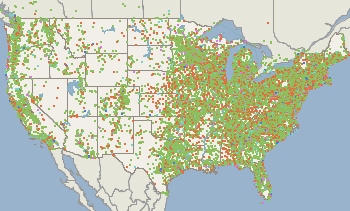
It is difficult to look back on the world as it was when we started developing LocalHarvest in 1998 and really remember how different it was. There were only about 500 CSAs and 1,700 farmers markets in the United States at that time. Farmers who did direct marketing had a difficult time finding customers. "Online marketing" was a new concept, and few farmers were wrestling with the dial-up Internet connections common in rural areas long enough to delve into it. And while the market for organic food was growing steadily, the idea of "local food" had yet to take root in the national consciousness.
Things have changed dramatically in the years since. There are now well over 6,000 CSAs, and over 8,000 farmers markets, representing 1100% and 370% growth respectively. While marketing is an ongoing issue in some areas, we regularly hear about cities having trouble attracting enough farmers to meet the sales demand at their markets, and of waiting lists at CSAs. Online marketing has changed too. Sixty percent of the farms in our national directory now have their own website, and a considerable portion do some amount of their sales online. The notion of "local" has become a community value. Good food is here to stay.
I am in a reflective state of mind because at the end of the month I will be leaving my current role with LocalHarvest. It is time for me to put to use a graduate degree I earned some years back, but the leavetaking is still bittersweet. Anyone who gets to work with and for people they admire is blessed, and I have been doubly fortunate because not only do I hold LocalHarvest farmers in highest esteem, but I also have gotten to work with an outstanding group of co-workers. After close to fifteen years with this little company it is impossible to imagine myself leaving entirely, and I hope to stay involved as a close friend of the LocalHarvest family.
Besides having a deep admiration for farmers, I have great appreciation for the people whose commitment to good food keeps farmers in business. It was the need to connect these two groups that brought LocalHarvest into being. Over the years I have tried to use this newsletter to facilitate an ongoing conversation between farmers and their customers. Sometimes I have spoken on behalf of farmers to educate consumers about what it is like to farm, other times as a consumer expressing appreciation to farmers for their hard work. Still other times I have posted calls to action when there has been a regulatory issue requiring collective effort. Many of you have written to me when you have liked or adamantly disliked what I said here. Through this ongoing dialogue we have influenced one another's thinking and the conversation has gone deeper. More than anything else about LocalHarvest, I love the symbiotic relationships the network reflects and supports. Farmers, market managers, chefs, artisan food producers, researchers, and millions of people who love good food all benefit through their connections to one another. All in the name of good food.
Years ago, I used to think it was just about the food. Journalists would ask me why people were drawn to local food and I would tell them that it just tastes better, which is true but it goes beyond that. It also feels better. The bigger truth, as I see it now, is that good food reconnects us to our spirits. When food has been grown and prepared with deep care and attention, we can tell. We recognize it and are drawn to it. When we buy this food from the people who grew it, and talk with them about it, and give our attention to its beauty, we are both drawn more deeply into the center of ourselves, and drawn up and out of ourselves into a circle of connection. This drawing in and drawing out could be called many things. I call it love.
Some farmer friends have a sign hanging in their office that says it best: "Food is love made visible." Yes. For me, it is not going too far to say that love is the driving force behind the resurgence of passion for local food over the last fifteen years. When love reveals itself as food, we respond.
Before I sign off I want to let you know that we are delighted to have found a wonderful writer and former rancher, Rebecca Thistlethwaite, to write our newsletter beginning in August. Having heard her ideas and read some of her writing, it is clear that she will bring new energy and depth to the LocalHarvest newsletter. I think you will be pleased.
Until next time, take good care and eat well.
Erin
Erin Barnett
Director
LocalHarvest