
12 Apr Tue 2011
Poults & Plastic
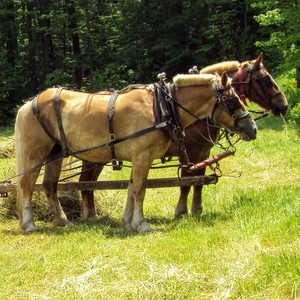
April sure has been a roller coaster, weather-wise, so far! We're not even 2 weeks into the month and we've had everything from snow to thunderstorms to 80+ degree temps! We're hoping things will even out and dry up a bit soon so we can get serious about preparing our fields for planting. Getting the horses harnessed up and making the first few rounds with the plow says spring more than anything else here!
The started sprouts have been getting some good greenhouse time, and I see new growth daily. I'm getting ready to start some more things that we'll want to plant as seedlings, but in the garden rather than the greenhouse. This will include some of our open-pollinated and heirloom tomatoes and peppers as well as things like zucchini and squash that just don't need greenhouse space, but that we want to get a jump on in preparation for our sales season. We are also hoping, if the weather cooperates, to get in some serious work on the greenhouses this weekend. We plan on putting up plastic on one of the metal frames for our tomatoes, cukes & peppers. We may also tear down one of the frames that is not in good shape. There is also some repair work to be done on the small one I'm currently using for seedlings. The back end of that greenhouse was made of untreated wood and is in rough shape. The recent winds went a long way towards removing the plastic on that part, so we'll work on that and tearing down the lumber supports. We've tossed out ideas for what we'll do with that space next- it could be anything from an asparagus bed to a new pavilion for poultry processing.
But the most exciting event of the recent past was definitely on Sunday. We have been hatching chicks for the past few years, and have over a thousand healthy chicks under our belt, so while it is exciting and fun, it's also not groundbreaking when the first fuzzy chicks of the season hatch. Our incubator has also brought other birds to life, in the past few years we've had good luck with ducklings, quail and even peachicks. We've also tried goslings, but they seem to require such high humidity that they don't hatch well, especially if we need to balance it with the needs of the chicken eggs in the incubator at the same time. So we just let the geese do their thing, it works much better. Our hope this year was that the Bourbon Red turkeys we bought last year would lay eggs and we would, for the first time ever, be able to hatch our own poults. We've found eggs everywhere, it seems. The hens have rejected my cardboard nest box in the safety of the turkey coop. Instead, I've collected eggs from the yard, the woodshed, the bad part of the greenhouse, my front porch furniture, and the most popular spot, the neighbor's brush pile across the road.
Since this is their first year to breed, so many things could go wrong. Are they fertile? Will the first eggs be viable? (often the first eggs laid by a chicken don't have as good of a hatching rate as ones from a slightly more mature hen.) Did I find the hiding spot before the eggs got too cold? Will we have any luck at all??? We set our eggs weekly, so that they don't get too old & lose viability. The first time I set turkey eggs, I had a total of seven. They take 28 days to mature (chickens take 21) so this weekend was the time to find out what, if anything, was going on inside them! I had hoped that at least a few of the first eggs would hatch. I was optimistic we wouldn't fail totally, but was prepared to call even two poults a success. I pulled out the hatching tray Sunday morning after hearing telltale peeping. We had chickens in there too, so I saw a rainbow of adorable fuzzies...Barred Rocks, Cochins, Phoenix chicks...and two little turkeys! SUCCESS! I removed all the dry birds to the brooder pen. Then I snuck a look and noted that other eggs were also pipped (showing the first cracks as the bird works its way out). More chickens and also more turkey eggs. In the end, we had what we considered a monumentally successful hatch with 6 of 7 eggs producing a healthy baby turkey!
We are looking forward to more hatching this weekend, including a bunch of Mille Fleur bantams from purchased eggs, more of our own variety of chicks, lots more turkeys and possibly a few ducklings as well. I'm confident we'll have success, but as the saying goes, you really can't count your chicks (or poults) before they hatch...
04 Apr Mon 2011
Our First Calf
Finally, the April showers today are rain and not snow. It's been a rather cold (and white) beginning to spring so far. But it is spring, and so we're getting busier every day now! Last Sunday, I was hoping for a relaxing day to recharge my batteries from the business of the Farm to Table conference. It was a nice idea, but as Dan came back from the barn after morning chores, he told me that Lil was unmistakably in labor. Lil is the older Dexter cow we bought last summer, and we'd been suspecting for a few days that she was getting close. We had decided to move my horse Sara from her roomy box stall and put Lil in there to give her a safe, clean space for her and the baby. Sara was moved over by the pen currently holding the sheep with young lambs, on the other side of the work horses. It seemed to bother Dixie more than Sara, as Dixie had a spell of kicking at the divider wall and in Sara's general direction. Other than a bit of confusion when it is time to come back into the barn in the evenings, Sara has been fine with the new arrangements; as long as her food is there she is pretty flexible! Lil also seemed fine with her new home, the cow that had the biggest problem with being separated from her was Buzz. He is a Holstein-cross beef cow we've raised up here, and the cow that has been on the farm the longest as of right now. He knew his herdmate was missing and called to her for several hours before calming down. While that's not totally surprising, the fact that the noisy cow was not Bernard, Lil's baby from last year, was. He, however, seemed fine without mom since he's a big boy now and still with the other cows he knows.
Lil is 13 years old, and has had quite a few calves in her lifetime. Dexters are known for not needing assistance, and this delivery was no exception. After the baby was born, Lil right away began talking to it, licking it, and showing all the motherly instinct that you could hope for. She's a sweet cow, and very used to both Dan and I , so what happened next was a bit of a surprise. Dan went to pick up the calf to check its gender and dip the navel in iodine, a general practice for any farm baby (iodine helps to prevent infections from manure or anything that might get on the navel). Lil was not impressed and began pawing the ground, shaking her head, and threatening to charge Dan right into a wall if he didn't leave the baby alone! We left them alone to calm down, since Lil was in a safe clean area. When we came back in an hour or so, we "tricked" Lil with a bit of feed and tied her up. She was not too happy, but we safely found out that we have a little Dexter boy, and he sure is cute! He's growing by leaps and bounds already in the past week, and Lil has pretty much returned to her normal, friendly self.
Lil and calf, less than an hour old

Our newest farm baby, a few days old...have you ever seen such a good-looking calf?!?
While I usually don't tolerate aggressiveness from any farm animal, and will happily eat anything that tried to hurt a person, this is one exception I'm happy to make. We want the mamas to want to protect their babies, and there is simply no substitute for good mothering instinct. As long as they calm down in a day or two, a little over-protectiveness isn't necessarily a bad thing. It's far better than the opposite-nothing is more frustrating that seeing an animal (I've seen it here with both goats and sheep) that give birth, then think the baby is some foreign creature to abandon. Mom won't have anything to do with baby, and it becomes an orphan. Sometimes you can get another mom to foster it, otherwise it becomes a bottle baby. While bottle babies can be adorable, they are a lot of work, and any baby is better off if it can nurse it's mothers milk instead of formula.
While Dan had years of experience with cows, as his family milked Jerseys for years as he was growing up, this was my first experience with a calf. It's simply amazing to see how quickly they can get to their wobbly little feet, and I can't wait until the weather improves enough that we can begin to let our little guy out to run and play in the spring sunshine.
29 Mar Tue 2011
Farm to Table
What a weekend! I was so happy to be a part of Pittsburgh's Farm to Table conference, but it sure made for a few long days. I'm fortunate that one of my sisters lives just a few miles from downtown, so I was able to stay with her and have some help setting up Friday morning. My greatest worry about the conference, since this is an entirely new venue for us, was if I was bringing enough stuff. I wanted the table to look full all the way to the end. I also wanted to have a profitable weekend, so part of me wanted to sell out completely!

Always a family affair- sister Laurel and I finish setting up
Friday started out slowly, as many folks had to work, but it did get busier as the day progressed. I had a nice time talking to a reporter from the Pittsburgh Post-Gazette newspaper, so I was hopeful that we'd get a mention in Saturday's edition. During the afternoon, more people we in attendance and stopped by. It always makes me smile, about half of the people had no idea where Tionesta was (or how to pronounce it) while the other half knew from coming here to a camp. Many even described in painstaking detail how I could find their weekend getaway! I sold some jams, talked to some lovely people, and got ready for the evening food tasting by setting up an electric roaster and cooking a leg of our pasture raised lamb. By the time 5:00 PM rolled around, the tasting hall smelled like my lamb. I set up my table with a selection of jams & mustards to sample and purchase, along with thin slices of our farm-raised ham. I put on my apron and gloves, got out the cutting board, and began slicing lamb for samples as well. We were told that the tasting was sold out (all 500 tickets!) and I had a line of people around the table pretty much all night. I got lots of fabulous feedback on everything we offered, especially the meats. I was even told our lamb was better tasting than a local farm, also doing the tasting, that is a high-end restaurant supplier and locally well respected around Pittsburgh. That really made me proud of what we do. People also couldn't believe that I cooked both the ham and the lamb in pans with nothing more than some water because they had such great flavor. I let people know that I cooked them as simply as possible because I wanted to showcase the flavor of our meats, not my cooking skills. All in all a great day, but after 12+ hours on my feet (in heeled boots, no less) I was ready to head back to my sister's and relax for the night.
I got back to the conference center Saturday morning with a Post Gazette. After I made sure my table was ready for the masses, I took a quick look for the promised article about Farm to Table. It was really nice, and I couldn't believe how much of it came from my conversation with the reporter. He detailed when I would be speaking, what the topic was, where & how we farm, and even gave a fantastic description of my Carrot Cake Jam! (To read it for yourself, click here:http://www.post-gazette.com/pg/11085/1134851-34.stm) Saturday was much busier, and I had a number of folks excitedly ask if this was the jam featured in the paper, and it was very cool to be able to say yes. I even had one lady who told me that she had no intentions on coming to Farm to Table, but changed her mind and came just to get her hands on my jam. Wow! Not surprisingly, I sold out of Carrot Cake Jam. I also sold out of Ginger-Garlic mustard, pickled beets, and the hot and mild pepper rings. By the end of the conference, I didn't have much inventory left of anything, really, but the table looked respectably full and I made far more than I had dared hope.
Saturday was also the day of my big presentation, titled “Heritage Livestock Breeds: What They Are, Why They Matter, and How to Find Them.” I was really impressed that people stopping by the table would get excited when they realized I was the speaker, and they let me know that mine was one of the things they had planned on attending. I was very pleased with the turnout. My Powerpoint full of animal photos loaded without incident, and the speech itself went well. For those of you who missed it, basically I started out by defining a breed of livestock, emphasizing that these were created by people for a specific purpose in a specific place. Heritage breeds have become endangered not because they don't do their jobs well, but because agriculture has changed so dramatically. There simply isn't demand for family milk cows or draft horse power like there was 150 years ago. These breeds are becoming endangered because of habitat loss, and that habitat is small, family farms. To understand what industrial agriculture has become, we looked at a few photos and touched on the basics of beef (feedlot conditions), pork (confinement & gestation crates), dairy (inbreeding of the Holstein breed), chicken (broiler hybrids and heath issues), turkey (Broad breasted whites & their inability to breed), and eggs (confinement in egg cages). I then had photos of the heritage animals that call our farm home. I talked about Barred Rock, Polish, Phoenix, Blue Cochin & Delaware chickens, Toulouse geese, Bourbon Red turkey, Dexter cattle and Belgian draft horses. I talked about the strengths of each breed and why we raise & how we use them on our farm. I mentioned the American Livestock Breeds Conservancy and the work they do to conserve and protect these animals. I gave reasons why people should care about these animals- the fact that biodiversity means food security, because a larger gene pool will be more resistant to new diseases and climate change. That supporting heritage breeds will mean supporting smaller scale & family farms- these breeds are endangered because they don't do well on industrial levels. Although I'm no nutritional expert, I talked about the benefits of heritage breeds-they are virtually always raised in pasture-based operations, so I used some studies from www.eatwild.com to talk about nutritional benefits. I talked about taste and about the Slow Food Ark of Taste program. I let the folks in attendance know what they could do to help these breeds, first and foremost being supporting them by purchasing the heritage products directly from farmers. That they should feel free to ask for them at restaurants-if enough people do, change will happen. I let my listeners know that they can join groups like the ALBC without being a farmer if they find that saving endangered livestock is a cause they want to support and get involved. For those interested in starting a backyard flock, or other livestock, to consider heritage breeds. I let folks ask questions, and was amazed that they were less about the topic in general and more about our farm. I think people have a real desire to become more connected with the manner in which their food is produced and with the farmers who are producing it, and that is great.

All dressed up & ready to present!
After the speech, it was a short downhill slide to the end of the day. I had a wonderful time, but I was ready to pack up, drive home and trade in my dress pants for jeans, and get back to the spring routines of hatching, caring for seedlings, farm babies, and waiting for the day when we can begin prepping the fields with our team.
19 Mar Sat 2011
Ready, Set, Get Busy!
It's getting busy here! First of all, next weekend is the Farm to Table conference, so it's time to put the finishing touches on my presentation about Heritage Livestock breeds and the slideshow full of pictures I have to go along with it. I'm also making sure I have brochures, jams, signs, and everything else I'll need to make my table look nice and full with homemade goodies for sale and information about the farm. I'm so excited to be a part of this, I think as farmers, we really need to do a good job of informing the general public about how food is grown and where it comes from, especially when you are trying to convince them that it truly is better to buy from a family farm. So I'm excited to be the “expert” speaker about Heritage Livestock, I think lots of people would support the efforts to save them and use them on family farms, but most folks just don't know that they exist. I'm hoping to change that, just a little! I'm also really excited about my table in the exhibit hall. Of course, the opportunity to make some extra money is nice, but I'm really looking forward to talking with people about our farm and how & why we do what we do. So if you're in the Pittsburgh area, or already planning on going to the convention center and taking in the event, please stop by and say hello! (For more info & tickets, visit www.farmtotablepa.com)
I was also excited to attend a grazing conference last week. While you might think that there is nothing difficult about animals eating grass in a field, there actually is much more to know than that. What species of grasses or legumes will work best for the animals you want to raise is important. So is management, like how many animals are in a field and how long they are there- anywhere from rotating small pastures every 12 hours to just letting them roam a large area all summer can be done. There are advantages and challenges to each and I was glad I went because I learned so much. It was also really exciting to listen to Dr. Temple Grandin and what she had to say, both about handling animals in a humane way and also about animal welfare issues and how as farms, we need to be sharing what we do with the public, since most folks are generations removed from farms. And she encouraged the farmers in attendance to think about the practices we use- if we wouldn't want the public knowing we handled our animals in a certain manner, shouldn't we be doing something differently?
The past few days have certainly felt like spring is in the air here at the farm. Almost all the snow and ice has melted, leaving the usual muddy mess behind. Inspections of the garden plots revealed ruby red rhubarb poking through the soil, along with herbs- I spotted chives, oregano, sage and lemon balm with new growth. The seedlings I started in flats are also progressing nicely. Each day I take them out to the greenhouse for some sun, then bring them back inside to avoid any cold temperatures overnight. I've also been spending a fair amount of time on egg hunts. I was elated to find a turkey egg on the floor of the turkey house on day this week. Doing a project in the backyard later that evening, I went into the woodshed to get something for Dan, which was good as I found a turkey nest with 6 eggs in it! I would have been more vigilant, but as this is the first year we've raised a breeding flock of turkeys, we weren't entirely sure when they would begin to lay- we had thought it would be a bit later in the spring. So now I'm always keeping an eye out for those crazy birds and where the next stash may be. I've set up a nice, comfy nest box on the floor of their turkey coop, which they happily ignore in favor of the open floor, the back of the greenhouse, the middle of the yard, or (my personal favorite) the one that laid an egg on the couch that sits on the front porch. When you live on a free range farm, egg hunts aren't just for Easter! The pullets are also laying better each day, and I expect to be setting a few of their eggs when we next put eggs in the incubator. Besides the turkey eggs, we're also getting duck eggs, and also eggs from the Phoenix & Cochin hens. I saw the first goose nest of the season as well, but I'll probably leave those eggs alone. Goose eggs need so much humidity, they are tricky to do in the incubator, especially if you're hatching chicken eggs too, which we will be. The geese do a good job of sitting on their eggs, so we'll just let nature take its course.
14 Mar Mon 2011
Springing Ahead
Did you remember to set your clocks ahead this weekend? Another welcome sign that spring's coming, but I hate it. Don't get me wrong, I enjoy having more daylight in the evenings, but I hate the out of sync feeling you have for a few days. It also makes the evening chores weird- this time of year we start about 4:30 PM, which gives us enough time to feed everything as well as take care of any unexpected tasks- think fixing the French drain that iced over and caused water to leak into the barn again or fixing the electric fence because Wilbur the boar hog is trying to get loose. So the critters are used to eating about 4:30-5:00. They have their own routines, and instinctively know it's time to eat. The horses will whinny from inside the barn when they hear footsteps (somehow they can tell human from cow, goat, etc!) The cows return from the far reaches of the pasture to wait by the barn for their hay. So for them, we bump chores "back" by an hour after the change, which means that in reality they are eating just when they expect, but it always throws me off for a few days.
Tomorrow I'm going to DuBois, PA for a grazing conference. One of the nice things about not working, besides all the wonderful stuff I get to do here, is that I can now go to some of the seminars and workshops to see how other folks farm and how I might improve what we do here. This grazing workshop is really the first one I'll be going to, and I'm excited. While grazing may not be the most engaging topic ever, it's so important to what we do. That being said, I'll admit that my main reason for going is the keynote speaker, Temple Grandin. For those who've never heard of her, Temple is an autistic woman who also has a doctorate in Animal Science. She's renown for her ability to understand animals and has been instrumental in reshaping slaughterhouses across the country to make the handling of the animals there more humane and less stressful. In my "previous life" before farming, I earned a Master's in Social Work and did work with autistic kids. I also loved animals and one day came across Ms. Grandin's book called Animals in Translation: Using the Mysteries of Autism to Decode Animal Behavior. It was fascinating and a wonderful read, even for those with little knowledge of livestock or autism. It gives a lot of insight into animal intelligence, and even why dogs do what they do. In the meantime, I've heard hers is such a remarkable story that there's even a movie about her out now! So I'm really excited to go and listen and learn tomorrow.
These is so much going on here at the farm as well! We're seeing signs of new growth all over the place. The rhubarb is pushing tiny crimson buds through the soil, and there are deep purple, fern-like shoots in the horseradish patch. The herb garden perennials are coming back to life as well- an inspection this weekend revealed new leaves on the sage, oregano, and lemon balm, as well as new shoots of chives, already 2" tall! Inside, I've got cucumbers, tomatoes, peppers and herbs sprouting in the flats I planted, and so I now watch the outdoor temperatures to see when it's safe to set them out in the greenhouse for some good spring sunshine. The pullets have begun to lay in earnest and we're beginning to save their eggs for hatching. In fact, this time next week I hope to have chicks hatch!
But possibly the most exciting news for me is that we have another lamb. Now, once lambing season kicks off, it's not quite as exciting since you've been watching the woolly bundles of joy leap and play for some time now. But this one is kind of special. After the whole Sheepie tragedy I watched my other ewes for signs of anything amiss. Unfortunately, another one of my young ewes seemed a little off within a week after Sheepie's death. So we brought her in, caught it early, and seemed to get everything straight. (At least that's what I thought. Dan wasn't entirely convinced that she was ill, but agreed that we should treat her anyway, as the medicine that treats is also used as a preventative. Better safe than sorry and all that.) I didn't blog about it, as it was just too hard emotionally to get so many notes of support, then lose the fight anyway the first time around. However, this has a happy ending, as this ewe, Lisa, has been fine for a month now, but you never know about the baby. This morning, before Dan left for work, he let me know that she'd lambed unassisted. Just a single, but alive and healthy and both mom and baby were doing fine in a lambing jug in the barn. I'm still out of whack, sleep-wise, and forgot to ask if it was a ewe or ram or if it was any color but white. I went down to the barn to check on them later and found her to be pretty wary of me, although she did take a treat from me. So I didn't bother to inspect the little one, as it seemed to be doing just fine, resting in the back corner of the lambing jug, and I hate to interfere with the bonding, especially with the younger ewes. Lisa is Rosa's daughter, and Rosa always seems to throw uniquely colored lambs. Rosa is black, and has had lambs that were all black, black with white markings (esp. on the face & head), and last year the one I called "Speckles" because he was brown and white speckled all over (I so wanted him to be a ewe, so I could keep it instead of processing it in the fall!). Lisa herself is black with a touch of white on the face, but Rosa's ewe lambs this year are both pure white. (Still adorable, but I do love the fun colored ones!) So I was about in shock to see this little one...not white, or black, or even brown, but what seems to be a charcoal gray with white all over, which Dan totally failed to mention. I'll be interested to see what it looks like when it's been dry for a few days, but really an eye-catching sheep. And I hope it's a girl, since males don't stay nearly as long on the farm, but we'll just see...
06 Mar Sun 2011
Almost There...
March always makes me feel like we've made it through winter's worst. Although I know we'll still get some snowstorms, ice, sleet and all that wintry mix, on other days the snow begins melting and, for the first time in months, we can see the fields instead of just a blanket of white. The days are getting longer, birds are returning from their southern winter hangouts, and it's easy to feel spring coming on.
It's hard though, because as much as I want to dig into the soil and get things underway, I know we aren't safe from frost here until June. Yes, really. Two seasons ago our last frost was June 3. It's a hard balance to strike between getting an early jump on crops and not losing whole fields of plants that can't handle a cold snap. One exciting project this year is returning a greenhouse or two into operational growing space. The plastic has been off of them for several years, and we had considered tearing down the metal frames since they aren't really all that attractive if not in use. One is still slated for being torn down, as it's pretty beat up, but we're excited to have plans to recover another one or two in plastic and put them back into production. This will allow us to put plants out earlier and to have things like tomatoes and peppers earlier in the season. The greenhouse veggies will have all the flavor of our field grown ones, because we still plant them right in the soil, not in pots or hydroponically. The structure is just used to get the soil up to planting temperature earlier, and to keep the plants warm during the inevitable spring cold snaps. Since we'll be able to transplant the seedlings outside earlier, that means starting the seeds earlier too, so I've got trays planted with tomatoes, eggplants, peppers, cucumbers and herbs. The hardest part was resisting the temptation to start everything right now, but we'll hold off on crops, especially the vining ones like squash & pumpkins for a few more weeks, otherwise they will get too big for their pots before we're able to successfully transplant them outdoors. But it is good to have trays full of seeds, I hope to see sprouts very shortly!
Another exciting sign of spring is eggs. Birds don't usually lay eggs in the winter, because it's not a good time to raise chicks. Generations of selective breeding have made chickens lay more eggs over a longer period of the year, but there is always at least a bit of slowdown in the winter. The days are getting noticeably longer, and it's signaling the birds to begin laying in earnest again. We're also beginning to get eggs from our layers which hatched last September. We've gotten eggs from some of the Barred Rock and Delaware hens, and it's certain that we'll soon be seeing blue eggs from our Ameracauna girls, too. While it's wonderful to have plenty of eggs to cook and bake with, this time of year I get most excited about hatching chicks. The quiet hum of the incubator, along with the periodic beeps letting us know the eggs are being turned, have become a sign linked in my mind with the arrival of spring over the past few years. There is nothing like opening the door to the incubator and pulling out a tray of downy chicks where just eggs were the day before. We set eggs for the first time this season yesterday, and we will be hatching our first few babies in about three weeks. We'll be hatching every week after that until sometime in late May, when we'll be collecting eggs to sell at the stand again. I'm also on the lookout for duck eggs, and I have a feeling it won't be long before the large eggs of our Toulouse gees begin appearing around the barnyard as well!
27 Feb Sun 2011
Are You OK?
When an animal suddenly has a change in its behavior, it's always something to take note of. Frequently, it's your first or only warning of sickness. It also can indicate when things aren't right in the environment or that a baby is imminent. A week or so ago I noticed one of my hen Bourbon Red turkeys looking kind of droopy, laying on the ground with her wings spread slightly. I thought perhaps she had something, like baler twine, wrapped around her leg, so I walked over. She let me pick her right up, but there was no sign of injury or anything amiss. Still, turkeys don't normally allow humans to touch them, so I was concerned. But when I turned back from the feed barrel with the scoop in hand, all turkeys were bright, alert, and ready to eat. I couldn't tell which was "droopy hen". I was a bit relieved, since appetite is usually the first thing to go when critters get sick. The next day, the "droop" had spread. Two hens were down. Again, they would let me touch them without getting up and running away, but acted fine a few minutes later. I mentioned it to Dan, and he replied that he too had seen this going on.
As I did chores, I kept thinking about my hens. What could be wrong? Then I remembered a suspiciously similar story, involving the very same breed of turkey, in one of my favorite books- Animal, Vegetable, Miracle by Barbara Kingsolver. She too, had seen this...just before the birds started to breed. Her description of toms that strutted continually since fall mirrored my own Gobbles, who struts to impress the mail lady, feed buckets, and any & everything else. The hens hadn't really shown any interest in this display, and now seemed more likely to show their own mating behavior when humans are around. Guess both sexes have imprinted on us somewhat, since we've provided them with food and cared for them since hatching. But spring is coming, the days are lengthening, and although I wasn't sure when turkeys would begin to lay eggs, the timing is definitely right. So I stopped worrying and hoped for the best. The turkeys have started to figure it out. Gobbles is taking an interest in the ladies instead of whatever might be laying in the yard. When one of the hens flew down from the roost in the pine tree into the chicken run, she and Gobbles seemed so frustrated that they were separated by the woven wire fence. It was as though they were star crossed lovebirds and he had eyes for no other hens, at least for a little while They are making somewhat awkward attempts to breed, and I'm optimistic that we'll have fertile eggs this spring.
This is hugely exciting, since we'll be hatching our own poults for the very first time. 99% of the turkeys raised in the US are the broad-breasted variety, which grow so much white meat that they physically can't even reproduce on their own. They are more of a variety that a true breed, since they cannot mate naturally. Each and every egg has to be artificially inseminated. So our biggest dilemma now is to decide if we'll take the eggs from the Bourbon Red hens to put in our incubator or let them try to sit on them naturally. I'd like to perpetuate turkeys that have a good maternal instinct, which has been bred out of so much domestic poultry, but at the same time there is a possibility the hen will give up halfway through sitting and we won't have any babies. Which might not be a huge deal to a hobby farmer or someone looking to raise their own food, but we've set our hearts on offering only heritage breed turkeys for sale here at the farm from now on. Incubated eggs would still be 100% farm-raised and another thing we would be able to do sustainably. It would cut out a cost (of purchasing poults), which is always a good thing for a business, and avoid the huge hassle it turned into when dealing with a certain mail order hatchery last year. Most likely, in the end, we'll compromise and take most of the eggs at first, then leave some to the hens and see what happens. Like the geese and peafowl, turkeys only lay enough eggs for one brood per season/year. If you take a few eggs and put them in the incubator, the hen will lay a few more, until she thinks she has enough to make it worth her while to sit on. Once she begins sitting ("going broody") she stops laying. That's it. No more eggs til next year. So snatching a few at first actually has a reasonable chance of extending the laying season and the total number of eggs.
But it is the season to begin watching for eggs of all kinds, and I can't wait to turn on the incubator and start Hatching Season 2011. Dan spotted a duck egg in the creek today, so the Pekins are beginning to lay. But I'm hoping they pick a less waterlogged spot soon, so we can collect & hatch the eggs. We didn't have ducklings last year because our male was killed by predators over the winter. We got some new ducks late last year and should be good to go. Duckings are so cute! We've also had a nearly complete lack of chicken eggs as we got rid of our unproductive older hens before winter set in. While I had replacement chicks in September, it takes about 6 months for a chicken to mature and begin laying, so I'm anxiously awaiting Barred Rock, Delaware & Ameracauna eggs to start soon. The other hens we have are more showy and not known for laying as well through the winter. Those would be our Blue Cochins & Golden Phoenixes. These birds will go broody and hatch their own chicks during the warmer months, which is fun, but we hatch out plenty in the early spring in the incubator. The longer days are a signal to start laying and I've found a few Phoenix eggs in the past few days so we'll be setting soon. (Yes, I really can tell what breed of chicken laid the egg by the shape, size & color!) So we'll be hearing the soft peep of downy chicks in another month or so, which is always amazing!
24 Feb Thu 2011
The Purple Bunny Palace
We had a couple days of spring thaw here last week. The snow all but melted (so much so that the creek in the barnyard overflowed its banks with nothing falling from the sky!) and the temperatures were in the 50's to near 60. Something about that kind of weather is enough for me to feel like spring is coming, and it's time to get busy with all the winter projects if I have any hope of completing them before we start plowing. The warm weather meant not just the snow was thawing, so it was a great opportunity to get the frozen manure out of the corners of the hog pens and chicken houses. It felt like spring cleaning!
The next project we stated was replacing the main rabbit hutch. I enjoy my rabbits and usually keep 5-6 does (females) in the main pen, plus I have smaller & moveable pens to separate out the buck (male) and any does about to give birth or pens of young rabbits I'm raising up to sell. But the main hutch has been in bad shape for some time. It was well-used when it came here quite a few years ago, so it's simply lived out its useful lifespan. Wood is rotting and sagging, wire needs replacing, and we decided it wouldn't be worth the effort to try and rehab it. So Dan told me to dream up some plans to make something really interesting, and we'd figure out what would be possible with the materials on hand at the farm. So I came up with a nice big living space (8' x 3') with two separate lofts(2' x 3'). While you don't normally think of bunnies as climbing animals who would use a loft, our girls are well used to ramps. They have a nice yard to play and graze in, and use a ramp to get into the hutch where the food, water and shelter is. So we put two lofts in. I fancied it up by outlining bunnies on the doors, Dan cut them with a jigsaw, and those are the windows. We have real windows in the center, and large doors with wire on the bottom. This pen should last for a very long time. The sides are made from cast off pieces of steel roofing. The roof is green and the sides a nice purple. Once we escape from the deep freeze, I have some leftover paint in nearly the same shades for the wooden parts. It's a great thing to get all the construction leftovers from Matt & Dan's contracting business...we always find uses for them at the farm, and they never go to waste! Literally, the only thing bought for this pen was the hardware cloth for the floor. The rest was found and/or recycled!
The purple bunny palace, or our new hutch.
I know it's hard to see...but here's Dini up in the loft (it doesn't help that she's all black, except for her nose...) It did not take long for them to adjust to the indoor ramps!
16 Feb Wed 2011
Baby Season Again
It's a spring thaw here at the farm! Although it's a great change of pace not having to break chunks of ice from all the water buckets, the packed snow has become so slippery that it's pretty much a matter of when, not if, I land on my rear while doing chores. The best I can hope for is that it's not on a big cow pie!
As I mentioned last time, we have babies!
Here's Char's pile of piglets- there are 8 total, 6 mostly black like mama and two of the blue butt coloration like Wilbur.
and here's double trouble...Rosa's twin ewe lambs, who are already beginning to bounce around and play!
It's somewhere between snow and mud outside, but luckily for me I have lots to do here inside! The Farm to Table conference in Pittsburgh (www.farmtotablepa.com) is coming up March 25 & 26. It's official that I'll be presenting at 2:30 PM on Saturday, so I've been polishing up my presentation as well as putting together a Powerpoint full of pictures of the animals to show as well. I'll also have a table in the exhibit hall, so I'm inventorying what products I can take to sell, putting together some signs with information and photos of the farm, and prepping to be part of the Friday evening food tasting as well. While it is work, I enjoy this kind of stuff and I'm really excited. If you attend this conference, be sure to stop by the Pleasant Valley Farm table and say hi!
13 Feb Sun 2011
Good to Be Back
The impossible happened this week...Dan and I actually took a bit of a vacation from the farm! We joke that even if the world ended, we'd still have to do chores before we left. While I'm not taking anything away from vegetable and crop farmers, the garden has a down time. You can go on a tropical vacation over the winter if you please. The plants won't suffer terribly if left alone for a day or two mid-season. Having as much livestock as we do, it's very rare that we can get away as a couple, even overnight. I think the last time we did was October of 2009, and that was just for a night. There is a reason raising farm animals is called “animal husbandry”; in a sense, you are married to your animals. They need to be cared for every day, without fail, and whether or not you are tired or ill. You need to care for them when they are sick, and be there for births. Your schedule revolves around their care every single day of the year, including holidays and weekends, since there is no magic day when the animals won't be hungry. I can't count the number of times we have been visiting friends or family locally, only to leave in the middle of the gathering because it was chore time. Please don't get me wrong though, I love my critters, I do choose to live this way, and I wouldn't trade it for anything else in the world. But we all need a bit of a break now and then!
Both my mom and Dan's parents live in the middle of the state, just far enough to feel like a mini vacation, and we had been looking forward to visiting on this little trip for some time. There was a pretty small window of opportunity between the holidays and the start of lambing season/piglet time/starting seedlings that we could leave for a few days. Dan's brother Matt agreed to tend to the livestock and the woodstoves in the house while we were gone, or it wouldn't have happened. Matt lived here on the farm for many years and visits us all the time, so the animals know him and he knows them. I can't think of anyone else I could trust to get everything done! We had planned to leave earlier, the end of January, but then Sheepie got sick. Caring for her meant putting any leisure plans on hold. We fought through that, but I'm very sad to report that in the end, it was all too much and she didn't make it. We did our very best, but it was a difficult condition to treat successfully. Then Nutmeg, one of our oldest ewes and consistently the earliest to lamb, had a healthy little ram. We knew the rest of the sheep would soon follow, and Char was expected to have a litter of piglets in mid-February as well, so for us, it was now or never. Baby season is just too much to put on someone else, even a great farm person like Matt.
So Dan and I visited family and took in some local sights from Sunday to Friday. It was nice, but it's great to be back home too. The house was warm and the animals were well-fed and thankfully, none of the animals gave Matt any trouble (except for Puff, my fluffy cat- he demands attention from everyone!). My replacement hens, although close to full grown, seemed like they grew while I was gone. And it seems as though we got back just in time. As we were doing chores last night, I noticed Rosa wasn't following me around looking for snacks as she usually does. I got her into the barn, and by this morning she had two beautiful, healthy ewe lambs. We also knew Char was close and have been watching her and giving her lots of extra bedding, and this morning, eight tiny piglets were busily nursing. The temperatures here are warming a bit, the snow is melting from the rooftops, and with all these babies, spring can't be far behind!
04 Feb Fri 2011
Thinking Spring
Despite the fact that it's still bone-chillingly cold here, there are signs of spring on the way. Perhaps that groundhog was on to something! The days are steadily getting longer, giving us a slightly longer window of time to get evening chores done without flashlights. I have been hearing many more wild birds calling from the trees, and while I haven't seen a robin yet, I doubt it will be too much longer now. Our mail ordered seeds are steadily arriving in the mailbox, which make me anxious for the ground to thaw. At the end of the year, I'm ready for the end of the garden season; it's a welcome break from weeding, planting, harvesting, and canning/drying/storing. At this point of winter, though, I long for something fresh and green. I miss planting, harvesting, eating, canning, and yes, even weeding. Of course, in my mind the new garden will have less weeds, less bugs, and more produce than ever before. (Reality has yet to set in!) But I do miss it and I look forward to the time when at least I can get the indoor seedlings started (tomatoes, peppers, and such). I'm trying to get better at it each year, because there are just so many more interesting varieties possible when you don't need to rely on what the local garden centers are carrying! I also try to get more comfortable with working the horses each year, so I'm looking forward to using some machinery this spring that I haven't in the past. (Check out www.pleasantvalleyfarm.weebly.com/field-work.html to see photos of Dan & I, our horses, and equipment!)
The last sure sign of spring around here is, of course, farm babies. I've mentioned the heartbreak of the ones we lost, and there is nothing to do now but move on. We noticed that another one of our ewes, Nutmeg, seemed to be very close, and even though it's a week or so early for her, we put her in the barn. A healthy lamb greeted us this morning as we did chores. I'll check on her soon to make sure all is well and to see if there are two babies, as she normally has twins.
01 Feb Tue 2011
Hope & Heartbreak
First of all, I want to say thanks to everyone who took the time to read about my sick sheep and send warm thoughts, kind words, and suggestions on how to help her. It was truly appreciated. Sheepie survived. She appears to have made a total recovery; no more wobbliness, a healthy appetite and is alert and attentive. Despite my earlier predictions, she is no longer skittish around me and happily comes over for a treat from my hand whenever I'm near her pen in the barn. Here are a few photos I took of her at feeding time two nights ago.

Sheepie

Looking for a handout (yes, she's actually licking my hand!)
However, there is sad news; she went into labor this morning. We assumed that it wouldn't be good, since it's earlier than we expected. For us, lambing season begins in mid to late February, not the end of January. She had two big, beautiful twins; both were born dead and required our assistance. This was my first time assisting a sheep in labor. Sheepie was a good patient, I just wish it could have been a happier ending. It is always sad to have a pregnancy end badly for any of the animals, but it does happen. In this case, we know what went wrong, which makes it a bit easier. We did all we could and I know this. I just remind myself that it could have been much worse, because if we would have lost the ewe, we definitely would have lost the babies too. We saved her, and she will be able to have lambs again. Her mother, Pansy, was productive well into her teens. Sheepie is just 2 years old, so that's a lot of life and many more lambs (we hope) ahead of her.
27 Jan Thu 2011
The Hard Part
When I was five years old, I thought I wanted to be a veterinarian. I believe that was my first serious thought about what I wanted to do when I grew up. I had an idea that playing with puppies & kitties all day would be the best job ever. As I got a bit older, I realized that vets deal far more often with sick animals, involving blood & guts & surgery and that not every animal was going to get better; some would die. That seemed too much to bear, so I moved onto something else (at 6 I wanted to be a paleontologist, since by definition studying dinosaurs meant they couldn't die on you!) It's a bit ironic now that I do spend a good bit of time as an amateur veterinarian, now that I am a “grown up.”
I have immense respect for vets, but find that we do most of our own care here. The nearest office is 20 or so miles away, and farm calls are not cheap, so it's pretty much a financial necessity to have the knowledge to be able to do your own worming, vaccinations, foot care and other routine stuff. The supplies for all this kind of medical care and more is available at our local farm supply stores. It's harder when it comes to animals actually getting sick, but again, if you can pinpoint the cause, you can generally get the products to do the care yourself.
A few days ago, Dan noticed a sheep all by itself in the pasture. He went to check on it, thinking maybe it had somehow got tangled in the fence or something, but it was just standing there. He chased her (very slowly) back to the rest of the flock in the barnyard. When I went to do evening chores, I looked for her and found her by the creek, staring off into space and not really responding to anything going on, even me approaching her. She's normally shy and flighty, so this was a sure sign that something was very wrong. After finishing up the birds' care for the evening, I went inside and consulted the various veterinary manuals- all seemed to point to the same thing, ketosis, or twin-lamb disease. This happens when a ewe is carrying twins or triplets and doesn't get enough carbs in her diet to support her rapidly growing babies and her own body. We feed a bit of grain to the sheep this time of year for that reason, but the sick one is shy and easily chased off by some of the older ewes. This is her second pregnancy, and although she had a single lamb last year it's very possible she's carrying two for the first time. This disorder also seems to be set off in some instances by changes in feeding schedule (nope) moving the flock (nope), or sudden changes in weather (a big yes- the day she got sick was COLD, with highs only in the teens and a sub-zero wind chill. It would drop to -18 that night.) Although I would have had a hard time describing her symptoms, descriptive words from the manuals included “dopey” and “generally slow” which pretty much hit the nail on the head. Symptoms can quickly proceed to blindness, paralysis, coma and death. As many as 80% of affected animals don't survive, according to one of the books.
Dan and I moved her into the small pen in the barn. Although she might not make it, leaving her outside would surely mean death. Since I didn't have any propylene glycol, the recommended treatment, I used the old-time trick of feeding her molasses. I also made sure to try and get her to drink, since dehydration will worsen the situation. Not being one of the tame favorites of the flock, she didn't have a name, so I started greeting her as "Sheepie" when I entered the pen. In the morning I found a store carrying the glycol, got it, and began her on the dosage proscribed in the book. Since then, she's been pretty touch and go. I still am not confidant she'll live, which is the hardest part. (I've debated for days about blogging this, as it's so likely to have an unhappy ending.) I make Dan go into the barn in the morning and then tell me that she's alive before I go inside with fresh water and her medicine- in these kind of situations they always seem to lose their fight during the night. When she seems to be going downhill, it can be hard for me not to cry while I'm trying to get some nourishment into her. When she seems marginally better, it's hard not to get my hopes up too high. I'm never sure what is harder, losing something you've been nursing for days or a week, or finding something happened suddenly, like when raccoons get into the coop and kill most of your favorite hens in one night. I tend to take it all personally, as though I am solely responsible for the outcome, even when it's something I couldn't have prevented or the advice I find states that treatment is frequently unsuccessful even under the best of circumstances. Dan reminds me that their lives are ultimately out of our hands, and all we can do is our best.
** It took me a couple of days to publish this, so I thought I'd include an update on Sheepie. She's still alive and in the pen in the barn. She's more active every day, including running from me this morning. (She never was very tame, and now she associates me with an unpleasant attempt to tube feed her. I doubt she'll be eating snacks from my hand any time soon.) She's eating hay and drinking water and appears to be regaining strength rapidly at this point. She does still have some wobbliness; it remains to be seen if this too will disappear or if it's some sort of permanent nerve damage. Also up in the air is the fate of the lambs. Will she end up aborting? Stillborns? Will they be alive, but somehow damaged? Or happy, healthy lambs? Only time will tell. I'm also watching the rest of the ewes like a hawk, I don't want to go through this again.
21 Jan Fri 2011
Taking Care of Business
Winter has definitely set in for the season here. We've had quite a few inches of snow fall since the beginning of the year, and today's temperatures are only in the teens, with a wind chill closer to zero. I know it's cold out when the rabbits prefer to stay in the hutch instead of spending a good part of the day in the outdoor run (which I can see from the warmth of my kitchen counter!) While we do have plenty of animal chores to keep us busy, especially breaking up ice to insure everything has access to water, it is probably the slowest time of the year on the farm. No butchering in sight, months to go until field prep begins, no garden bounty to preserve, and I've already finished putting together the seed orders for our 2011 garden. (I'm already watching my mailbox for them to arrive!)
So, what do we do with all this free time? All the things we've put off until we have time for “winter projects”! I've done some interior painting around the house, and plan on repainting our roadside signs in the next week or two. Dan repaired the back door to the produce shed and did some winterizing by putting up batten strips in the rear, making it more weatherproof for the feed and other things that always end up getting stored there during the months we're not open. But, depending on the weather, not every day can be spent outdoors. I spend a lot of time on the business end of things now, meaning lots of computer time. The start of the new year means I'm starting out new records for everything from feed records to finances, and I'm still mastering the art of spreadsheets. We're also reviewing when to expect babies, and how soon we need to adjust where the moms-to-be are being kept and how they are fed. (We will be expecting our 2011 crop of farm babies to start arriving as early as next month, with lambs, rabbits and piglets coming due!) We will likely begin to hatch chicks in March, so I'm already planning when and how I'll separate the breeding flocks. Also, since I do all the advertising, it's a good time to review any online listings of the farm for accuracy and work on any new pages I'd like to get online on the website before spring. Other yearly business tasks include reviewing our business cards and brochures, seeing if changes need to be made, and deciding if/when to have more printed. It's also the time of year when association memberships are up for renewal, so it's a good time to look critically at the organizations your business partners with, both to determine if it makes good financial sense to be a part of them, but also to make sure the values you hold are the same as what the organization is promoting. There is so much to running a farm; you need to stay on top of all the things a regular business does, like finances and inventory and the like, but also so much more since you're in the business of raising living things. It seems as though I've fallen behind when I'm not actively planning 6 or 12 months down the road. While that may seem like an exaggeration, it takes 18-24 months for a cow to reach butchering weight (plus nearly a year gestation if you're breeding them), or 6-7 months before a chicken will lay a single egg. This all has to be taken into account well before you plan on offering a product, be it spaghetti squash or homemade sausage. So taking a month or more to review what works, what hasn't, and planning what needs to be done, how you intend to do it, and what tools, seeds, materials or livestock you'll need is a necessary part of the process.
It's also time to spend on ourselves. Dan has been excited to make progress in the forge, and I love to help him. It's fascinating to watch, in my opinion! I've also been catching up on some reading and working on research for a presentation I'll be doing in March. I also find winter to be a wonderful time to spend in the kitchen. I love being around a warm stove on a cold winter's day, so I've been pursuing my goal of making a decent loaf of bread, as well as slow simmered soups and other goodies.
13 Jan Thu 2011
Pleasant Valley...Forge?
I've mentioned many times how so little goes to waste on a small farm like ours- manure becomes fertilizer for the garden, garden leftovers are canned, and the scraps from that process supplement our pig's food. The same is true for lots of stuff here- non-organic “stuff”, that is. The original produce shed was a humble 8' x 12' building. Sales quickly outgrew it, but when our current stand was built, the old one didn't just go away. It made a very serviceable garden shed for a number of seasons, housing tomato stakes, irrigation equipment, hoes and more. Last year, we brought it closer to the house, did some repairs and maintenance, and our flock of Delaware chickens happily called it home. This year, we're breeding fewer varieties of chickens and we don't need the extra coop, but unused space rarely stays that way for long. This little building is now a fully functional forge, which is also a great way to recycle scrap metal from around the farm.
Dan isn't the first farm resident to try smithing, nor is this the first forge here. In fact, the original forge is still here. It's located in the workshop building, which is the oldest building on the farm. (It's older than the barn, which was built in 1894.) It was once a busy place, shoeing teams of horses and mules on their way to the town of Nebraska just over the hill. (The town is long gone, a boomtown that had mostly disappeared before being flooded under what is now Tionesta Lake.) The original stone forge is still there in the center of the shop, but the chimney leans at a pretty significant angle as it passes through the second story. While it would be really neat to use it again, the chances of the building catching fire are just too high, and we decided to err on the side of not burning it to the ground! So the anvil, the hand-cranked blower and other tools such as hammers, punches, chisels and tongs have been moved to the new, smaller forge. The anvil & blower are old, probably 100+ years, and have been on the farm much of that time. At least a pair or two of the tongs were likely made here in the old forge, as blacksmiths routinely make their own tools. The smaller workshop does have the advantage of being quite warm and toasty in this winter cold, as the heat from the coal fire necessary to heat the metal up soon warms the building as well. Dan has already made a few projects for the house, including a poker for the woodstove and decorative hooks for my cast iron skillets to hang from in the kitchen. Although I'm not much help besides cranking the blower to help the metal heat faster, it's fascinating for me to watch an ordinary piece of scrap metal be turned into something useful and beautiful as well. It's a wonderful way to pass some of the winter away!