
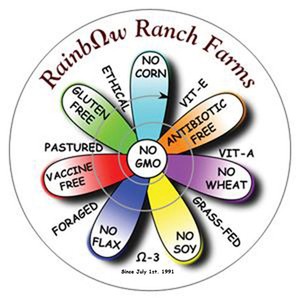
Rainbow Ranch Farms
26 Jan Wed 2011
How Anger Can Indirectly Cause Health Problems
How Anger Can Indirectly Cause Health Problems
By Sandy Potts
http://ezinearticles.com/?How-Anger-Can-Indirectly-Cause-Health-Problems&id=3547619
Of all the emotions that humans face, anger is one of the most toxic and problematic. Affecting tens of millions, toxic anger can literally poison people each and everyday of their lives. Anger is not something that can or should be cured but anger management is a necessity to avoid terrible conflicts whether it is at work, in relationships or at home and so forth. One of the reasons for the need of anger management is due to the toxic side effects that anger may indirectly cause to your health.
A high risk of a heart attack is one of the main health issues caused by anger. Unhealthy habits such as smoking cigarettes, overeating or drinking alcohol (or some combination of these) may contribute to heart disease. High blood pressure and high cholesterol usually go hand in hand with overexcessive lifestyles of overeating and cigarette smoking and so forth. Chest pain, a heart attack and a stroke are associated with a history of heart disease and anger is a contributing factor to all these risk factors.
It is estimated that there is a 65% higher chance of being a cigarette smoker if you normally experience intense anger such as rage than if you usually experience mild anger, that is irritation. This is due to the fact that smoking cigarettes may somehow help alleviate the stress and anger that one may feel. Unfortunately, smoking is linked to heart disease (and cancer) and that is one reason why anger indirectly affects your health.
Drinking alcohol is a negative coping mechanism, it numbs a person's emotions and people drink to forget their problems but also what they are feeling at the moment, such as sadness, anxiety, stress, guilt, shame and anger. Alcohol is a contribuiting factor for heart disease and it is noted that the more intense anger the person feels, the higher the alcohol consumption. Of the people who get occasionally mildy angry, 22 percent have more two or more alcoholic drinks whereas 44 percent of the intensely angry people drink that amount.
Overeating is one way that people deal with emotions, whether it be positive or negative. Stress, happiness, anger and so forth are a common way to be dealt with by reaching for food. Food, like alcohol, can be a numbing agent and when people are upset at the world, food makes a good distraction. Unfortunately, the side effect can be obesity which can cause all sorts of health problems.
High blood pressure is a significant factor in contributing to heart disease. Fifteen percent of people who get mildly angry have high blood pressure whereas 44 percent of people who display intense anger have high blood pressure. If you keep in the anger, your odds of having hypertension are 21 percent, and if you let it out, your odds are only 11 percent. When it comes to high cholesterol though, it is not caused by anger. However, it does aggravate the problem. High levels of anger among Type A personalities tend to have elevated levels of total cholesterol and LDL ("bad") cholesterol.
As it has been emphasized several times, it's very important to practice anger management if you tend to display fits of rage. Not only does anger affect other people at work or at home, the relationships that you try to cultivate, but it can also indirectly cause some serious health problems. Displaying intense anger can indirectly contribute to a higher chance of overeating, overindulgeing in alcohol, smoking and so forth. Practicing anger management is one of the first steps to getting your health back on track.
|
Sandy has been an internet marketer for over two years and enjoys all aspects of the internet, whether it be designing a new website to surfing the internet for interesting information. Her hobbies include running, pilates, socializing with friends, wine tasting and traveling. Come visit her website over at http://mrcoffee-espressomachine.info/ which helps people find great information on espresso machines, most notably the mr. coffee espresso machine Article Source: http://EzineArticles.com/?expert=Sandy_Potts |
25 Jan Tue 2011
Population Reduction 2012 (Codex Alimentarius)
Thank you to Melioped, this is a very informative video.
Population Reduction 2012 (Codex Alimentarius)
http://www.youtube.com/watch?v=h93lkcv6Ees&feature=related
Link Between Diet and Onset of Mental Illness
So many health factors are triggered by diet and nutrition, some behavior is a result of bad diet, such as: compulsive lying, overeating, excessive smoking, alcohol binging. Most of us understand the links between diet and behavior, others are still wet behind the ears. To improve diet today, to start healing soft tissue and brain tissue, browse www.localharvest.org stores to find what best suits your family.
Some of you may know people who are suffering from mental illness, I know that a lot of people do, just read some of the stuff written on the World Wide Web, blogs, websites, newspapers, magazines etc.if proper diet can be one of the steps to begin healing, share this information.
Good, healthy, organic, food is not just delicious and filling, it can be healling too.
From our friends at Science Daily,
Scientist Shows Link Between Diet and Onset of Mental Illness
ScienceDaily (Dec. 13, 2010) — Changes in diet have been linked to a reduction of abnormal behaviors in mentally ill people or animals, but a Purdue University study shows that diet might also trigger the onset of mental illness in the first place.
For the complete and original article: http://www.sciencedaily.com/releases/2010/12/101213151446.htm
Story Source:
The above story is reprinted (with editorial adaptations by ScienceDaily staff) from materials provided by Purdue University, via EurekAlert!, a service of AAAS.
Journal Reference:
- Brett D. Dufour, Olayiwola Adeola, Heng-Wei Cheng, Shawn S. Donkin, Jon D. Klein, Edmond A. Pajor, Joseph P. Garner. Nutritional up-regulation of serotonin paradoxically induces compulsive behavior. Nutritional Neuroscience, 2010; 13 (6): 256 DOI: 10.1179/147683010X12611460764688
24 Jan Mon 2011
The Cause and Cure for Depression
The Cause and Cure for Depression
A great prospective from our friend Jason Christoff
A lot, if not all, the wonderful, organic and natural foods can be found right here on www.LocalHarvest.org Browse the online stores to change your eating habits today!
Posted in Weight Loss on 17. Oct, 2008
In our final blog on depression we focus on the foundations of depression and how to fight depression at the root. Today many patients are clearly unaware that most medications and doctor endorsed treatments merely aid with covering up symptoms.
For example, if someone is standing on a nail they can either a) step off the nail or b) keep standing on the nail and take an aspirin (or other pain killers/ anti-inflammatories) to deal with the “symptom” of standing on the nail. Standing on the nail comes first, the pain comes second. If we never step on the nail there is never any pain and therefore no need for the aspirin.
The question is, what causes depression so we can avoid it altogether? What comes first? The reason simple cures for depression are never discussed with most patients is that there is very little money in helping people cure themselves.
There is no money to be made off healthy people and there is no money to be made off dead people, the focus of conventional medicine is on the in-between…….people who are not truly alive yet are not yet dead. Conventional medicine traps people in the middle or the “in-between”. Oddly enough North America’s health care system focuses on citizens having a long (drug dependent and expensive) comfortable death and never a long vibrant life.
more.... Please click link to go to the original post and website!
http://www.jchristoff.com/the-cause-and-cure-for-depression/
ON RAW MILK SAFETY!
ON RAW MILK :
If we, as a collective group, do not stand up for our rights to consume healthy, or even unhealthy foods of our choosing, soon the F.D.A. will tell us what we can eat for breakfast, lunch and dinner (and in between).
It is not about food safety, it is about control. He, who controls the food, controls the people! First milk, then what? Will we be forced to buy only patented food products, generated from Genetically Modified seeds?
If raw milk is to be allowed by the people to be considered a hazard, then when is the F.D.A. going to make "mothers boil their breast milk, before feeding babies?" IT COULD HAPPEN. Stand up and voice your opinion, what ever it may be.
I personally grew up on raw milk, not until 1985 did I even taste pasteurized milk. It was around that time Alta Dena Dairy was made to stop all their raw milk production, in Southern California.
Some large “raw milk” producers, claim RAW MILK, however, they are U.S.D.A. inspected, they must pasteurize their milk. It is illegal to place raw dairy products in front of the general population for sale. YES, even in California. Call or contact the California Department of Food and Agriculture (milk and dairy division). Milk and Dairy Food Safety Branch
Mailing Address: 1220 N Street, Sacramento, CA 95814
Phone: (916) 654-0773; Fax: (916) 653-7512
Ask them if your favorite raw milk, which is available in a store close to you is pasteurized? YES, even if the label states “RAW MILK”, by raw milk standards, when pasteurized to a certain temperature, it can still be considered raw milk.
EVEN “FOR PET USE ONLY” does not fly; all pet food is regulated and must be under inspection. So many misconceptions are making people uneasy, uncomfortable and scared. EVEN when labeled “FOR CRAFT USE ONLY” it must be regulated, because all craft material must be non toxic and child safe; RAW MILK is considered POISON by the F.D.A. and the C.D.F.A. (milk and dairy division)
It is true, the C.D.F.A. Is raiding (with guns) small farms, co-op’s, farmers market vendors and markets who even attempt to sell raw milk. http://www.farmtoconsumer.org/aa/aa-26april2010.htm
It does not matter if raw milk is technically legal in California, because if the folks who regulate the milk and dairy division are going to bust into your farm, home or vendor stand with guns, handcuffs or SHOOT YOU! Obviously they are the new LAW. http://www.farmtoconsumer.org/aa/aa-26april2010.htm
When an authority brandishes a firearm, they are doing so with the intent to SHOOT BULLETS from it, if they wanted to talk, no guns would be needed.
Our farm and a few of our farm members were recently contacted about a small, local “green house” or above ground container, produce grower, who is now advertising “RAW MILK SOON” from pigmy goats, I was in laughter, I wanted to know where the threat was, especially since she mentioned pigmy goats, I explained that, obviously her only consmers are her own family, and that was perfectly legal and that she would need 100 pigmy goats to produce enough milk for any market.
I also said that I know the person, she has been a guest in my home, and that I am not interested in getting involved, nor will I comment on the location, or where she can be located. I tried to explain that this person is no threat to anyone, just now, starting a farm and may not be aware of the food, health and safety laws and regulations.
Obviously “the they” know where she is, she advertises online, and they may have just wanted to gather additional info. BEWARE the milk and dairy division will gather information on illegal, raw milk and bathtub cheese producers and compile a good case against them before the RAID, this ensures jail time and a solid prosecution.
I do know firsthand that a few illegal, raw dairy producers are not clean and unaware of health and safety standards, some even lack the common sense to maintain a sanitary environment. When you are dealing with a raw dairy product, sanitation standards, livestock health and care must be of the highest caliber, or else,the weak, the elderly, children or anyone with a weak immune system can get very ill, or even die, usually resulting fromunsanitary conditions. I have been in the farming industry a long time, and have seen many ugly things.
I agree that sanitation standards, education and monitoring of small raw milk farms offering raw dairy to the general public should be enforced, but to OUTLAW raw milk is just plain ignorant and self serving. If you know where your raw dairy is coming from, how the livestock are treated and handled, if you know that the conditions are sanitary, and are happy with your product, you should have the right to choose. This is what America is built on “Freedom Of Choice” People!
Rainbow Ranch Farms
Rainbow Ranch Farms
Rainbow Ranch Farms is owned by a cooperative group of farm members and operated by farm members protocol.
A small, private farm, specializing in the delicate dietary and health needs of a close nit group of people. We are proud of our animal husbandry standards, and make improvements on a regular basis.
From Raw Foodies to Purists, to the Family Next Door. All seeking and working hard to preserve old fashioned farming, heirloom foods and heritage livestock. A group striving to make the world a better place, and to make certain that foods are grown and harvested with humane treatment and grown as nature intended.
We do not use corn, soy or wheat, our proprietary feed blend ingredients are from Certified Organic ingredients. We steer away from using commercial feeds, seeds, and plants.
In an effort to help preserve rare and endangered breeds of livestock, we grow a wide variety of heritage, rare and endangered breeds.
Some of our products are now in small grocery outlets within California, if you would like your local grocer to carry our meats, please let us know or let your grocer know, thank you.
We grow our mets natures way, the way nature intended: pastured, grass fed and free range livestock; We may be the smallest farm, growing the widest variety of free range, grass fed, heritage breeds in the U.S.A. today, in a humane and stress free natural environment and on 100% Certified Organic custom feed blend, without the use of corn, soy, wheat and Gluten-Free!
According to our farm members, customers, freinds, family and neighbors: Rainbow Ranch Farms grows the most delicious, free range, grass fed, pastured and humanely grown heritage meats, on today's market. We bring together the food cooperatives, community supported agricultural programs and unite local (100 mile), natural farmers, growers, producers and manufacturers of foods, produce, commodities and household goods used every day.
Our meats are pure, lean, delicious and "sushimi fresh". Raw Foodies do not consume meats that have deep frozen, we offer both fresh and freshly frozen. Fresh pick-up, fresh delivery or next day air shipping is available. No that is tricky!
Rainbow Ranch Farms Community Supported Agricultural Programs and cooperatives are very tight, and cooperative farm members who are farmers, growers, producers and manufacturers may participate.
Our member participants provide, fresh heirloom (from old fashioned, rare food seeds), (fruits, vegetables, greens, whole grains, nuts and seeds), consumer goods and products FREE of flouride or aluminum, homemade soaps and lotions, from producers who actually grow their own goats and milk, and so much more.
Our Family Fun Fairs, Farm Events, Farm Tours and Classes are held throughout the year, CO-OP's are weekly and our C.S.A. is monthly, throughout the state of California!
WHAT MAKES RAINBOW RANCH FARMS SO OUTSTANDING?
NO Medications, NO Hormones, NO Steroids, NO Antibiotics, NO Additives, NO Pesticides, NO Herbicides, NO Animal-By-Products, NO Arsenicals, NO Fungicides, NO G.M.O.'s, NO Microbials and NO Artificial Grow Lights.
NO CORN, NO SOY, and NO WHEAT
Heritage breeds
Advanced, electronic and back-up product traceability
Rare and endangered breeds
Free range
Grass fed
Pastured
Humane and Ethical handling
Individually Processed, by Hand
Superb animal husbandry, second to none
Clean and safe living conditions
Environmentally safe and ecologically friendly protocols
Compliant
Proprietary, Organic Feed
NOTE: Not all applications for membership can be accepted, we reserve the right to refuse membership. Applications are considered on a first come, first serve basis, pending approval.
Since 1991, we have stuck to our mission, improved on our farming techniques and continued to grow on a self sustaining, bio-dynamic permaculture.
Rainbow Ranch Farms is a small, private farm cooperative, generating the purest foods which are demanded by farm members. We are not open to the general public. Our farm products are available to the public through various avenues and through small, privately owned, independent grocery, and specialty stores across California.
No "one single" person decides what is grown, how it is grown, harvested, how it is packaged, chilled, priced, sold, or shipped, this is a member cooperative decision, made by an entire group of farm members, who demand fresh food, clean foods, humanely raised, free range grown, without corn, soy or additives.
Rainbow Ranch Farms: where members control their food from day one to the day it hits the dinner table.
We support the missions of Certified Naturally Grown, Animal Welfare Approved, Humane Handling and Certified Organic. We have always respected and supported these wonderful agencies. You may even see us sporting their logos someday!
Our proprietary feed blend is "Certified Organic", manufactured by the highest standards in todays industry and 100% G.M.O.-FREE (tested & verified).
Animal Welfare approved is a highly respected certification, we have and continue to encourage this label and certification process to farms across the country that grow livestock.
Their guidelines are superb and help to protect against the much needed abuse and/or neglect that does occur in the industry today. Please check-out their website http://www.animalwelfareapproved.org/ and persue a certification. You and your customers will eat better!
Be certain to be very clear with your Inspectors and auditors, so that they understand your operation. I have had great results and informative conversations with these agencies, the inspectors are kind, educated, articulate and open to suggestions.
If you have any questions, please contact the farm.1-760-868-6206
23 Jan Sun 2011
WHY EAT LOCAL? From Health to Money Matters
WHY EAT LOCAL? From Our friends at www.100milediet.org
Here on www.LocalHarvest.org you will find the largest selection of farms, close to you. Please be sure to explore, what your local food providers are growing NOW!.
1. Taste the difference.
At a farmers’ market, most local produce has been picked inside of 24 hours. It comes to you ripe, fresh, and with its full flavor, unlike supermarket food that may have been picked weeks or months before. Close-to-home foods can also be bred for taste, rather than withstanding the abuse of shipping or industrial harvesting. Many of the foods we ate on the 100-Mile Diet were the best we’d ever had.
RRF Insert: Be sure that you are selecting produce from heirloom seeds, and not supporting the corporations who supply genetically modified or patented seeds to farmers.
2. Know what you’re eating.
Buying food today is complicated. What pesticides were used? Is that corn genetically modified? Was that chicken free range or did it grow up in a box? People who eat locally find it easier to get answers. Many build relationships with farmers whom they trust. And when in doubt, they can drive out to the farms and see for themselves.
RRF Insert: Not all famers have the time for visits, since farming takes most of the day, please be certain to be patient, gracious and understanding.
3. Meet your neighbors.
Local eating is social. Studies show that people shopping at farmers’ markets have 10 times more conversations than their counterparts at the supermarket. Join a community garden and you’ll actually meet the people you pass on the street.
RRF Insert: It does not need to be a farmers market, it could be a local food co-op, local C.S.A. or even a small specialty market that meets your needs.
4. Get in touch with the seasons.
When you eat locally, you eat what’s in season. You’ll remember that cherries are the taste of summer. Even in winter, comfort foods like squash soup and pancakes just make sense–a lot more sense than flavorless cherries from the other side of the world.
RRF Insert: Sometimes produce farmers grow foods in coolframe and/or greenhouse, they may offer some out of season fruits and vegetables, even during the out-of-season months. Some areas have a comlimentary climate, which allows for growing some fruits and vegetables, naturally, even during out-of-season.
5. Discover new flavors.
Ever tried sunchokes? How about purslane, quail eggs, yerba mora, or tayberries? These are just a few of the new (to us) flavors we sampled over a year of local eating. Our local spot prawns, we learned, are tastier than popular tiger prawns. Even familiar foods were more interesting. Count the types of pear on offer at your supermarket. Maybe three? Small farms are keeping alive nearly 300 other varieties–while more than 2,000 more have been lost in our rush to sameness .
6. Explore your home.
Visiting local farms is a way to be a tourist on your own home turf, with plenty of stops for snacks.
7. Save the world.
A study in Iowa found that a regional diet consumed 17 times less oil and gas than a typical diet based on food shipped across the country. The ingredients for a typical British meal, sourced locally, traveled 66 times fewer “food miles.” Or we can just keep burning those fossil fuels and learn to live with global climate change, the fiercest hurricane seasons in history, wars over resources…
8. Support small farms.
We discovered that many people from all walks of life dream of working the land–maybe you do too. In areas with strong local markets, the family farm is reviving. That’s a whole lot better than the jobs at Wal-Mart and fast-food outlets that the globalized economy offers in North American towns.
9. Give back to the local economy.
A British study tracked how much of the money spent at a local food business stayed in the local economy, and how many times it was reinvested. The total value was almost twice the contribution of a dollar spent at a supermarket chain .
10. Be healthy.
Everyone wants to know whether the 100-Mile Diet worked as a weight-loss program. Well, yes, we lost a few pounds apiece. More importantly, though, we felt better than ever. We ate more vegetables and fewer processed products, sampled a wider variety of foods, and ate more fresh food at its nutritional peak. Eating from farmers’ markets and cooking from scratch, we never felt a need to count calories.
11. Create memories.
A friend of ours has a theory that a night spent making jam–or in his case, perogies–with friends will always be better a time than the latest Hollywood blockbuster. We’re convinced.
12. Have more fun while traveling.
Once you’re addicted to local eating, you’ll want to explore it wherever you go. On a trip to Mexico, earth-baked corn and hot-spiced sour oranges led us away from the resorts and into the small towns. Somewhere along the line, a mute magician gave us a free show over bowls of lime soup in a little cantina.
Click the link for the website and original article. http://100milediet.org/why-eat-local
We have a list of clean, reliable, friendly and responsible small family farms, meat growers, food co-op's, C.S.A's, produce growers, 100 mile market, custom pastured meat butcher shops etc. If you would like more information, feel free to contact us.
Health Benefits of Grass-Fed Products-Eat Wild!
Health Benefits of Grass-Fed Products
From our fiends at www.eatwild.com
click here for the study data and for the entire article
http://www.eatwild.com/healthbenefits.htm
Meat, eggs, and dairy products from pastured animals are ideal for your health. Compared with commercial products, they offer you more "good" fats, and fewer "bad" fats. They are richer in antioxidants; including vitamins E, beta-carotene, and vitamin C. Furthermore, they do not contain traces of added hormones, antibiotics or other drugs.
Below is a summary of these important benefits. Following the summary is a list of news bulletins that provide additional reasons for finding a local provider of grass-fed food.
Original article with study data:
http://www.eatwild.com/healthbenefits.htm
Summary of Important Health Benefits of Grassfed Meats, Eggs and Dairy
Lower in Fat and Calories. There are a number of nutritional differences between the meat of pasture-raised and feedlot-raised animals. To begin with, meat from grass-fed cattle, sheep, and bison is lower in total fat. If the meat is very lean, it can have one third as much fat as a similar cut from a grain-fed animal. In fact, as you can see by the graph below, grass-fed beef can have the same amount of fat as skinless chicken breast, wild deer, or elk.[1] Research shows that lean beef actually lowers your "bad" LDL cholesterol levels.[2]
Grass fed Beef 4X higher in Vit.E.
Grass Fed Meats Improve fat Levels
ALA keeps breast cancer away
How much arsenic did you eat for Thanksgiving?
“Omega-6 is like a fat producing bomb...”
Take care of your heart! Eat whole milk dairy products from grass-fed cows.
New term you need to know: “by-product feedstuffs”
Score Ten for Grass-Fed Beef
- Lower in total fat
- Higher in beta-carotene
- Higher in vitamin E (alpha-tocopherol)
- Higher in the B-vitamins thiamin and riboflavin
- Higher in the minerals calcium, magnesium, and potassium
- Higher in total omega-3s
- A healthier ratio of omega-6 to omega-3 fatty acids (1.65 vs 4.84)
- Higher in CLA (cis-9 trans-11), a potential cancer fighter
- Higher in vaccenic acid (which can be transformed into CLA)
- Lower in the saturated fats linked with heart disease
Original article with study data:
http://www.eatwild.com/healthbenefits.htm
Eggs from pastured hens are far richer in vitamin D
The European Union refuses to buy U.S. chicken
Healthy Eggs: What We Knew in 1932
Grass-fed Beef Clearly Superior, Says New German and Canadian study
Free Range Eggs Nutritionally Superior
- 1/3 less cholesterol than commercial eggs
- 1/4 less saturated fat
- 2/3 more vitamin A
- 2 times more omega-3 fatty acids
- 7 times more beta carotene
Lambs raised on pasture are higher in protein, lower in fat
Original articel with study data:
http://www.eatwild.com/healthbenefits.htm
22 Jan Sat 2011
Ron Paul at Farm Food Voices
COACHELLA FESTIVAL - 2011
COACHELLA FESTIVAL - 2011
Some of our farm members will be performing at the COACHELLA FESTIVAL, Join us for great food, rocking music and a fun filled time for the whole family.
Some of the artists performing will be Kings Of Leon, Arcade Fire and Kanye West. We have a giant group going, plus back stage passes! Tickets on sale now!
Lamb Tail Docking Inhumane, Cruel, Unnecessary
This is ugly, if you have a weak stomach, please do not read, how most lambs are treated before going to the dinner table.
Here is the complete and original article:
http://animalwelfaretaiwan.webs.com/sheepandlambs.htm
Before being slaughtered the infant lambs will have a number of horrific procedures carried out on them.
Remember: Always be certain that your lamb was humanely treated, before giving money to further the abuse of innocent animals, especially livestock that we use and grow for food. It is important to respect the life and harvest of all livestock.
At only a few days old all the male lambs will be castrated. Usually they will have an extremely tight plastic ring placed around their genitalia, this cuts off the blood supply and the reproductive organ subsequently withers and falls off. This is excruciatingly painful and is done with out pain killers or anesthetic. In older lambs the scrotum will be cut open and the testes extracted. This is all done to make the meat tenderer as well as to control the temperament of the child and accelerate his growth.
The babies will also have their ears tagged by piercing and under go “tail docking”, this is when the tail is either cut off or has an extremely tight plastic ring placed on it which like the castration causes the tail to shrivel and fall off. The docking is meant to prevent parasitic infections but there is little scientific evidence to suggest that it is effective.
Older sheep may also have their horns removed whilst the lambs will be disbudded. These are all agonizing and unnecessary operations often carried by non-expert staff with no sanitization or medication. Some young lambs are so terrorized by the castration that they subsequently go into shock and stop suckling, they eventually die from starvation beside their distraught mothers.
Successful Steps for Growing Baby Carrots-Easy
Successful Steps for Growing Baby Carrots
Article by theMallorys (6,869 pts )
Edited & published by BStone (38,197 pts ) on Jul 14, 2010
Read more: http://www.brighthub.com/diy/lawn-garden/articles/77583.aspx#ixzz1ApFczU2n
Growing baby carrots can lead to an early harvest in your gardening efforts. Learn the steps to effectively grow these delicious and nutritious treats.
Read more: http://www.brighthub.com/diy/lawn-garden/articles/77583.aspx#ixzz1ApFgHXBs
Whether you’re growing baby carrots in containers or in the ground, you’ll enjoy the fact that these small root veggies grow so quickly. You can grow them for snacks or to add to your favorite stews or salads. It can be disappointing to pull carrots from the dirt, to find nothing but roots or a misshapen carrot. There are simple steps you can take to make sure that your baby carrots don’t end up a disaster.
Image Credit: Bryan Medders
Step #1: Grow Carrots in Containers
Some gardeners have done well growing carrots directly in garden beds and raised bed gardens. Growing in containers will give you the best results. Choose clay or wood pots with drainage holes for water. You can drill them yourself, and you need at least four holes to ensure proper drainage. The size of the container should be 10 inches wide and 10 inches deep.
Step #2: Pick the Right Potting Soil
Avoid using garden soil, which is compact and will make growing carrots difficult at best and a failure at worst. The roots won’t be able to expand, and you’ll end up with great looking greens on top, but no carrot at the bottom when it’s time to harvest. The soil should be loamy or sandy and you should add compost that has rotted for some time. You should be aware that some gardeners have expressed concerns for the asbestos content of vermiculite, which is often recommended for helping to keep the soil loose. Do your research before adding any to your soil mix, especially if you want to grow organic carrots. The total soil amount that you’ll need is two and a half gallons.
Step #3: Sow Seeds and Water
Plant seeds about 1/4 inch deep in the soil. When they grow 2 inches high, thin them. The seedlings should be one inch apart when you’re done. The thinning gives the carrots enough room to grow underground.
Step #4: Companion Planting with Radishes
Maximize your gardening efforts and container gardening space by growing radishes among the carrots. Radishes grow fast, and you can harvest them long before you need to thin out carrot seedlings. You’ll also grow more food, and get the satisfaction of immediate growing success, which will encourage you as you wait for the baby carrots to grow.
Step #5: Do the Popsicle Stick Test for Watering
Growing baby carrots successfully requires you to water them at the right time and in the correct amounts. If you water them too much, you’ll rid the soil of much-needed nutrients. If you underwater them, the carrots won’t grow at all. Try the Popsicle stick test before you water. If soil sticks to the Popsicle stick when you place it in, then you don’t add water. It’s also a good idea to add mulch to the top layer of the soil, to keep water from evaporating and reducing your need to water.
The different varieties of baby carrots are ready to harvest in 55 to 65 days after planting. Pull them out of the ground when they’re about 1/2 inch in diameter. You can also just pull one out to see if it’s the size you want. Know that you know how to grow baby carrots in containers, try expanding your indoor veggie garden!
Read more: http://www.brighthub.com/diy/lawn-garden/articles/77583.aspx#ixzz1ApFk32zN
21 Jan Fri 2011
Don't Be Fooled By a Farmers' Market Without Any Farmers
Click on the link at bottom of page to read and sign petition.
As the food movement continues to gain momentum, demand for local, seasonal fare increases exponentially. But just as all this sustainable food crops up, another entity rears its ugly head: We're seeing more and more attempts by unscrupulous companies to cash in on the movement's popularity by "greenwashing" (or "foodwashing" perhaps) their unsustainable products. Sometimes this insidious technique succeeds in conning well-meaning consumers out of their hard-earned cash. Other times, it's just laughably transparent.
In an example of the latter kind, a Safeway in Kirkland, Washington recently set up tents in its parking lot and hung a huge, yellow banner advertising a new "Farmers' Market". Martha Tyler, manager of the local Redmond Farmers' Market, noticed the setup and stopped by, excited to see which farms the business was promoting. Unfortunately, actual farmers were conspicuously absent. Safeway had just moved their regular produce outside to be sold "farmers'-market style."
Outraged, Tyler alerted other farmers' market organizers, who were none too pleased. It wasn't long before the Washington State Farmers' Market Association wrote Safeway a letter informing them that what they were doing was not just outrageous, it was illegal. Washington's state law defines a farmers' markets as five or more actual growers selling directly to consumers. Safeway quickly agreed to remove the offending phrase and change the name to something more generic like "Weekend Outdoor Market."
While Washington market organizers seem satisfied with this solution, it still strikes me as incredibly misleading and underhanded. And while some states like Washington outlaw this kind of chicanery, many states do not. Some so-called "farmers' markets" actually sell, through intermediaries, produce from the same mega-farms found in the supermarket, or even out-of-state farms. These "farmers' markets" do not, in fact, feature any products produced by local farmers.
Even markets that do sell from small, local producers often also feature other vendors selling things like crafts and prepared foods. This variety is fine in and of itself, but when these types of vendors begin to outnumber the farmers, they can be pushed out or forced to diversify into non-food products. The result is the market no longer becomes a real opportunity for farmers to sell their goods.
It's often easy to tell if a farmers' market is the real deal or not; just look around. Are the majority of the goods for sale things you actually grow on a farm? Are the salespeople actually the growers? Ask the market manager or the vendors themselves. If you are still in doubt, you can usually look up a particular market online to learn more. If your state, like California, has a certification process, you can use that to verify authenticity. LocalHarvest.com is a great database for both finding and vetting markets in your area.
If your goal is just to get fresh air while you shop, then you may as well visit Safeway and its weekend outdoor market. But if your goal is to make a positive impact for farmers, the environment, and your community with your food dollars, then buyer beware: Be sure to double-check whether your local market is really a farmers' market.
Please click on the link for the original story
http://food.change.org/blog/view/dont_be_fooled_by_a_farmers_market_without_any_farmers
COACHELLA FESTIVAL - 2011
Some of our farm members will be performing at the COACHELLA FESTIVAL, Join us for great food, rocking music and a fun filled time for the whole family.
Some of the artists performing will be Kings Of Leon, Arcade Fire and Kanye West. We have a giant group going, plus back stage passes! Tickets go on sale TODAY! 1-21-11
http://www.allaboutjazz.com/php/news.php?id=74088
Grow an organic vegetable garden
Organic gardening: How to grow an organic vegetable garden
http://www.youtube.com/watch?v=lFsSlS7IHBg&playnext=1&list=PL0243FE5026D94D5F&index=1
Easy, Cheap, Do It Yourself!