
Mohawk Valley Trading Company - Honey - Maple Syrup - Beeswax Candles
28 May Mon 2012
Giveaway Winners - Mohawk Valley Trading Company
Congratulations:
Nancy Shobe, you are the winner of Custom Hoodie Hooded Sweatshirt: Dominique Chicken Giveaway 1
Trent Rowe, you are the winner of Buckwheat Honey T-Shirt Giveaway 1
We’ve sent you an email and look forward to your reply.
24 May Thu 2012
Maple Syrup T-Shirt Giveaway 1
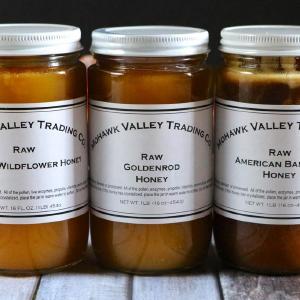
Maple Syrup T-Shirt Giveaway 1 is sponsored by Crooked Brook. The prize is a white, Gildan, 6.1 oz. 100% preshrunk cotton, t-shirt printed with the image of our maple syrup label and URL printed on the back.
[Read More]
20 May Sun 2012
Buckwheat Honey T-Shirt Giveaway 1
18 May Fri 2012
Maple Syrup Production in North America -The Evolution
The Native Americans collected maple sap from v-shaped notches carved into maple trees. The sap was diverted into birch bark buckets using bark or reeds. It was concentrated by placing hot stones into the buckets or by freezing the sap and removing the ice, which is composed only of water.
When Europeans reached northeastern America they adapted native techniques to make their own maple syrup. The v-shaped notches were replaced with auger-drilled holes. This practice is less damaging to the trees. Bark buckets were replaced with seamless wooden buckets carved from lumber rounds. The method of sap concentration also changed from passive to active. Large amounts of sap were collected and brought to a single area where it was boiled over fires in round cauldrons until reduced to the desired consistency. ‘Sugar shacks’ were built expressly for the purpose of sap boiling. Draft animals were often used to haul fire wood and large containers of sap for sugaring. Maple syrup was an important food additive in early America because imported cane sugar was not yet available.
In the mid-1800’s syrup production changed again. Round cauldrons were replaced by flat pans in order to increase surface area and therefore allow for faster evaporation. Over the next 60 year several variations on this design were patented. Draft animals were replaced by tractors and heating methods expanded to include propane, oil and natural gas as well as wood.
The 1970’s represent another period of major changes in maple syrup production. Plastic tubing running directly from trees to the sugaring location eliminated the need for energy and time intensive sap collection. Reverse osmosis and pre-heating made syrup production more efficient. Recent advances have been made in sugarbush (maple trees used primarily for syrup production) management, filtration and storage.
There are two well known systems of maple syrup grading in use today. One system is used in Canada (where 80% of the world’s maple syrup is produced) and another system is used in the United States of America. Both systems are based on color and translucence with relate to the flavor of the syrup. Different grades are produced by the same trees over the length of the season. Since maple syrup recipes usually do not specify any particular grade to use, take into consideration that darker colored syrups will produce dishes that a have a pronounced maple flavor.
Despite these changes in equipment, the production of maple syrup has changed very little in hundreds of years. Unlike most modern crops, maple syrup production remains a seasonal activity. Maple producers are limited more by the weather than any other factor. The sugaring season generally begins in February and runs through April. It varies year to year based on daytime and nighttime temperature fluctuations. Ideal sugaring weather requires warm days (around 40°F) and freezing nights (around 20°F). When the days get warmer and it stops freezing at night the tree buds begin to swell and the sap changes. When the sap turns from clear to yellow it is no longer useful for sap production. Even short periods of unseasonably warm weather can cause the sap to turn, effectively ending the season. Red Maple trees leaf out earlier than Sugar and Black Maple trees, making them less desirable for sugaring.
17 May Thu 2012
Custom Hoodie Hooded Sweatshirt: Dominique Chicken Giveaway 1
For Custom Hoodie Hooded Sweatshirt Giveaway 1, our friends at Crooked Brook are offering a heather grey hoodie with an embroidered Dominique Chicken on the back.
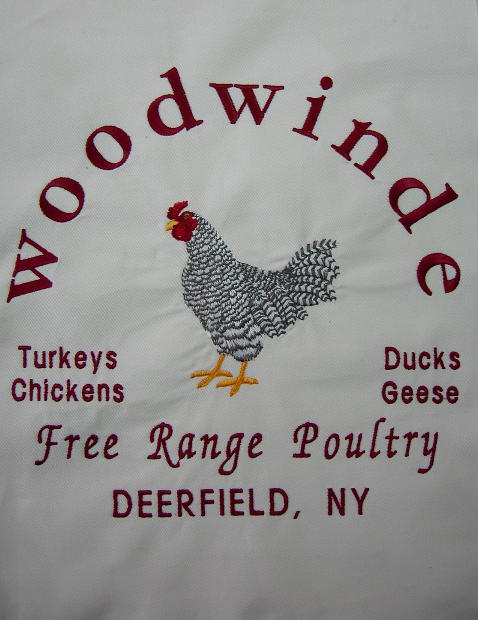
The winner can get this hoodie with just the Dominique Chicken, or with:
1. The name of your farm, ranch or business.
2. Town and state or URL.
3. Tag line or goods and services.
The above options are subject to approval by Crooked Brook.
The value of this hoodie, including shipping is $90.00.
The winner will be chosen randomly, from those who post a comment with an answer to this question;
What breed of live stock would you like to see for Custom Hoodie Hooded Sweatshirt Giveaway 2?
Terms & Conditions:
You must be 18 years or older to win.
Contest ends midnight (Eastern Standard Time) 05/24/12.
Winner will be chosen randomly and contacted by email.
Winner will have 48 hours to reply or a new winner will be chosen.
Crooked Brook will ship the prize to the winner within 30 days of contest end.
Physical address required for shipping; no PO boxes, US recipients only residing in one of the 48 contiguous states.
About The Dominique
The Dominique, also known as Dominicker or Pilgrim Fowl, is a breed of chicken (Gallus gallus) originating in the United States during the Colonial. It is considered America's oldest breed of chicken, probably descending from chickens brought to New England from southern England during colonial times. By the 19th century, they were widely popular and were raised in many parts of the country. Dominiques are a dual purpose breed, being valued for their meat as well as for their brown eggs. They weigh 6 to 8 pounds (2.7 to 3.6 kg) at maturity. In earlier times, their feathers were much sought after as stuffing for pillows and mattresses.
After the Plymouth Rock breed was developed from the Dominiques in the 1870s, the Dominiques' popularity declined, until by 1950 they were so rare as to be considered nearly extinct. During the 1970s, Dominiques were listed in "Critical" status by the American Livestock Breeds Conservancy, with fewer than 500 breeding birds in North America. However, due to a revival of interest in them and other rare breeds, the Dominiques have made a comeback and are now listed on the "Watch" list, indicating lesser danger of extinction.
About Hoodies
The origin of the hoodie goes back to the Middle Ages when the standard trappings for monks was a long tunic or robe with a cowl. The hooded sweatshirt as we know it today, was invented in the United States by Champion (an apparel manufacturer specializing in sportswear) in the 1930s and the word hoodie or hoody started to appear in popular culture in the 1990s.
Today, almost every major apparel brand offers a line of hoodies. Some high-end brands offer hoodies in high-performance fabrics, knitted silk, merino wool or other fabrics. With all of the different brands, styles, profiles, fabrics and colors of hoodies to choose from, it can be a bit overwhelming.
Whatever you do don’t buy cheap hooded sweatshirts; they are thin, ill fitting, lose their color, shape and shrink excessively after the first wash.
03 May Thu 2012
Custom T-Shirt - Blue Andalusian Giveaway 1
The Andalusian is a breed of chicken originating in the Andalucia region of Spain. Often called the Blue Andalusian for the color accepted for showing by the American Poultry Association, they also appear in Splash (mottled) and Black. They are classified as "Mediterranean" chickens, and like other breeds from this class, they are closely feathered, active, and good layers of white eggs. Although the only color pattern recognized by the American Poultry Association is Blue, when you cross two blues you will get some whites and some blacks. Because of this, they are relatively rare except amongst poultry enthusiasts and small backyard flock owners interested in preserving heritage breeds. These rare egg laying chickens lay up to 160 eggs per year.
The Mohawk Valley Trading Co. has asked Crooked Brook to do the t-shirt printing for Blue Andalusian t-shirt giveaway 1.
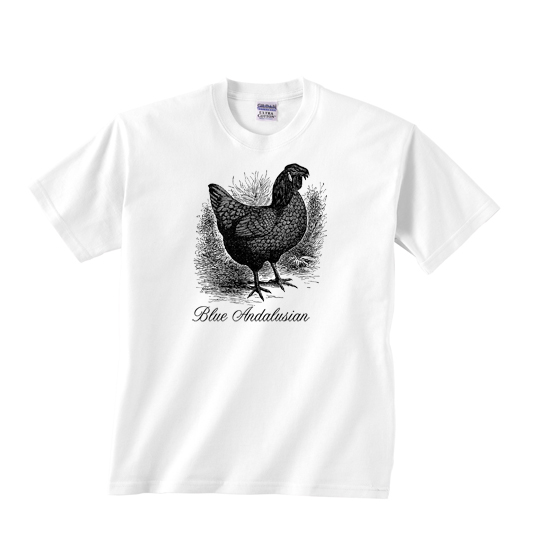
This t-shirt is a white, Gildan, G200 6.1 oz. Ultra Cotton® T-Shirt made in 100% preshrunk cotton, taped shoulder-to-shoulder with a seamless collar and double-needle stitching throughout and the image of a Blue Andalusian printed on the front.
Crooked Brook t-shirts are printed using Direct to Garment Printing (DTG printing or digital garment printing) which is the process of using inkjet printers to print an image directly onto a t-shirt without the use of screens like with silk screening or screen printing. Direct to Garment printing (DTG) technology uses eco-friendly, water soluble ink, unlike some screen printing methods that layer Plastisol (a suspension of PVC particles in a plasticizer) on top of the t-shirt. DTG allows photographic quality printing with no setup fee or minimums for custom t-shirts.
The winner will be chosen randomly, from those who post a comment with an answer to this question;
What breed of chicken would you like to see for the next t-shirt giveaway?
Terms & Conditions:
You must be 18 years or older to win.
Contest ends midnight (Eastern Standard Time) 05/10/12.
Winner will be chosen randomly and contacted by email.
Winner will have 48 hours to reply or a new winner will be chosen.
Crooked Brook will ship the prize to the winner within 30 days of contest end.
Physical address required for shipping; no PO boxes, US recipients only residing in one of the 48 contiguous states.
The t-shirt evolved from undergarments used in the 19th century, through cutting the one-piece "union suit" underwear into separate top and bottom garments, with the top long enough to tuck under the waistband of the bottoms. By the Great Depression, the t-shirt was often the default garment to be worn when doing farm or ranch chores, as well as other times when modesty called for a torso covering but conditions called for lightweight fabrics.
T-shirts, with and without buttons, were adopted by miners and stevedores during the late 19th century as a convenient covering for hot environments.
T-shirts, as a slip-on garment without buttons, originally became popular in the United States when they were issued by the U.S. Navy during or following the Spanish American War. These were a crew-necked, short-sleeved, white cotton undershirt to be worn under a uniform. It became common for sailors and Marines in work parties, the early submarines, and tropical climates to remove their uniform "jacket", wearing (and soiling) only the undershirt.
Named the t-shirt due to the shape of the garment's outline, it soon became popular as a bottom layer of clothing for workers in various industries, including agriculture. The t-shirt was easily fitted, easily cleaned, were made in various colors and patterns and inexpensive, and for this reason it became the shirt of choice for young boys.
In comparison to screen printed garments, DTG printed garments can be just as durable and more eco-friendly. Screen printing also requires a lot of setup ie. creating screens for each color. The only thing Direct to Garment Printing (DTG) printing requires is for the image to be high resolution.
02 May Wed 2012
Raw Honey: Chef Tom Colicchio on the Mohawk Valley Trading Company
Our raw honey is used and endorsed by one of by the world’s most recognized chefs: Tom Colicchio and here is what Tom has to say about it:
If you’re looking for really great honey, here’s my first piece of advice to you: You’re unlikely to find it in a plastic squeeze bottle shaped like a bear.
My second piece of advice: Try these raw honeys from Mohawk Valley Trading Company. Raw honey is unfiltered, unheated and totally unprocessed, and contains all of the same pollen, enzymes, vitamins, antioxidants, minerals, aromatics and amino acids that it had while still in the hive. I’m told that raw honey has all kinds of health benefits, but I love it because I think it tastes exactly as honey should and has a wonderful, spreadable consistency and a slightly crunchy, substantial texture.
Not only do we use raw honeys from Mohawk Valley Trading Company at Craftbar, ’wichcraft and Colicchio & Sons, but I keep a jar of the stuff on my desk at all times.
Raw Apple Blossom Honey
This is derived primarily from the nectar of Fuji, Wolf River, Crispen, Sweet Sixteen, Pound Sweet, Granny Smith, Winesap, Fortune, Cortland, Empire, Ginger Gold, Macoun, Spigold, Honeycrisp, Jonagold, Golden Delicous, Acey Mac and other apple blossoms.
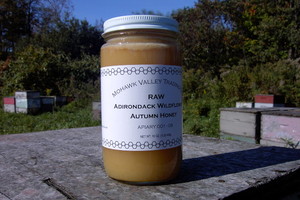
Raw Adirondack Wildflower Autumn Honey
Derived primarily from the nectar of Goldenrod, in addition to, but not limited to Jewelweed, Purple Aster, Spotted Knapweed, Chicory, Queen Anne's Lace, Creeping Bellflower and other wildflowers.
Raw Maine Wild Blueberry Blossom Honey
Derived from low bush blueberries, which are harvested once every other year. Low bush blueberry blossoms have small white or pink bell-shaped flowers and are rich in antioxidants.
The three varieties are subtly different from each other: the wildflower autumn honey is a little bit floral, the apple blossom honey is slightly creamy and mellow, and the maine wild blueberry blossom honey has a deeper, bolder flavor than the others. Try any of the three in glazes, subbed in for sugar while baking or simply on warm toast or in tea.
Keep in mind that over time raw honey will naturally crystallize (if you ask me, all the better for eating it straight from the jar). Just place the jar in warm water to soften it.
Eat Well and Cook Often,

01 May Tue 2012
Custom Embroidered Polo Shirt: Walleye Giveaway 1
The walleye is a freshwater native to most of the northern United States and Canada. It is also called the yellow walleye to differentiate it from the blue walleye, which is an extinct subspecies that used to inhabit the southern Great Lakes.
Although it is the state fish of Minnesota and South Dakota, more walleye is eaten in Minnesota than in any other state. Baudette and Garrison, Minnesota both declare to be the "Walleye Capital of the World," each with a large statue of a walleye.
In honor of the Sander vitreus (formerly Stizostedion vitreum), The Mohawk Valley Trading Co. has teamed up with Crooked Brook to sponsor a walleye embroidered polo shirt giveaway.
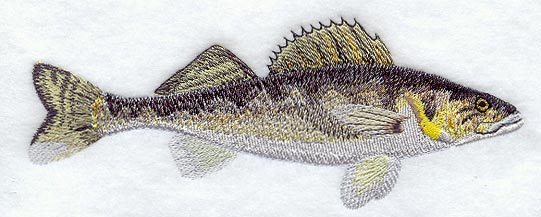
This is a first quality custom polo shirt with a walleye embroidered on the left chest. The brand, color, gender and size of the polo shirt will be determined by what they have in stock at the time the winner is announced. Crooked Brook will try their best to send winner’s a polo shirt as close to their request as possible.
The winner will be chosen randomly, from those who post a comment with an answer to this question;
What color, gender and size polo shirt would you like to win?
Terms & Conditions:
You must be 18 years or older to win.
Contest ends midnight (Eastern Standard Time) 05/09/12.
Winner will be chosen randomly and contacted by email.
Winner will have 48 hours to reply or a new winner will be chosen.
Crooked Brook will ship the prize to the winner within 30 days of contest end.
Physical address required for shipping; no PO boxes, US recipients only residing in one of the 48 contiguous states.
Polo shirts are also called "polos" or tennis shirts and they became so popular on golf courses, people started calling them golf shirts. Although the words "polo shirt" and "golf shirt" are used interchangeably, the term "polo shirt" is more popular. Promotional polo shirts are one of the most popular promotional apparel items because they make great gifts and are an excellent way to build brand recognition and promote your business.
29 Apr Sun 2012
Chef Tom Colicchio on Mohawk Valley Trading Company Honey
The Mohawk Valley Trading Company (MVTC) offers the highest quality organic and unprocessed natural products we can produce. Our raw honey and maple syrup is used and endorsed by two of by the world’s most recognized chefs: Bobby Flay recommends our maple syrup and Tom Colicchio recommends our honey. Not only does Tom say our honey is one of his “Personal Pantry Essentials” and “Favorite Gifts” but he also keeps “a jar of the stuff on my desk at all times.”
Tom recently added three more of our honeys to his collection and here is what he has to say about them:
I’ve already shared some of Mohawk Valley Trading Company’s truly extraordinary raw honeys with you and I know many of you have become coverts. So, I’m adding three more of their honeys to my collection:
Tulip Poplar-Black Locust Honey
This honey is derived from the nectars of the Tulip Poplar and Black Locust tree blossoms, which bloom around the same time of the year.
Summer Wildflower Honey
Collected from a range of flowers blooming wild throughout the summer season; Wildflower honey, also known as polyfloral honey, is derived from the nectar of numerous species of flowers or blossoms. The taste, aroma and flavor will vary from season to season, depending on what flowers are dominant at the time the nectar is collected.
Goldenrod Honey
Derived from the pure nectar of wild goldenrod. When Goldenrod is the major nectar source of a honey you get a honey that is golden, spicy, and mildly pungent tasting.
The three varieties are subtly different from each other: the tulip poplar & black locust honey is the deepest, richest, and most powerfully floral of the bunch, the goldenrod honey is clean and mildly spicy, and the summer wildflower honey fits somewhere in the middle, varying based on the particular range of nectars collected for a given batch.
Think about using these thick, complex honeys on yogurt, as a substitute for granulated sugar when baking, or just smeared onto toast. Personally? I also eat good honey plain, with a spoon. But no matter how you use them, these honeys will be a real star. They’re head and shoulders above the mass-market stuff you buy in the supermarket.
Cook Often, Eat Well,
Hoodie - Hooded Sweatshirt Giveaway 2
When it got down to 30 the other night, we had to break out the hoodies and that reminded us that it was time to team up with Crooked Brook again to sponsor another hoodie giveaway. Hooded sweatshirts were popular with people who worked outdoors, way before they became fashionable and were called hoodies.

(Image for example only. Brand, color, gender and size to be determined)
These giveaways are first quality, blank hoodies from Crooked Brook’s inventory. The brand, color, gender and size of the hoodie will be determined by what they have in stock at the time the winner is announced. Crooked Brook will try their best to send winner’s a hoodie as close to their request as possible.
Hopefully, for the next giveaway we can offer printed or custom embroidered hoodies.
The winner will be chosen randomly, from those who post a comment with an answer to this question;
What color, gender and size hoodie would you like to win?
Terms & Conditions:
You must be 18 years or older to win.
Contest ends midnight (Eastern Standard Time) 05/06/12.
Winner will be chosen randomly and contacted by email.
Winner will have 48 hours to reply or a new winner will be chosen.
Crooked Brook will ship the prize to the winner within 30 days of contest end.
Physical address required for shipping; no PO boxes, US recipients only residing in one of the 48 contiguous states.
The origin of the hoodie goes back to the Middle Ages when the standard trappings for monks was a long tunic or robe with a cowl. The hooded sweatshirt as we know it today, was invented in the United States by Champion (an apparel manufacturer specializing in sportswear) in the 1930s and the word hoodie or hoody started to appear in popular culture in the 1990s.
Today, almost every major apparel brand offers a line of hoodies. Some high-end brands offer hoodies in high-performance fabrics, knitted silk, merino wool or other fabrics. With all of the different brands, styles, profiles, fabrics and colors of hoodies to choose from, it can be a bit overwhelming.
Whatever you do don’t buy cheap hooded sweatshirts; they are thin, ill fitting, lose their color, shape and shrink excessively after the first wash.
27 Apr Fri 2012
Buckwheat Honey Giveaway 1 at Honey Like No One Else
Here is a little info about Eric and why he has a separate blog on his main site dedicated to honey:
My name is Eric. I live in Saline, Michigan with my wife (Donna) and two daughters, Hannah (4) and Autumn (1). I have been enjoying varietal honeys ever since I first tasted orange blossom and avocado blossom honeys during a trip to California in 2011. I have started up a separate blog from my main blog to share my passion for great tasting honey and the stories behind them.
Why have a separate blog on my site dedicated to honey? Honey is a very diverse sweetener that is collected in a variety of ways. There are so many interesting stories out there on how the beekeepers get their honey. I plan to bring you those interesting stories. I also want to share some of the nation’s best honeys with a focus in my own backyard (Michigan).
I got into varietal honey about a year ago. I was a skeptic at first. I thought I would never be able to tell the difference between a clover honey and an orange blossom. While visiting California, I tasted some honey at a farmer’s market. I was surprised at the flavor my tongue was experiencing. That day I bought my first orange blossom honey as well as some avocado honey. I have tried many different honeys since from cranberry blossom to star thistle to sourwood. All have their own unique flavor.
On this blog you will find interviews with beekeepers, reviews of honeys, recipes, and sources to buy honey. I am planning on taking all this research and turning into my very first e-book.
There are multiple ways for you to gain entries into this contest and if you would like to enter to win a jar of Buckwheat Honey head on over to Honey Like No One Else.
20 Apr Fri 2012
Raw Buckwheat Honey Review
Buckwheat honey is well known in the holistic medicine world because it has a high mineral content and antioxidant compounds. When I was sick with a chest cold I could not stop coughing. I tried an over the counter cough syrup and got no relief. Then I tried the raw buckwheat honey and it worked better than the store bought cough syrup! I have recommended this to several of my friends and they too have confirmed that it truly worked.
If you are planning to use buckwheat honey for its health-benefits, raw buckwheat honey is the specific type you need. This is because heating of any honey (pasteurization) destroys the all of the pollen, live enzymes, propolis, vitamins, amino acids, antioxidants, minerals, and aromatics; these are the important parts to receive the health benefits.
Buckwheat is neither a grass nor wheat, but is a fruit related to rhubarb it was one of the first crops cultivated in the United States. Dutch colonists brought buckwheat to North America where they planted it along the Hudson River. Buckwheat was sometimes called beech wheat, because its seeds look like small beech nuts.
Buckwheat was an important crop in the U.S. until the demand declined in the 1960's. Buckwheat honey is not a widespread honey and finding it locally may be difficult because today, buckwheat is primarily grown in the northern states.
Buckwheat seeds are also used or making gluten free flour and buckwheat blossoms are an excellent source of nectar and blooming can continue well into the autumn.
Buckwheat hulls are used as filling for pillows and zafu. The hulls are durable and do not conduct or reflect heat as much as synthetic fills and they are an excellent substitute to feathers for people with allergies. However, buckwheat hull pillows made with uncleaned and unprocessed hulls contain high levels of allergens that may trigger an asthma attack in those who are at risk.
Raw buckwheat honey has a deep, dark brown color, strong, pungent, molasses like earthy flavor, that I found is very different from other fruit blossom or wildflower honey. In my opinion, the flavor wavers toward the savory side rather than sweet aromatics of your typical honey. I decided to not use this for my sweet baked goods but instead for breads, barbeque sauce and other sauces that contain already hearty ingredients like dark beer and mustards.
Not all honey is created equal and that is the case for the raw buckwheat honey, although it is honey, it is not one that should be used as a substitute for wildflower honey because it is very, very different; Though in the right application it adds an extraordinary dimension to a dish.
I made a loaf of honey wheat bread and the depth of flavor was absolutely fantastic! The earthy flavor and the more subdued sweetness made the bread great for toast and sandwiches. I have used the buckwheat honey as a glaze by itself on grilled meats what were prepped with a dry rub, when the honey met the dry rub they created a barbeque sauce that was one of a kind. I also experimented with the honey by adding it to my honey mustard dressing recipe and now it is a staple in my home.
Try this recipe out for yourself; you will be amazed how well the buckwheat honey flavor works!
Milk and Buckwheat Honey Loaf
Makes 1 loaf
1 cup wheat flour
1 cup unbleached white flour
2 teaspoons baking powder
1/2 teaspoon salt
1 cup whole milk
1/2 cup raw buckwheat honey
Directions:
Grease a 7 by 3-inch loaf pan. Preheat the oven to 375°F. Put the wheat flour in a mixing bowl. Sift the white flour, baking powder, and salt over the wheat flour. Measure the milk in a 2-cup measure and incorporate the buckwheat honey at a drizzle. Pour the milk and honey mixture into the flour and beat until well combined. Pour into the loaf pan and bake 40 to 50 minutes, until humped and well browned.
11 Apr Wed 2012
Fleece Blanket Giveaway 2 Winner!!!
Congratulations AJ Campbell, you are the winner of Fleece Blanket Giveaway 2!!!
We’ve sent you an email and look forward to your reply. To all you other Local Harvest followers; don’t bum out ‘cuz there’s plenty more Fleece Blanket Giveaways in the works, so keep coming back to our blog. If you can’t wait to win one, contact Crooked Brook.
09 Apr Mon 2012
Raw Honey - Benefits of Raw Honey Are Beyond Measure
Raw honey is one more food on the extensive list of raw foods that have been confirmed to be healthier for you than what is normally found in the super market. The benefits of raw honey are so numerous we can not even begin to list all of them here, however we will try. It is one of the world’s oldest foods that will not only provide you with plenty of health benefits, but it tastes delicious. It is common knowledge that when heat is applied fruit or vegetables that they lose some of their nutritional value. When honey is heated and filtered it looses many of the health benefits that make it so popular.
Honey has been around for millennia and Historians don’t even know how far back they can date the use of honey in cultures. It is impossible know exactly how long humans have been collecting and eating honey because even the earliest historical records indicate that we have known of the power of the bee and the uses of the honey.
Cave paintings supposed to have been done in or around 7000 BC shows that people were harvesting honey even then. Honey bees date back even further than that record by centuries. Fossils show proof that bees were pollinating and producing honey over 150 million years ago, which leads us to believe that the first people may have made use of honey.
Honey is still one of the most essential components in a great deal of cooking and baking, it’s relative health properties and the resurgence in interest in holistic medicine and healing is also helpful to the honey industry.
Unfortunately, the majority of the honey found in our supermarkets today has been heavily processed. Many unscrupulous commercial honey producers chemically refine, blend and heat their honey which can all eradicate the many health benefits honey has to offer. That is the reason why raw honey is not like most honey, it is exceptional in that it has the same qualities it had when it was in the bee hive.
Raw honey has antiseptic and antibacterial properties is full of vitamins, minerals, bee propolis, royal jelly, wax and pollen. The vitamins that are found in honey include B6, thiamine, riboflavin, niacin, and some amino acids. There are also several minerals including copper, calcium, iron, magnesium, manganese, phosphorus, sodium, potassium, and zinc.
When you consume raw honey you give your body a dose of vitamins, amino acids and minerals as well as a burst of energy. Raw honey can increase your energy, strength as well as your endurance and is also been known to lessen muscle fatigue.
Raw wildflower honey is often used by pollen allergy sufferers to lessen their sensitivity to pollen by eating 1 to 2 tsp. of it each day. The idea is, that by introducing small amounts of pollen into their system by eating raw honey, a tolerance to pollen allergens is built up.
Today, many people only perceive honey as the little plastic bear kept the kitchen cupboard but it is so much more. Make it part of your daily routine to include raw honey in your diet or as a substitution for sugar. No matter how you consume raw honey, you will harvest the benefits of this really marvelous contribution from our friends the bees.